


D915 in Turkey, the mountain road that challenges every driver
The D915 mountain road, which connects the cities of Of an...



Known as the world's first nomadic empire, the Xiongnu built a massive territory stretching from Kazakhstan to Mongolia. Their skills in mounted warfare made them swift and fearsome enemies, and their legendary conflicts with Imperial China led to the construction of the Great Wall.
Now, scientists have discovered that high-status women, perhaps princesses, were revered in Xiongnu society and were instrumental in expanding the empire's reach. Experts conducted a genetic investigation of two Xiongnu imperial elite cemeteries along the empire's western border, in present-day Mongolia.
These princesses were buried with horse equipment such as saddles, bridles and bronze chariot pieces - items that are usually "associated with the male figure and power", they found.
The analysis was conducted by an international team of experts at the Max Planck Institute for Evolutionary Anthropology (MPI-EVA) and Geoanthropology (MPI-GEO), Seoul National University, the University of Michigan, and Harvard University.
Study author Dr Bryan Miller at the University of Michigan said: "Women held great power as agents of the Xiongnu imperial state along the frontier. They often held exclusive noble ranks, preserving Xiongnu traditions and engaging in both steppe power politics and so-called exchange networks."
Centered in the territory of present-day Mongolia, the Xiongnu empire controlled large parts of Asia for nearly three centuries, starting around 209 BC until their final dissolution at the end of the first century AD.
At their peak, the Xiongnu profoundly influenced the political economies of Central, Inner and East Asia, becoming a major political rival to imperial China, the experts say in their paper. They established “long-distance trade networks” that imported Roman glass, Persian textiles, Egyptian faience, Greek silver and bronze, silk and Chinese lacquer.
The Xiongnu first appeared in historical records around the 5th century BC, when their repeated raids into northern China prompted the construction of the famous Great Wall. Unfortunately for historians, the Xiongnu had no writing system, so historical records about the Xiongnu are almost entirely written down and passed down by their rivals and enemies. / CNA

The D915 mountain road, which connects the cities of Of an...
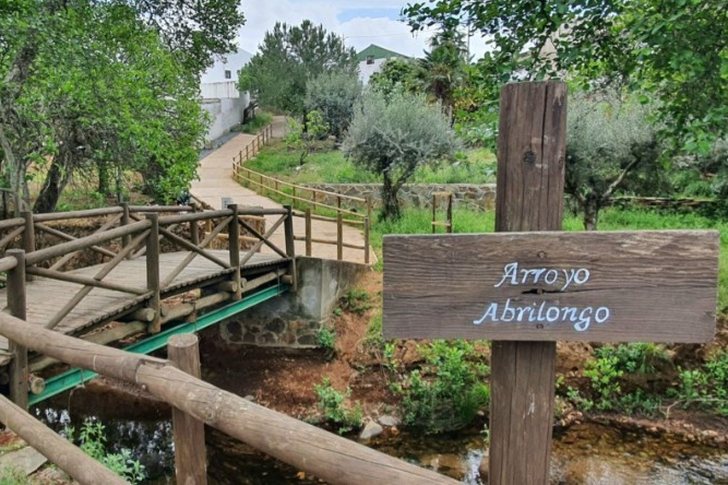
On the border between Spain and Portugal is one of Europe'...

Nestled between Switzerland and Austria is one of Europe's...

Scientists have been surprised after small, glowing ruby-l...

A 24-karat gold coin featuring Donald Trump has been propo...
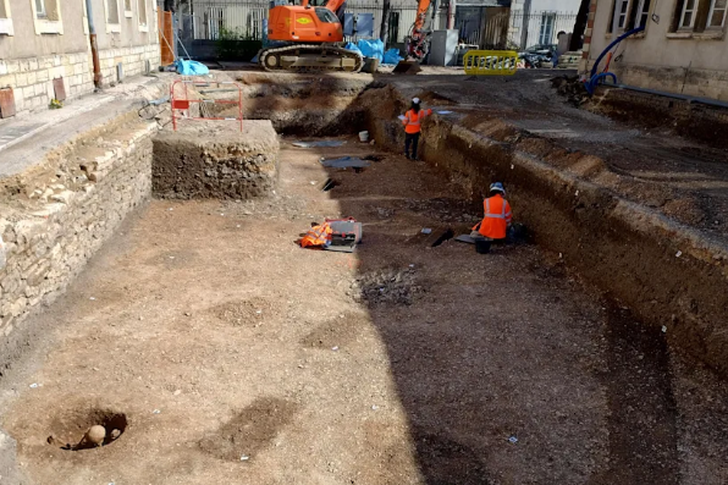
In the city of Dijon, France, archaeologists have discover...

A new trend is making people look for cleaner, more econom...

A British couple has claimed to own the world's largest pr...

According to a British study published in the scientific j...

US President Donald Trump recently shared a previously unk...

A new ranking from Time Out has revealed the 50 best citie...

A red fox inexplicably got on board a cargo ship that was ...

A growing number of Michelin-starred celebrity chefs have ...

A scientific expedition to the depths of the ocean near Ca...

Pink lakes are natural phenomena caused by high salinity, ...

A new study warns that more than 216,000 hectares of fores...

March is known as the month that brings spring, but what m...

Humans today carry a small amount of Neanderthal DNA in th...

Astronomers have identified with the help of the Hubble Sp...

This March 3rd, a total lunar eclipse is expected to occur...

The arrested mayor of Tirana, Erion Veliaj, with 13 charge...

CNA has uncovered the tentacles of the head of the Supreme...

The company "Gjikuria" has been caught in several serious ...

Sokol Sadushi's tentacles have touched the diplomatic syst...

The Special Board of Appeal (KPA) decided this Monday ...

The KPA vetting decided this Thursday to dismiss the p...

Suela Salavaçi, a prosecutor in the Prosecutor's Offic...

The Special Board of Appeal reinstated the prosecutor ...

A serious accident occurred this Sunday on the Milot-Rrësh...

A base with an arsenal of weapons and combat ammunition is...

Today, tributes will be held in Vlora in honor of journali...

On 18.07.2026, at around 22:15, in the village of Barbullu...

On Sunday, our country will remain under the influence of ...

The World Health Organization described extreme heat in Eu...

Systematically in the last 15 years, circulatory system di...
Today, our country will remain under the influence of stab...

Russia carried out one of the largest ballistic missile at...

Two American soldiers were killed in Jordan during Iranian...

Smoke from massive wildfires in Canada has blanketed much ...

New York Mayor Zohran Mamdani said he is in talks about wh...

Trust among people is not just a three-syllable word. It c...

Master of humor Todi Llupi has passed away at the age of 7...

The ninth edition of "MIK Festival" kicked off with one of...

A historic evening for Albanian culture was marked in the ...

In Golem and Durrës, the season seems dynamic: buses with ...

This Sunday, one US dollar is bought for 81 lek and sold f...

INSTAT statistics for May show an increase in tourism, wit...

Albania needs higher wages, but more than that. It needs a...