


DP MP raises his voice for Mirdita: A region with history cannot be hidden, don't you dare touch it
DP MP, Gjin Gjoni, reacted after the publication of the ne...

DP MP, Gjin Gjoni, reacted after the publication of the ne...

Albania needs higher wages, but more than that. It needs a development model where improving incomes is accompanied by improving daily life. If citizens with university and postgraduate education, good incomes and professional prospects feel just as dissatisfied as those with low incomes, the problem is no longer just economic, but institutional. That is where the real quality of a country's development is measured.
Albania continues to have some of the lowest wages in the region. In 2025, the average gross monthly wage reached around 860 euros, while in Serbia, Bosnia and Herzegovina, Montenegro and North Macedonia it was 30-50% higher.
This gap alone would be reason enough for dissatisfaction and protest, especially in a country where prices have approached European levels, while purchasing power remains significantly weaker.
But the protest that has been taking place for weeks in Tirana is showing that, after more than 30 years of transition, salary is no longer the only argument, and for many it is not even the main reason.
It is not just low-income citizens or families facing economic difficulties who are on the scene.
The protest is also being significantly supported by an urban middle class, educated and professionally active, which may have above-average salaries, even significantly higher.
A “Monitor” survey of 1,114 citizens – which it should be noted is not representative of the entire population, as participants were not randomly selected and responses were given voluntarily – found that 90% of them support the protest. The main reasons are related to factors such as corruption, state capture, lack of perspective for the future, poor governance, lack of accountability, lack of justice and impunity for abuses.
The protection of the public interest, the environment, education, health and public spaces were also listed among the main concerns. Poverty and rising prices were important, but not the dominant reason.
The audience consists mainly of economists, freelancers, entrepreneurs, banking sector employees, information technology employees, and other urban and educated profiles for whom there is a relatively dynamic job market.
It is precisely this structure of pollsters and responses, which certainly cannot be generalized with a high degree of accuracy, that has decided to speak out in favor of the voice of protest.
This means that the civic reaction in the country is taking on new features and is bringing the voice of a stratum that needs to be heard, because it is active in the economy, pays taxes, creates jobs and, in many cases, has still chosen to build a life in Albania.
The results suggest that, at least for the urban and professional segment that Monitor follows, Albanian society has entered a new phase. After three decades, a portion of citizens no longer measure development solely by the amount they receive at the end of the month.
Salary remains essential, but in addition to it, a functioning state is required, justice that acts equally for all, an administration that rewards merit, and decision-making that does not take place far from the public interest.
This explains the presence of bankers, freelancers, entrepreneurs, and tech workers in the protest. Many of them have stable incomes, but they face institutional insecurity, a lack of meritocracy, corruption, environmental degradation, and the feeling that the country's development is not translating into a better standard of living every day.
The responses of banking sector employees are also significant. Of the 150 respondents in financial and insurance activities, 89% expressed their support for the protest. For this group, the dissatisfaction is not only related to the wallet.
It is related to the quality of the state, to the way decisions are made, and to the fear that, despite personal success, the country is missing the opportunity to become fairer, more livable, and more competitive.
A professional may have a good salary, but this does not protect him from polluted air, traffic, concreting, poor health care, education that does not produce the necessary skills, or an administration that operates according to connections and not rules. He may have an apartment, but not a livable city.
He may have a good job, but not the certainty that his children will see a future here.
For this reason, economic growth is not measured solely by Gross Domestic Product, the number of tourists, building permits, or the average wage. It is no wonder that there are a host of other statistics and indices invented by statisticians and measured by statistical institutes that attempt to approximate the reality of a country's development.
In the UN happiness index, Albania has historically ranked last or second to last in Europe, leaving behind only Turkey and far below Kosovo, which has lower per capita income and wages than we do.
Development is also the quality of institutions, fair competition, a protected environment, public spaces, justice, security, and trust that the rules apply equally to everyone.
In fact, these elements are not in conflict with increasing wages. On the contrary, reducing corruption and strengthening the rule of law would make the country more attractive for quality and long-term investments.
A more competitive, more productive and less dependent economy on construction and consumption would create better jobs and higher wages. Sustainable development of the territory and the environment would increase the real value of living and not just the price of property.
Albania needs higher wages, but more than that. It needs a development model where improving incomes is accompanied by improving daily life.
If citizens with university and postgraduate education, good incomes and professional prospects feel just as dissatisfied as those with low incomes, the problem is no longer just economic, but institutional. That is where the real quality of a country's development is measured./ Monitor

This Saturday, one US dollar is bought for 81.2 lek and so...
The Albanian economy continued to expand in early 2026, bu...
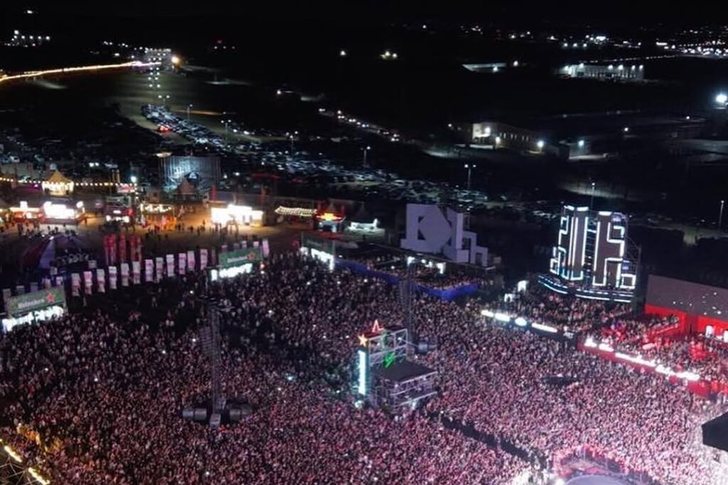
For three days of festival, up to 120 euros just for parki...
Oil prices have risen again in recent days on internationa...
This Friday, one US dollar is bought for 81.2 lek and sold...

Around 97,100 people are employed in regulated professions...
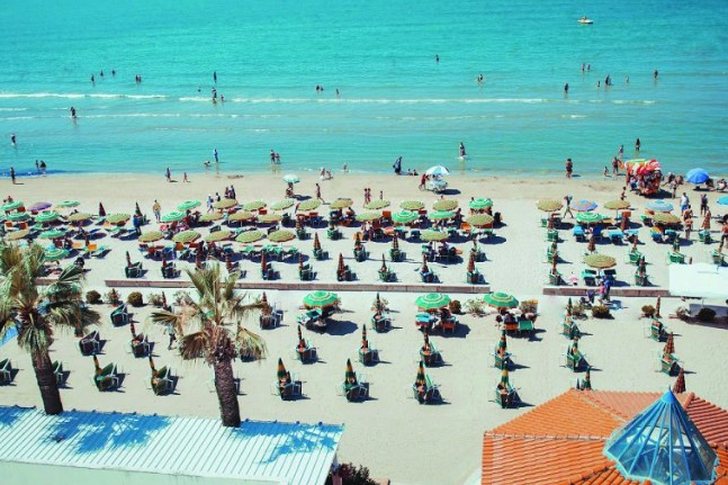
Albania continues to be the main destination for vacatione...
This Thursday, one US dollar is bought for 81.1 lek an...

Beekeeping has expanded significantly in recent years, bec...
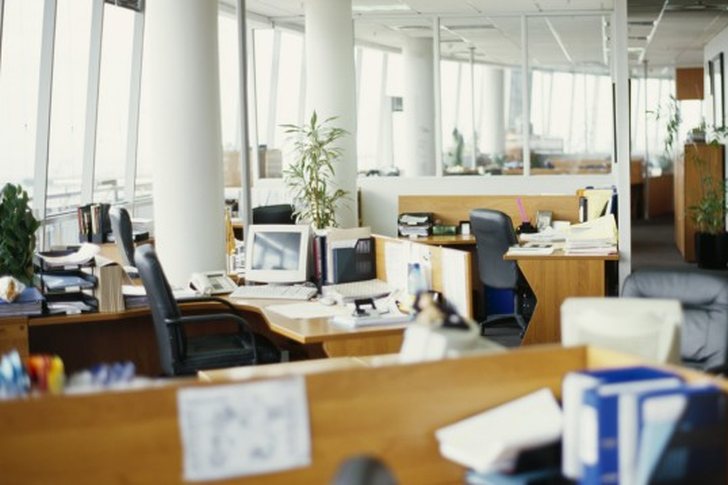
Employment in 2025 was characterized by a slight decline a...
A few weeks after the dissolution of the Transparency Boar...
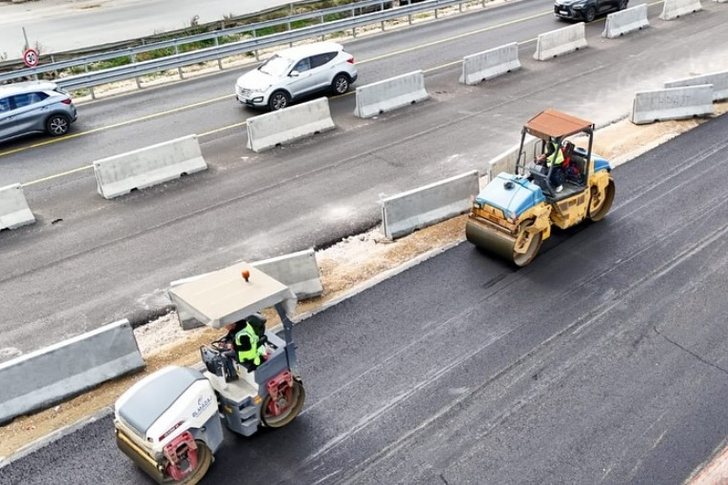
Albania, along with other Western Balkan countries, risks ...
Over the last 35 years, Albania has consistently faced a n...
This Wednesday, one US dollar is bought for 81.3 lek and s...

The number of foreign exchange offices declined in 2025, f...
In addition to the effect on the decline in demand for rea...
This Tuesday, one US dollar is bought for 81.5 lek and sol...
The tax administration has announced the completion of the...
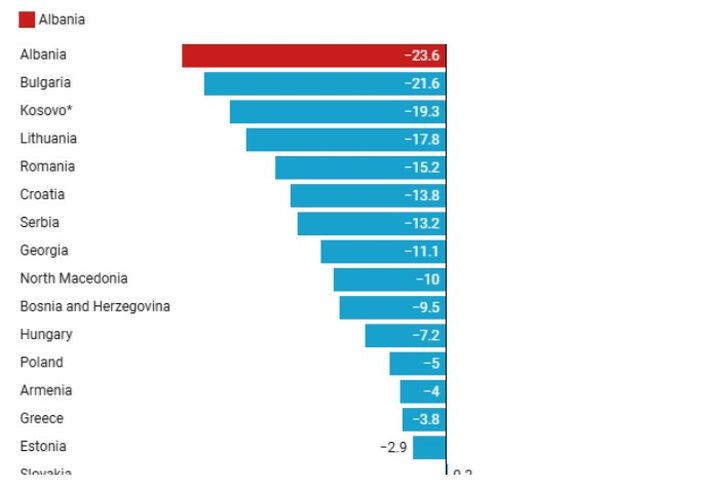
Albania has lost almost a quarter of its population since ...
This Monday, one US dollar is bought for 81.5 lek and sold...

Another name listed in the group of 99 of Erion Veliaj...

The mayor of Tirana, Erion Veliaj, arrested on 13 charges ...

Qytetarët që kalojnë pasditen pranë Liqenit Artificial në ...
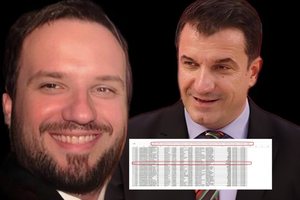
On the morning of July 7, 2026, the Ministry of Culture ur...

The Special Board of Appeal (KPA) decided this Monday ...

The KPA vetting decided this Thursday to dismiss the p...

Suela Salavaçi, a prosecutor in the Prosecutor's Offic...

The Special Board of Appeal reinstated the prosecutor ...

One person was injured after a gunshot attack recorded thi...

An injury has occurred in Korça where an 18-year-old man h...

Saranda / Preliminary information At around 21:15, in nei...

A serious incident occurred in Saranda this Friday evening...
Today, our country will remain under the influence of stab...

On Friday, our country will remain under the influence of ...
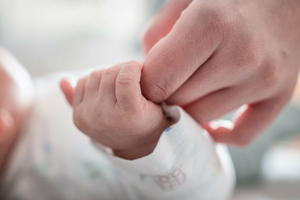
Demographic trends in Europe are revealing a new complex r...
Today, our country will remain under the influence of stab...

Japan's parliament has approved a bill to ease the rules o...
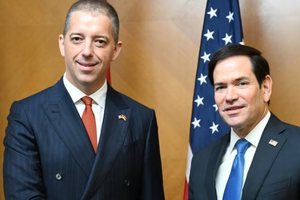
The Strategic Dialogue process between the United States a...

The Trump administration decided on Thursday to shorten th...
The Minister of State Administration and Local Self-Govern...

Master of humor Todi Llupi has passed away at the age of 7...

The ninth edition of "MIK Festival" kicked off with one of...
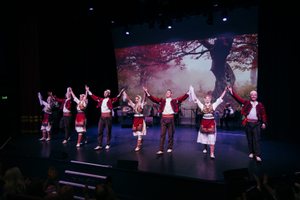
A historic evening for Albanian culture was marked in the ...

When I turned 10, another building was built in front of o...
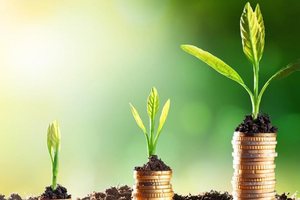
Albania needs higher wages, but more than that. It needs a...

This Saturday, one US dollar is bought for 81.2 lek and so...
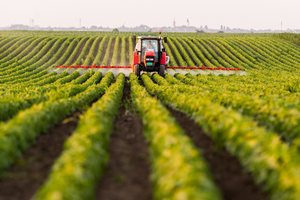
The Albanian economy continued to expand in early 2026, bu...
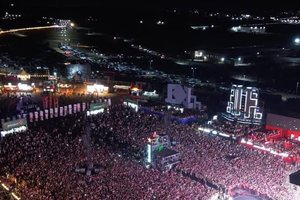
For three days of festival, up to 120 euros just for parki...