


US and Iran exchange fire as tensions rise over Strait of Hormuz
Tensions between the United States and Iran have escalated...

Tensions between the United States and Iran have escalated...

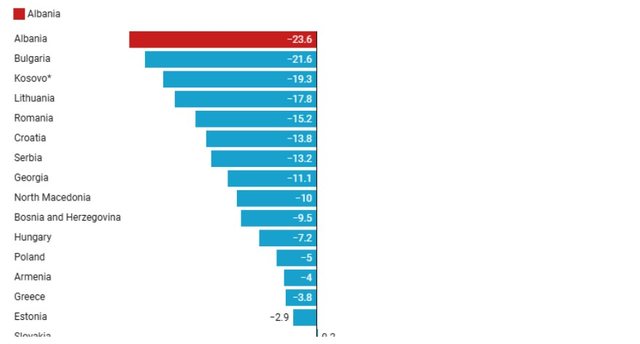
Albania has lost almost a quarter of its population since the early 2000s, marking the strongest contraction among European countries.
According to Eurostat data, on January 1, 2026, Albania had about 2.34 million inhabitants, down from 3.06 million in 2000 (Eurostat reports figures published by INSTAT).
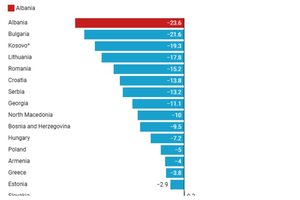
In 25 years, the country's population has decreased by about 721 thousand people, or 23.6%. The data shows that Albania has lost almost one in every four inhabitants it had at the beginning of the millennium.
This decline, according to data compiled by "Monitor", is the highest in Europe. The second country with the highest contraction is Bulgaria, which saw a reduction of 21.6% in the same period.
In third place is Kosovo, for which the shrinkage is calculated from 2003, when the earliest data is reported. Since that period, Kosovo's population has shrunk by 19.3%.
Lithuania also recorded a strong decline, with 17.8%, followed by Romania with 15.2%, Croatia with 13.8%, Serbia with 13.2% and Georgia with 11.1%.
In North Macedonia, the population has decreased by 10%, while in Bosnia and Herzegovina by 9.5%. Hungary has lost 7.2% of its population, Poland 5%, Armenia 4%, Greece 3.8% and Estonia 2.9%.
Data shows that almost the entire Western Balkans has lost population, but Albania remains at the top of the ranking in terms of the pace of contraction.
Serbia has lost about an eighth of its population compared to 2000, Croatia approximately 14%, while Bosnia and Herzegovina and North Macedonia about a tenth.
The only exception in the region is Montenegro, where the population is 3.3% higher than in 2000.
Population decline, due to high emigration and gradual population aging
Albania is facing three demographic shocks simultaneously: high emigration, declining birth rates, and rapid aging.
Emigration is the main factor influencing this trend. The constant departure of young people has reduced not only the number of residents, but also the population base of reproductive age. As a result, the number of births has fallen rapidly, while the ratio between young and old is worsening.
Since the early 1990s, the country has been experiencing successive cycles of emigration, which do not seem to be stopping, despite economic growth and improving incomes. According to the latest INSTAT data on net migration, more than 166.4 thousand Albanians appear to have left the country during the post-pandemic years from January 1, 2021 to 2026.
Albania, which for decades was considered one of the countries with the youngest population in Europe, has now reached the median age of the European Union. According to INSTAT data, the median age reached 45 years on January 1, 2026, up from 34.2 years in 2014. In just 12 years, the indicator increased by 10.8 years, about 4.5 times faster than in the EU.
This means that half of the Albanian population is now over the age of 45. The decline in fertility and the emigration of young people are rapidly shifting the demographic structure towards older age groups.
In 2025, births reached their lowest historical level since the transition, at 22.5 thousand, from 82 thousand in 1990, as the natural increase is heading towards zero. (see the natural increase graph)
The consequences are not limited to the number of inhabitants. The shrinking population reduces the consumption base, narrows the labor supply, and increases pressure on the pension system and health services.
With fewer young people entering the labor market and more older people retiring, the ratio between contributors and beneficiaries is deteriorating. At the same time, for several years now, businesses have been increasingly facing a shortage of workers, especially in sectors that require a skilled workforce and are trying to replace them with foreign workers.
Europe is growing, despite more deaths than births
While Albania and most Eastern European countries are losing population, the European Union continues to increase its population.
On 1 January 2026, the EU population reached 452 million, around 706,000 more than a year earlier. This was the fifth consecutive year of growth, following a decline during the pandemic in 2021, Eurostat reported.
Compared to 2016, the European Union had 8 million more inhabitants, while compared to 2006 the increase was 16 million.
But the population increase is not coming from births. Since 2012, the EU has recorded more deaths than births. The negative natural balance has been offset by positive net migration.
This means that without the influx of immigrants, the population of the European Union would be in decline.
During 2025, the population increased in 16 EU countries. The highest growth rates were recorded in Malta, with 24.1 people per 1,000 inhabitants, Cyprus with 13.7 and Luxembourg with 13.1. The strongest declines were recorded in Latvia, Estonia and Hungary.
Malta and Ireland, the strongest growth since 2000
In the long-term comparison, Malta has increased its population by 51.3% since 2000, the highest rate in Europe.
It is followed by Ireland with 45.9%, Cyprus with 44.3% and Iceland with 41.3%. Andorra has recorded an increase of 35%, Azerbaijan 28%, Switzerland 27.4%, Liechtenstein 27.1% and Norway 25.7%.
Spain increased its population by 22.5%, Sweden by 19.7% and the United Kingdom by 19.3%. Belgium by 16.8%, Austria by 15.2%, the Netherlands by 14.3% and France by 14.2% also recorded significant increases.
These countries also face low fertility and aging, but have managed to mitigate natural loss by attracting immigrants.
More developed economies offer higher wages, jobs, public services, and institutional stability. This has made them destinations for labor from the Balkans, Eastern Europe, and elsewhere.
Immigration is creating two different demographic realities in Europe. Receiving countries are growing their populations and meeting labor market needs, while countries of origin are losing young people, professionals, and working-age families./ Monitor


This Monday, one US dollar is bought for 81.5 lek and sold...

This Sunday, one US dollar is bought for 81.5 lek and sold...

The new old-age pensions in 2025 were on average 16,500 le...

This Saturday, one US dollar is bought for 81.4 lek and so...

The escalation of the conflict in the Middle East has once...

In addition to food, household appliances, oil, and more, ...
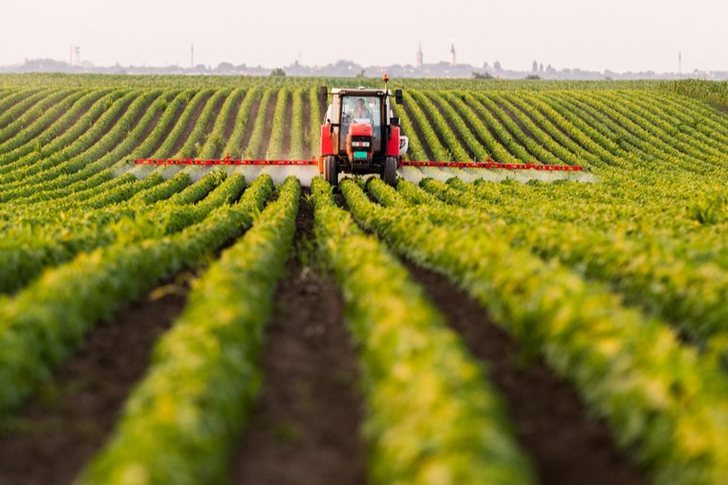
The government has reduced the funds foreseen for rural de...

This Friday, one US dollar is bought for 81.4 lek and sold...

The Tax Directorate has announced that the process of auto...
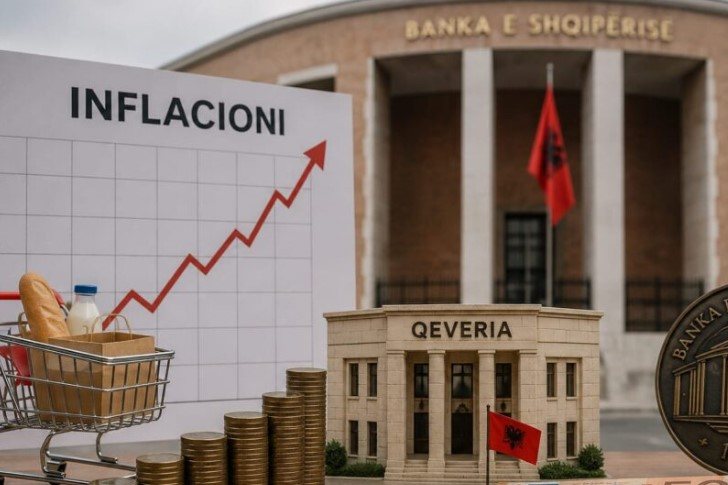
If coordinated policies are not undertaken by the Bank of ...

In the 2026 budget revisions, the Ministry of Defense budg...
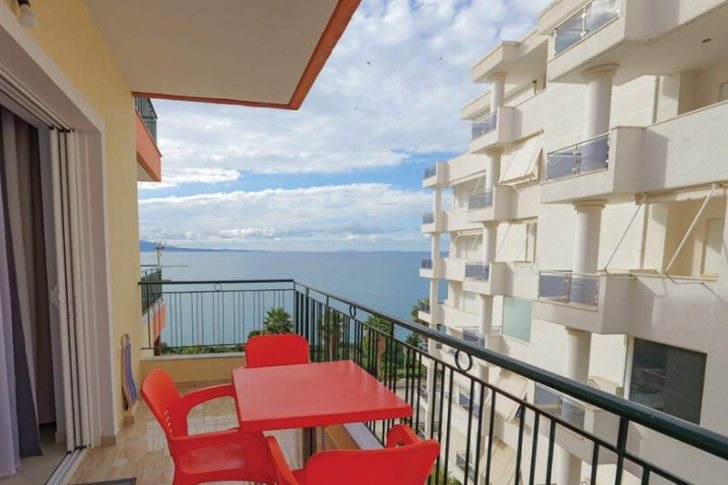
Although about 6 months have passed since the start of the...
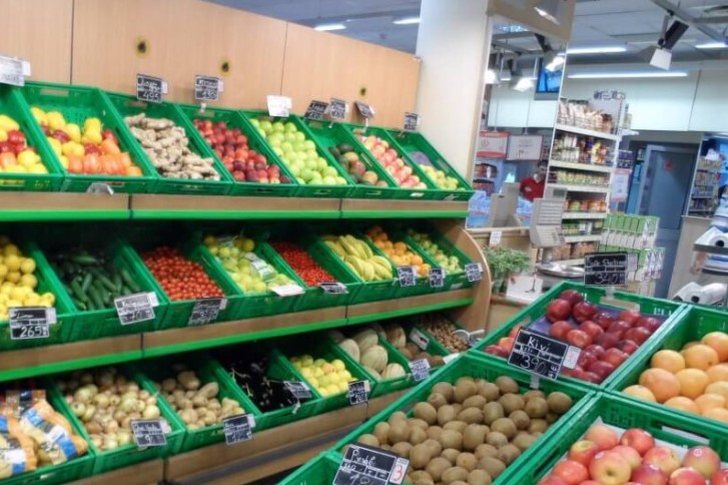
Vegetable prices marked a strong increase in June, precise...
This Thursday, one US dollar is bought for 81.5 lek and so...
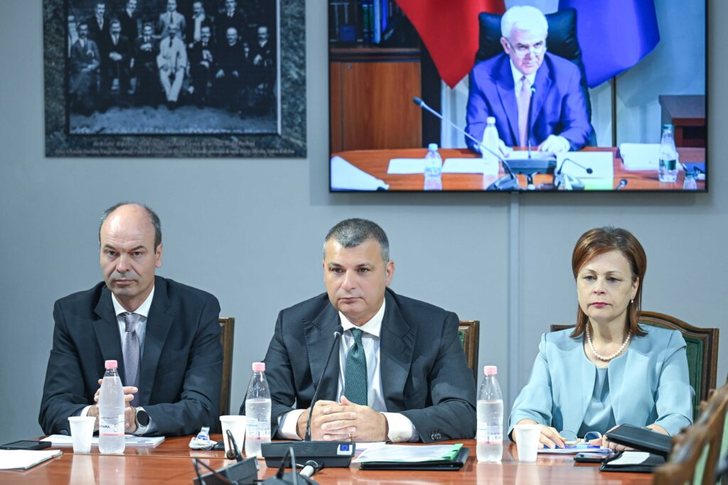
The Governor of the Bank of Albania, Gent Sejko, stated th...

The latest data published by the Institute of Statistics f...
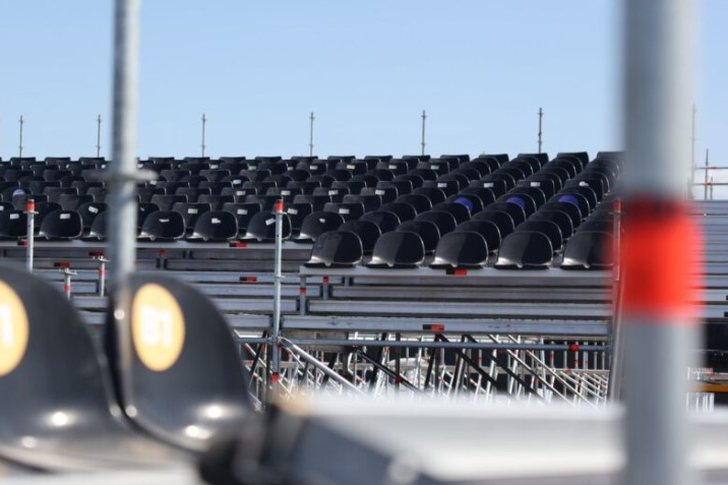
The government is providing 4 million euros for an event t...

A few days before Kanye West's concert in Tirana, the publ...

The lack of local labor is increasingly pushing Albanian b...

This Wednesday, one US dollar is bought for 81.2 lek and s...

On the morning of July 7, 2026, the Ministry of Culture ur...

After the disclosure of the portfolio of properties an...

For 6 months now, CNA has been sending several letters to ...
The word "fatherland" with properties is not enough. The m...

The Special Board of Appeal (KPA) decided this Monday ...

The KPA vetting decided this Thursday to dismiss the p...

Suela Salavaçi, a prosecutor in the Prosecutor's Offic...

The Special Board of Appeal reinstated the prosecutor ...

A 43-year-old man was arrested in flagrante delicto after ...
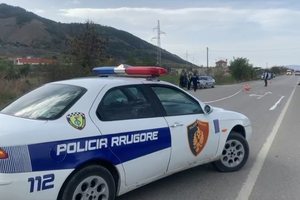
A serious road accident occurred this Sunday at the exit o...

A serious accident was reported today on the Gjirokastër-T...

A serious incident occurred today in the village of Orizaj...
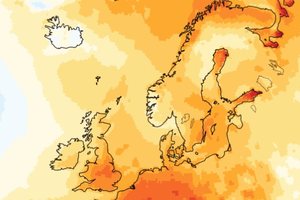
Albania was included in the band of above-normal temperatu...
Today, our country will be affected by mainly stable weath...
Today, our country will be affected by mainly stable weath...

A serious incident occurred this Saturday in neighborhood ...

Tensions between the United States and Iran have escalated...

A massive fire has engulfed a bar in Bangkok, Thailand, ki...

An aging population, emigration and a growing burden of ch...
While the West thought that mass expulsions of Russian dip...

When I turned 10, another building was built in front of o...
A special scientific conference was held by the World Bekt...

The German Embassy in Tirana has invited the Albanian publ...

Professor and literature scholar Ali Xhiku has passed away...
Albania has lost almost a quarter of its population since ...

This Monday, one US dollar is bought for 81.5 lek and sold...

This Sunday, one US dollar is bought for 81.5 lek and sold...

The new old-age pensions in 2025 were on average 16,500 le...