


Only 1200 individuals remained/ The dramatic moment when humanity almost disappeared from the face of the earth
About 930,000 years ago, the human race was on the ver...


President Joe Biden was "fine" according to White House Communications Director Ben LaBolt after tripping on stage during the US Air Force graduation ceremony on June 1. But his fall was caught live on camera, and people on social media speculated what was behind the episode.
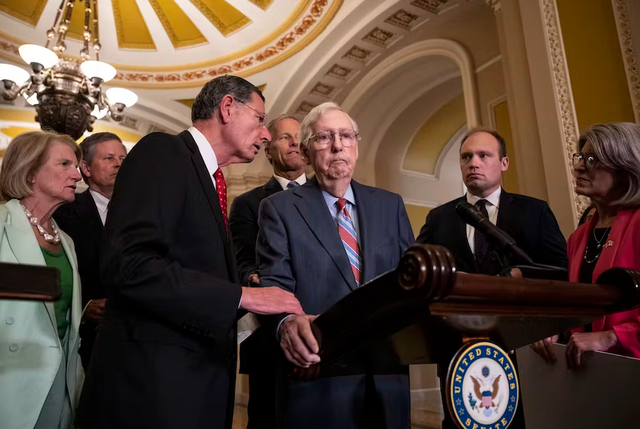
Biden, who turns 81 in November, is the oldest US president in office. He is among a growing number of politicians who are aging, including 81-year-old Republican Sen. Mitch McConnell. On August 30, the latter was completely blocked when a reporter asked him about his plans for re-election to office.

He was silent for more than 20 seconds, his gaze haunted, as an aide asked if he heard the question correctly. "We will need a minute" - said the aide and a few moments later removed the senator from the podium. That incident was followed by a similar incident with McConnell in July.
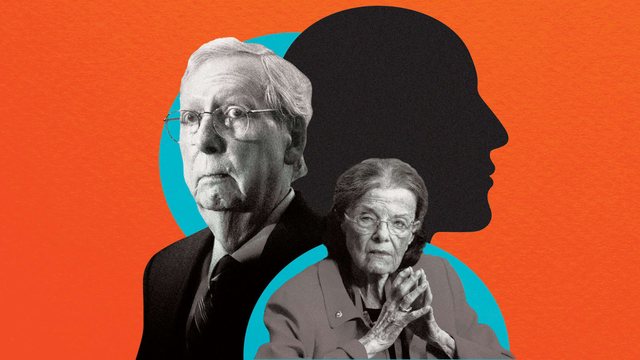
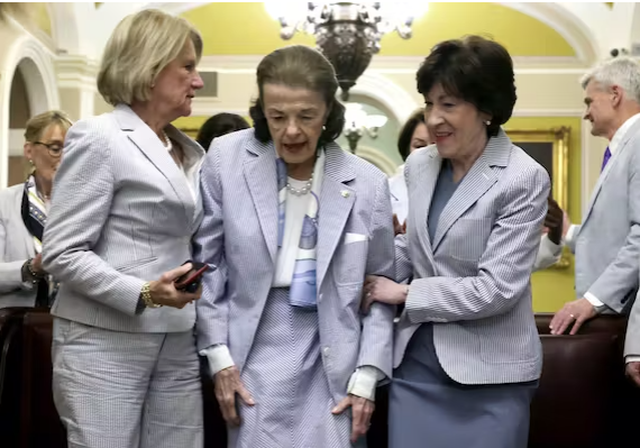
Some people — from his fellow Democrats to The New York Times' board of editors — have questioned whether McConnell and other colleagues, including 90-year-old Diana Feinstein, can get the job done, citing a number of incidents which she is included.
Feinstein began to read a prepared speech before a vote at a Senate budget hearing on July 27, while her fellow Democrat, Sen. Pat Marrej, whispered to her: "Just say yes!". Such events rightly raise the question: Can politicians be too old to serve in public office?
Should society make retirement at a certain age mandatory for elected officials who run the country, such as presidents and senators? I am a philosopher and bioethicist who studies the ethics of individual and societal aging, and these issues are at the forefront of what I study and try to answer.
Whatever one's view of the ethics of age limits for politicians, voting remains the primary way to put personal views into practice. The criteria for presidential candidates in the USA have not changed since 1789, when the Constitution was written.
In that era, the average life expectancy was about 34 years. But it was very different for people who were slaves or free. Today, the life expectancy for the average American is 79 years. But it tends to be much higher for people like politicians, who are relatively wealthy and have good health care.
In the US, a person must be 35 years of age or older to be elected president.
Must be at least 25 years old to be elected to Congress and 30 years old to serve in the Senate. The US banned age discrimination in the workplace in 1967. Should the politicians who run the country be exempt from this law?
A YouGov poll last year reported that 58 percent of Americans want a maximum age for politicians. Those who support age limits usually say that politicians holding office should not be more than 70 years old. That would make 71 percent of current senators ineligible to hold office.
It is unclear how age limits might be enforced in this area. Increasingly, people will be forced to face questions about whether a person may be too old to hold public office. People are living longer in the US, but the same is true all over the world.
Considering age limits for high-ranking politicians actually raises some ethical questions that do not have a clear answer. Staying in office despite health problems can threaten public safety. An American president has tremendous power. including the ability to launch nuclear weapons.
Members of Congress are responsible for making laws, declaring war, and controlling taxes and spending. As people age, they face an increased risk of developing chronic diseases. And the latter can interfere with daily life, and put older politicians at a higher risk of performing poorly in daily activities.
Another option besides the legal age limit is health testing or even better. Testing employees of all ages at regular intervals avoids age stereotypes. Biden undergoes an annual health checkup, and is considered "fit for the job he holds."
Should the same standard apply to Feinstein and McConnell? This raises the big question: "What if the doctors do not agree among themselves on the health and ability of a politician to stay in office?". Health checks differ from compulsory retirement.
In rich western countries, people don't retire because they can no longer work. Retirement is not related to an actual reduction in physical or intellectual abilities. On the other hand, people's health tends to decline after retirement.
Those who oppose mandatory retirement, which includes me, say that it generates negative stereotypes based on age. Experts have shown that older people are different and they separate biological aging - such as physical wear and tear on the body - from chronological aging.
In addition to stereotyping the elderly, forced retirement violates the principles of equality. People who are equally capable of performing a job deserve an equal chance to continue working, regardless of factors unrelated to job performance such as age, race, or gender identity.
But proponents of the age-based retirement thesis say that this policy treats people equally over time, since all young people will one day get old. But others disagree, insisting that the essence of equality is to create a community of equals, and that it is wrong to discriminate against older people.
People who support putting an upper age limit on the president and members of Congress have launched online signature campaigns on Change.org. But these efforts would require a constitutional amendment and have yet to gain widespread support.
Also, 2 Republican senators have submitted an amendment to the US Constitution, which will allow senators to serve only 2 6-year terms, while members of Congress only 3 2-year terms. Congress has shot down previous proposals to impose term limits.
At the state level, 16 states limit terms for legislators, but not necessarily because of age concerns. Direct age limits are being considered in South Dakota, which in 2024 will vote to amend the state constitution to set an upper age limit of 80 for congressional candidates. Since it is the government that sets the minimum age for Congress and the presidency, should there be upper limits? This question remains open. In a democracy, it is the people who decide through voting./ " The Conversation " - Translated and adapted by CNA

About 930,000 years ago, the human race was on the ver...
It is 1 o'clock in the afternoon on a summer Saturday, and...

Cheating is a complex topic, with an emotional charge, tha...

On a hot summer day in July 1954, a man arrived at Haneda ...

Fosili i një majmuni i zbuluar së fundmi në Turqi, ka nxit...

Flying is the safest way to travel. According to the lates...

When London was hit with the bubonic plague in 1665, many ...

When I heard that hospitals in the US were short of blood ...

At the Bled Strategic Forum held this week, European C...

By Ross Pomeroy "Big Think" Over time, a person's persona...
Gone are the days of old scams, with "princes" offering th...

The Boeing E-4B aircraft, also known as the "End of the Wo...

Water is the main component of our body and a fundamental ...

While intelligence is often considered a very valuable tra...

After several years full of anxiety about the backward ste...

Whether power corrupts a person—or whether a corrupt perso...

In January 1989, as a college student, I came here to marc...
It is hard to say when a crisis under a dictatorial regime...

Kur shpërtheu Lufta e Parë Botërore, qindra mijëra burra a...
By Devi Sridhar "The Guardian" In the words of singer Tay...

A 39-year-old citizen has been arrested in Lezha, after se...

CNA has launched another investigation that could lead to ...

Irfan Hysenbelliu is a businessman that we call "Irfan the...

In March 2026, CNA launched another investigation centered...

The Special Board of Appeal (KPA) decided this Monday ...

The KPA vetting decided this Thursday to dismiss the p...

Suela Salavaçi, a prosecutor in the Prosecutor's Offic...

The Special Board of Appeal reinstated the prosecutor ...

Several gunshots were reported today in the village of Gjo...

Following the successive operations carried out by the ope...

The Police Supervision Agency has seized the service weapo...

A serious incident occurred in Lushnje, where citizen IY, ...

As the year 2026 is in its second half, the world is exper...

Today, our country will be under the influence of stable a...

By noon, cloudiness is expected to prevail in almost all o...

Children without parental care, for whom alternative famil...

Ukrainian President Volodymyr Zelensky said Russia wants t...

Iran is adapting and enhancing the capabilities of its bal...
Serbia's Minister of State Administration and Local Self-G...
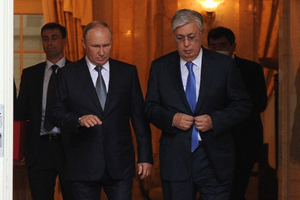
Kazakh President Kassym-Jomart Tokayev shared some critici...
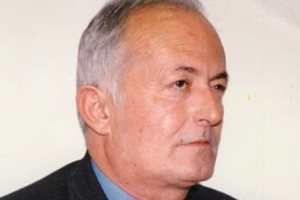
Two windows, a century of history and the metaphysics of p...

In my research at the Central State Archives, specifically...

At a time when industrial products are increasingly taking...

Trust among people is not just a three-syllable word. It c...

This Saturday, one US dollar is bought for 81.7 lek and so...

War, weather and supply disruptions could send gas prices ...
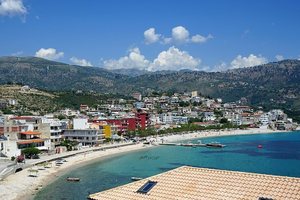
The number of active enterprises in Albania continued to g...
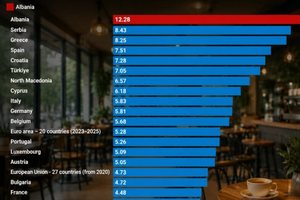
In Albania, the bar-cafe has long become an almost unique ...