

Albania between the unstoppable exodus, demographic decline and hope from the tourist boom of recent years
It is 1 o'clock in the afternoon on a summer Saturday, and...


About 930,000 years ago, the human race was on the verge of extinction. Our ancestors had begun to spread across the planet. They walked upright on 2 feet and used simple stone tools. A few millennia ago they were around 100,000. Not much compared to now, but enough to continue surviving in a hostile world.
But something happened and the population dropped to only 1,200 individuals. About 98 percent of the entire population disappeared. Then, for 117,000 years - or 1,170 centuries - that small population, which today could easily fit inside a nightclub, managed to avoid complete extinction.
Then, 800,000 years ago, the population grew to about 30,000 individuals. This story took place during the Paleolithic period, a time of great change, when some animals replaced others in certain waves from east to west, and when climate change caused problems for our ancestors to the point that they almost disappeared.
That demographic crisis increased the evolutionary pressure on the few people who survived, and led to changes such as the fusion of two chromosomes into something very similar to our own genome. It also gave rise to a new species, possibly the common ancestor between Neanderthals and Denisovans and the now-extinct Homo Sapiens.
The last human species outlived all others, perhaps helping to drive them to extinction. So today's 8 billion people are descended from those 1200 survivors. According to a recently published article in Science, this is essentially what happened back then.
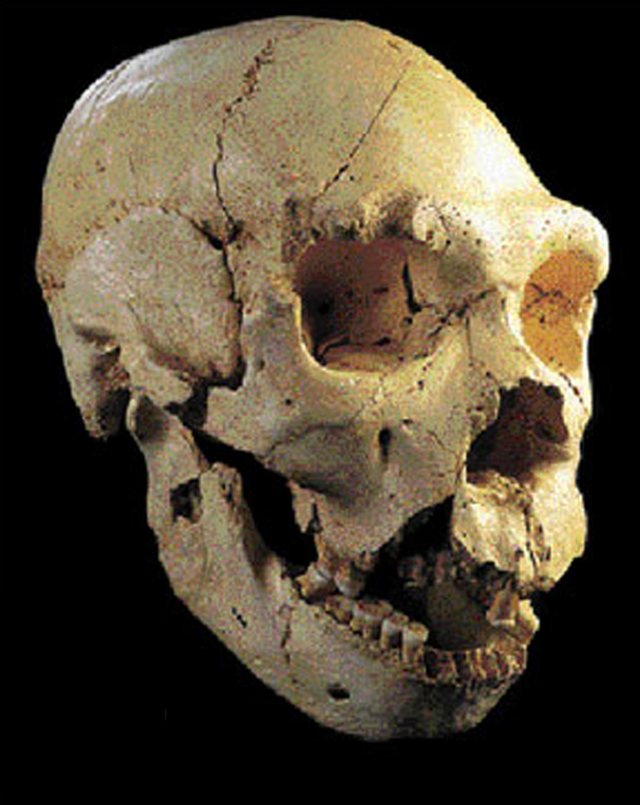
The study is the fruit of collaboration between researchers from China, Italy and the US. For reasons still unknown, almost no fossils have been found from that era, a little more than 900,000 years ago, with rare exceptions such as skull fragments discovered in Gombore in Ethiopia and the remains of Homo ancestors in Atapuerka, Spain .

So in the absence of bones, scientists worked with a technique called FitCoal, which makes it possible to find out what happened to the population then by studying the genome of today's people. They used the genome sequences of 3,154 people from around the world. And in their analysis, they also discovered the crisis when the human population was left with only 1,280 individuals that could reproduce. With so few alternatives, interbreeding became widespread, and the effects of that loss of diversity can still be seen today.
Megjithatë, siç sugjerojnë autorët, ai moment i vështirë mund të ketë krijuar një specie të re, ndoshta Homo heidelbergensis, paraardhësi i përbashkët i Neandertalëve, Denisovans dhe Homo Sapiens. Për të shpjeguar rënien e madhe të popullsisë, autorët e studimit e vënë theksin tek ndryshimet e mëdha klimatike që zgjatën epokën akullnajore dhe shkaktuan thatësira të mëdha në rajone të gjera të planetit.
Ndërsa për të shpjeguar rimëkëmbjen, e cila filloi rreth 813.000 vjet më parë kur popullsia u rrit me 20 herë, ata flasin për kontrollin e zjarrit, prova për të cilën janë gjetur tashmë në Izrael nga 790.000 vjet më parë, si dhe një klimë më pak armiqësore, me më shumë gjah dhe perime në dispozicion për të shuar urinë.
Antonio Rozas, drejtori i Grupit Paleoantropologjik në Muzeun Kombëtar të Shkencave Natyrore të Spanjës në Madrid, e pranon se historia që del nga studimi i publikuar duket “si shumë e bukur për të qenë e vërtetë”. Sipas tij mbijetesa e një popullsie kaq të vogël për kaq shumë mijëra vjet “nuk është shumë e besueshme”, sepse “është përtej dinamikës së zakonshme të popullsisë”.
“Për një kohë aq të gjatë, rrethanat do të kishin ndryshuar, dhe popullsia nuk mund të rikuperohej. Por në përgjithësi, është e vërtetë që ajo pikë demografike kritike përkon me një fenomen, kalimin nga Pleistoceni i Poshtëm në atë të Mesëm, që është dukuria e zëvendësimit të faunës në nivel planetar, sidomos në Euroazi”- përfundon ai.
Even Antonio Salas, specialist in population genetics at the University of Santiago de Compostela (Spain), appreciates the importance of the study, but also points out the limitations of his approaches.
"One can speculate that during the critical period, the phenomenon of the separation of species may have occurred that also brought the last common ancestor] common with the Denisovans, the Neanderthals, with whom we separated 765,000-550,000 years ago.
But many of these phenomena have been irreversible. Many methods that detect positive natural selection are based on the carryover that exists between the selected genetic variant and those that are in a dependent relationship with it...Signs of dependence between genetic variants can be lost within 10,000 years," he emphasizes. / Adapted from CNA

It is 1 o'clock in the afternoon on a summer Saturday, and...

Cheating is a complex topic, with an emotional charge, tha...
On a hot summer day in July 1954, a man arrived at Haneda ...
Fosili i një majmuni i zbuluar së fundmi në Turqi, ka nxit...

Flying is the safest way to travel. According to the lates...

When London was hit with the bubonic plague in 1665, many ...

When I heard that hospitals in the US were short of blood ...

At the Bled Strategic Forum held this week, European C...

By Ross Pomeroy "Big Think" Over time, a person's persona...

Gone are the days of old scams, with "princes" offering th...

The Boeing E-4B aircraft, also known as the "End of the Wo...

Water is the main component of our body and a fundamental ...

While intelligence is often considered a very valuable tra...

After several years full of anxiety about the backward ste...

Whether power corrupts a person—or whether a corrupt perso...

In January 1989, as a college student, I came here to marc...

It is hard to say when a crisis under a dictatorial regime...

Kur shpërtheu Lufta e Parë Botërore, qindra mijëra burra a...

By Devi Sridhar "The Guardian" In the words of singer Tay...

To say that Aleksei Djumin has had a meteoric rise in his ...

A 39-year-old citizen has been arrested in Lezha, after se...

CNA has launched another investigation that could lead to ...

Irfan Hysenbelliu is a businessman that we call "Irfan the...

In March 2026, CNA launched another investigation centered...

The Special Board of Appeal (KPA) decided this Monday ...

The KPA vetting decided this Thursday to dismiss the p...

Suela Salavaçi, a prosecutor in the Prosecutor's Offic...

The Special Board of Appeal reinstated the prosecutor ...

Several gunshots were reported today in the village of Gjo...

Following the successive operations carried out by the ope...

The Police Supervision Agency has seized the service weapo...

A serious incident occurred in Lushnje, where citizen IY, ...

As the year 2026 is in its second half, the world is exper...

Today, our country will be under the influence of stable a...

By noon, cloudiness is expected to prevail in almost all o...

Children without parental care, for whom alternative famil...

Ukrainian President Volodymyr Zelensky said Russia wants t...

Iran is adapting and enhancing the capabilities of its bal...

Serbia's Minister of State Administration and Local Self-G...
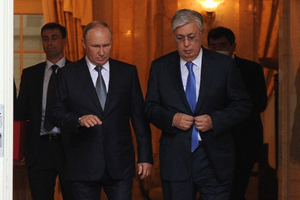
Kazakh President Kassym-Jomart Tokayev shared some critici...
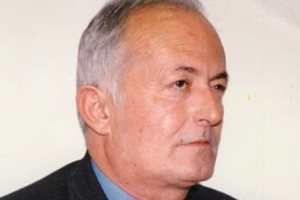
Two windows, a century of history and the metaphysics of p...
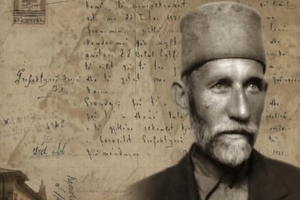
In my research at the Central State Archives, specifically...

At a time when industrial products are increasingly taking...

Trust among people is not just a three-syllable word. It c...

This Saturday, one US dollar is bought for 81.7 lek and so...

War, weather and supply disruptions could send gas prices ...
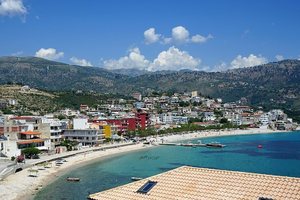
The number of active enterprises in Albania continued to g...
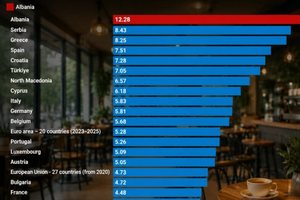
In Albania, the bar-cafe has long become an almost unique ...