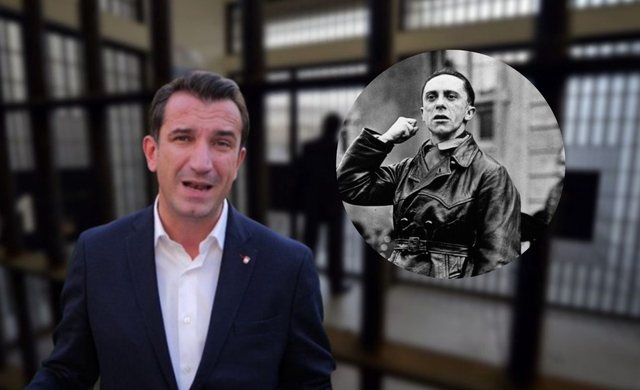
Businessman Artur Shehu breaks his silence: I am a long-time land owner in Zvërnec, I don't know the investors at all
Albanian businessman Artur Shehu spoke on the Opinion show...

Albanian businessman Artur Shehu spoke on the Opinion show...

There are moments when modern politics brings to mind the totalitarian regimes of the 20th century, through their propaganda techniques.
Albania is certainly not Nazi Germany, however, the way public communication is constructed, how perception is managed, and how critics are treated, creates strong methodological similarities with the classic manual of modern propaganda.
Goebbels, the Reich's propaganda minister, understood propaganda not as rational debate, but as an emotional instrument of domination. He said , "Propaganda must appeal to feelings rather than intellect ." So, propaganda does not aim to convince through argument, but through emotion, identification, and repetition.
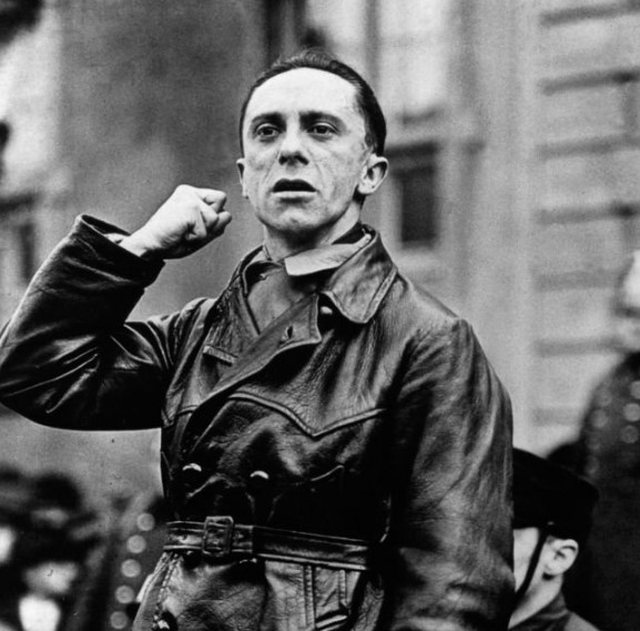
This is where the similarity with the way Erion Veliaj has been building his public image for years begins. Erion Veliaj's communication is rarely built on technical or institutional debate. Instead, he relies on emotional videos, children, trees, artists, music, optimistic chronicles and the constant aestheticization of the political figure.

Even in the face of current serious corruption allegations, the public narrative remains largely unchanged: inaugurations, smiles, colors, optimism, and motivational slogans. This is reminiscent of the propaganda method that creates a “parallel reality” where perception matters more than the crisis itself.
Goebbels openly expressed the logic of this method. “It is not propaganda's task to be intelligent; its task is to lead to success.”
So, the goal is not truth or analysis, but political effect.
In this spirit, Veliaj has consistently used simple and emotionally strong slogans: "Work, not talk", "We plant trees, they plant mud", "Tirana that doesn't stop", "Transformation", "Positivity".

These slogans are repeated obsessively in interviews, social networks, and government-run media. This was precisely one of the pillars of Goebbels' propaganda; reducing reality to a few simple messages that are repeated until they become collective perception.
Even the famous saying associated with his propaganda method , "Repeat a lie often enough and it becomes the truth," despite debates over the exact wording, sums up the philosophy of that propaganda.
Another strong similarity is the way critics are treated. Goebbels did not present opponents as people with arguments, but as saboteurs, evil people or enemies of the people. In his propaganda, the critic was delegitimized before the debate began.
The same rhetorical technique is often observed in Erion Veliaj. Instead of confronting the essence of the corruption accusations, attention is shifted to "politically motivated prosecutors", "paid media", "those who hate Tirana" or "those who want to stop the work".

So, the debate no longer focuses on the question: "are the allegations true?", but on "who is attacking?" and "what are their motives?".
This is a classic propaganda technique. Do everything you can to destroy the credibility of the critic and avoid confronting the substance.
Equally significant is the tendency to identify the political figure with the city itself or progress. Nazi propaganda presented the regime as the embodiment of Germany and any criticism of it as an attack on the nation.
In a much more modern and non-totalitarian way, even in Erion Veliaj's rhetoric, the idea that attacks on him are attacks on the transformation of Tirana or on the work done is often present. This creates an extreme personalization of politics, the leader and the public project becoming one.
Essentially, the similarity lies not in the ideology or regime, but in the mechanism that is based on emotional propaganda, sloganization, mass repetition, narrative control, delegitimization of critics, and management of public perception.
These are techniques that Goebbels systematized in the most brutal form and that today appear in modern, more sophisticated and media-driven versions, even in formal democracies. Precisely for this reason, many people, when they hear Erion Veliaj's public rhetoric, may remember a regime, but they especially remember his propaganda method. /CNA

Albania's population decline was unusual for a country not...
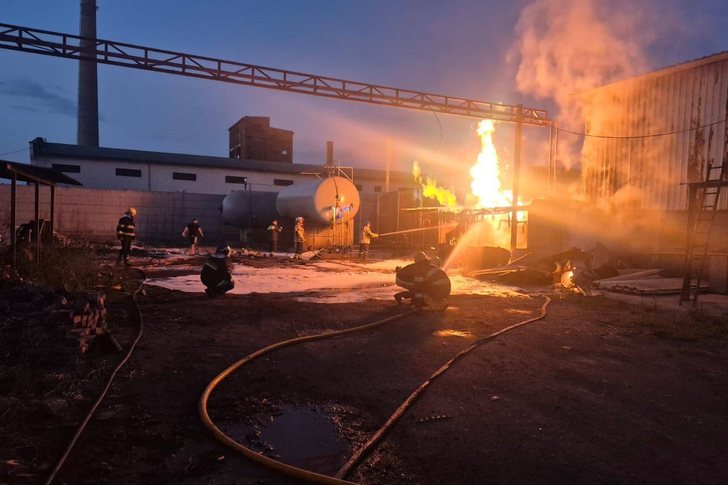
A large-scale fire engulfed a battery processing plant in ...
The former head of the Albanian Electric Power Corporation...

Qeveria shqiptare ka miratuar së fundmi një ndryshim në më...

On Friday, our country will be affected by relatively unst...
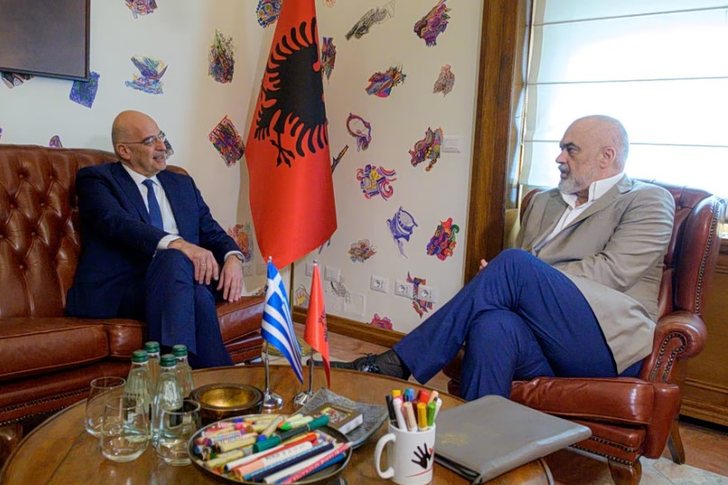
Greece is stepping up efforts to revive negotiations with ...
Journalist Ferdinand Dervishi has spoken about the disappe...
The OSCE Presence in Tirana has reacted to the consensus a...
Journalist Xhevahir Zhabina has spoken about the disappear...
Former Senior Director of the State Police, Shemsi Prençi,...
The Assembly has approved in today's plenary session the d...
Journalist Klodiana Lala spoke about the testimony of Must...
The Parliament has approved in today's plenary session the...
Journalist Artan Hoxha spoke this evening regarding the re...
The moderator of the show Të Paekspozuarit, Ylli Rakipi, d...
Mereme Sela claims that he can take the Democratic Party f...

Lawyer Saimir Vishaj has revealed on the Rudina show his b...
DP MP Belind Këlliçi, during his speech in the Parliament,...

The final report of the European Union member states on Al...

Journalist Klodian Tomorri has commented on the IBAR repor...

The next case broadcast on the show "Stop", this Thursday,...
The case published this Thursday, June 4, on the show "Sto...
The protests of recent days related to the situation in Zv...
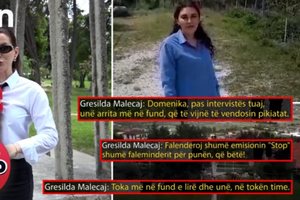
The case addressed this Wednesday, June 3, on the show "St...

The Special Board of Appeal (KPA) decided this Monday ...

The KPA vetting decided this Thursday to dismiss the p...

Suela Salavaçi, a prosecutor in the Prosecutor's Offic...

The Special Board of Appeal reinstated the prosecutor ...
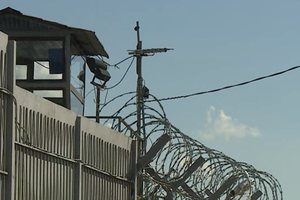
A convict was found dead today in the premises of the Pris...
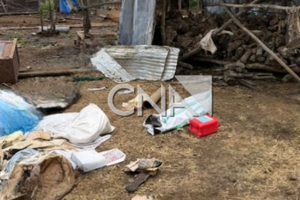
Several images provided by CNA show the area where this mo...

A quantity of explosive material exploded this morning at ...
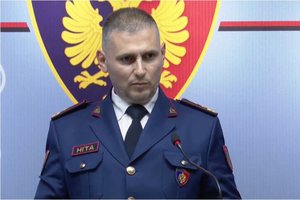
The Head of the State Police, Skënder Hita, expressed his ...

For many children and teenagers, the long summer holidays ...
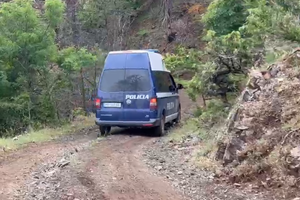
Witnesses in Lozhan, Maliqi, have shared details from the ...

Albania is facing an unprecedented demographic transition,...

On Thursday, our country will be affected by unstable weat...
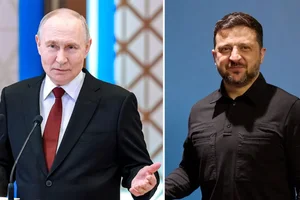
Russian President Vladimir Putin said the war in Ukraine c...
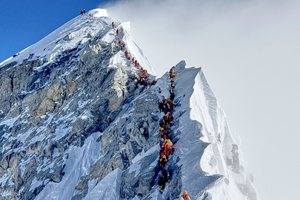
An extraordinary story of survival has been recorded in Ne...
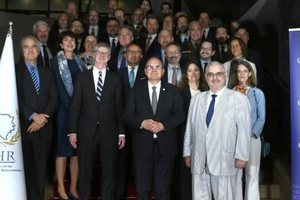
The Peace Implementation Council in Bosnia and Herzegovina...
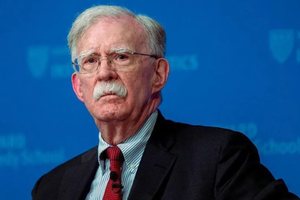
John Bolton, the former national security adviser to US Pr...
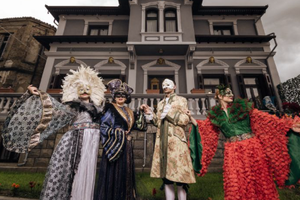
Korça is ready to open the summer season with one of the c...
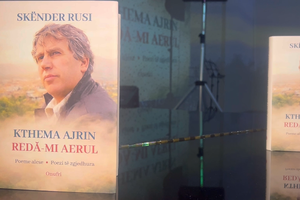
Two years after his passing, the renowned Korçë poet Skënd...
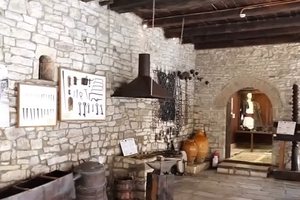
The Ethnographic Museum of Berat has opened its doors to v...
The story of Harilla Bakalli is one of the most chilling t...
The government aims to transform the country's industrial ...

Kursi i këmbimit të euros me lekun ka rënë më tej këtë jav...

Profit margins in the construction sector have increased s...

The Transparency Board, at its meeting today, decided to i...