They hired Muçi Shaljanin/ The court sentences two former AMP officials
The Tirana Court has issued a ruling for two former AMP of...

The Tirana Court has issued a ruling for two former AMP of...
Shkeljet dhe abuzimet e Agim Ismailit, në kohën që drejtonte Drejtorinë e Përgjithshme të Burgjeve janë të panumërta. Një raport qindra faqësh i KLSH-së ka nxjerrë në pah zullumet e shumta të kryera nga Agim Ismaili. CNA, përmes disa shkrimeve ka treguar se si Agim Ismaili, si drejtor i Burgjeve përmbyti IEVP-të me ilaçe të skaduara, futi ushqime pa standarde duke vënë në rrezik jetën e të dënuarve, abuzoi me procedurat tenderuese për produktet ushqimore dhe firmosi tender për rikonstruksionin e një godine që vetë e kishte shpallur jofunksionale. Të gjitha faktet e dokumentuara në raportin e Kontrollit të Lartë të Shtetit tregojnë gjithashtu se si skandalet pas të cilave qëndron Agim Ismaili kanë pasur dhe pasoja të rënda ekonomike. Shkeljet e kryera nga ai kanë sjellë shpenzimin e miliona lekëve pa efektivitet. Në raportin e dalë nga auditimet e KLSH-së në burgje, është kërkuar dhe shkarkimi nga detyra i Agim Ismailit për shkak të abuzimeve të shumta të tij. Këto shkelje të listuara njëra pas tjetrës të kryera nga Agim Ismaili si drejtues i Burgjeve, përbëjnë një dosje për SPAK.
4 artikuj për këtë temë.

Agim Ismaili's abuses, when he was the director of prisons, seem to have no end. A report by the Albanian Supreme Audit Office has highlighted the abuses and violations committed by Agim Ismaili.
CNA has shown through several articles how Agim Ismaili, as director of prisons, flooded the prisons with expired medicines, how he introduced substandard food, putting the lives of prisoners at risk, abuses with tendering procedures for food products and now finally the next scandal has to do with a tender with the object "Reconstruction of the Vaqarr warehouses".
The winning economic operator of this tender was "Doksani-G" shpk with a value of 4,530,393 lek including VAT, with a work schedule of 4 months. From the audit of this tender, it was found that the Detention Building that was to be reconstructed is an out-of-function building.
By Transfer Order of the General Director of Prisons, there are no longer any detainees in this building, because they were moved to the premises of the "Jordan Misja" Penitentiary Institution.
The verification at the facility revealed that, in this building, only one person was serving an alternative sentence.
"From the audit of the procurement procedure with the object "Reconstruction in Vaqarr warehouses" and based on the Procurement Contract no. 2619/7 dated 10.06.2019 concluded between the CA of the DPB with the winning economic operator "Doksani-G" shpk, with a value of 4,530,393 lek including VAT, with a work schedule for 4 months, it was found that:
According to Chapter V (Preventive with a value of 487,996 lek excluding VAT) of the DT and the Contract, works have been partially included and completed, which consist of waterproofing, with bitumen emulsion and tar cardboard additions, on the terrace of the IEVP-Vaqarr Detention Building.
The group of auditors verified during the physical inspection on 13.01.2021 that the Detention Building is an out-of-function building since, by Transfer Order of the General Director of Prisons no. 3497/1 dated 17.04.2019, there are no more detainees in this building, who have been moved to the premises of the "Jordan Misja" Penitentiary Institution since April 2019. The verification at the facility resulted in the fact that, in this building, only 1 person was serving an alternative sentence," the report states.
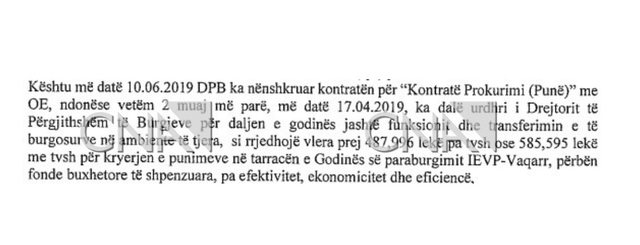
Thus, Agim Ismaili, in clear violation, signed the contract for the reconstruction of the building for which he had signed the order for its decommissioning.
As a result of this abuse, the report emphasizes that the amount of 487,996 lek excluding VAT or 585,595 lek including VAT, are funds spent ineffectively.
"Thus, on 10.06.2019, the DPB signed the contract for the "Procurement Contract (Work)" with the EO, although only 2 months ago, on 17.04.2019, the order of the General Director of Prisons was issued for the decommissioning of the building and the transfer of prisoners to other facilities, as a result of which the value of 487,996 lek excluding VAT or 585,595 lek including VAT for the performance of works on the terrace of the IEVD-Vaqar Detention Building constitutes budgetary funds spent, without effectiveness, economy and efficiency," the report states.
All of these facts mentioned above in the report of the Supreme State Audit indicate the abuses and serious violations of Agim Ismaili during the time he headed the General Directorate of Prisons.
Just like introducing expired medications or turning a blind eye to the hygiene and quality of food products for prisoners, abuses of tender procedures for food products are another violation reflected in the KLSH report. /CNA
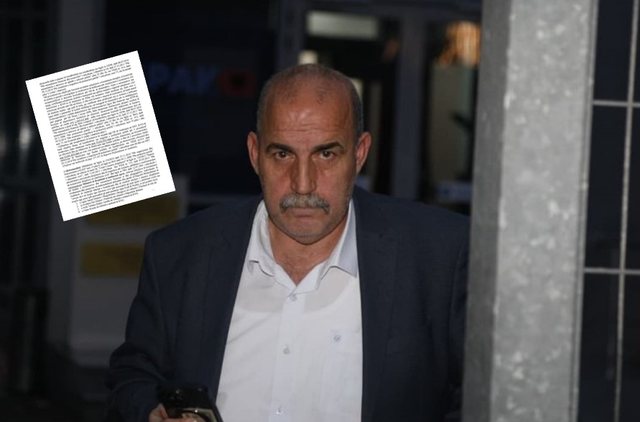
The name of Agim Ismail, the man investigated by SPAK as part of the structured criminal group that stole SPAK's investigative files, results after several violations and abuses of tender procedures while he was exercising his duties as the director of Prisons.
The scandals that resulted in the former director of prisons, Agim Ismaili, are laid out in a hundreds-page report by the State Audit Office.
These abuses and violations have had serious consequences, often endangering the lives of prisoners in prisons and also causing millions of lek in economic damage to the state.
In this report, resulting from the SAI's audits of prisons, Agim Ismail's dismissal from office was also requested due to his countless abuses.
The findings from the audits of the Supreme Audit Office, when the Prisons were run by Ismaili, showed that budgetary discipline was violated several times, with payments being made in violation of the law.
Specifically, the report states that procedures for the supply of food products have been found to contain shortcomings, weak controls, receipt of goods from third parties without verifying whether or not they meet the required criteria, etc.
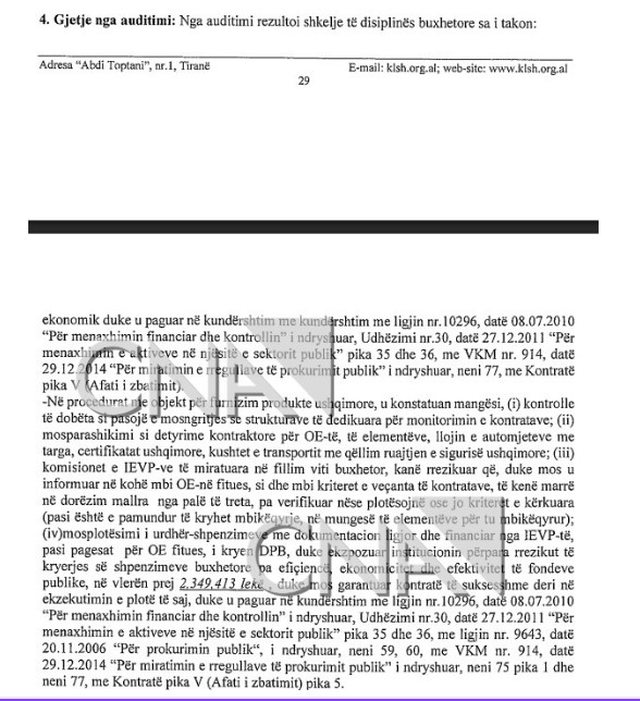
“ The audit resulted in a violation of budgetary discipline as regards: economic, being paid in violation of Law No. 10296, dated 08.07.2010 "On financial management and control" as amended, Instruction No. 30, dated 27.12.2011 "On asset management in public sector units" points 35 and 36, with Council of Ministers No. 914, dated 29.12.2014 "On the approval of public procurement rules" as amended, Article 77, with the Contract, point V (Implementation deadline).
In the procedures for the supply of food products, deficiencies were found, weak controls as a result of the failure to establish structures dedicated to monitoring contracts; failure to foresee as contractual obligations for EOs, the elements, the type of vehicles with license plates, food certificates, transport conditions in order to maintain food safety; the commissions of the IEVPs approved at the beginning of the budget year, have risked that, by not being informed in time about the winning EO, as well as about the specific criteria of the contracts, they have taken delivery of goods from third parties, without verifying whether or not they meet the required criteria (since it is impossible to carry out supervision, in the absence of elements to be supervised); failure to complete expenditure orders with legal and financial documentation by the IEVDs, after payments to the winning EO were made by the DPB, exposing the institution to the risk of making budget expenditures without efficiency, economy and effectiveness of public funds, in the amount of 2,349,413 lek, not guaranteeing a successful contract until its full execution, being paid in violation of Law No. 10296, dated 08.07.2010 "On financial management and control" as amended, Instruction No. 30, dated 27.12.2011 "On asset management in public sector units" points 35 and 36, with Law No. 9643, dated 20.11.2006 "On public procurement", as amended, articles 59, 60, with Council of Ministers No. 914, dated 29.12.2014 "On the approval of public procurement rules" as amended, article 75 point 1 and article 77, with Contract point V (Implementation deadline) point 5 ", the report states.
These scandals, as highlighted above, have also had serious economic consequences. According to the report, these consequences are related to the announcement of economic operators as winners, in violation of public procurement rules for 5 tender procedures. This type of violation has resulted in the ineffective spending of around 127 million lek.
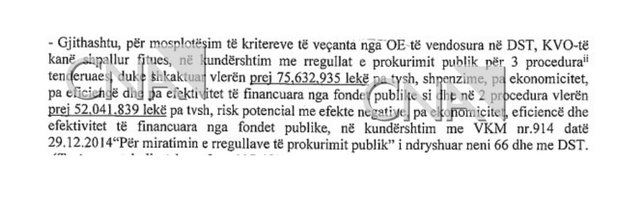
"Also, for failure to meet specific criteria by EOs set out in the DST, the KVOs have declared winners, in violation of the public procurement rules for 3 tender procedures, causing a value of 75,632,935 lek excluding VAT, expenses, without economy, without efficiency and without effectiveness financed from public funds, as well as in 2 procedures a value of 52,041,839 lek excluding VAT, potential risk with negative effects, without economy, efficiency and effectiveness financed from public funds, in violation of the Council of Ministers No. 914 dated 29.12.2014 "On the approval of public procurement rules" amended article 66 and with the DST" , the report adds.
As a result of these abuses and serious violations found in the field of procurement and financial management, as well as the individual responsibilities identified and reflected in the Final Audit Report, the SAI, in its report to the Ministry of Justice, requests that disciplinary measures be taken "from reprimand to dismissal" for several employees, headed by the main abuser, Agim Ismaili.
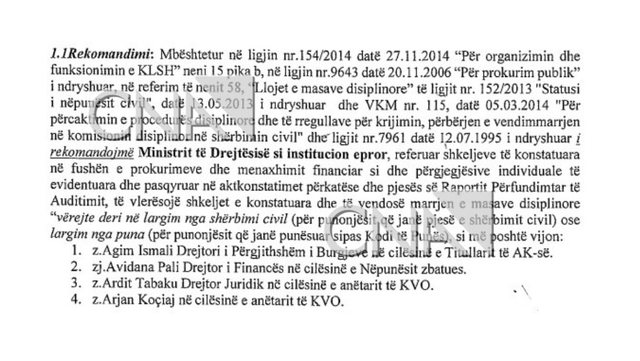
“Based on Law No. 154/2014 dated 27.11.2014 "On the organization and functioning of the SAI" Article 15 point b, in Law No. 9643 dated 20.11.2006 "On public procurement" as amended, in reference to Article 58, "Types of disciplinary measures" of Law No. 152/2013 "Status of civil servants", dated 13.05.2013 as amended and Council Decision No. 115, dated 05.03.2014 "On determining the disciplinary procedure and the rules for the establishment, composition and decision-making in the disciplinary commission in the civil service" and Law No. 7961 dated 12.07.1995 as amended, we recommend to the Minister of Justice as a superior institution, referring to the violations found in the field of procurement and financial management as and individual responsibilities identified and reflected in the relevant findings and part of the Final Audit Report, to assess the violations found and decide to take disciplinary measures "remarks up to dismissal from the civil service (for employees who are part of the civil service) or dismissal from work (for employees who are employed under the Labor Code), as follows:
1. Mr. Agim Ismali, General Director of Prisons in the capacity of Head of the CA.
2. Ms. Avidana Pali, Director of Finance, in the capacity of Implementing Officer.
3. Mr. Ardit Tabaku, Legal Director in the capacity of member of the KVO.
4. Mr. Arjan Koçiaj in the capacity of member of the KVO ", it is stated in the recommendations of the ALSHI.
Everything evidenced and listed above clearly shows the massive abuse of Agim Ismaili, at the time he headed the General Directorate of Prisons.
The hundreds-page report of the Supreme Audit Office has shown violations in tender procedures, abuses of office by Agim Ismail, who in this report "nakedly" reveals that during his tenure as director of prisons, successive scandals were committed, starting with the expired medicines with which he "flooded" the prisons, continuing with the quality of food for prisoners that was completely outside the standards and now with violations of tender procedures.
In fact, these violations committed by Agim Ismaili as head of the Prisons constitute a file for SPAK. /CNA
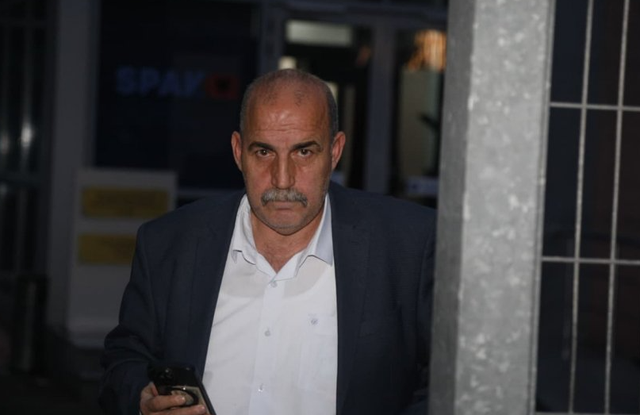
Former Director of Prisons, Agim Ismaili, has emerged as part of a scandal related to the time he was at the head of the General Directorate of Prisons.
His abuses and violations, during the time he was at the head of this institution, are countless, while their consequences are frightening.
These violations become more serious when they affect not only the proper functioning of this institution, but directly the lives of prisoners.
The next scandal, which involves Agim Ismaili, the man investigated by SPAK as part of the structured criminal group that stole SPAK's investigative files, has been highlighted in a report of hundreds of pages by the Supreme State Audit Office.
When Agim Ismaili headed the Prisons Institution, procedures were established for the supply of food products (dairy, bread and meat) to prisoners in prison institutions.
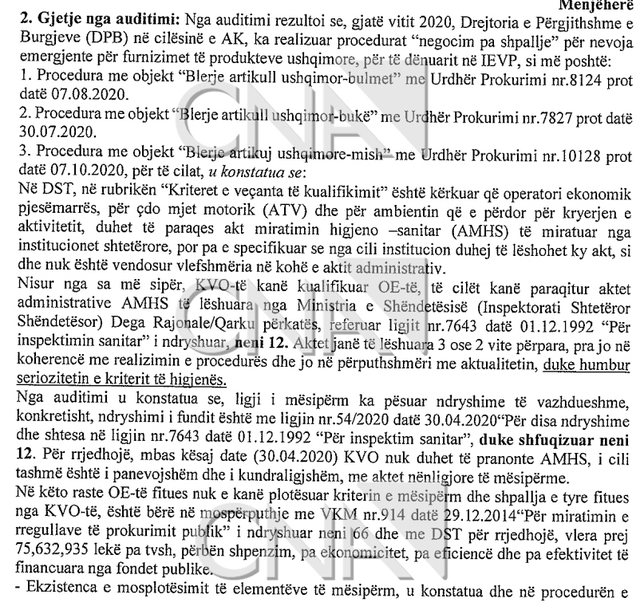
In the standard documents of this tender, a special qualification criterion is that the operator, for each motor vehicle and for the environment it uses to carry out the activity, must submit a hygiene and sanitary approval act approved by state institutions.
The scandal appears precisely here: The act in question on hygiene was issued 2 or 3 years ago, therefore not simultaneously with the implementation of the procedure and not in accordance with current events, losing the seriousness of the hygiene criterion.
This act should not have been accepted because the economic operator lacked the main qualification criterion.
"Based on the above, the KVOs have qualified the EOs, which have presented the AMHS administrative acts issued by the Ministry of Health (State Health Inspectorate) Regional Branch/Relevant District, referring to Law No. 7643 dated 01.12.1992 "On Sanitary Inspection" as amended, Article 12. The acts were issued 3 or 2 years ago, therefore not in coherence with the implementation of the procedure and not in accordance with the current situation, losing the seriousness of the hygiene criterion", the report states.
Further, the ALSHI report questioned the quality of food products for prisoners in the Penitentiary Institution.
"The KVOs have acted in violation of the Decision of the Council of Ministers no. 914 dated 29.12.2014 "On the approval of public procurement rules" amended article 66 and the DST, by declaring the EO the winner, and by questioning the quality of food and animal products for convicts in the Penitentiary Institution, financed from budgetary funds", it says, among other things.
The audit found that the food did not meet the standard due to violations in the tendering procedures. The quality of food in prisons was beyond any standard. This is also confirmed by the fact that prisoners receive large amounts of food from outside.
The SAI has found that supplies may have been made by third parties without first checking certification or compliance with the criteria.
"In the procedures for the supply of food products, deficiencies were found, weak controls as a result of the failure to establish structures dedicated to monitoring contracts; failure to foresee as contractual obligations for EOs, the elements, the type of vehicles with license plates, food certificates, transport conditions in order to maintain food safety; the commissions of the IEVPs approved at the beginning of the budget year, have risked that, by not being informed in time about the winning EO, as well as about the specific contract criteria, they have taken delivery of goods from third parties, without verifying whether or not they meet the required criteria (since it is impossible to carry out supervision, in the absence of elements to be supervised)," the report states.
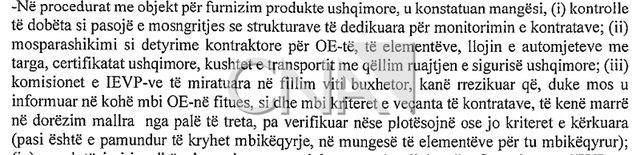
This is a scandal and abuse that, in addition to the abuse of funds, which CNA will cover in another article, has put the lives of prisoners at risk, as the report clearly states that the quality of the food used for the prisoners has been questioned./ CNA
A major scandal involving Agim Ismaili has come to light. The scandal dates back to the time when he was head of the prison institution, that is, director of the General Directorate of Prisons.
Agim Ismail's deeds, which are actually written in black and white in a detailed report by the Supreme State Audit Office, show major violations and economic damage, above all, a risk to the lives of prisoners by introducing expired medications into prisons.
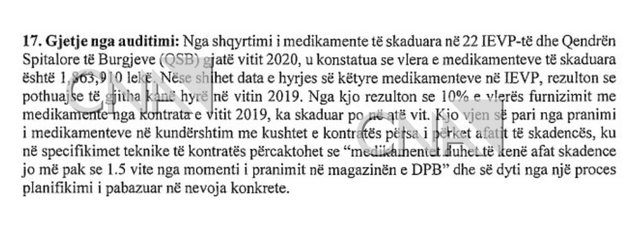
The KLSH report highlights in dozens of pages and documents that during the management of the prison institution by Agim Ismaili, the institutions serving sentences were flooded with expired medicines. Not just one institution serving sentences, but almost all the prisons, Tirana, Berat, Tepelena, etc.
What happened?
At the time when Agim Ismaili was running the Prisons, the KLSH report states that from reviewing the list of expired medications in all prisons, it is found that in almost all prisons, medications have expired in the amount that was entered, never being used, which shows that the purchases of these medications are not based on planning that stems from concrete needs.
Furthermore, this report also reveals the scandal of expired medicines being purchased.
"From the review of expired medications in 22 prisons and the Prison Hospital Center (PHC) during 2020, it was found that the value of expired medications is 1,863,910 lek. If we look at the date of entry of these medications into the prisons, it turns out that almost all of them entered in 2019. This results in 10% of the value of the supply of medications from the 2019 contract, having expired in that same year. This comes firstly from the receipt of medications in violation of the terms of the contract regarding the expiration date, where the technical specifications of the contract stipulate that 'medications must have an expiration date of no less than 1.5 years from the moment of receipt in the DPB warehouse' and secondly from a planning process not based on concrete needs. From the review of the list of expired medications in all prisons, it is found that in almost all "The prisons have expired medications in the amount that was entered, never being used, which shows that the purchases of these medications are not based on planning that stems from concrete needs ," the SAI report states.
The introduction of expired medications did not only occur in one prison in the country, but in all of them. Also, the medications were never used, so their purchase was planned without being based on the specific needs of the prisoners.
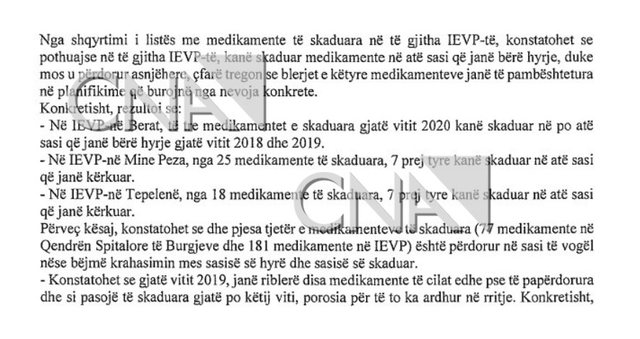
"From the review of the list of expired medications in all prisons, it is found that in almost all prisons, medications have expired in the amount that was entered, never being used, which shows that the purchases of these medications are not based on plans that stem from concrete needs. Specifically, it resulted that: - In Berat Prison, all three expired medications during 2020 have expired in the same amount that was entered during 2018 and 2019. - In Mine Peza Prison, out of 25 expired medications, 7 of them have expired in the amount that was requested. - In Tepelena Prison, out of 18 expired medications, 7 of them have expired in the amount that was requested. In addition, it is found that the rest of the expired medications (77 medications in the Prison Hospital Center and 181 medications in the Penitentiary) was used in small quantities if we compare the quantity received and the quantity expired. - It is noted that during 2019, some medications were repurchased which, although unused and consequently expired during the same year, the order for them has increased. Specifically, the medication Buscolamin in ampoules, in 2018 resulted in the purchase of 6,400 pieces and of these, 3,620 pieces expired in 2019, or about 57% of the purchased quantity. It is noted that in 2019, this medication was purchased in a quantity of 7,000 pieces, i.e. more than a year ago, although more than half of the purchased quantity expired, questioning the real needs for this item. Likewise, out of the quantity of 7,000 pieces purchased in 2019, 1,770 pieces expired in 2020. This indicates a lack of proper planning according to the needs for medications in 2019 and the use of funds without efficiency and effectiveness, contrary to the requirements of Law No. 10 296, dated 8.7.2010 'On Financial Management and Control' ," the report states.
Meanwhile, this scandalous practice has not happened just once, but repeatedly. Audits by the Albanian Supreme Audit Institution (ALSH) have shown that expired medicines have been purchased again and in larger quantities.
"It is noted that during 2019, several medications were repurchased, which, although unused and consequently expired during the same year, the order for them has increased. Specifically, the medication Buscolamin in ampoules, in 2018 resulted in the purchase of 6,400 pieces and of these, 3,620 pieces expired in 2019, or about 57% of the purchased quantity. It is noted that in 2019, this medication was purchased in the quantity of 7,000 pieces, more than a year ago, although more than half of the purchased quantity expired, questioning the real needs for this item. Also, out of the quantity of 7,000 pieces purchased in 2019, 1,770 pieces expired in 2020. This indicates improper planning according to the needs for medications in 2019 and the use of funds without efficiency and effectiveness in contradiction with the requirements of Law No. 10 296, dated 8.7.2010 'On financial management and control'. -Furthermore, we also found that the prisons do not report to the health sector in the DPB every month regarding monthly consumption, status and expiration dates, thus not implementing the order of the Director General. The above shows that the prisons do not plan according to real needs for medications, constantly exposing the institution to the risk of misuse of public funds. For the above, we conclude that the value of 1,863,910 lek, of expired medications is economic damage" , it is further mentioned in the SAI report.
All these facts highlighted in the hundreds-page report of the Supreme State Audit constitute a serious abuse and violation, regarding the way in which expired medications have been introduced into all prison institutions in Albania, seriously endangering the lives of prisoners on the one hand and revealing another dark side, that of purchasing expired or near-expiry medications. /CNA

KPP is violating national security/ IT pro...
Investigation into terror over business/ J...
Demolition of villas in Sauk/ IKMT remembe...
Another member of the Constitutional Court...
https://www.cna.al/kosova-bota/zgjeđetjet-ne-kosove-dalin-...
Ardit Bido, with several versions about th...

The hearing for "Partizan" is postponed / ...
The 40s of Mero Baze and Erion Veliaj Sep...
Appointments in the 'Rama 4' government/ H...
38 days of fraud by Erion Veliaj and Mero ...
Veliaj/Këlliçi's Dismissal: A Well-Deserve...
Metropolitan of Korça, His Grace Anastasio...
Shabani: Veliaj will not be present at the...
Fier Court sentences pedophile to 25 years...
A goal and a red card, the Lazio-Roma derb...
He received 700 euros in exchange for perm...
Veliaj and the "Berisha" case, an explanat...
Names of MPs revealed/Opposition with thir...
"The majority is planning to restrict j...
PL becomes a parliamentary group/ Democrat...

CNA has launched another investigation that could lead to ...

Irfan Hysenbelliu is a businessman that we call "Irfan the...

In March 2026, CNA launched another investigation centered...
The arrested mayor of Tirana, Erion Veliaj, with 13 charge...

The Special Board of Appeal (KPA) decided this Monday ...

The KPA vetting decided this Thursday to dismiss the p...

Suela Salavaçi, a prosecutor in the Prosecutor's Offic...

The Special Board of Appeal reinstated the prosecutor ...

Another phase of the international operation, codenamed "T...

Police have arrested a 34-year-old woman at Rinas Airport ...
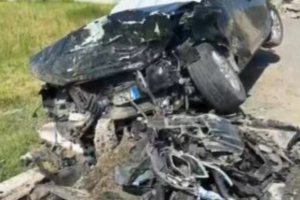
A serious accident has occurred on the Lezhë-Shëngjin axis...
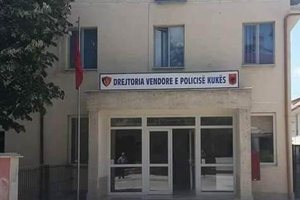
A serious incident has occurred in Morina, Kukes. Citizen...

This Wednesday, our country will be under the influence of...

All of Southern Europe will face changing weather conditio...

Albania was hit by temperatures significantly higher than ...

For the first time, Pogradec welcomed the Inter-Lake Chess...

Prime Minister Andy Burnham has announced that most bus fa...

France's parliament has passed a law to ban social media f...

US Secretary of State Marco Rubio arrived in Manila on Jul...

In the space of a few days, Ukrainian President Volodymyr ...

At a time when industrial products are increasingly taking...

Trust among people is not just a three-syllable word. It c...

Master of humor Todi Llupi has passed away at the age of 7...

The ninth edition of "MIK Festival" kicked off with one of...

Businesses will no longer be required to simply register t...

Despite economic growth and income in recent years, Albani...

This Wednesday, one US dollar is bought for 81.4 lek and s...

Construction company licenses will have a validity period ...