

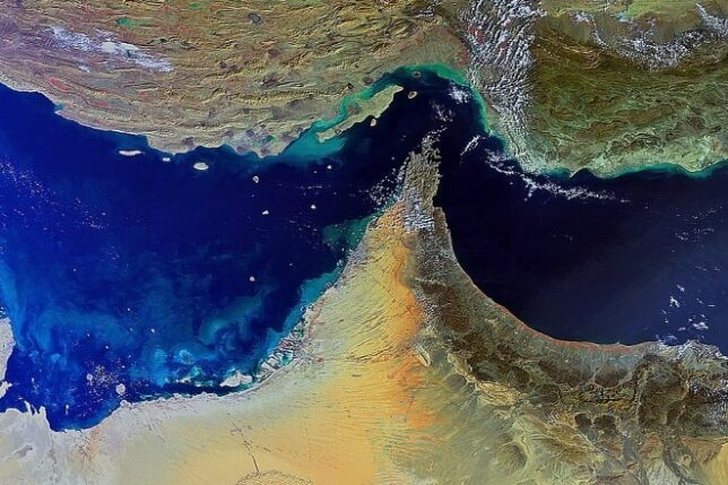
Iran offers deal to open sea lanes in Hormuz
A senior Iranian official revealed this Saturday that Iran...


Weeks of American and Israeli bombings, as well as sanctions and restrictions, have hit Iran hard, but it may be geology that will ultimately force Tehran to make concessions in its ongoing confrontation with the United States.
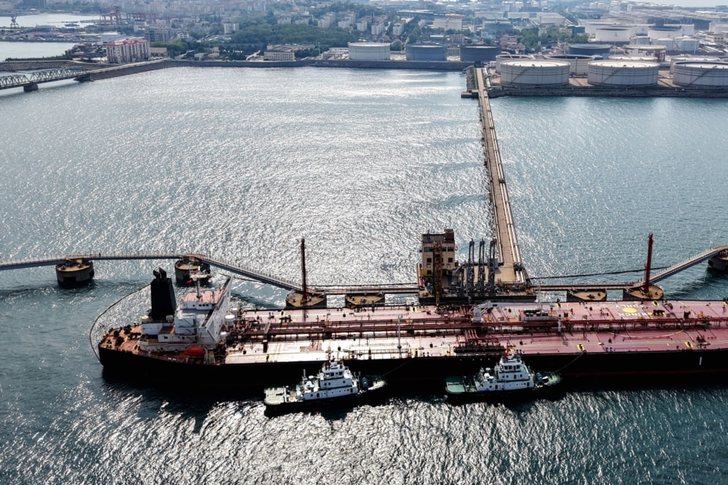
As the US naval blockade of Iran nears its third week, data from shipping and industry watchers shows that tankers have been unable to transport Iranian crude through the Strait of Hormuz to markets in Asia.
This means that Iran's oil storage facilities are filling up rapidly, and its time is limited before it is forced to halt production.
This is the problem for Tehran, analysts say, at a time when it is trying to withstand US pressure to negotiate a peace deal.
"This creates more of a geological impact than anything else related to how the oil is extracted," Stephen Innes, managing partner at SPI Asset Management, a foreign exchange and commodities advisory firm, told Radio Free Europe (RFE/RL).
Once the valves are closed, "the oil tends to fall to the bottom of the tank. So it becomes sticky and thick and it takes a lot of force to get it back up," he said.
The consequence, he added, could even be "game over" for the sector.
“The whole process of increasing the pressure and successfully getting [the oil] back out of the well can take maybe a year…. A lot of people think it’s just the end of production because it’s going to be too expensive [to restart],” Innes said.
A research note published by Goldman Sachs on April 23 noted that “the share of production from locations with relatively low reservoir pressure is estimated to be higher in Iran and Iraq than elsewhere in the [Persian] Gulf.”
The note, which examined oil sectors across the Gulf, said the recovery in oil production levels "may only be partial after a prolonged shutdown."
Mehdi Moslehi, a UK-based Iranian consultant who has worked in the oil sector for a decade, agreed that the duration of any disruption to oil production would be important.
"If production in a well stops for a short period, let's say from a week to two or a maximum of three weeks, then it can be put back into operation," he told REL's Radio Farda.
"But if a well remains shut in for a long period, especially because oil wells in southern Iran mostly have high sulfur content and depending on how old the well is, there will be serious problems. The reservoir pressure can drop," he explains.
Of course, Iran may not need to halt production. But data released this week shows that it is now in a race against time.
A recent report from Kpler, a cargo and shipping analytics company, said that "no confirmed tankers have left the US blockade zone" since Washington began enforcing the blockade on April 13.
"Some tankers passed through the Strait of Hormuz, but were unable to bypass the US blockade, which is located further south between the Gulf of Oman and the Arabian Sea," the report said.
This is why Iran's oil reserves are filling up.
Kpler estimated that Iran has about 12 days of oil left before its tanks are full. Some analysts have given a time window of 2-3 weeks.
"Earlier, we could say that time was on the side of the Islamic Republic. But now we can no longer say that," Kpler analyst Homayoun Falakshahi told Radio Farda. "The rules of the game have become somewhat balanced."
Iran's blockade of the Strait of Hormuz, hindering oil exports from other Gulf countries, is also putting pressure on it. It has led to a surge in oil prices and hit the supply chain of the global economy, affecting not only oil but also gas and other vital commodities.
As this continues, the blow to global markets is also growing.
"For now, this is a game of endurance, to see which side gives more in the short term.... Prices around $100-110, even up to $120 per barrel are still levels that the global economy can sustain. However, if the Strait of Hormuz is closed in the coming days or weeks, prices are likely to rise further," Falakshahi said.
On April 29, Brent crude rose sharply to $115 per barrel after a report in The Wall Street Journal that US President Donald Trump had told aides to prepare for a "prolonged" blockade.
Meanwhile, Iran is looking at other ways to ease pressure on storage. There are discussions about shipping oil by train to China, Iran's biggest customer. But that would be more expensive and in smaller quantities than tanker shipping, and would therefore have limited impact.
Iran's next step could be further escalation.
Many other Gulf producers have been able to ease the storage pressure facing Iran by using other routes, such as Saudi Arabia's East-West pipeline to the Red Sea. Amid the decline in production, this has helped keep pumps running and pressure in mainlines.
Iran could mobilize its proxy forces, the Houthis in Yemen, to attack this route, targeting shipping in the Bab al-Mandab Strait, through which about 10 percent of the world's seaborne oil passes.
But that would also involve risks for Tehran. In recent weeks, the United States has increased its large military presence in the region and signaled the possibility of renewed fighting.
"The feeling in the market is that something will be achieved on the deal front within the next three weeks," Innes said.

A senior Iranian official revealed this Saturday that Iran...
China will not comply with United States sanctions on five...

Ukrainian President Volodymyr Zelenskye has shared a warni...
A senior commander of the Islamic Revolutionary Guard Corp...

Legendary Formula 1 driver and Paralympic champion Alessan...

United States President Donald Trump has told the US Congr...

The United States has decided to reduce its military prese...
US President Donald Trump said his country could be in a b...
Two months after the United States launched its offensive ...

Shtetet e Bashkuara të Amerikës dhe Venezuela duket se kan...
US President Donald Trump has announced new tariffs on the...
Iran has sent a new proposal for talks with the US to Paki...

Six people have been injured in a stabbing attack at a sch...
Workers around the world today have called for peace, high...
The US government says the war with Iran is over, adding t...
The Central Election Commission in Kosovo has begun prepar...

Three US congressmen, Keith Self, Ritchie Torres and Mike ...

New security camera footage has revealed the moment a gunm...

Chancellor Friedrich Merz caused surprise and uncertainty ...

The European Union has decided to suspend payments of fina...

Irfan Hysenbelliu claims to be a big businessman, an hones...

The murder of officer Enea Mekolli in the line of duty has...

The next case broadcast on the show "Stop", this Thursday,...

The case published this Thursday, June 4, on the show "Sto...

The Special Board of Appeal (KPA) decided this Monday ...

The KPA vetting decided this Thursday to dismiss the p...

Suela Salavaçi, a prosecutor in the Prosecutor's Offic...

The Special Board of Appeal reinstated the prosecutor ...

A 38-year-old man was arrested today near the Kamza turnof...

A money changer in Durrës lost 60 thousand euros after bei...
The 6 citizens captured in Dubai, members of criminal grou...
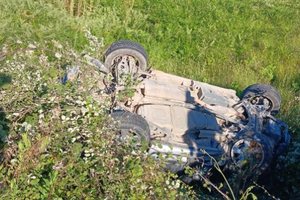
A serious accident occurred on the Kardhiq-Delvinë axis, i...

Today our country will be affected by stable weather condi...

For many children and teenagers, the long summer holidays ...

Albania is facing an unprecedented demographic transition,...

On Thursday, our country will be affected by unstable weat...

Leaders of the European Union and Western Balkan countries...

On the eve of the EU-Western Balkans summit, Germany and F...

Russian President Vladimir Putin said the war in Ukraine c...

An extraordinary story of survival has been recorded in Ne...

Korça is ready to open the summer season with one of the c...

Two years after his passing, the renowned Korçë poet Skënd...

The Ethnographic Museum of Berat has opened its doors to v...
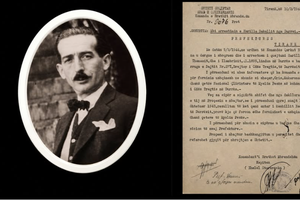
The story of Harilla Bakalli is one of the most chilling t...

Despite years of efforts at regional cooperation and free ...

Albania is the country with the highest level of severe ma...

This Friday, one US dollar is bought for 81.3 lek and sold...
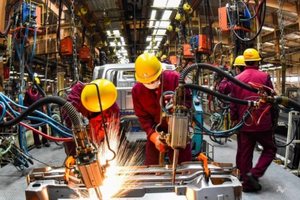
The government aims to transform the country's industrial ...