



At the end of July, during archaeological excavations near Bydgoszcz in Northern Poland, the remains of a child who lived about 400 years ago and who had special characteristics were found: his body was buried in a boat and on the left wrist was
placed a kind of large padlock.
This discovery is very unique for the young age of the deceased, but is not unusual in itself. The particular position of the burial and the presence of padlocks or other unusual objects are among the typical elements of what we sometimes hear called "vampire graves".
These objects were thought to be suitable to prevent supposed supernatural beings or evil spirits from possessing dead people and bringing them back to life, as was believed at the time to be the case. The little boy's body was found in a cemetery discovered 18 years ago under a sunflower field in the village of Pien, where about 100 ancient graves have been found in recent years.
The researcher from the department of medieval history at the Nicolaus Copernicus University in the city of Toru who is leading the excavations, Dariush Polinski, explained that it was a cemetery for poor people, or what he called "abandoned souls excluded from society". Speaking to The New York Times, Polinski said that this is the only known case of a burial of this type involving a child in Europe. However, there are several examples of adult remains buried with similar precautions.
In August 2022, the remains of a young woman were discovered in the same cemetery, who was also buried with a padlock on her big toe and a sickle between her chest and head. The causes of her death are not clear, but the sickle was supposed to cut her throat if she revived and tried to rise from the grave. Meanwhile, in Luzino, near the city of Gdansk, in the northernmost part of the country, a mass grave containing the remains of 450 people who lived in the 19th century and were buried in similar ways was discovered in June. Among other things, about 1/5 of the bones had bricks near their heads, arms
and legs, while some had severed heads, which were placed between their legs.
Maciej Stromski, the archaeologist in charge of the dig, explains that at the time it was thought that if a family member of a dead person died immediately after the relative's funeral, he might be a vampire. For this reason, after the burial, the body was exhumed and the head was cut off, to be placed between the legs.
Similar burials have been observed in other areas of Poland, as well as in Slovakia, Hungary, Austria and Romania. All Eastern European countries. The key and padlock, as well as the supine position, which was supposed to trap the resurrected dead, are characteristic of an apotropaic burial, that is, aimed at warding off evil. While they were often labeled "vampire cemeteries" or "anti-vampire" burials, they were mostly used for people who for one reason or another were considered strange, different, or unfortunate. Vampires, perceived as fantastical and immortal creatures that feed on the blood of human beings, are well-known figures worldwide.
The typical vampire that has been depicted in literature and cinema - with a frightening appearance - owes mainly to the novel "Dracula" by the Irish writer Bram Stoker. In fact, he is very different from the demons of Slavic folklore from which he also derives as a myth. In the collective imagination, vampires are a specific type of reanimated creature that feeds on the blood of humans, infecting them. On the other hand, in Polish folklore, very similar creatures called upiór (upir) and strziga, have existed since the Middle Ages.
These spirits could occupy the bodies of dead people to then torture living beings or animals, sometimes drinking their blood, and sometimes devouring their flesh and bones. In general, Eastern European folklore imagined them as beings who resurrected the bodies of dead people and who spread disease, death, and destruction.
As Stacey Abbott, author of a book on the history of legends about vampires and zombies in the 21st century, explains, in reality these terms denoted people who for some reason were considered "different", or who did not adhere to the norms of the society of the time.
Bethan Briggs-Miller, an expert in folklore and historian of paranormal phenomena, recently told the Washington Post that for these reasons they could not be buried in a regular cemetery, nor in a hallowed ground, for fear of their return. in life, resurrected by evil spirits.
To prevent this, nails or padlocks were placed on their corpses. In some cases, people pierced their bodies with wooden sticks and chopped off their legs and arms, or after exhuming them, they cut off their heads or burned them. Ebot cites as an example the case of the woman buried with a sickle around her throat, which according to him could have been isolated from her social group because of a physical deformity, for whatever habit was considered "immoral", or simply one of the prejudices many related to her gender.
Polinski also seems to agree with this, according to which these people were probably excluded from society because they were not baptized, died by suicide, or exhibited behavior considered strange. Among other things, it was believed that evil spirits could possess the souls of those who died early from epidemics. It does not seem a coincidence that most burials of this type in Poland date back to the 17th century, a period which Polinski has defined as "a century of wars, crises and an extremely harsh climate, like a kind of ice age".
On the other hand, the function that these ancient spirits had was the same as that of other entities present in cultures around the world: they were blamed for misfortune or disease at a time when viruses and bacteria were not yet known and when there was no scientific or understandable explanation for many of the things that were happening./ Adapted in Albanian by CNA







Finally there is a date, 2030, for the Europe of the futur...
President Joe Biden was "fine" according to White House Co...
About 930,000 years ago, the human race was on the ver...
It is 1 o'clock in the afternoon on a summer Saturday, and...
Cheating is a complex topic, with an emotional charge, tha...
On a hot summer day in July 1954, a man arrived at Haneda ...
Fosili i një majmuni i zbuluar së fundmi në Turqi, ka nxit...
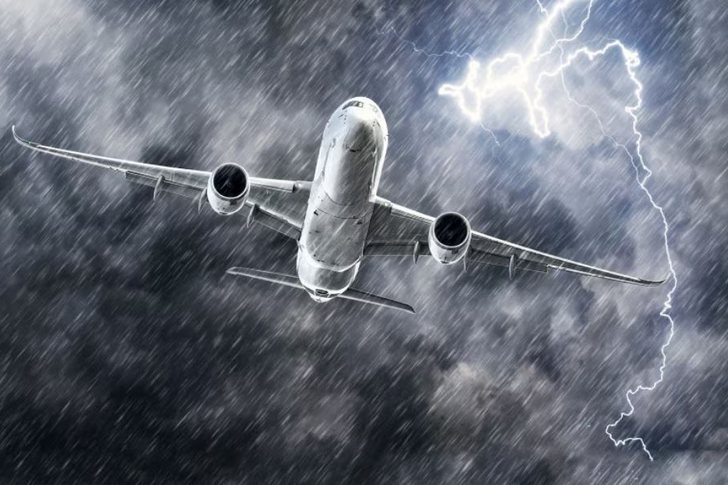
Flying is the safest way to travel. According to the lates...

When London was hit with the bubonic plague in 1665, many ...

When I heard that hospitals in the US were short of blood ...

At the Bled Strategic Forum held this week, European C...

By Ross Pomeroy "Big Think" Over time, a person's persona...

Gone are the days of old scams, with "princes" offering th...

The Boeing E-4B aircraft, also known as the "End of the Wo...

Water is the main component of our body and a fundamental ...

While intelligence is often considered a very valuable tra...

After several years full of anxiety about the backward ste...
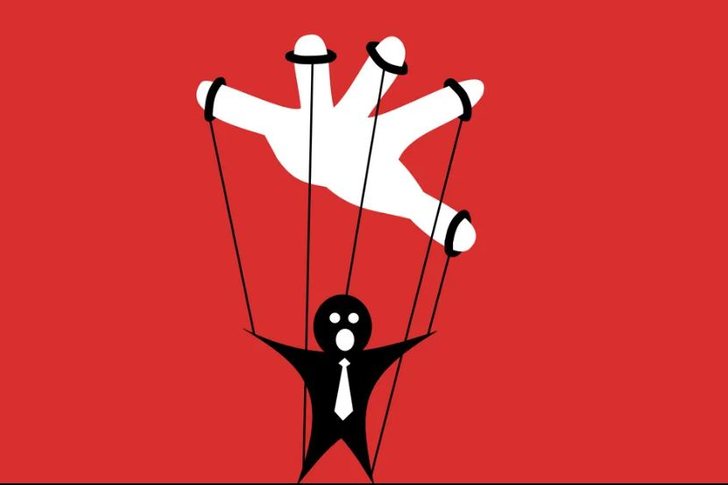
Whether power corrupts a person—or whether a corrupt perso...

In January 1989, as a college student, I came here to marc...
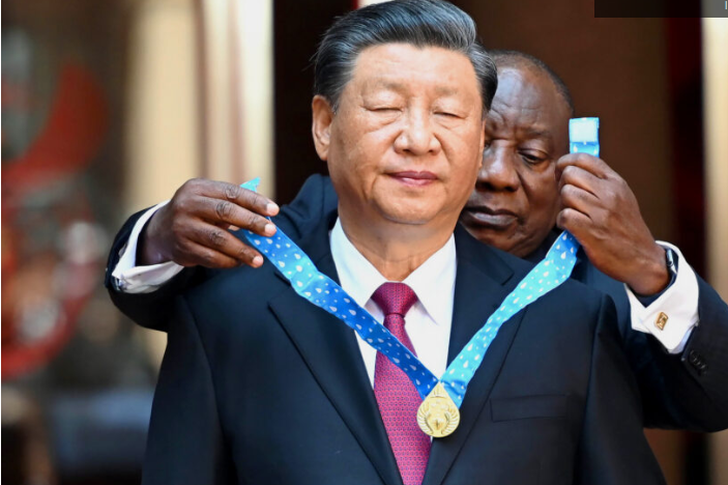
It is hard to say when a crisis under a dictatorial regime...
A 39-year-old citizen has been arrested in Lezha, after se...

CNA has launched another investigation that could lead to ...

Irfan Hysenbelliu is a businessman that we call "Irfan the...

In March 2026, CNA launched another investigation centered...

The Special Board of Appeal (KPA) decided this Monday ...

The KPA vetting decided this Thursday to dismiss the p...

Suela Salavaçi, a prosecutor in the Prosecutor's Offic...

The Special Board of Appeal reinstated the prosecutor ...
Several gunshots were reported today in the village of Gjo...
Following the successive operations carried out by the ope...
The Police Supervision Agency has seized the service weapo...
A serious incident occurred in Lushnje, where citizen IY, ...

As the year 2026 is in its second half, the world is exper...

Today, our country will be under the influence of stable a...

By noon, cloudiness is expected to prevail in almost all o...

Children without parental care, for whom alternative famil...
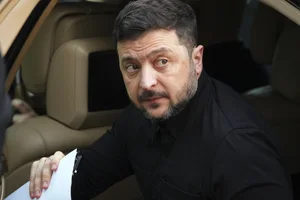
Ukrainian President Volodymyr Zelensky said Russia wants t...
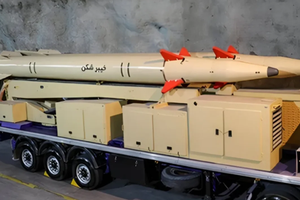
Iran is adapting and enhancing the capabilities of its bal...
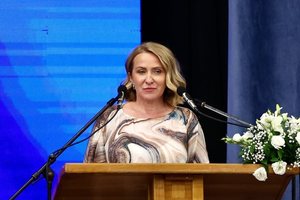
Serbia's Minister of State Administration and Local Self-G...
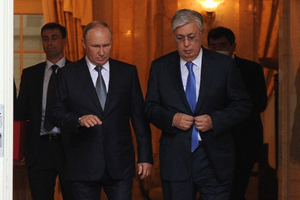
Kazakh President Kassym-Jomart Tokayev shared some critici...
Two windows, a century of history and the metaphysics of p...
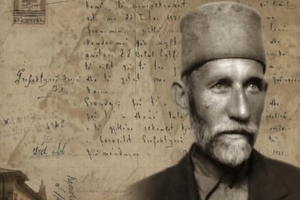
In my research at the Central State Archives, specifically...

At a time when industrial products are increasingly taking...

Trust among people is not just a three-syllable word. It c...

This Saturday, one US dollar is bought for 81.7 lek and so...

War, weather and supply disruptions could send gas prices ...
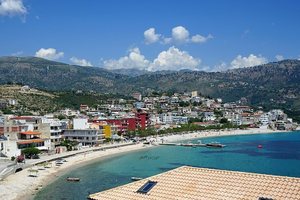
The number of active enterprises in Albania continued to g...
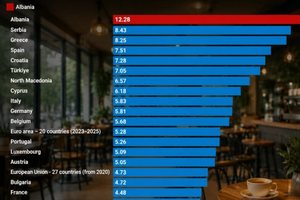
In Albania, the bar-cafe has long become an almost unique ...