

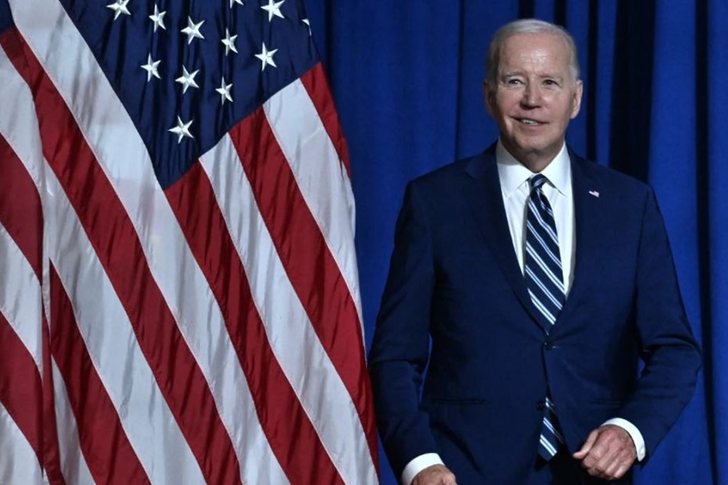
A story of betrayal / Joe Biden's team continues to negotiate for Ukraine without Ukraine
Eighteen months after Russia's complete invasion of their ...


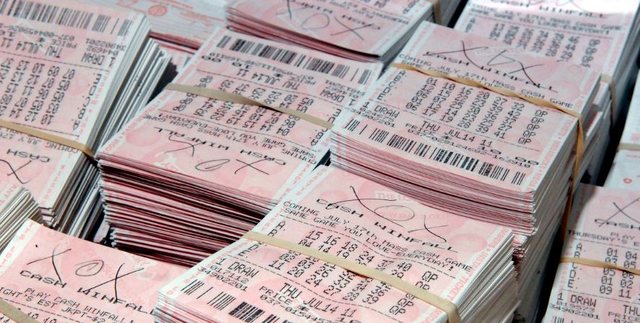
On the afternoon of February 15, 1992, state lottery officials in the US state of Virginia announced on television the number combination of the winning tickets. For several weeks, no one had been able to find all 6 winning numbers, and the first prize had grown to over $27 million (about €55 million today, taking into account exchange rates and inflation).
After a few days it emerged that not only the jackpot of 27 million, but also 6 second prizes, 132 third prizes and 135,000 other small prizes, had been won by a single group of investors from Australia.
And at the head of this group was a former employee of Romanian origin, passionate about mathematics and economics, who had been living in Australia for several years: Stefan Mandel.
After becoming famous as a serial lottery winner, he had managed to involve thousands of international investors in a gigantic and complicated effort to legally win the Virginia lottery.
Things didn't go as planned, but the group still won, giving Mandel the lion's share of the profits and a short-lived fame. Although today's lotteries are regulated and managed differently than 30 years ago, Mandel's story resurfaces from time to time when the lottery prizes get too big. It was made famous by a television program and series of articles in the 1990s. It was then re-mentioned recently by American radio's Planet Money program, whose hosts contacted Mandel in 2016. He had moved with residence in Vanuatu, an archipelago in the Pacific Ocean.
Not many details are known about Mandel's life before his period of fame. In the 1960s he was an employee in a company in the mining industry in Romania, a dark period remembered for the conditions of extreme poverty of the population, during the rule of the dictator Nicolae Ceau?escu.
Mandel's monthly salary was about 360 lei per month, just enough for a pair of good shoes. To improve his family's economic situation, Mandel tried to use his education and his passion for probability theory to find a way to increase the chances of winning the Romanian national lottery.
In fact, he did not find such a method. But he managed to convince 3 friends that by increasing the amount of tickets purchased, they would manage to "cover" a series of lottery combinations sufficient to guarantee at least the second prize. Mandel's specialty was lotteries in which each player aims to match six randomly drawn numbers in a range from 1 to 49.
This is a very popular lottery in North America and other countries, although in different variants and with different rules today than a few decades ago. If the 6 numbers on a ticket match those drawn during the draw, regardless of the order of the draw, then the player in possession of the ticket wins the jackpot.
And the probability of this happening, considering that the same number cannot be drawn twice, is 1 in 13,983,816. While the probability of matching only 5 out of 6 numbers is 1 in 54,201. Therefore, to be sure of the 6-digit combination, it is necessary to play with 13,983,816 tickets, while to shoot at least 5, it is enough to play with 54,201 tickets.
Mandel calculated the amount needed to play in a lottery in Romania in order to ensure that he would win at least the second prize, i.e. match at least 5 of the 6 winning numbers. In the end, he and his friends played far fewer combinations than needed to have that kind of certainty.
They were very lucky to get all 6 numbers right and get the first prize. So they won much more than they could be mathematically certain. In total, they earned 72,783 lei, or as Mandel himself said, "the salary of 18 years of work". Mandel soon left Romania. He continued to enter lotteries, trying to find a way to win them.
And after spending 4 years traveling around Europe, he moved permanently to Australia. He never found any method other than the only known way to secure the first prize: to buy a lottery ticket for every possible combination of numbers.
Of course, as Mandel himself explained to the Romanian business newspaper Bursa in 1994, not all lotteries could be profitable from the player's point of view. In most cases, today as then, the hypothetical amount to be spent to play all possible combinations exceeds the value of the prize many times over.
There is also an inevitable margin of unpredictability. However, many organizations and countries where lotteries exist have long introduced laws, rules and forms of player health protection that prevent a single player from spending more than a certain amount.
He solved this problem by convincing hundreds of investors to create a mutual fund. Several times the group managed to win 12 jackpots in various lotteries in Australia in the late 1980s, one of which was over $1 million and 400,000 smaller prizes.
In 1988, the group attracted the attention of the Australian government, which at one point changed lottery law to limit the amount of bets accepted in the lottery by a single player, and then by a single group of players. In 1989, Mandel's group expanded beyond Australia.
He specifically focused on 6 different lotteries in the US, including one in Massachusetts with a jackpot of $37 million and 9 million combinations, and one in Arizona with a jackpot of $11 million and 5.1 million combinations. In the end, he stopped at the Virginia lottery, which had more favorable conditions.
It allowed players to buy an unlimited number of tickets, and in late 1991, it began to have a very large jackpot, as for months no one had found the winning combination. In cooperation with an insurance company, Mandel founded the International Lottery Fund and convinced 2,560 people to buy a 10-year life insurance policy with an annual amount of $4,000.
He used that money to buy each of them a share in the Virginia lottery. Meanwhile, at a warehouse in Melbourne, it installed 30 computers and about 12 printers, with 16 full-time employees to print millions of pre-sold tickets in all possible combinations, a job that took three months.
It then spent $60,000 to ship all the tickets - about a ton of paper - to the United States, where other people were waiting for a signal to begin the rest of the necessary operations, which was actually the most complicated part of the plan. When the Virginia lottery jackpot reached $15.5 million before the Wednesday, February 12, 1992 drawing, Mandel considered it worth enough to pay off taxes, overhead and investors.
The next draw would be on Saturday: they had 3 days to play. The lottery allowed tickets to be printed at home and taken to any authorized reseller in the United States so that registration could be verified. But showing up at a gas station with a truck loaded with 1 million tickets and cash was something impossible.
Mandel then arranged with an accounting firm to transfer $9 million, the majority of the investor's fund, to a Boston bank, which converted them into checks for $10,000 each. It then signed an agreement with several retail companies in the state of Virginia to buy large quantities of tickets.
Each ticket can have up to 5 combinations, with $1 per combination. On February 12, Mandel's associate met in a large Norfolk commercial building with 35 couriers employed by Mandel, to whom he distributed all the $10,000 bills in bundles and all the money in stacks of $10,000 checks.
Couriers went around for two days asking confused clerks at more than 100 gas stations and supermarkets to register hundreds of thousands of lottery tickets. "We thought they were crazy," said the head of a gas station chain.
But on Saturday, one of the sales chains was flooded with orders and left Mandel's couriers with about 140,000 unsold tickets, for a total of about 700,000 "discovered" combinations. By the time the sale closed, of the 7,059,052 possible combinations only about 6.4 million had been played by the group.
Late on Saturday evening, February 15, the draw was made live on television: the combination of numbers drawn was among those played by Mandel's group, which won a jackpot of $27,036,142 and secondary prizes worth $900,000 other dollars.
Although there was nothing officially illegal under the laws of the United States and the state of Virginia, the win was considered fraudulent by the lottery organizers.
However, a subsequent international investigation involving the CIA, FBI and Australian Securities Commission exonerated Mandel and his investors. In the end, each of the investors who participated in the Virginia lottery earned about $1,400 in profits on their $4,000 investment. Mandel kept $1.7 million for himself. After a series of failed investments, he moved to an island in the Vanuatu archipelago off the east coast of Australia where he still lives today./ Adapted from CNA

Eighteen months after Russia's complete invasion of their ...

Illegal immigration is an intractable problem, not bec...

In the terribly complicated politics of the Western Balkan...
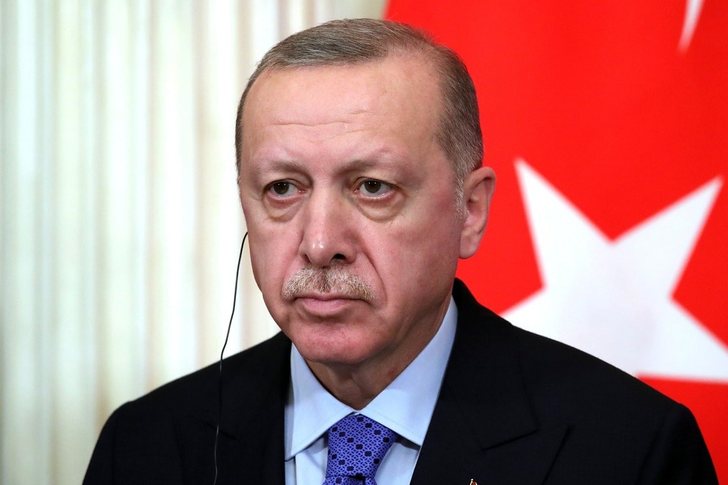
Turkish voters re-elected Recep Tayyip Erdogan for a t...
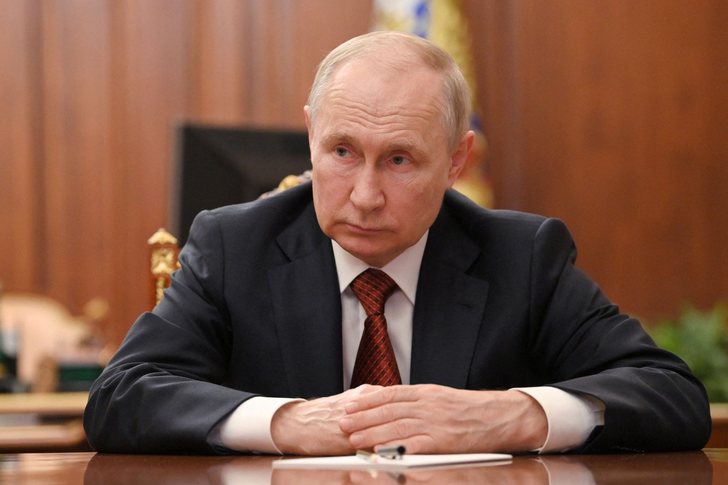
While Vladimir Putin generally shies away from overt threa...
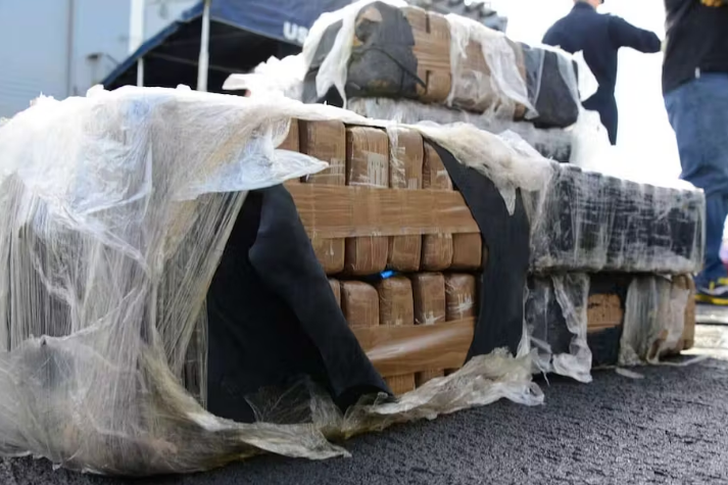
The international drug control regime was established more...
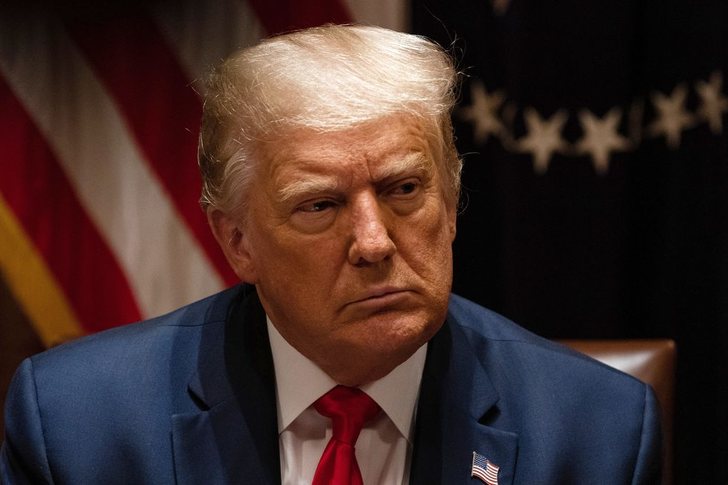
For those who want the Republican Party to move in ...

This year marks the 30th anniversary of the founding of th...

The current disorder of the international order is the res...

" These changes were made as a function of a great war a...
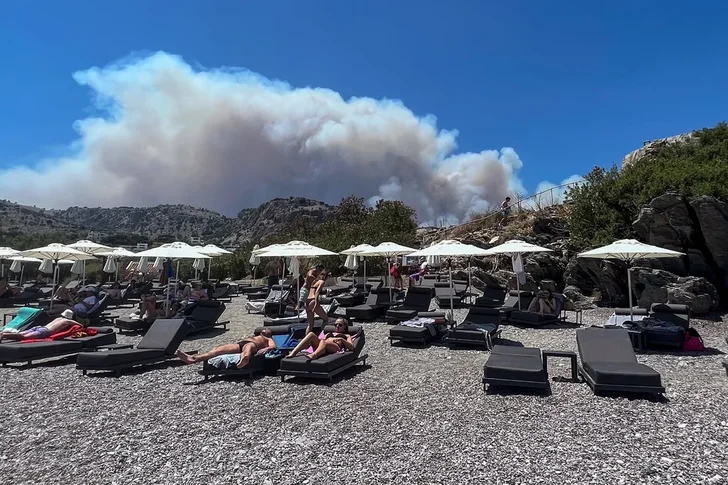
Thousands of people stranded on beaches. Reports of childr...
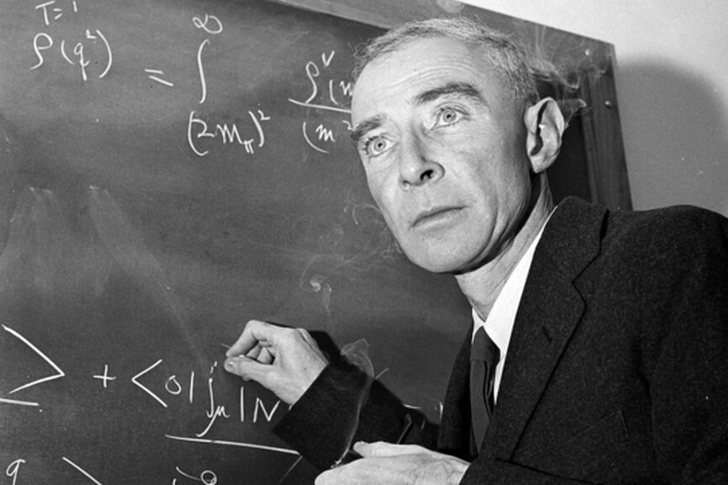
While millions are enjoying director Christopher Nolan's l...

Ukrainian President Volodymyr Zelensky (born 1978) has...

Money has always been made with health and safe businesses...

In 1944, on August 2, the Nazis killed in the Auschwit...
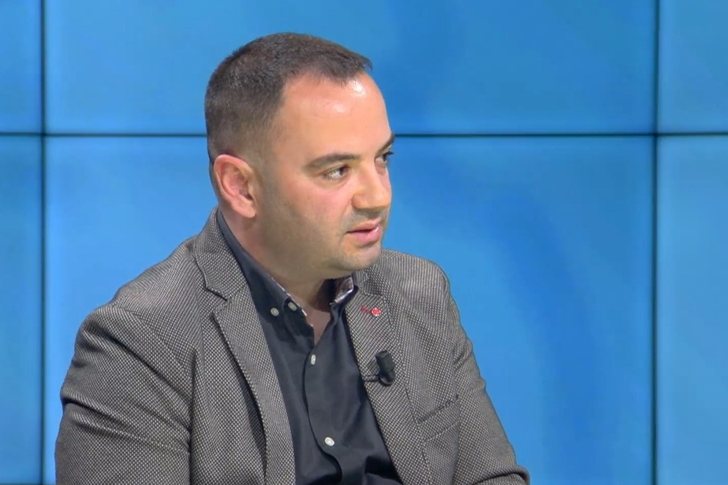
The emergency of the actor Genc Fuga and finding salvation...

The Alps span eight European countries: Germany, Switzerla...
Knowing foreign languages is increasingly important in t...

Anyone who has tried to quit smoking will tell you how har...

However Russia's war in Ukraine ends, Europe is anxiously ...

A 39-year-old citizen has been arrested in Lezha, after se...

CNA has launched another investigation that could lead to ...

Irfan Hysenbelliu is a businessman that we call "Irfan the...

In March 2026, CNA launched another investigation centered...

The Special Board of Appeal (KPA) decided this Monday ...

The KPA vetting decided this Thursday to dismiss the p...

Suela Salavaçi, a prosecutor in the Prosecutor's Offic...

The Special Board of Appeal reinstated the prosecutor ...

Several gunshots were reported today in the village of Gjo...

Following the successive operations carried out by the ope...
The Police Supervision Agency has seized the service weapo...

A serious incident occurred in Lushnje, where citizen IY, ...

As the year 2026 is in its second half, the world is exper...

Today, our country will be under the influence of stable a...

By noon, cloudiness is expected to prevail in almost all o...

Children without parental care, for whom alternative famil...

Ukrainian President Volodymyr Zelensky said Russia wants t...

Iran is adapting and enhancing the capabilities of its bal...

Serbia's Minister of State Administration and Local Self-G...
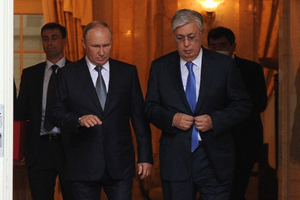
Kazakh President Kassym-Jomart Tokayev shared some critici...
Two windows, a century of history and the metaphysics of p...
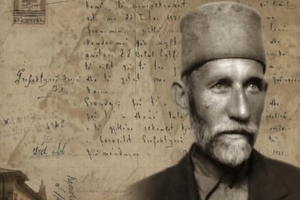
In my research at the Central State Archives, specifically...

At a time when industrial products are increasingly taking...

Trust among people is not just a three-syllable word. It c...

This Saturday, one US dollar is bought for 81.7 lek and so...

War, weather and supply disruptions could send gas prices ...
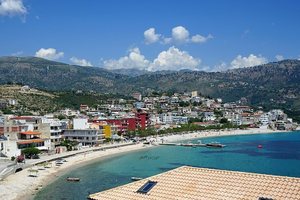
The number of active enterprises in Albania continued to g...
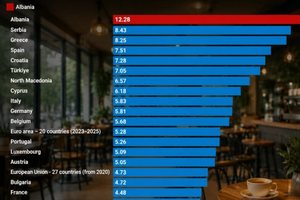
In Albania, the bar-cafe has long become an almost unique ...