

Western Balkans, in a chaotic and leaderless world order
The current disorder of the international order is the res...


This year marks the 30th anniversary of the founding of the European Union. When the Maastricht Treaty entered into force in 1993, Europeans began an experiment that was unique in history in terms of supranational governance and shared sovereignty.
The EU's common market allows the free movement of goods, services and capital between the 27 member states. While its Schengen Area means open borders between member states (and the right of free movement even in non-Schengen member states).
It gives more than 400 million people an unprecedented form of citizenship that transcends national territories. While free trade is an old idea, the free movement of people on this scale is entirely new. But to what extent is the European Union more than just a much-vaunted trading bloc?
In this regard, it is worth considering two recent cases when Europeans faced divorce: the Greek debt crisis and Brexit, each of which brought to the fore the conflicting forces fighting for control of the continent.
In the case of Greece, the EU played the role of the evil oppressor, using the threat of expulsion from the union to extract concessions from a member state. On the other hand, in the case of the United Kingdom, Brussels was the hero, stoically enduring an act of betrayal by London while defending the principles of multilateralism and openness.
But which of these episodes comes closest to describing the essential character that the EU actually has? At times, the guiding philosophy of Europe seems to be based on "home economics". Former German Chancellor Angela Merkel invoked the image of the Swabian "thrifty housewife" to justify her hard-line stance during the Greek debt crisis.
And the policy that the European Union ultimately pursued in that case had almost as much scientific basis as an old wives' tale.
We recall here that Greece's debt problems were part of a series of dominoes that fall rapidly one after the other. After the global financial crisis of 2008, Greece could no longer cover its "mountain" of debts, so it sought help from the European Union and the International Monetary Fund, which usually remains the last lender available when others refuse or give up.
While no one denies that Greece's finances were in real chaos, many analysts believe that the "troika" (the European Commission, the European Central Bank and the IMF) erred by seeking repentance for past mistakes, rather than throwing the foundations for a better economic future.
They insisted that Greece would receive the bailouts only if it adopted some very strong austerity measures, including major budget cuts, tax increases, forced privatizations and a host of pro-business reforms.
As Yanis Varoufakis, the Greek Minister of Finance, noted, the troika's fixation on debt repayment, rather than earlier guarantees of economic recovery, pushed Greece into submission to the troika's dictates. Under those conditions, the EU appeared as a bullying and vindictive actor, eager to inflict unnecessary pain and suffering on an unfortunate population.
By refusing to forgive part of Greece's debt, she appeared to have embraced the Darwinian argument that Europe would be strengthened if its weakest economic ties were eliminated (an outcome that was narrowly avoided).
At the head of the countries that advocated this harsh approach was Germany, which from its history should be well aware of what can happen when a country suffers from national humiliation. Echoing the arguments supported by Berlin, the EU insisted that rigid fiscal discipline must be maintained, despite "soft" considerations such as the predictable humiliation of the Greek people.
In the case of Brexit, the UK's status as the EU's second-largest economy made it susceptible to hubris. A narrow majority of Britons rejected the economic logic of staying in the EU, and focused on all the problems supposedly caused by immigration (such as shortages of primary school teachers and doctors).
For those who supported leaving, the benefits of barrier-free trade did not justify the perceived costs of barrier-free migration within the European Union. When the United Kingdom invoked Article 50 of the Treaty on European Union and initiated divorce proceedings, the EU joined as a community.
So the position of the EU was a reversal of its position during the Greek crisis. After 2016, it remained true to its original mandate of ensuring peace and prosperity between former enemies, justifying its selection as the winner of the Nobel Peace Prize in 2012. But the sheer eagerness with which Europe was willing to inflict suffering on Greece and ignore the voice of its people was best exploited by opportunistic Eurosceptics in the UK. They said: Why should the UK continue to care and be part of a project that allows the strong to bully the weak?
After the years 2009-2010, Greece and other member states in the south became - on the basis of wretched economic theories - what the well-known New York Times columnist, Paul Krugman, called "Austeria" (The Land of Austerity).
The United Kingdom's own dismal experience with austerity measures after 2010 played a major role in the success of the pro-Brexit referendum in 2016. The uniqueness of the European project lies in its ambition to create a new kind of connection between people and the country, based on the "idea of ??Europe".
In its own way, the Greek and British experiences show that this idea cannot be based on transactional logic alone. Previous experiments with austerity in the 1930s ultimately tore the continent apart. If the EU intends to survive for another 30 years, it will have to decide once and for all whether it wants austerity or solidarity.
This dilemma is reflected in the great debate regarding the European Commission's proposed reform of the bloc's fiscal rules. If Brussels chooses the former, it will vindicate those who believe that the European project has generally only been a marriage based on expediency rather than long-term values.
Note: Antara Haldar, Associate Professor of Empirical Legal Studies at the University of Cambridge, England./ " Project Syndicate " - Translated and adapted by CNA

The current disorder of the international order is the res...
" These changes were made as a function of a great war a...
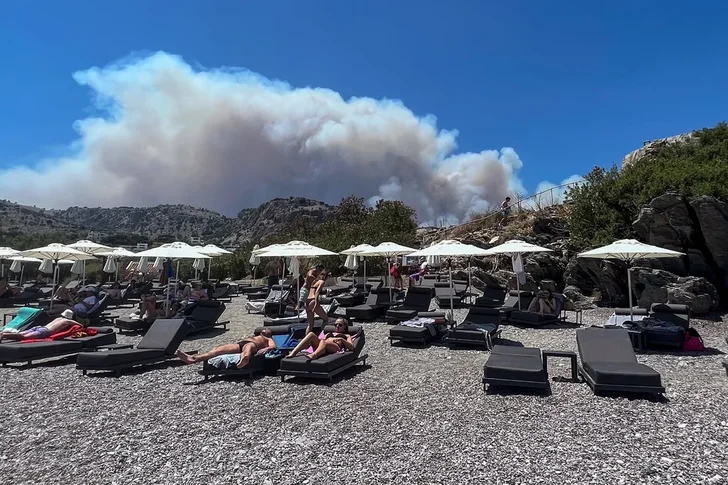
Thousands of people stranded on beaches. Reports of childr...
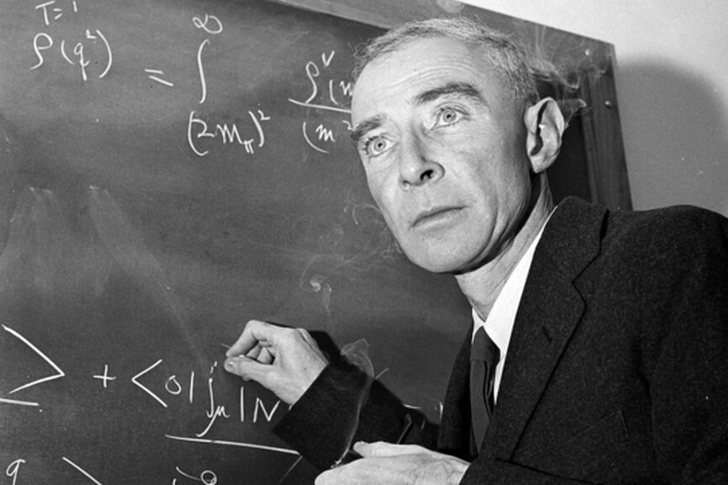
While millions are enjoying director Christopher Nolan's l...
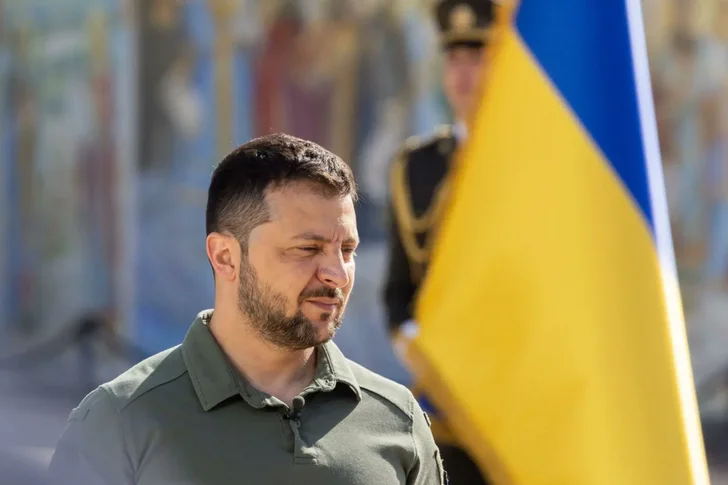
Ukrainian President Volodymyr Zelensky (born 1978) has...
Money has always been made with health and safe businesses...
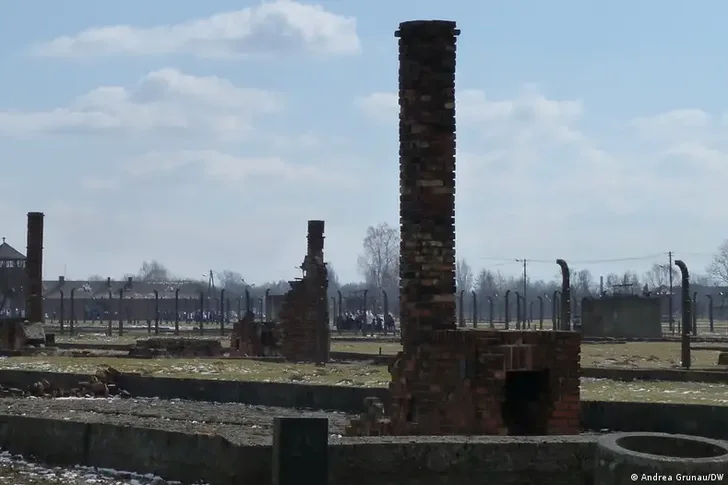
In 1944, on August 2, the Nazis killed in the Auschwit...
The emergency of the actor Genc Fuga and finding salvation...
The Alps span eight European countries: Germany, Switzerla...
Knowing foreign languages is increasingly important in t...
Anyone who has tried to quit smoking will tell you how har...
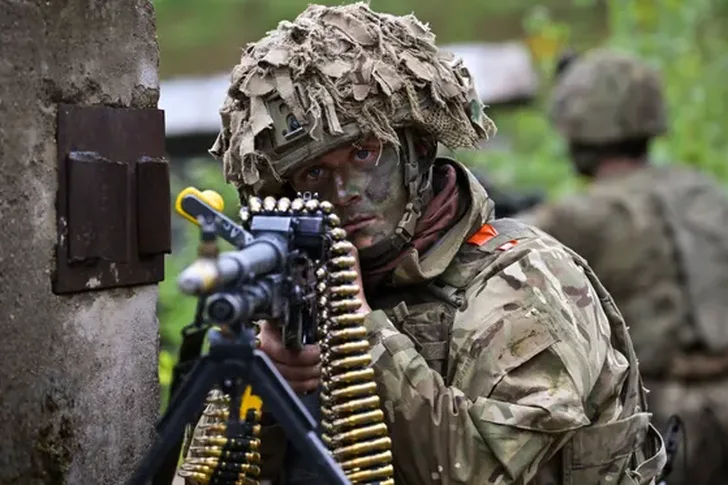
However Russia's war in Ukraine ends, Europe is anxiously ...
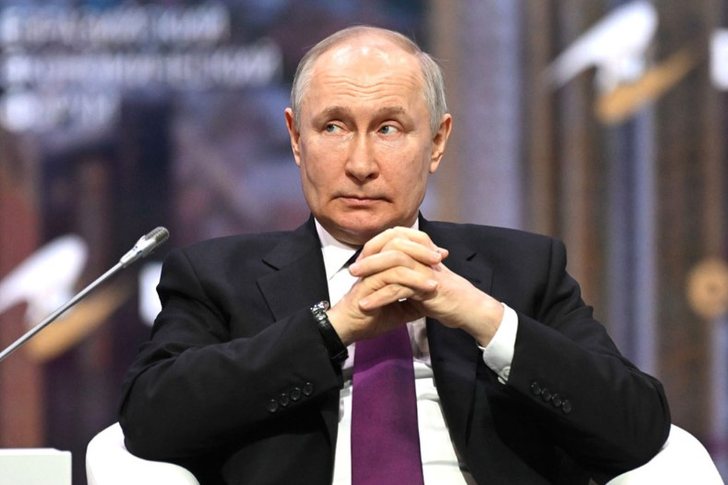
Despite the failure, Yevgeny Prigozhin's coup attempt was ...
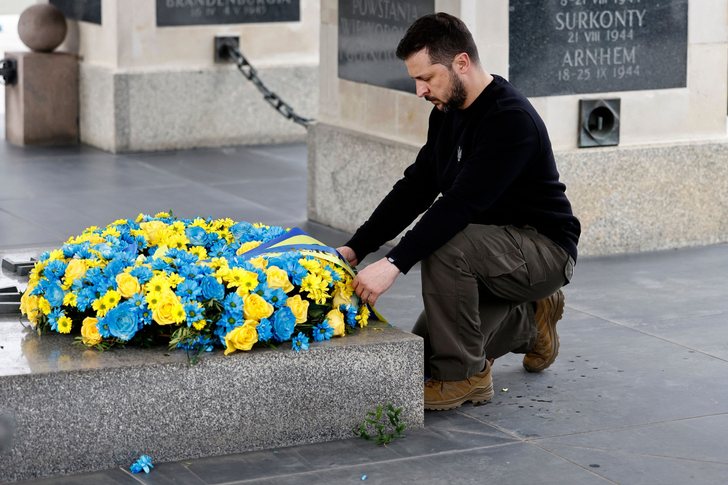
When Russian President Vladimir Putin sent his troops into...
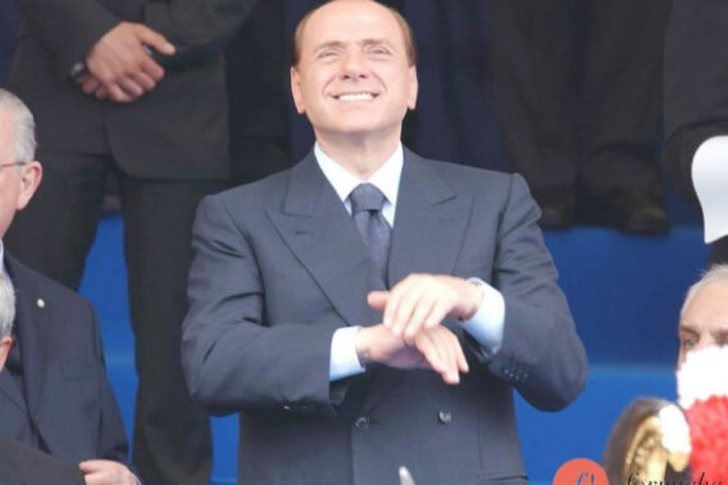
Protagonist of his farewell, as only those who have pl...
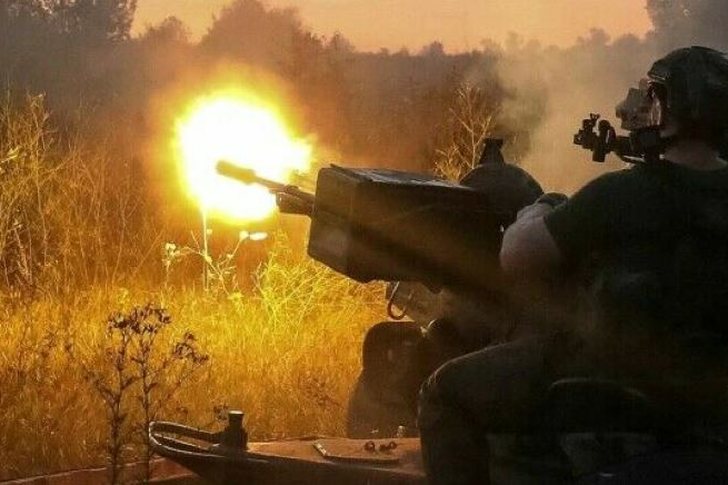
The war between Russia and Ukraine is an example of how wa...
Kim luan ndeshjen e fundit me Napolin. Mbrojtësi koreano-j...
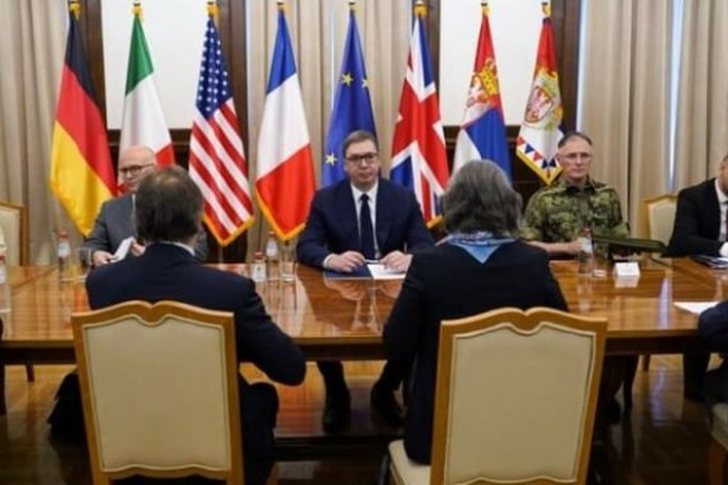
The thirst for stability and the seriousness of the clashe...
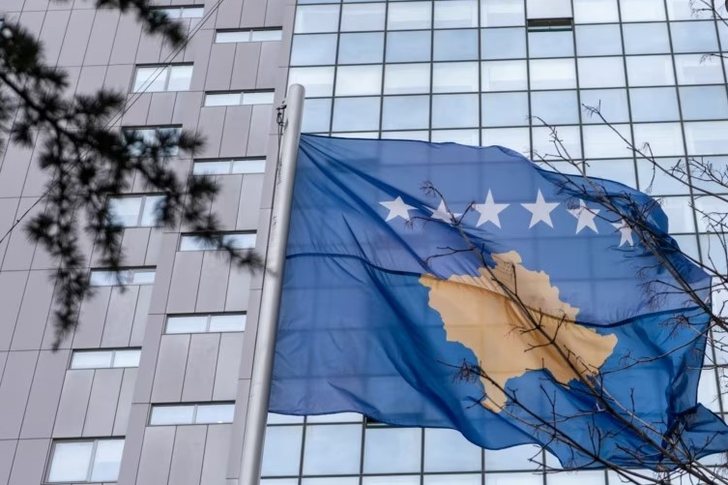
Of course, a bloody war is going on in Ukraine. But Europe...
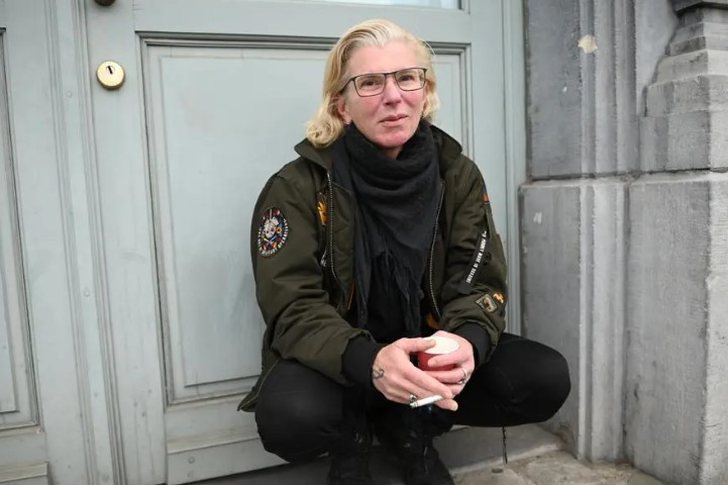
Julia Paievska is known by the nickname "Taira". She has a...
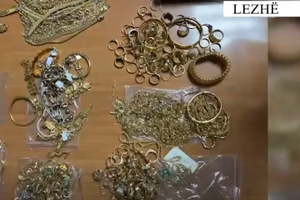
A 39-year-old citizen has been arrested in Lezha, after se...

CNA has launched another investigation that could lead to ...

Irfan Hysenbelliu is a businessman that we call "Irfan the...

In March 2026, CNA launched another investigation centered...

The Special Board of Appeal (KPA) decided this Monday ...

The KPA vetting decided this Thursday to dismiss the p...

Suela Salavaçi, a prosecutor in the Prosecutor's Offic...

The Special Board of Appeal reinstated the prosecutor ...
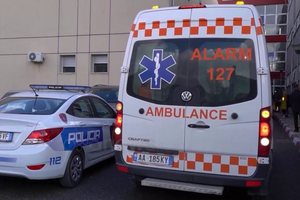
Several gunshots were reported today in the village of Gjo...

Following the successive operations carried out by the ope...
The Police Supervision Agency has seized the service weapo...
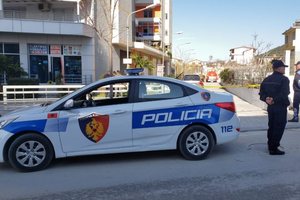
A serious incident occurred in Lushnje, where citizen IY, ...
As the year 2026 is in its second half, the world is exper...
Today, our country will be under the influence of stable a...

By noon, cloudiness is expected to prevail in almost all o...

Children without parental care, for whom alternative famil...
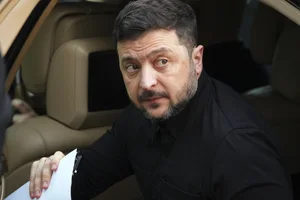
Ukrainian President Volodymyr Zelensky said Russia wants t...
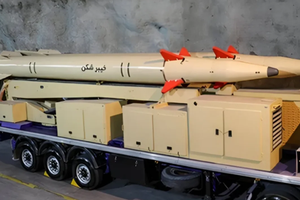
Iran is adapting and enhancing the capabilities of its bal...
Serbia's Minister of State Administration and Local Self-G...
Kazakh President Kassym-Jomart Tokayev shared some critici...
Two windows, a century of history and the metaphysics of p...
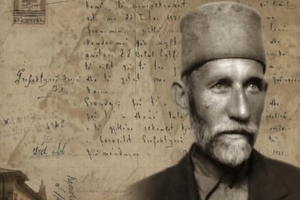
In my research at the Central State Archives, specifically...

At a time when industrial products are increasingly taking...

Trust among people is not just a three-syllable word. It c...
This Saturday, one US dollar is bought for 81.7 lek and so...
War, weather and supply disruptions could send gas prices ...
The number of active enterprises in Albania continued to g...
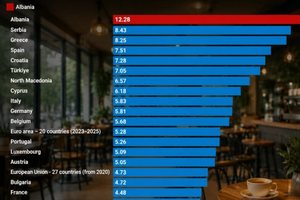
In Albania, the bar-cafe has long become an almost unique ...