


My Europe: "Evil is not omnipotent"
In 1944, on August 2, the Nazis killed in the Auschwit...


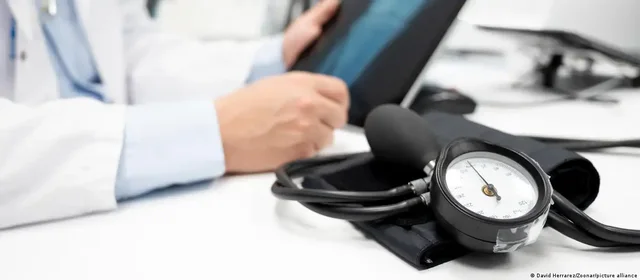
Money has always been made with health and safe businesses have been made. Therefore, for years, foreign investors have been buying more and more private doctors' clinics in Germany, which they use as investment properties. A trend that health experts and patients alike are watching with concern.
They fear that for reasons of increased profits, corporations will force doctors to perform unnecessary medical treatments. Especially treatments, which are expensive and not paid for by insurance companies, but must be paid privately in cash.
A study published in May by the non-governmental organization Finanzwende Recherche (in Albanian the Association for analyzing financial changes), an organization created in 2018 with the aim of reforming the financial markets, says that in 2022 Private Equity firms bought in Germany 174 doctor's offices, 34 more than a year ago. In 2010, the number of purchases was only 2.
According to investigations by the Norddeutsche Rundfunk (NDR) radio, such enterprises have hundreds of doctors' offices throughout Germany, so that certain chains of firms have monopoly positions in certain regions and cities. NDR went to a total of 500 hospitals that are owned by investors. The actual number of investor-owned hospitals is unknown because there are no obligations to disclose the type of ownership, something many health experts want to change.
The federal government took up this topic last year. " I demand an end to the purchase of doctors' clinics by investors who are lured by profit ," said the Social Democratic Minister of Health, Karl Lauterbach. He has announced that he will prepare a draft law, " so that these investors "not to come to doctors' offices anymore ".
In the fight he has announced to investors, Lauterbach is supported by Horst Helbig. He is the spokesman for the German Society of Ophthalmologists, specializing in ophthalmologists, and runs the ophthalmology clinic in Regensburg. Helbig thinks that investor clinics aim for pure profit.
" The goal of an investor group is 100 percent to make a profit. They don't want anything else, and at the end of the day they don't ask for anything else ," says Helbig. " Of course even a clinic that is owned by doctors wants to make money. But the main goal of doctors is medical care. "
A study done in 2022 by the independent Institute for Research and Consulting in Infrastructure and Health Issues confirms this. The study says that investor-owned clinics receive ten percent more payments than physician-owned clinics.
In Germany there is a two-tier healthcare system, which is financed by employers' and employees' social insurance contributions. Health insurance is compulsory for all people. State health insurance, which covers about 90 percent of the population, is not allowed to refuse help to anyone. The remaining 10 percent enjoy more health care through private health insurance. The entire healthcare system in Germany costs several hundred billion euros every year.
Helbig says he's noticed a tendency for new investor-owned physician clinics to not accept patients who have health insurance and focus more on profit-making patients. " Some patients are more profitable than others, some cost more money than others. We have seen that many patients whose treatment is not profitable are sent to public hospitals," the health expert tells Deutsche Wellen .
This is seen especially in eye clinics, where there are large price differences between medical treatments, some of which are not covered by health insurance. "Cataract operations (removal of the eye curtain) are well paid, while emergency interventions of any kind are paid little", explains Helbig. But even cataract operations that are difficult, for example because the curtain has advanced too much, are sent to public hospitals.
The association Finanzwende Recherche has calculated that investors make up to 20 percent profit on their properties, but only if they buy enough private clinics. The business model of the Private-Equity-Fonds type is about buying several private clinics, merging them and modernizing them also by means of loans, in order to later sell them at a profit, says Finanzwende researcher Aurora Li.
" The focus is not on operating profit, but on continuous capital flow ," Li tells Deutsche Wellen. , then this can be beneficial for other financial investors as well. And a lot of cash flow is achieved by owning a lot of doctor's clinics ."
Doubts are high if patients are not sure if their treatment does not increase profit. " Another risk has to do with the business model that these doctor's offices have, which is very risky and causes them to go bankrupt quickly. Especially when the high loan percentages cause high costs." Then, says Li , investors can close the doctor's office.
The draft law announced by Karl Lauterbach has not yet been drafted, but some doctors' associations see the matter differently from the Minister of Health. So, for example, the Association of Medical Care Center Operators points to government data, according to which there is no statistical evidence to say that medical treatment in clinics owned by investor funds is worse.
In addition, doctors who work there published a letter in May refuting Lauterbach's claim that they are not independent. "Being employed doctors we exercise our profession in the service of patients with the same passion and commitment as our colleagues in single doctor clinics or hospitals."
Because of economic burdens, even Horst Helbig is not in principle against the merger of private doctors' clinics. For example, very few young doctors have the opportunity to put the necessary investments to use. And only a few of them are willing to work 60 hours a week, necessary to open their own clinic. "Of course it can be asked to remove the bureaucracy that overloads a doctor's clinic. But I know that it is naive to think that this can really happen in Germany."/ DW

In 1944, on August 2, the Nazis killed in the Auschwit...
The emergency of the actor Genc Fuga and finding salvation...

The Alps span eight European countries: Germany, Switzerla...

Knowing foreign languages is increasingly important in t...

Anyone who has tried to quit smoking will tell you how har...

However Russia's war in Ukraine ends, Europe is anxiously ...
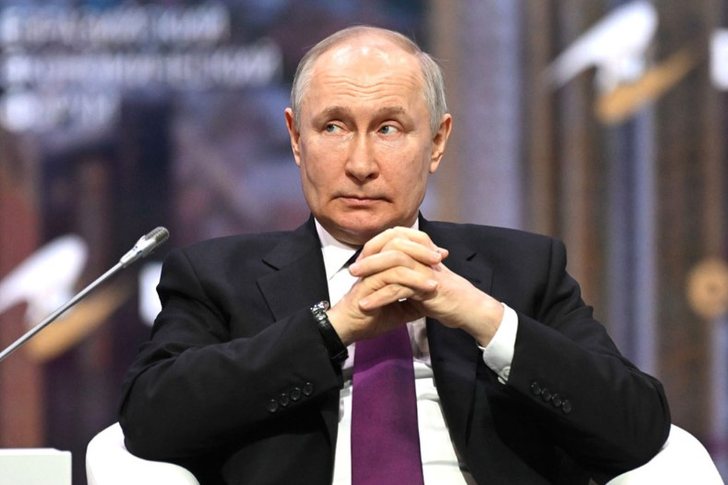
Despite the failure, Yevgeny Prigozhin's coup attempt was ...
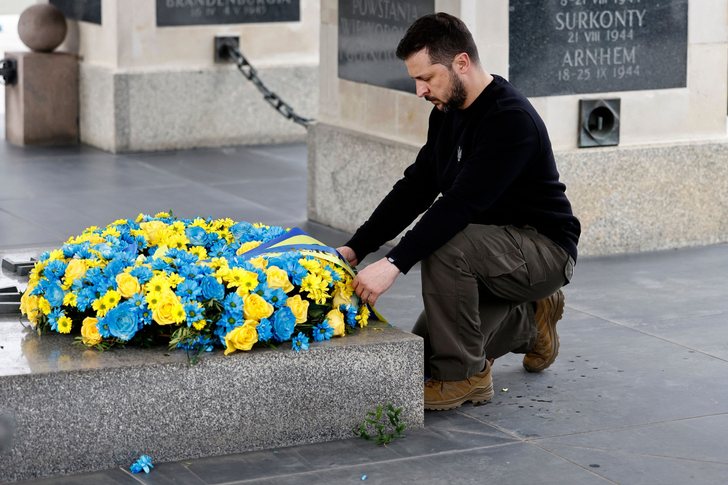
When Russian President Vladimir Putin sent his troops into...
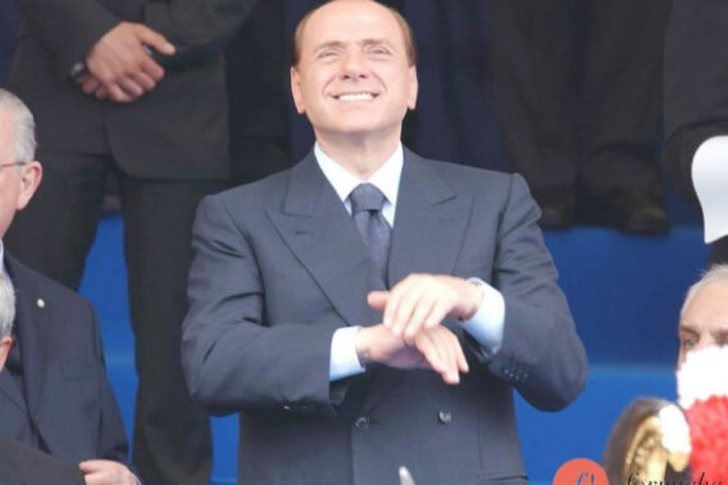
Protagonist of his farewell, as only those who have pl...

The war between Russia and Ukraine is an example of how wa...

Kim luan ndeshjen e fundit me Napolin. Mbrojtësi koreano-j...

The thirst for stability and the seriousness of the clashe...

Of course, a bloody war is going on in Ukraine. But Europe...
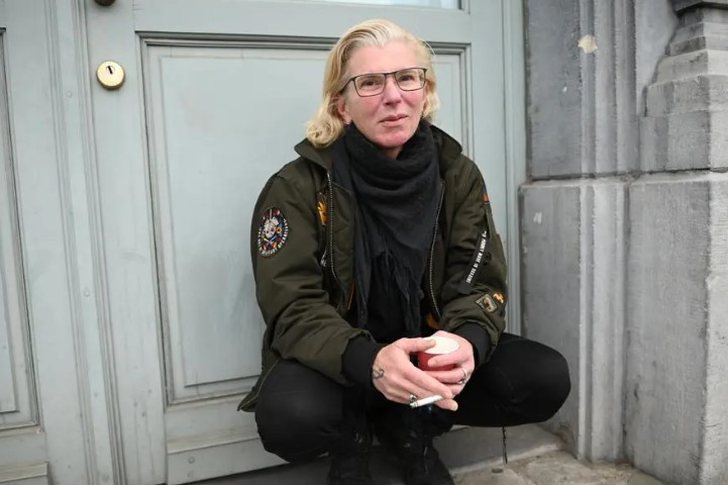
Julia Paievska is known by the nickname "Taira". She has a...

Granit Xhaka luan ndeshjen e tij të fundit me Arsenalin, tek...

At the end of the Cold War, US President George HW Bush po...

Which animals kill the most people every year? Although Ho...

Weather has always been a powerful force, capable of dicta...

Make no doubt: the war in Ukraine can end this year, w...

While most love songs are inspired by the joys and pai...
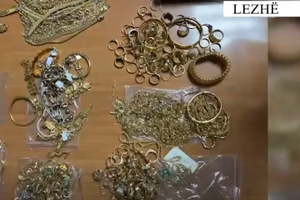
A 39-year-old citizen has been arrested in Lezha, after se...

CNA has launched another investigation that could lead to ...

Irfan Hysenbelliu is a businessman that we call "Irfan the...

In March 2026, CNA launched another investigation centered...

The Special Board of Appeal (KPA) decided this Monday ...

The KPA vetting decided this Thursday to dismiss the p...

Suela Salavaçi, a prosecutor in the Prosecutor's Offic...

The Special Board of Appeal reinstated the prosecutor ...

Several gunshots were reported today in the village of Gjo...

Following the successive operations carried out by the ope...
The Police Supervision Agency has seized the service weapo...

A serious incident occurred in Lushnje, where citizen IY, ...

As the year 2026 is in its second half, the world is exper...

Today, our country will be under the influence of stable a...

By noon, cloudiness is expected to prevail in almost all o...

Children without parental care, for whom alternative famil...
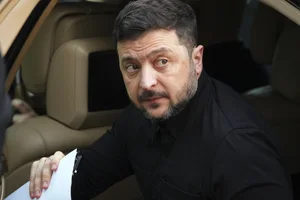
Ukrainian President Volodymyr Zelensky said Russia wants t...

Iran is adapting and enhancing the capabilities of its bal...
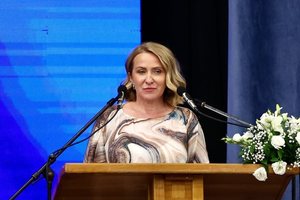
Serbia's Minister of State Administration and Local Self-G...
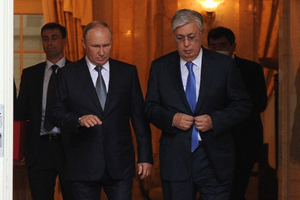
Kazakh President Kassym-Jomart Tokayev shared some critici...
Two windows, a century of history and the metaphysics of p...

In my research at the Central State Archives, specifically...

At a time when industrial products are increasingly taking...

Trust among people is not just a three-syllable word. It c...

This Saturday, one US dollar is bought for 81.7 lek and so...

War, weather and supply disruptions could send gas prices ...
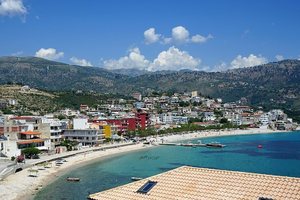
The number of active enterprises in Albania continued to g...

In Albania, the bar-cafe has long become an almost unique ...