


Stefan Mandel, the Romanian who found a way to win the lottery for sure
On the afternoon of February 15, 1992, state lottery o...


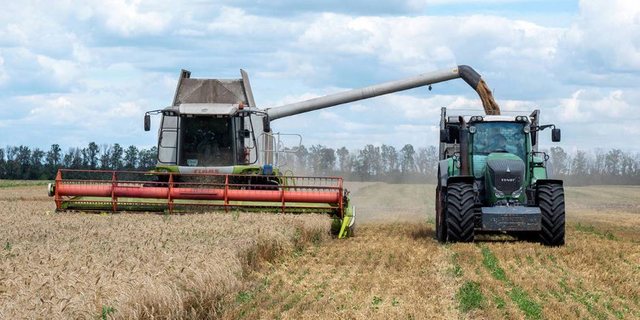
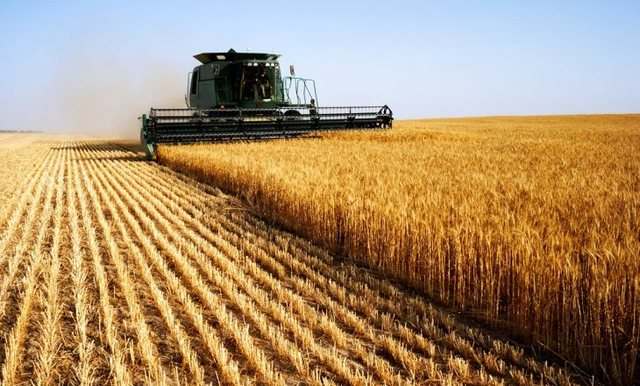
The Covid-19 pandemic and the war in Ukraine have caused commodity prices to rise in recent years, severely damaging global food security. Currently, global food prices have fallen compared to the peak recorded a year ago.
But no one should be complacent: the world's food supply problems are not over. The risk of additional price volatility remains high. With Russia's unilateral termination of the Black Sea Wheat Initiative and parallel attacks on Ukraine's export infrastructure, grain prices have risen again.
But dysfunctional food markets are at long-term risk. Wheat remains more than 2 times more expensive than before the pandemic. Moreover, food price inflation is still above 5 percent in most developing countries, and up to 30 percent in Rwanda and Egypt.
Meanwhile, another global increase in food prices is very likely. The real problem is that the growing market power of large agribusiness companies is increasing the risk that extreme food price swings will become the norm.
For example, take the chemical fertilizer sector. The tripling of their prices over 2020-2022 - which also brought food prices up - was driven in part by higher costs for nitrogen fertilizers, which reflected rising gas prices.
But new data from GRAIN/IATP shows that major companies in the sector raised fertilizer prices beyond what was needed to cover increased production costs, increasing their profits by 36 percent, even as they sold more few products.
Profit ratios turned out to be 3 times higher than before the start of the war in Ukraine, and well above the 13 percent average published by the S&P 500 performance rating company. Global grain traders have been able to turn scarce supplies into record profits.
In mid-2022, multinational wheat company Archer-Daniels-Midland (ADM) recorded its highest ever 3-month earnings. Its rival Cargill also posted record profits with total revenue rising 23 percent.
Such profitability is made possible by the increasing concentration of corporations in the food and fertilizer sectors. ADM and Cargill are two of the four "ABCD" companies - along with Bunge and Dreyfus - that control about 70-90 percent of the world wheat market. Just 4 companies account for 75 percent of nitrogen fertilizer production in the United States and 72 percent of the potash fertilizer market globally. Thanks to decades of mergers and acquisitions, such companies have been able to expand their influence in the supply chain.
Now, a proposed $34 billion merger between Bunge and Viterra — the grain arm of commodities giant Glencore — would mean further concentration of soybean and canola processing and distribution across America.
Major agribusiness companies enjoy enormous power in managing supply and setting prices, similar to OPEC's role in oil markets. And they're not afraid to use it: previous episodes of market turbulence — in the 1970s and in 2008-2-11 — also led to higher profits in the fertilizer and grain trading sectors.
In a 2021 report to US regulators, Nutrien, the world's largest chemical fertilizer company, admitted that "its sales prices were higher than offsetting higher raw material costs and the lowest sales volume".
For the world's poor, who spend up to 60 percent of their income on food, every 1 percent increase in food prices can have devastating consequences. High import costs for food and chemical fertilizers are also a reason why many low- and middle-income countries are now facing their worst debt crisis in 60 years.
While farmers are not able to benefit from the increase in food prices, mainly because the costs of inputs - provided mainly by large firms with great market power - are rising even faster than the prices of food products.
Even with farm prices now falling and debt mounting (due to rising interest rates), many farmers are trying to avoid bankruptcy.
While Russia's actions in Ukraine are fueling the future rise in wheat prices, it has already become clear that food prices can rise without warning. There is no doubt that this will cause more shocks.
The negative consequences are likely to deepen further if a few companies still retain such tremendous power over the world's food systems. This is precisely why governments must act to change incentives before the next crisis arrives.
To date there have been persuasive calls to start taxing agribusiness windfalls and to reinvest the funds in food systems to withstand the consequences of climate change.
Continued government oversight of fertilizer price increases - as farmers' groups have often requested - is also needed, along with stronger enforcement of competition policies to curb monopolistic collaborations in the sector.
Governments should even consider doing what they have been reluctant to do for decades: stepping in to break up monopolies. The Bunge-Viterra monopoly offers an ideal opportunity to assess what kind of consolidation is really in the public interest and to send a clear message to the big companies in the sector: profiting from food crises will no longer be tolerated. / Adapted from CNA

On the afternoon of February 15, 1992, state lottery o...

Eighteen months after Russia's complete invasion of their ...

Illegal immigration is an intractable problem, not bec...

In the terribly complicated politics of the Western Balkan...

Turkish voters re-elected Recep Tayyip Erdogan for a t...

While Vladimir Putin generally shies away from overt threa...
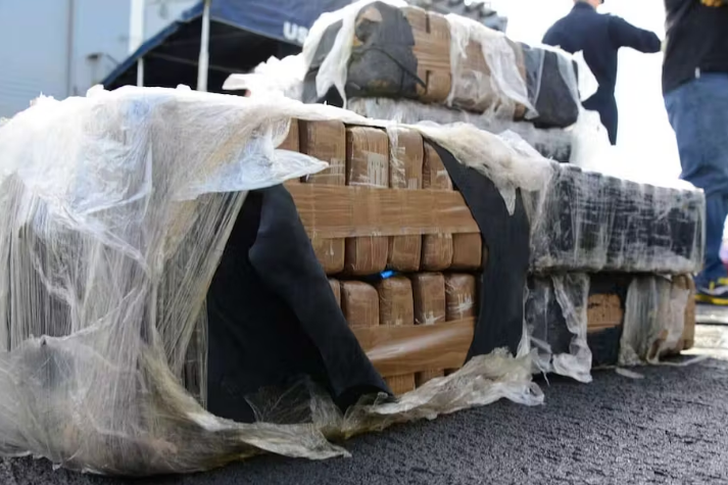
The international drug control regime was established more...

For those who want the Republican Party to move in ...

This year marks the 30th anniversary of the founding of th...

The current disorder of the international order is the res...

" These changes were made as a function of a great war a...
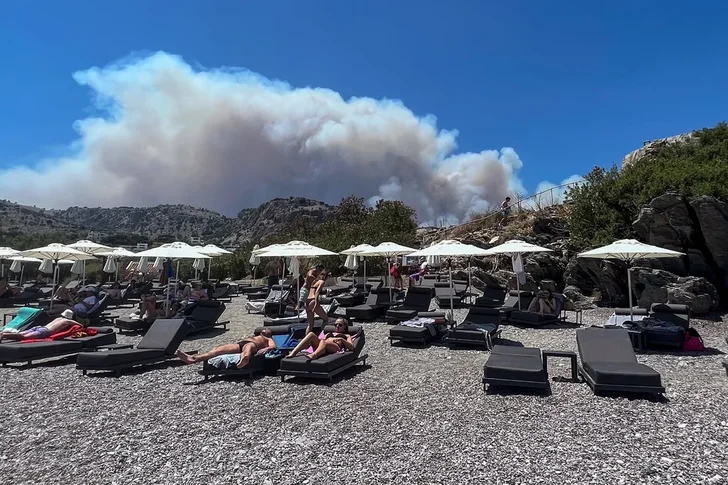
Thousands of people stranded on beaches. Reports of childr...

While millions are enjoying director Christopher Nolan's l...

Ukrainian President Volodymyr Zelensky (born 1978) has...

Money has always been made with health and safe businesses...

In 1944, on August 2, the Nazis killed in the Auschwit...

The emergency of the actor Genc Fuga and finding salvation...

The Alps span eight European countries: Germany, Switzerla...

Knowing foreign languages is increasingly important in t...

Anyone who has tried to quit smoking will tell you how har...

A 39-year-old citizen has been arrested in Lezha, after se...

CNA has launched another investigation that could lead to ...

Irfan Hysenbelliu is a businessman that we call "Irfan the...

In March 2026, CNA launched another investigation centered...

The Special Board of Appeal (KPA) decided this Monday ...

The KPA vetting decided this Thursday to dismiss the p...

Suela Salavaçi, a prosecutor in the Prosecutor's Offic...

The Special Board of Appeal reinstated the prosecutor ...

Several gunshots were reported today in the village of Gjo...

Following the successive operations carried out by the ope...
The Police Supervision Agency has seized the service weapo...

A serious incident occurred in Lushnje, where citizen IY, ...

As the year 2026 is in its second half, the world is exper...

Today, our country will be under the influence of stable a...

By noon, cloudiness is expected to prevail in almost all o...

Children without parental care, for whom alternative famil...

Ukrainian President Volodymyr Zelensky said Russia wants t...

Iran is adapting and enhancing the capabilities of its bal...

Serbia's Minister of State Administration and Local Self-G...

Kazakh President Kassym-Jomart Tokayev shared some critici...

Two windows, a century of history and the metaphysics of p...

In my research at the Central State Archives, specifically...

At a time when industrial products are increasingly taking...

Trust among people is not just a three-syllable word. It c...

This Saturday, one US dollar is bought for 81.7 lek and so...
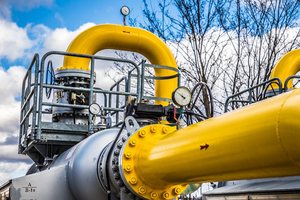
War, weather and supply disruptions could send gas prices ...
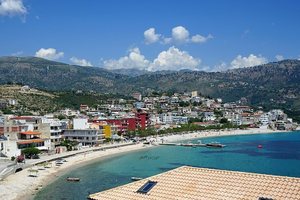
The number of active enterprises in Albania continued to g...
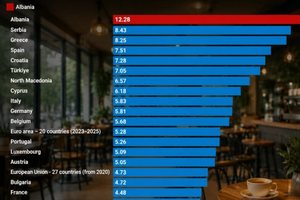
In Albania, the bar-cafe has long become an almost unique ...