


Carlo Bollino's morality and the truth
Carlo Bollino, when he left the Special Court today, decla...



A denunciation is not worth the noise it creates, but rather whether it forces institutions to move. This is where many citizens make a mistake: they think that a strong accusation, a status on social networks or a short video is enough. In reality, examples of denunciations that lead to investigations have one thing in common - they are not based on anger, but on evidence, precise timing, names and public interest.
In Albania, denunciation has often become a worn-out word. Politics uses it for attack, parties in conflict use it for pressure, and individuals seeking personal revenge also use it. But when it comes to serious investigation, the standard changes. The prosecution, the police, inspectorates, anti-corruption structures or the media themselves do not deal with guesswork. They deal with materials that have weight, logical connections and verification traces.
Examples of complaints that lead to investigations in practice
Complaints that produce real consequences are usually those that expose a specific violation and not just a general suspicion. A citizen who reports that a bribe was demanded in a public office and brings messages, an audio recording, the date, time and the name of the person responsible is much more likely to trigger an investigation than someone who simply says: "there is corruption there".
The same applies to tenders, fictitious employment, construction permits, misuse of funds, kickbacks, environmental violations or political favoritism. When the complaint documents how the violation was committed, who benefits and what the public damage is, institutions do not find it easy to ignore it. And if they ignore it, the public cost increases.
There is a big difference between a complaint and a complaint that leads to an investigation. The complaint can be vague, based only on perception. The complaint that shakes the system has a skeleton of facts. It shows not only that something is wrong, but also where the verification should begin.
Denunciation for direct corruption
This is the most classic case. A citizen, business or employee within the administration claims that an official has requested money, favors or interference in exchange for a service that legally should be provided without illegal payment. The investigation begins when there are tangible elements: recorded conversations, telephone communications, bank transactions, witnesses or synchronization of facts that prove the scheme.
The problem is that many whistleblowers stop at the sentence: "they asked me for money". This is not enough. The investigation is strengthened when there are clear questions: who asked them, when, where, with what intermediary, for what procedure and are there precedents with other persons.
Denunciation for predetermined tender
Here we enter the area where large sums circulate and where denunciations, when well supported, can open serious files. A typical example is when the tender documents seem tailor-made for a single company, when the criteria are absurd, when the winner has obvious connections to the decision-makers or when the winning bid is inflated in relation to the market.
A serious denunciation in this case is not enough with the accusation that "this tender is theft". It compares the documents, reveals strange deadlines, identifies conflicts of interest, analyzes the prices and exposes the mechanism. When the denunciation puts official documents on the table, institutions have much less room to remain silent.
Denunciation of nepotistic or fictitious employment
In the administration, public enterprises and local institutions, dubious employment is an old wound. But not every allegation of nepotism leads to an investigation. An investigation leads to the case when it is proven that the procedure was manipulated, that the competition was formal, that the criteria were changed for a certain person, or that salaries were paid to individuals who did not show up for work at all.
Internal documentation is very valuable here: attendance lists, appointment orders, modified announcements, employee testimony, and even ongoing reports that show the scheme and not the isolated case.
What makes a denunciation taken seriously?
In theory, every report must be verified. In practice, institutions move faster when the denunciation is well-constructed. This is not necessarily right, but it is reality. A file with evidence puts them in front of responsibility. An emotional status gives them an alibi to ignore it.
First, the denunciation must be accurate. Dates, names, place, function of the persons, the procedure involved, the amount claimed, the relevant document - the more concrete, the stronger. Without these, even when they are right, the denunciator risks getting lost in the chaos.
Second, there must be traces of evidence. It is not said that the citizen will have the entire file ready. This work is done by the investigation. But there needs to be at least one verifiable starting point: an email, a photo, a recording, a copy of a document, a comparison of invoices, a double witness. When everything is left to word against word, the pace slows down.
Third, the public interest matters. A personal conflict with no public impact may be treated differently than a complaint affecting taxes, security, health, education, urban planning or justice. The greater the harm to the public, the stronger the reason for an in-depth investigation.
When a whistleblower fails
There are times when a whistleblower is genuine, but fails because it is poorly done. This happens often. One person publishes only a fragment of a video without context. Another makes general accusations without names. Someone else confuses rumor with fact. These not only weaken the issue, but can divert attention from the violation to the credibility of the whistleblower.
There is another problem: selective whistleblower. When information is used only to attack one party and silenced about the others, the public smells manipulation. Credibility is a rare coin. Once burned, it is difficult to restore.
A whistleblower can also fail because the institution is unwilling to investigate. This happens. Especially when the issue affects local government, economic interests or political connections. But even in these cases, good documentation keeps the issue alive. It can be revived, amplified, become part of the public debate and force the authorities to account later. This is why critical media, including CNA.al, treat denunciations not as rumors, but as material that must be verified, confronted and exposed without cosmetics.
Examples of denunciations that lead to investigations beyond corruption
Not every investigation is related to bribery or tenders. There are denunciations that affect public health, safety and citizens' rights. A factory that pollutes a river, a landfill that operates outside of standards, a school with manipulated documents, a hospital with missing medicines only on paper - all of them can trigger an investigation if substantiated with concrete elements.
In these cases, evidence often does not come as a "single weapon". It comes as a mosaic. An administrative document, an employee's testimony, a series of photos, a contract, an invoice, a technical report. When these parts match, the story becomes unpleasant for whoever has hidden the traces.
There are also denunciations that start from an individual case and end up revealing a scheme. A patient complains about being paid underhanded. Then other cases emerge. A parent denounces favoritism at school. Then the network of interventions is revealed. Serious investigations often start with a single voice, but gain strength when others speak and when the facts are connected.
How to write a complaint that doesn't get lost in a drawer
The language should be clear and not theatrical. There is no need for bombastic sentences. A clear sequence is enough: what happened, who was involved, when it happened, what evidence exists and what needs to be verified. The simpler the story, the harder it is to dismantle.
Fact must be separated from opinion. The fact is that a document was signed on a certain date. The opinion is that the signature was made with abusive intent. The investigation is initially built on fact. Opinion may be valid, but it should not replace evidence.
Equally important is the preservation of original materials. Messages, emails, documents, photos, recordings - the less they are touched, the more usable they remain. A manipulated material, even when it exposes something real, can be dismissed very quickly. The
strongest denunciation is not the one that shouts the loudest. It is the one that leaves behind traces that are not easily erased. In a country where noise is daily, the weight of fact remains the strongest weapon against abuse. Whoever wants a matter to be truly investigated must bring not just suspicion, but material that turns suspicion into a compulsion for action./ CNA

Carlo Bollino, when he left the Special Court today, decla...

A denunciation is not worth the noise it creates, but rath...

The state cannot act as a spectator in a hydrocarbon marke...
The public has become skeptical, and rightly so. It has se...

One of the oldest wounds of Albanian public life is the ga...
The Democratic Party is the official opposition and the la...
CNA.al is a digital Albanian, regional and international n...
Recent investigations by the Special Prosecution Office ha...

The ten-day protest that began in Tirana after an incident...
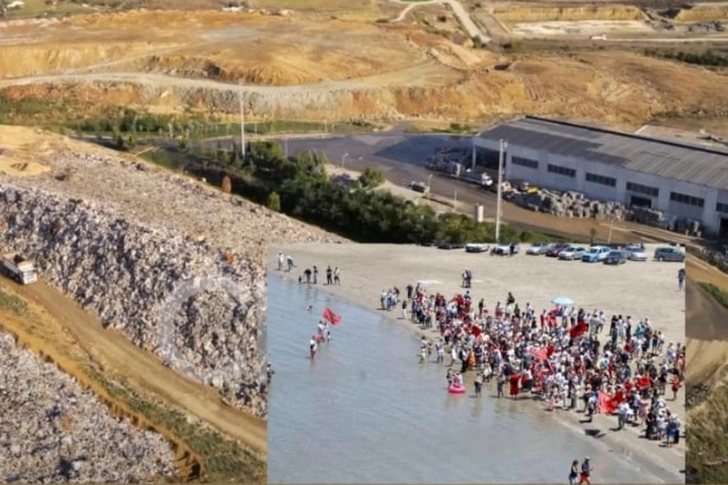
A group of environmentalists, some residents, but also...
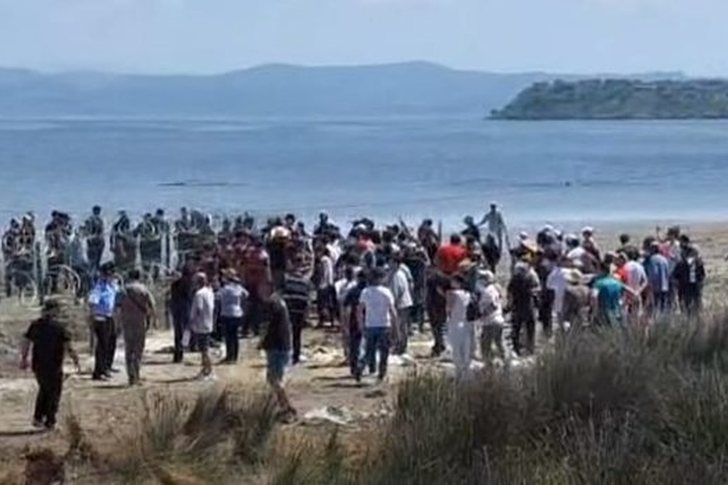
What happened in Zvërnec is being seen in different ways, ...

Një lajm plasi në rrjetet sociale në lidhje me një investi...

The media reported yesterday that there had been violence ...
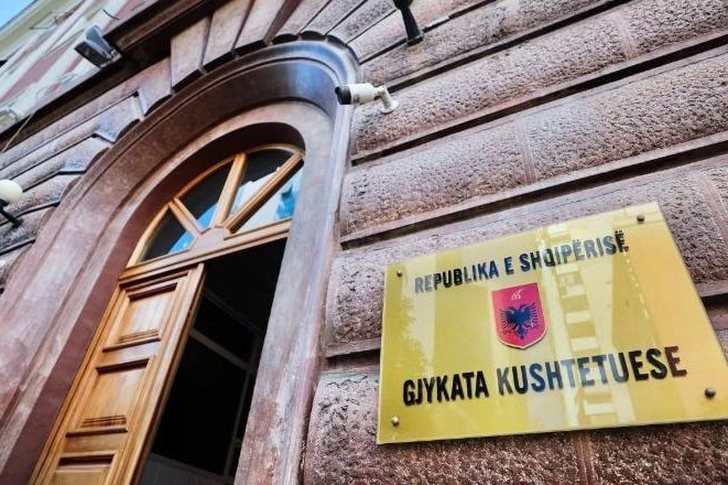
Yesterday, the Supreme Court issued a ruling and said ...
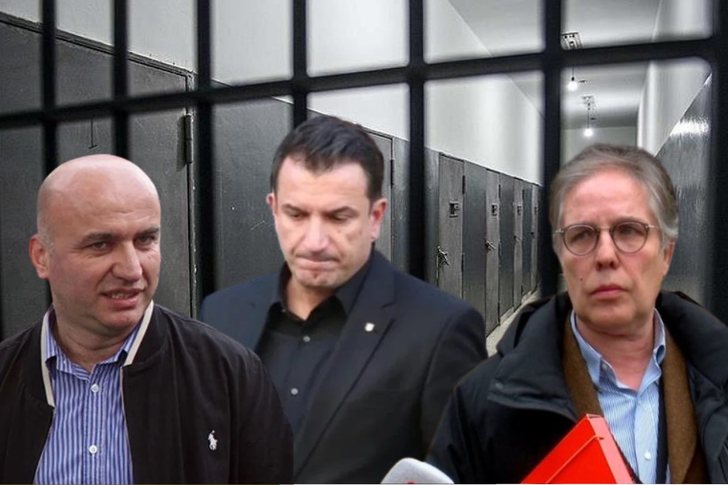
The Erion Veliaj case is expected to be discussed again in...
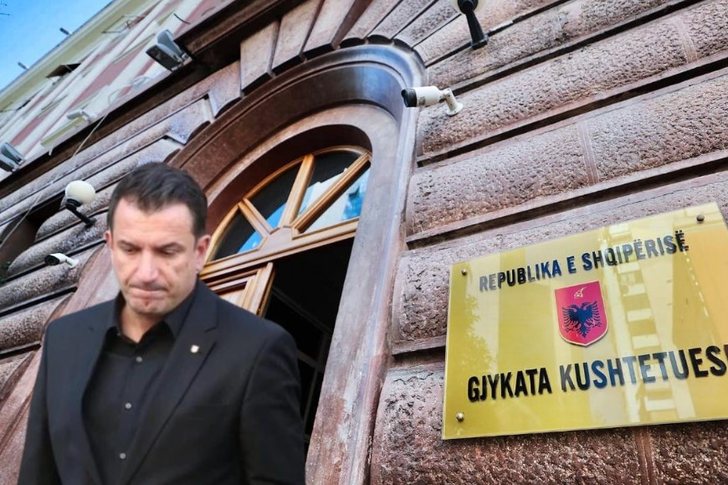
In the real legal reading of the Constitutional Court's de...
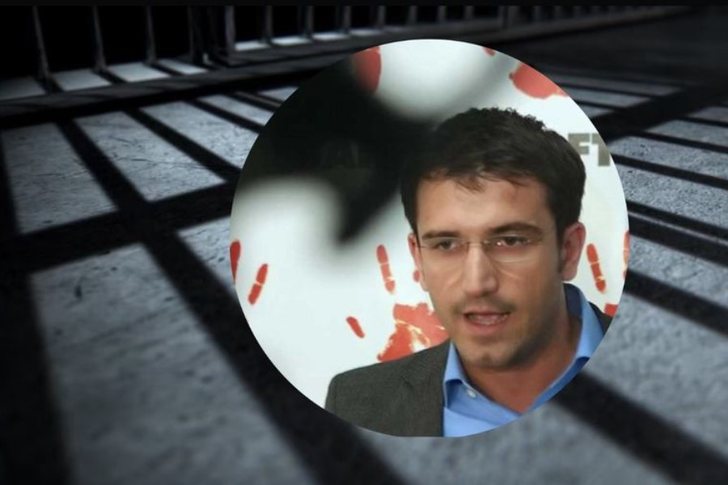
There is an interesting and at the same time paradoxical s...
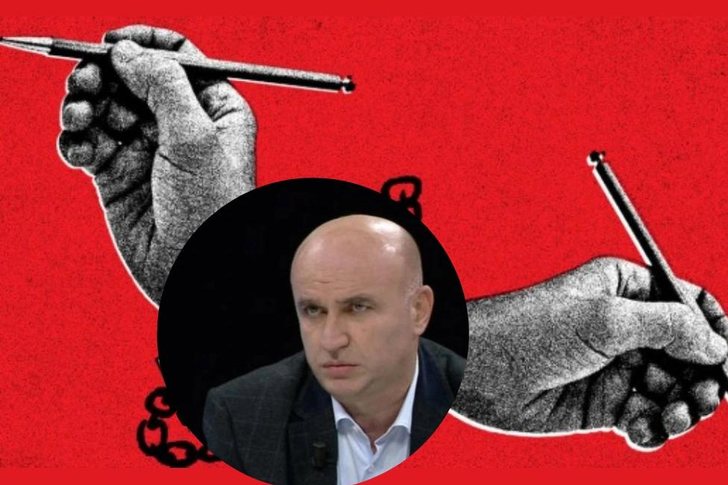
In the modern history of political propaganda, the name of...

One of the most disturbing elements of the way Erion Velia...

In one of his writings, of course, paid for, commissioned,...

CNA has launched another investigation that could lead to ...

Irfan Hysenbelliu is a businessman that we call "Irfan the...

In March 2026, CNA launched another investigation centered...
The arrested mayor of Tirana, Erion Veliaj, with 13 charge...

The Special Board of Appeal (KPA) decided this Monday ...

The KPA vetting decided this Thursday to dismiss the p...

Suela Salavaçi, a prosecutor in the Prosecutor's Offic...

The Special Board of Appeal reinstated the prosecutor ...

A person has died today on Orikum beach. According to repo...

Footage emerges from the serious accident that occurred th...

A Shkodra traffic police officer was hit with hard objects...

This Wednesday, around 4:00 PM, a serious accident occurre...

Children without parental care, for whom alternative famil...

On Thursday, our country will be under the influence of st...

A serious accident that occurred this Wednesday with the c...

The Institute of Geosciences has shared a forecast for wea...

For the first time since the launch of the euro, European ...

Artificial intelligence (AI) models from the American comp...
At least 10 people have died after a fire broke out in a h...
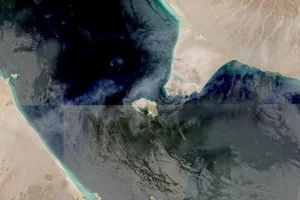
Yemen's Houthis have claimed to have attacked two Saudi oi...

At a time when industrial products are increasingly taking...

Trust among people is not just a three-syllable word. It c...

Master of humor Todi Llupi has passed away at the age of 7...

The ninth edition of "MIK Festival" kicked off with one of...

The average sale price of apartments in Tirana reaches rec...

This Thursday, one US dollar is bought for 81.5 lek and so...

The price of diesel reached 206 lek per liter from 198 lek...

Businesses will no longer be required to simply register t...