


Wagner and the risk of conflict escalation, what is happening on NATO's doorstep
Thousands of troops mobilized and open nuclear threats. Th...


Tony Blair's post-prime ministerial career is different. Other prime ministers often sat in parliament as MPs, usually in the House of Lords (although Ted Heath sat in the House of Commons for 27 years). Most of them were engaged in charity work. Some of them were elected to several senior management positions.
One of them, Alek Dagllas-Hom, continued to hold power in the government, serving as Foreign Minister in the Hith government. But none of them set out to create a power structure for themselves, independent of government, as Blair has done with his Institute for Global Change.
He has been in the spotlight recently because the institute organized a Future of Britain conference last month in which Blair appeared to give his blessing to the current Labor leader, Keir Starmer, as a successor to his worthy.
Blair said his institute's resources would be available to the Labor Party as it prepares to come into government if it wins the next election. And this is no more than what he has always said himself: that the work of his institute is available to any government and opposition around the world to anyone who wants to have it available.
But his institute is being given more attention not just because it's holiday time, but because Labor looks increasingly likely to form the next government. And ideological connections and personnel suggest that Blair's institute will be very influential.
In fact, it is assumed that if Starmer is elected prime minister, a significant number of Blair's institute staff will follow him to Ten Downing Street. After a long period in which "anger at Blair" marred the former prime minister's image, his activities since leaving office have been characterized by cashing in on dictators.
Now he is back on the public stage, and is generally considered to have useful things to say. Brexit has played a major role in rehabilitating his image, as he could campaign more convincingly than anyone to remain in the EU. Blair continued to do so, even as the majority of the losing party in the referendum lost any influence on public opinion.
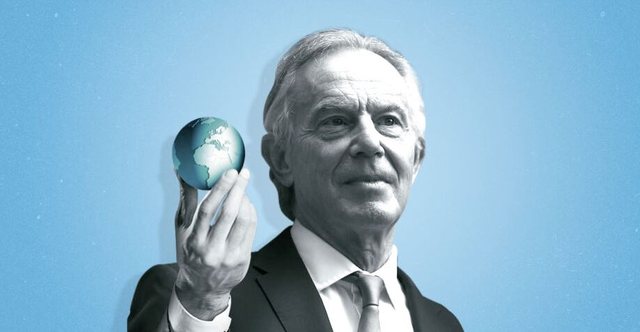
At the same time, the Blair Institute built its reputation for high-quality, timely and largely non-ideological work (“what matters is what works”). Although with some familiar themes like optimistic enthusiasm for technology and some familiar politics like identity databases.
The institute scored an impressive success during the pandemic due to its appeal to "give the first doses to as many people as possible" of the Covid-19 vaccine, which helped accelerate vaccine supply and coverage. Yes, he does a lot of valuable work on climate change issues, which Blair drew attention to when he said in an interview with Andrew Marr that reaching the zero-emissions target owes more to what other countries are doing than Great Britain.
So it's no wonder why there is a new wave of interest in Blair and all his activities. What exactly is he doing? Is his institute doing good or bad work? Who finances it? Answering this last question, The Times has analyzed the institute's accounts, noting that Lerri Elizon, the American technology billionaire, has given large sums to it since 2018.
Elizon is one of several major donors, including the Bill and Melinda Gates Foundation, the Blavatnik Family Foundation (which funds the school on governance at Oxford University), and the US Agency for International Development.
However, Elizon's case is interesting, as it bought electronic health data company Cerner last year for $30 billion. Elizon's ambition is to provide digital health data to every American and indeed to citizens of every country in the world.
This aim intersects with Blair's policy fixations. His institute has worked on setting up digital ID systems, particularly for vaccine records, in Rwanda, Ghana and Senegal. As Tom Mektag writes for UnHerd, some of his work in developing countries has been criticized because the institute has become a "McKinsey for world leaders" - a global management consultancy that advises prime ministers and presidents" based on his personal relationship with Blair himself. .
And this raises questions about transparency and accountability. Mektag cites an advertisement for a job at the institute for Eastern Europe to "lead a TBI team located in the position of the most senior adviser to the government", expected to "suggest and persuade your counterpart" at the prime ministerial or presidential level.
He asks: "What would be the reaction if it were the other way around? So if, for example, the Clinton Foundation were to advertise a team of people who would be involved in the British government, or who would simply "suggest advice and convince" the British Prime Minister to follow their advice?
However, there seems to be a lot of demand for the institute's services. It had a turnover of $81 million in 2021 alone, and now employs 800 people worldwide. I never thought Blair would be interested in money for himself.
He has always been interested in power, and needs to raise money to utilize his networks and political skills. He has more than enough money for himself, with his London house, his country house and his prime ministerial lifestyle.
His son Euan owns the company Multiverse, which was valued at $1.7 billion last year. The senior buyer does not officially receive a salary from the institute: all the money he raises goes into consulting work for governments around the world and policy advice in the UK.
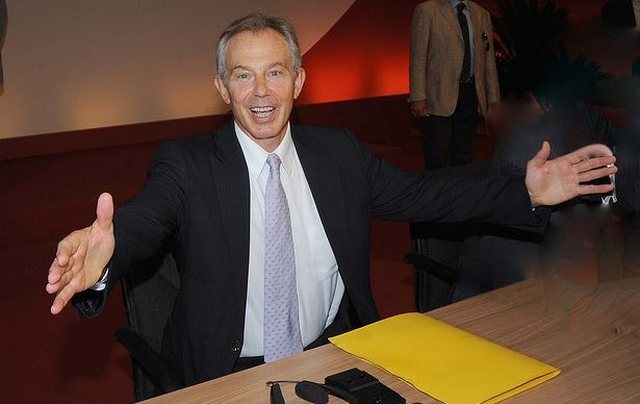
So what motivates him at 70 to work so hard, as if he still had a country - or a world - to run? McTague writes: "The more I studied him, the more I wondered if his greatest weakness of all was simply the desire to remain relevant, a weakness that the famous writer JDS Salinger once described as "a lack of courage to be an absolute nobody"./ Adapted from CNA

Thousands of troops mobilized and open nuclear threats. Th...

What Sweden is experiencing this summer, after a series of...

"Your place is in the kitchen!", "It's your own fault,...

Bald, black-eyed and very dark-skinned: genome analysis re...

Pontius Pilate was for nearly 10 years the Roman governor ...

The Covid-19 pandemic and the war in Ukraine have caused c...

On the afternoon of February 15, 1992, state lottery o...
Eighteen months after Russia's complete invasion of their ...

Illegal immigration is an intractable problem, not bec...

In the terribly complicated politics of the Western Balkan...
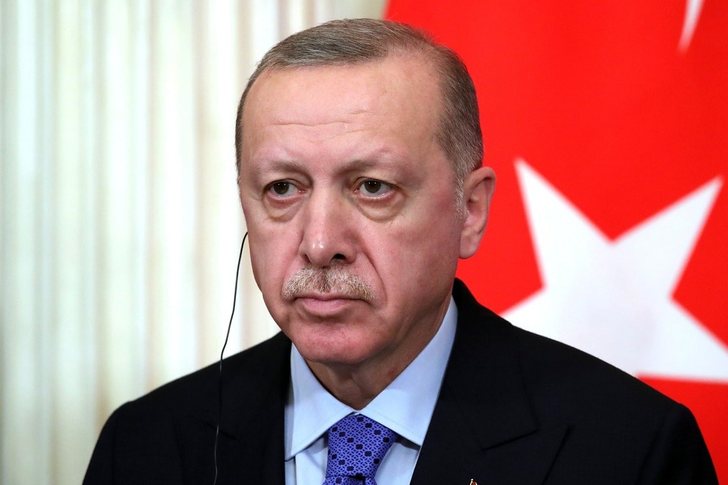
Turkish voters re-elected Recep Tayyip Erdogan for a t...
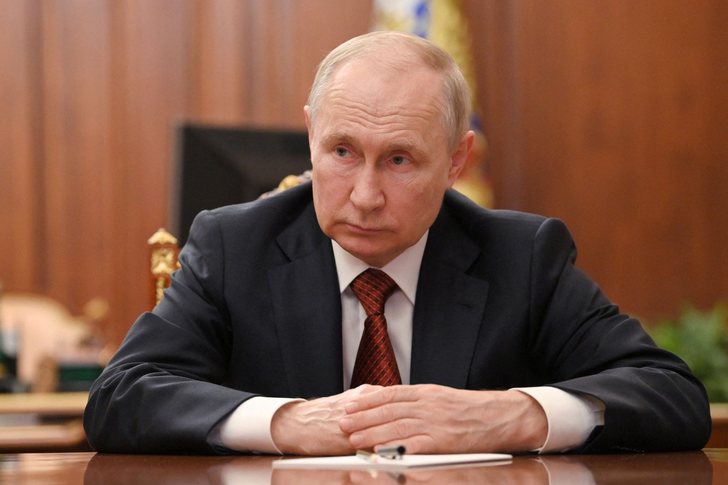
While Vladimir Putin generally shies away from overt threa...

The international drug control regime was established more...

For those who want the Republican Party to move in ...
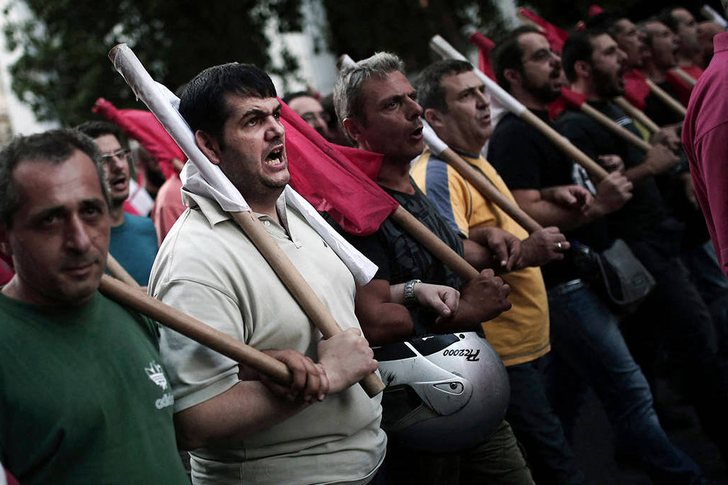
This year marks the 30th anniversary of the founding of th...

The current disorder of the international order is the res...

" These changes were made as a function of a great war a...
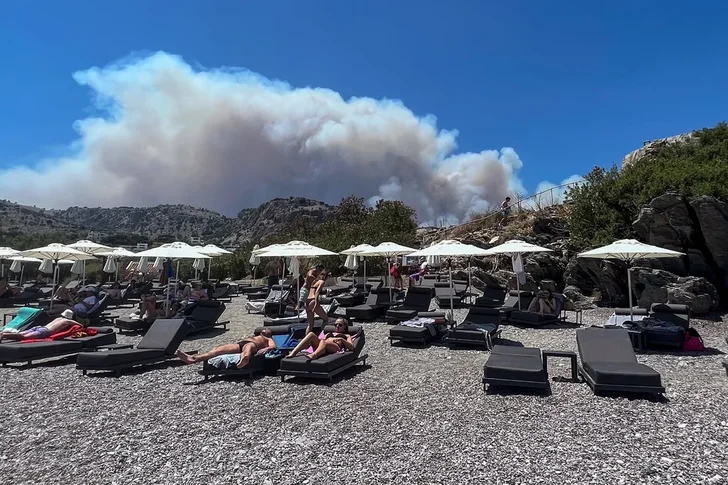
Thousands of people stranded on beaches. Reports of childr...
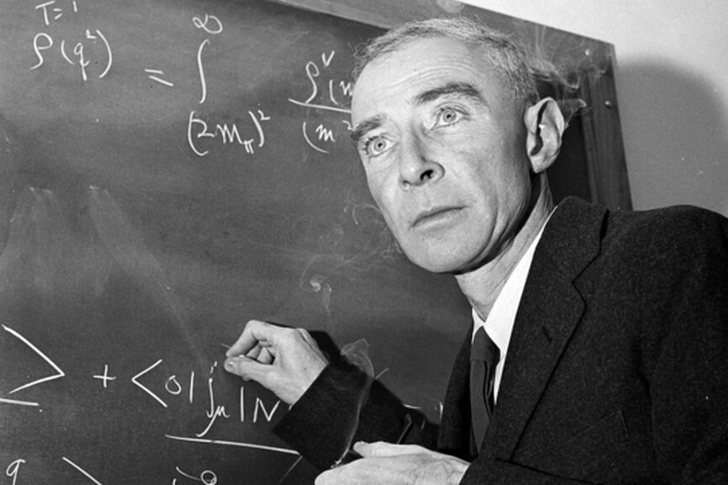
While millions are enjoying director Christopher Nolan's l...

Ukrainian President Volodymyr Zelensky (born 1978) has...
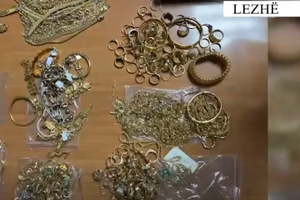
A 39-year-old citizen has been arrested in Lezha, after se...

CNA has launched another investigation that could lead to ...

Irfan Hysenbelliu is a businessman that we call "Irfan the...

In March 2026, CNA launched another investigation centered...

The Special Board of Appeal (KPA) decided this Monday ...

The KPA vetting decided this Thursday to dismiss the p...

Suela Salavaçi, a prosecutor in the Prosecutor's Offic...

The Special Board of Appeal reinstated the prosecutor ...

Several gunshots were reported today in the village of Gjo...

Following the successive operations carried out by the ope...
The Police Supervision Agency has seized the service weapo...

A serious incident occurred in Lushnje, where citizen IY, ...

As the year 2026 is in its second half, the world is exper...

Today, our country will be under the influence of stable a...

By noon, cloudiness is expected to prevail in almost all o...

Children without parental care, for whom alternative famil...
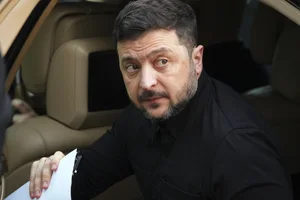
Ukrainian President Volodymyr Zelensky said Russia wants t...

Iran is adapting and enhancing the capabilities of its bal...
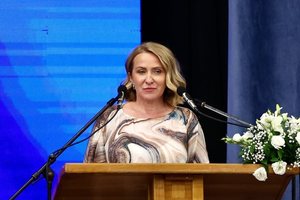
Serbia's Minister of State Administration and Local Self-G...
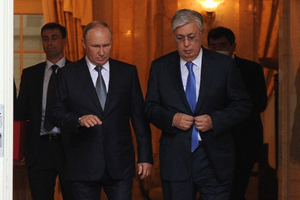
Kazakh President Kassym-Jomart Tokayev shared some critici...
Two windows, a century of history and the metaphysics of p...
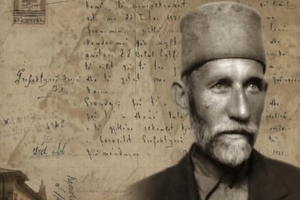
In my research at the Central State Archives, specifically...

At a time when industrial products are increasingly taking...

Trust among people is not just a three-syllable word. It c...
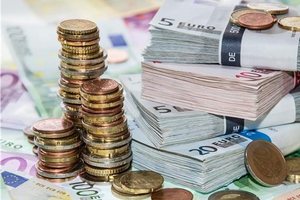
This Saturday, one US dollar is bought for 81.7 lek and so...

War, weather and supply disruptions could send gas prices ...
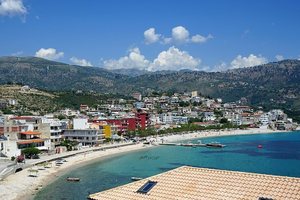
The number of active enterprises in Albania continued to g...
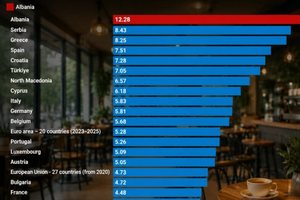
In Albania, the bar-cafe has long become an almost unique ...