

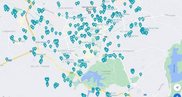


In August 2023, I joined a group of artists in a walk around the territory of the Municipality of Tirana, along the so-called "Orbital Forest".
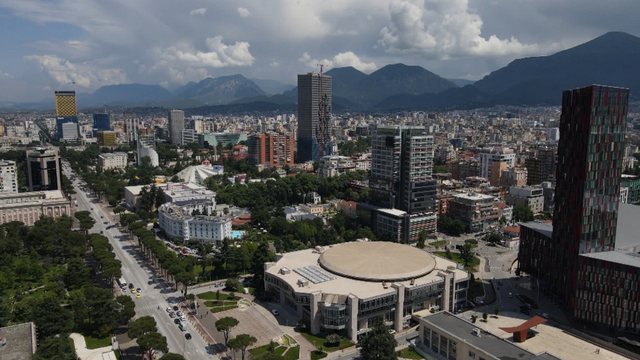
The Orbital Forest, announced as "a natural limit to urban expansion", was one of the main propaganda points of the public sale of the General Local Plan of Tirana "TR030", drawn up in 2016 by Stefano Boeri, Italian architect and former candidate for mayor of Milan.
But even though we walked several days in a row around Tirana—from Kodra e Diellit to Linza, between the fields of Kashari, along the Tirana River and Farka Lake—we did not find any trace of this green area. What we saw from different points around the city: a thick layer of smoke, car fumes and dust from the constructions that suffocated the inhabitants of Tirana in the middle of an excruciatingly hot summer.
How can it happen that a city planned to be "sustainable", "accessible", "creative", "intelligent" and "biodiverse" turns into a giant construction site in a state of near-permanent traffic jam?
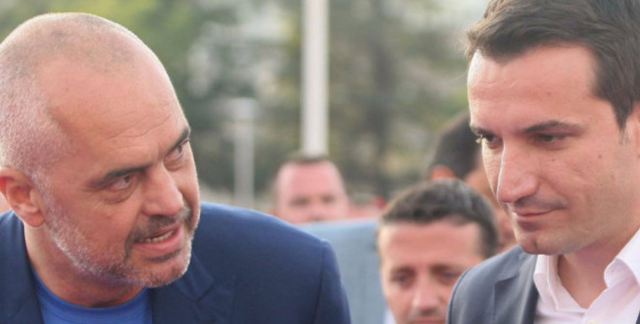
To answer this question, we must go back to the time after the local elections of 2015, when the government of Edi Rama sought to implement the so-called "Territorial Reform", which included the drafting of general local plans for all the country's municipalities. International bidding procedures were opened for each municipality, including Tirana, where Erion Veliaj had just been elected mayor. Although theoretically competitive, the winners of these tenders were mostly predetermined, as Stefano Boeri confirmed to me in a meeting at Hotel Rogner the morning before he presented his plan to the government tender commission. Boeri told me clearly and simply: "I was personally asked by Edi Rama to participate." We have a clear understanding that my studio will win".
Boeri successfully presented his vision for Tirana, which was co-designed with UNILAB and IND studios. After a series of failed public consultations, held in violation of many laws, the plan was approved by the Tirana City Council. Its implementation began immediately, in 2017.
The TR030 plan includes 13 strategic projects that will turn Tirana, within the year 2030, into a "European model for non-anthropocentric coexistence between people, animals and nature". It would take too much time to discuss each of the strategic projects individually, but they can generally be grouped into two broad categories. The first category summarizes the projects that aim to increase green spaces, both inside and around the city, including the construction of the "Orbital Forest"; a second and a fourth ring, both green; of the "World Park"; and the three green corridors along the rivers. The second category includes projects whose main component is construction: five additional "transformation zones" (including the "natural oasis" of Farka) and a network of schools built through a public-private partnership.
Today we are in the middle of Mayor Veliaj's third term and in the middle of the implementation period of the TR030 plan (2017-2030). Assessed on the basis of the objectives defined in the plan, the first set of strategic projects has completely failed, while the second set of projects has flourished beyond all imagination.
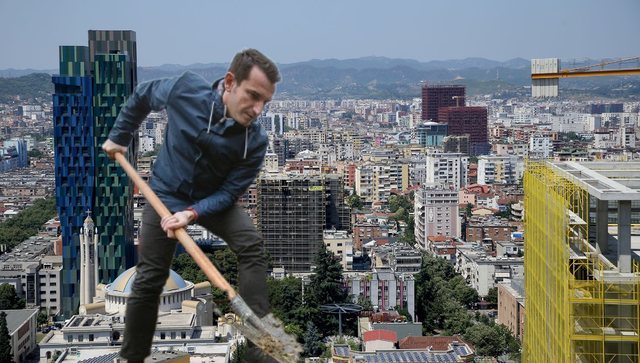
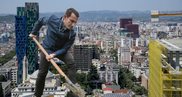
No trace of the Orbital Forest is found. Despite the annual photographs of Mayor Veliaj with a shovel in hand, the promised 2 million trees have not been planted. A report last year by the Supreme State Control (SCSC) concluded that the lack of budget, land and ownership has led to "a low level of implementation" of this objective. The green rings (second and fourth), which would create movement space for pedestrians, cyclists and a tram, have not been realized. Also, the World Park planned along the northern extension of the 'Dëshmorët e Kombit' boulevard has not been realized either. Likewise, the natural corridors along the three rivers—Tirana, Lana, and Erzeni—are not created in any sense. On the contrary, KLSH comes to the conclusion:
"The environment is rapidly degrading, a fact that is reflected in problems such as landslides, deterioration of water quality, air pollution, noise, waste management problems, etc.
The cause of this environmental disaster is "uncontrolled urban development".
Only in October 2023, 12 new towers were approved in the center of Tirana. This brings us to the second set of strategic projects of the TR030 plan. Both the development of five new "transformation" areas (in total 57 hectares) and the construction of the network of new pulic schools are based on the same principle: the expropriation of existing private assets and the privatization of public assets to build on them with through the public-private partnership scheme (also known as concessions).
Public-private partnerships are a costly and inefficient way of managing public investment, since they essentially subsidize private companies to take out bank loans at significantly higher interest rates than the government itself could borrow.
The benefit for the government in this scheme is that the "investment" is not counted as public debt thus keeping the level of public debt artificially low, while the benefit for the private person is that the government assumes all the risks of the investment, leaving only the benefits.
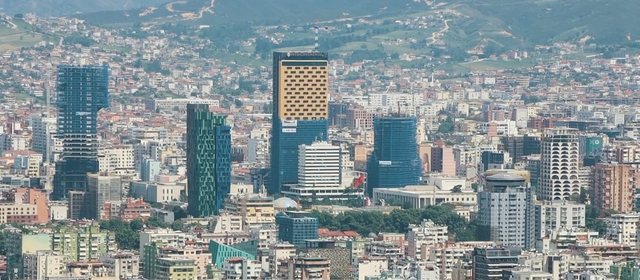
These transformation zones defined in Boer's TR030 plan, complete with ten "dynamic epicenters" of development also reclassified as transformation zones (such as the Block area) have become the bed for the massive explosion of construction in Tirana.
The intensive urbanization of the city has been incredibly profitable for the designer himself. Immediately after the approval of the TR030 plan, Boeri launched an advertising campaign to praise the values ??of the plan, announcing "almost a century later, it is the Italians who are designing Tirana again".
Then, the Municipality of Tirana commissioned the redevelopment of the area near Lana, in its eastern part, with private developer and designer Stefano Boerin. Also, the municipality again agreed with Boer for the design of the three schools that would be built with a public-private partnership between the municipality and Agikons company. Meanwhile, builders who secured permits in the most coveted areas of the plan also agreed with Boer as architect: Invest Society for two buildings, The Cube and West Residence, in the Block area, while Gener 2 for the "Vertical Forest" adjacent to the Air Albania Stadium.
This brings us back to the original question: how can it happen that a plan designed to turn Tirana into a "Balkan garden" has turned it into a hell where the noises are deafened and the dust of the towers drowns? The answer lies in the direct economic motives of those responsible for its implementation.
Unlike transformation zones, none of the green components of the TR030 plan have a profit model behind them—no money can be made from parks, forests or greenbelts. Building towers, on the other hand, satisfies every desire for profit and enrichment.
First, the Municipality of Tirana generates revenue with the construction permits it issues, taxing 8 percent of the construction value for each construction permit. These revenues have become an important pillar of the municipality's budget, since the time when the Rama-Veliaj couple have all the construction permits in Tirana. In 2022, Tirana set a new record for building permits: it issued permits for 1.8 million square meters of new construction. Without these projects, Tirana Municipality would go bankrupt.
On the other hand, for many individuals and construction companies in Tirana it is a convenient way to launder money.
A 2020 report by the Global Initiative Against Transnational Crime estimated that, in the period 2017-2019, about 1.6 billion US dollars were laundered in Albania through real estate (construction and sales).
So both the municipality and the construction companies have strong motives to keep the construction machinery running.
Second, the concessions and complicated tendering structures of many public redevelopment projects for "transformation zones" and public schools create great opportunities for corruption and self-interest, as has already been made clear by the Tirana Municipality directors' scandal. In one case, Company 5D, owned by several important directors of the municipality, "won" the tender for the redevelopment of the Kinostudio transformation area. As for private constructions, even in cases of transformation, both those who run the municipality and the owners of private companies (often the same people) benefit.
And third, the redevelopment projects produce massive amounts of construction waste, which is deposited in the Sharra landfill. Although this may not seem like a direct motivation, this issue was raised by former deputy prime minister and former finance minister Arben Ahmetaj in a television interview. Speaking about the Sharra incinerator concession, Ahmetaj asked the cryptic question:
"I have a question for SPAK: where did the 60 million go? ...Where are the 60 million euros, who is behind them, who gave the guarantee....?"
What are the "60 million euros" Ahmetaj refers to? It is the money that private construction companies are thought to have paid so far for the deposit of construction waste in the Sharra landfill, the waste collected from hundreds of constructions with permission from the Municipality of Tirana.
Before the Sharra concession contract, which was awarded to the shell company Integrated Energy BV SPV in August 2017, construction waste was managed by the Municipality of Tirana itself. But with an extralegal agreement and without any transparency, the municipality decided that Integrated Energy BV SPV would receive and manage the construction waste. This agreement allowed payments from the construction companies to go directly into the accounts of the Integrated Energy company, outside of any kind of public oversight or audit. How construction waste management was privatized still remains unclear and needs to be investigated.
When the assets of Integrated Energy BV SPV were seized by the state last year, these 60 million euros that reasonably belong to Albanian taxpayers, were not found in the company's accounts or anywhere else. Where did they go? And was it really only 60 million euros or so? How can one measure the amount of construction waste that has actually been deposited in Sharre by private companies without any public supervision?
The opposition has articulated a possible explanation as to where these revenues could have gone that Integrated Energy BV SPV received illegally. The opposition believes that the money has been returned to those who run the Municipality of Tirana and has been used to buy votes, through the expensive system of patronage, set up by the Socialist Party. As part of this system, Tirana Municipality officials were appointed and worked as coordinators and campaign managers of SP and Veliajt in Tirana, which led to the overwhelming victory in 27 of the 27 constituent units of Tirana Municipality in the 2023 local elections.
This money could also have been used to pay the media, ensuring uninterrupted positive coverage on all the main televisions of the construction projects and policies of the Municipality of Tirana, a continuous television practice throughout the time of its management by Erion Veliaj.
It is this system of illegal benefits and payments that has made it possible for the continuous and uninterrupted cycle of demolitions and constructions, illegal permits, dubious concessions and waste mismanagement to not be described in public for what it is: a cancer in the body of the city, which is slowly killing its inhabitants, and which must be urgently combated with green spaces and building restriction laws.
The money that this process produces in each of its links is an essential element of maintaining control and power over the city and its citizens. Pollution is not a defect of the system, but it is the essential component of the system./ ExitNews

Rama's rally with his party supporters in Athens was t...
We have well understood a lesson from the recent devel...
Television, the grandfather of media, is experiencing ...
Dear friends, Llagami of KLGj, I have publicly denounced h...
Fatmir Xhafaj came to the podium today and for 5 minut...
One of the characteristics of today's political discou...
Nëntë maji - Dita e Fitores mbi Fashizmin - festohet në Az...
Shocked by the news that Skenderbeu ate a calf before the ...
\Jam menduar natën e kaluar ta botoj apo jo dhe vendos...
As expected, many television programs last night were ...
1. What is said on the first day is incomplete. The releas...
Those who regularly follow the prime minister's Instag...
When we say that this is a very serious event, another...
Although a non-delegable protocol obligation stemming ...
Dear friend, Today the letter has lost its power, unl...
After the fall of the dictatorship, the Albanians did not ...

On the day he was supposed to be arrested, he woke up ...
Përplasja e fundit mes Baton Haxhiut dhe Erion Veliajt më ...
After staying for 7 hours with his colleagues at SPAK, des...
Ajo që ka ndodhur në Shkollën e Magjistraturës është m...
Irfan Hysenbelliu claims to be a big businessman, an hones...
The murder of officer Enea Mekolli in the line of duty has...
The next case broadcast on the show "Stop", this Thursday,...
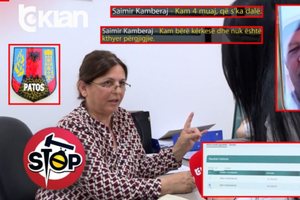
The case published this Thursday, June 4, on the show "Sto...

The Special Board of Appeal (KPA) decided this Monday ...

The KPA vetting decided this Thursday to dismiss the p...

Suela Salavaçi, a prosecutor in the Prosecutor's Offic...

The Special Board of Appeal reinstated the prosecutor ...
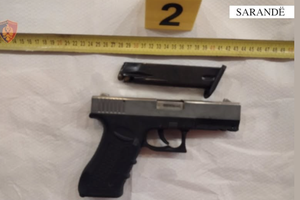
A 37-year-old citizen has been arrested in flagrante delic...
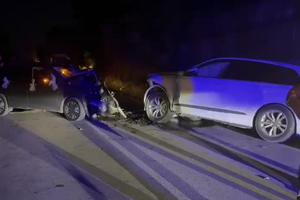
A road accident has been reported on the Fier-Levan axis, ...
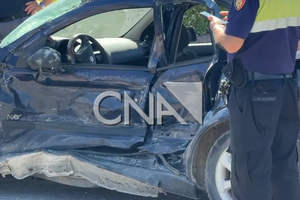
An accident was recorded a few minutes ago on the Pogradec...
Following the cooperation of Interpol Tirana with Interpol...

The modern European traveler seeks a meaningful connection...
This Sunday, weather conditions are forecast to be clear a...
Albanians are officially the hardest working people in Eur...

This Saturday will be characterized by mostly clear weathe...
Presidenti rus Vladimir Putin është në pushtet prej 26 vit...
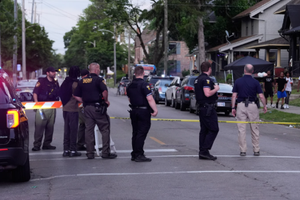
Gunfire erupted in Ohio, USA, in the area where the Old We...
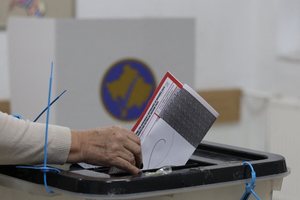
The citizens of Kosovo will today try to give direction to...

The military advisor to Iran's supreme leader, Mohsen Reza...
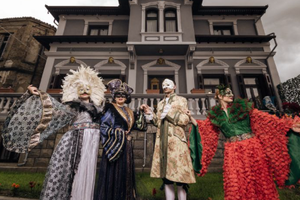
Korça is ready to open the summer season with one of the c...
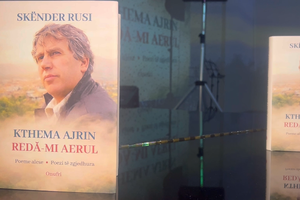
Two years after his passing, the renowned Korçë poet Skënd...
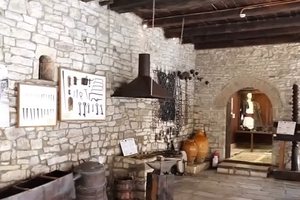
The Ethnographic Museum of Berat has opened its doors to v...
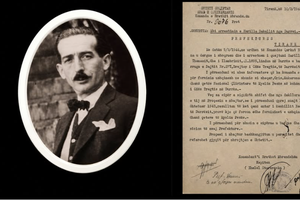
The story of Harilla Bakalli is one of the most chilling t...
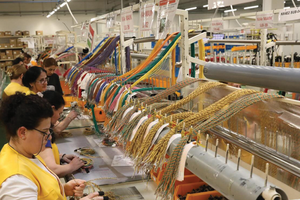
The automotive industry in Albania is currently at a turni...
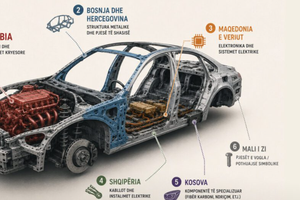
If you were to follow the industrial map of the Western Ba...
The Transparency Board, in today's meeting, decided to red...

This Saturday, one US dollar is bought for 81.4 lek and so...