


"Don't call me darling"/ Debate in the Electoral Reform Commission: You are black and white in your mind
The Electoral Reform Commission was accompanied by debates...

The Electoral Reform Commission was accompanied by debates...
Më 9 prill, në orën 09:30, u mblodhën Kolegjet e Bashkuara në një seancë gjyqësore për të shqyrtuar një akt turpi të marrë nga partizan Sadushi që i shërben kryebashkiakut të arrestuar të Tiranës për 13 akuza dhe 5 vepra të rënda penale. Pas shqyrtimit në seancë, Kolegjet e Bashkuara pritet të vendosin për vendimin penal për paraburgimin. Skenari është i qartë. Qëllimi i këtij akti është politik, që mjet ka nxjerrjen e kryebashkiakut të arrestuar të Tiranës, Erion Veliaj, nga burgu. I pavetinguari Sokol Sadushi nxori një vendim të ndërmjetëm, duke e ushtruar këtë detyrë për herë të parë, për nisjen e procedurës për ndryshimin e pjesshëm të praktikës së njësuar të Kolegjeve të Bashkuara të Gjykatës së Lartë të vitit 2011 mbi masat e sigurimit personal. Përmes këtij vendimi të ndërmjetëm, Sadushi kërkon të bëjë ndryshime procedurale që në finale çojnë në ndryshimin e kritereve të vendosjes së masës së sigurimit, duke i shërbyer në këtë mënyrë Erion Veliajt si hall i madh i kreut të Gjykatës së Lartë dhe mikut të tij Mero Baze, gazetar mercenar, kamikaz i familjes Veliaj. Gjithë skenari është se partizan Sadushi është bërë një ushtar i devotshëm i Mero Bazes. CNA ka materiale dhe ndërhyrje konkrete që Mero Baze ka bërë në media për Sokol Sadushin. Sokol Sadushi i është borxhli Mero Bazes për mbështetjen mediatike që i ka dhënë dhe sot bëjnë veprime për të nxjerrë kryebashkiakun me 13 akuza nga burgu./ CNA
7 artikuj për këtë temë.
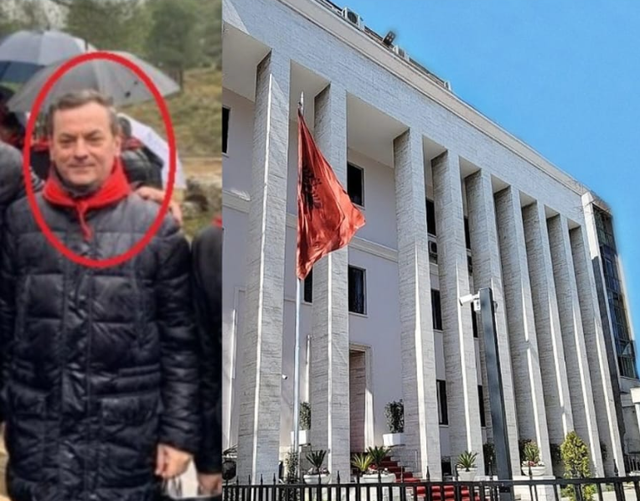
For several weeks, Sokol Sadushi, the head of the Supreme Court, has been in the public eye. With an interim decision, he intervened in a "violent manner" against the Supreme Court's criminal panel.
He then called on the United Colleges to take action regarding the procedures for detention in prison, which, in fact, are all provided for in the law, in the Constitution, the cases when a detainee must remain in prison due to dangerousness, the arguments required from prosecutors, from lawyers, and in the end it is the court that decides.
Sokol Sadushi seems to have a goal. And according to all the arguments given by the media and politics, the interim decision requested by Sokol Sadushi to change the decision of the joint panels of 2011, in the final, aims to release Erion Veliaj from prison, to give the mayor of Tirana with 13 charges a lighter security measure.
CNA has learned that there is a bargain between the head of the Supreme Court and his people close to the Socialist Party or Prime Minister Edi Rama. Sokol Sadushi is known as a strong supporter and close friend of Mero Baze, the journalist of Erion Veliaj's family.
The latter once intervened in our editorial office to delete articles, investigations or declarations of Sokol Sadushi's assets at the time when the latter was the head of the Magistrate's Office and was later promoted to the position of President of the Supreme Court without undergoing vetting, although he left the justice system through the window, he entered through the door, taking one of the highest justice positions in the country.
Sources close to the SP's rebirthers told CNA that a clear scheme goes as far as bargaining for the position of President of the Republic.
It is believed that Sadushi has been promised to make the move to issue an interim decision and change the 2011 decision of the United Colleges and then he could be given the President's chair in 2027.
Mr. Bajram Begaj's mandate ends in July, while Sokol Sadushi's ends a few months earlier. The solution is quite simple: receive a few months' interim payment and then Sokol Sadushi is elected President of the Republic.
This is a promise made by certain segments of the government, which are seeking at all costs to get Erion Veliaj out of prison and for this they are also using the head of the Supreme Court, Sokol Sadushi, with several actions and decisions that have raised many doubts, but nothing has been left unexplained, either from Sadushi's strategy or from the bargains offered to the head of the Supreme Court with important positions such as that of the President of the Republic./ CNA
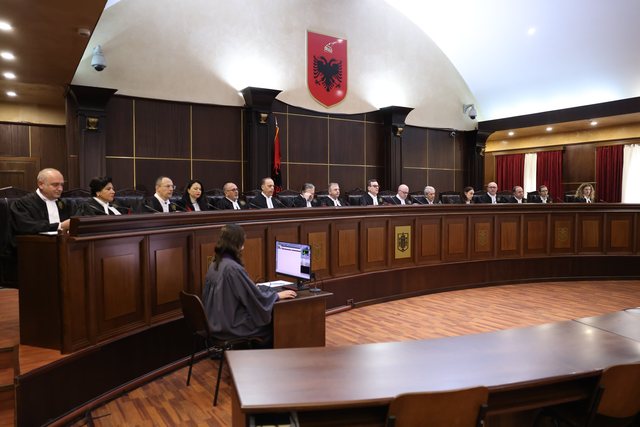
In examining the issues raised before the Joint Panels regarding the interpretation of Articles 228 and 230 of the Code of Criminal Procedure and their relationship with Article 5 § 3 of the European Convention on Human Rights, an approach must be avoided that, under the pretext of strengthening guarantees, risks distorting the very logic of judicial decision-making and shifting the focus from real analysis towards procedural formalism.
Firstly, the thesis according to which the court must, in every case, analyze in detail the alternative measures as a necessary premise for ordering “prison arrest”, does not find direct support in the text of the law.
Articles 228 and 230 of the Code of Criminal Procedure do not require an inventory-type analysis of every possible measure, but a concrete assessment of the necessity and appropriateness of the measure sought. Transforming this obligation into a detailed and mandatory analysis of every alternative constitutes an interpretative addition that does not stem from the law, but from an excessively formalistic approach.
The court is not called upon to conduct a theoretical exercise on all possible security measures, but to decide on a specific request submitted by the prosecution. If the analysis of the specific circumstances shows that only the measure of “prison arrest” is capable of neutralizing the risk, then the conclusion on the inadequacy of the alternatives is included in this finding itself and there is no need for a separate justification for each of them. To demand the opposite means to replace the substantive analysis with a formal ritual of justification.
Secondly, the attempt to exclude the nature of the criminal offense as an assessment element in determining risk constitutes another deviation from the logic of the law.
It is indisputable that risk cannot be automatically and abstractly presumed solely on the basis of the seriousness of the offence, but it is equally wrong to claim that the nature of the offence is an irrelevant or useless element in this assessment.
The nature of the offence, the manner in which it was committed and the severity of the sanction are objective elements that directly affect the assessment of risk and cannot be excluded from the analysis without making it artificially truncated. The problem lies not in the use of these elements, but in their use exclusively and without reference to the specific circumstances of the case.
Thirdly, the thesis according to which the inappropriateness of detention in prison must be proven by the defendant constitutes an unacceptable reversal of the burden of proof and contradicts the fundamental principles of criminal procedure.
In an accusatory system, it is the prosecution that must justify any restriction of personal freedom, while the defendant does not and cannot have the obligation to prove the absence of conditions for imposing the measure.
Any interpretation that implies the opposite not only violates the presumption of innocence, but risks turning the security measure into a mechanism that is applied in the absence of sufficient evidence, simply due to the defendant's inability to produce evidence to the contrary.
In this context, the problems identified in judicial practice – the use of stereotypical formulas, the lack of concrete analysis, and the automatism in determining pre-trial detention – do not stem from an erroneous normative or interpretative standard, but from a deficient implementation of the existing law.
Consequently, the attempt to address these problems through a reformulation of unifying practice risks treating the symptom rather than the cause, adding formal requirements without guaranteeing a real change in the quality of decision-making.
In conclusion, the interpretation of articles 228 and 230 of the Criminal Procedure Code should remain focused on the concrete analysis of the risk and the real necessity of the requested measure, without shifting towards a formalism that does not add substantial guarantees.
Any deviation from this approach, whether in the form of an obligation for detailed analysis of alternatives or in the form of reversing the burden of proof, risks violating the balance between the effectiveness of criminal proceedings and the protection of personal freedom./ CNA
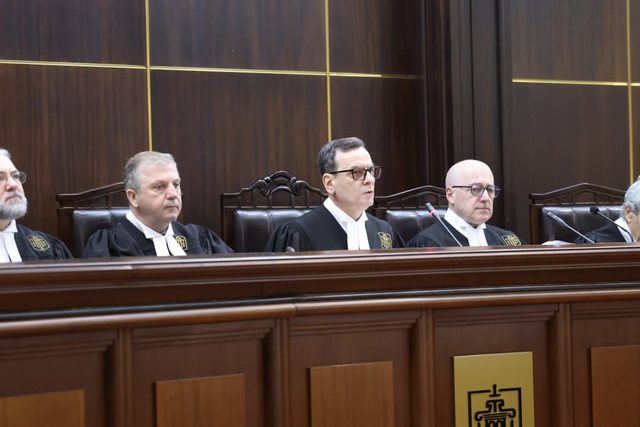
Pre-trial detention as an extraordinary measure, concrete risk analysis, proportionality — these are not innovations. They have been part of the Criminal Procedure Code since the beginning and a direct reflection of the standards of the European Court of Human Rights. However, today they are being treated as if Albanian justice has just entered a new era of legal awareness.
For when a system feels the need to so solemnly reaffirm what it has always known, it is usually not discovering a new truth — but reacting to a concrete circumstance. And when that circumstance coincides with high-profile public and political issues, doubt is no longer merely speculative but inescapable in public perception.
Of course, no one would openly say that such a change in practice is intended to affect a particular issue. But justice is not measured only by what one says, but also by the moment when one chooses to say it. And the timing, in this case, is as significant as the content.
The problem has never been the lack of a standard. No one has prevented the courts from requiring concrete evidence of risk, from avoiding stereotypical formulas, or from analyzing proportionality. The problem has been elsewhere: in the way judicial discretion has been exercised and in the lack of strong control over that discretion. This is a problem that is not solved by a new unifying decision, but by a change in judicial culture — something that is not announced, but built over time.
Because it can be read as an attempt to “universalize” a need that actually arises from a specific case. And when justice is perceived as reactive to cases rather than as consistent in principles, public trust is not strengthened — it is weakened.
In the end, a simple but essential dilemma remains: if the standard has always been there, why did it take such a moment to recall it? And most importantly — are we dealing with a real improvement of the system, or simply a reformulation of it to adapt to a context that requires immediate response?
Because justice is not measured by the ability to say the right things, but by the ability to enforce them consistently — even when there is no reason to say them out loud./ CNA
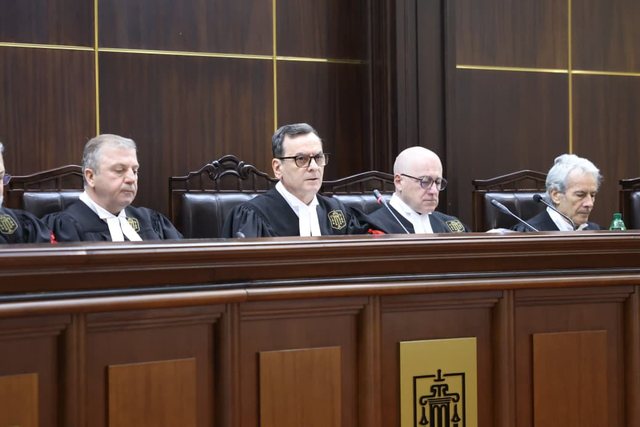
There is a subtle irony in the way Albanian justice occasionally reveals principles that it has always had at its disposal. Today, there is talk of the need for “further development of judicial practice” on security measures, as if the exceptional character of detention, proportionality and concrete risk analysis were innovations of recent years. In fact, these are the foundations on which the Code of Criminal Procedure and the jurisprudence of the European Court of Human Rights were built from the beginning.
Why a new unifying decision, a new debate, a “reinvention” of the standard? When a legal system feels the need to solemnly reaffirm what the law has long said, the problem is usually not the lack of a norm, but the lack of its implementation.
It is difficult to avoid the perception that this exercise does not stem from calm doctrinal reflection, but from the pressure of a concrete context. When justice moves with great energy to clarify well-known principles precisely at certain moments, the legitimate question arises: is a general standard being constructed, or is a general justification being sought for a particular case?
Because, in essence, nothing has ever prevented the court from seeking concrete evidence of risk, from realistically analyzing proportionality, or from avoiding stereotypical formulas. There has been no legal vacuum. There has been, in many cases, simply a lack of will to apply the law rigorously. And this is a problem that is not solved by a new unifying decision, but by a different judicial culture.
Instead of acknowledging that the standard has always been there and that the deviation came from practice, the system chooses to present the situation as a need for “further development.” It is an elegant way to avoid the more difficult question: why has what has long been known not been implemented until now?
In a climate where every move in the justice system is also read politically, this initiative risks being seen not as an improvement in the system, but as a reaction to a specific case. And in justice, perception is as important as reality. A standard that is reaffirmed only when the system needs it, and not when the law needs it, loses some of its credibility.
In the end, the question remains open and uncomfortable: if the law has always been clear, why does it take such a huge judicial exercise to say the same thing again? And most importantly — will it really change anything, or will it simply change the way decisions are written?/ CNA
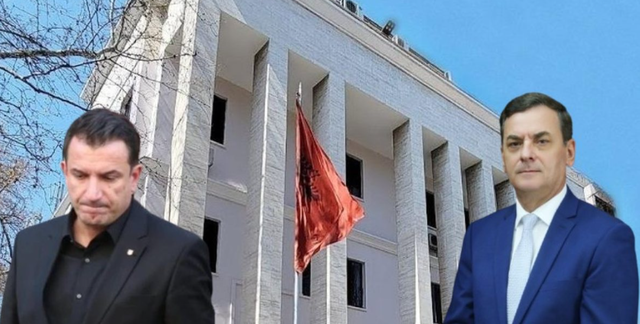
Sokol Sadushi, one day before a decision by the Criminal Chamber of the Supreme Court, intervened with an interim decision.
He found Begtash Zeneli and struck 14 hours before. He didn't let the college make a decision, but intervened himself.
And now he has proposed that the Joint College convene to discuss the 2011 decision.
A criminal practice that will actually be discussed by the majority of civil judges, namely the Administrative College and the Civil College, while the chances are clearly that the Criminal College will be against it because it is the one that will work with that practice, it is the one that will follow it, it is the college that has exhausted and has also worked with the practices of the past.
In fact, such a decision by Sokol Sadushi or any president of the Supreme Court could come at any moment. The question that arises is simply: why did Sokol Sadushi intervene now? What is the reason? What is the purpose? Did Mero Baze, the journalist of the Veliaj family, intervene with Sokol Sadushi? They are both friends.
CNA has materials and concrete interventions that Mero Baze made in the media for Sokol Sadushi.
He asked not to be written about, not to be attacked, while Sadushi was going to the Supreme Court and the schemes were being revealed.
Sokol Sadushi is indebted to Mero Baze for the media support he has given him and is now the president of the court where the effort to bring Erion Veliaj home will take place.
With a kamikaze move, he asks to convene the United College the day after the trial of Ilir Meta. Meanwhile, a month later, after his decision is made public, there is the trial of Erion Veliaj in the Constitutional Court and thus the scheme clearly works. Ilir Meta is in a daze, a new decision is made to expel Erion Veliaj.
This could be called an allusion, but Sokol Sadushi's intervention is as criminal as a murder that could be committed against the justice system.
This is because the decision comes at a time when the only senior Albanian state official facing 13 serious criminal charges, most of them for corruption, is being held in prison and has been postponing criminal court proceedings for 7-8 months.
For almost a year now, he has been attacking judges and prosecutors from his cell. They have been seen in wiretaps, they have been seen in articles, in the government media, in the media paid for by the incinerators, the "5D" media, and now Sokol Sadushi brings us an interim decision at a very delicate moment.
When justice in Albania must receive its due weight, when the European Union must evaluate the justice structures, not only SPAK, but also the Supreme Court, the Constitutional Court and other institutions.
Some of them have become like those rags used to wipe cement that haven't been cleaned for months, but they are so dirty that they are blocking Albania's path to Europe. And Sokol Sadushi can also block this with the action he is taking.
So we are faced with the fact: will the United College accept being used as a tool, as an army of mercenaries to fulfill Sokol Sadushi's whims, to implement the possible scenario of Erion Veliaj's release?
Or will he stand as a man of integrity in the face of the Sadducees, the Mero Bazes and every other screenwriter to show that in Albania there are responsible officials, that in Albania there are responsible judges, that in Albania there are people who really know how to weigh and are not used like a prisoner's toilet paper in the cells of Durrës?/ CNA
Sokol Sadushi is the President of the Supreme Court of Albania, the head of a very important institution that became part of numerous debates at the time of its constitution.
The Supreme Court is seen by internationals as an institution that should be impartial and, by any standard, even the minimum European one, should have experienced lawyers, people with integrity who are the pinnacle of judicial power, and after them, only the Constitutional Court remains.
The latter is where the noise comes in, but in the Supreme Court, which has professional names and is experienced, it should be so badly misused and thrown out of business or used by its president as private property, let's not say worse than that, like those red-light houses where anyone can enter and exit for a fee, that's how the case of president Sokol Sadushi can be called.
Sadushi is one of the people who participated in the justice reform and at that time its drafters were told that they would not be included and would not be part of the new justice structure, but from the head of the Magistrate's Office, Sokol Sadushi jumped to the head of the Supreme Court and without vetting, if we go by the vetting standards according to the reform that our partisan made, not only would he not be in the justice system, but he would probably be under investigation by SPAK, like many of his other colleagues.
However, we are not going into this in depth, although we will soon have a full analysis of Sokol Sadushi's assets, but the last action taken on March 9, about 12 days ago, shows us the lack of integrity, misuse, and perhaps even the hostage-taking of the partisan Sadushi who has gone into hiding.
From the captain of Peshtan, Mero Baze, the man who tries to strongly protect Sokol Sadushi in the media and politically and is in great trouble and now perhaps using him for his own interests, as Mero Baze declares that Erion Veliaj will come out very soon and he says this in more than a few circles of friends.
He used to declare that Edi Rama had put him in, now he says that we will get him out very soon and the scheme is ready.
Sokol Sadushi intervened with an interim decision on March 9, while also undermining the integrity of the Supreme Court because he intervened about 14 hours before the Criminal College of this court issued a decision.
Where does it happen? In which country in the world? Where did Sokol Sadushi find the file among the 20,000 or so that the Supreme Court has?
Who gave it to him and why? Did he ask for it himself? Why did he intervene with an interim decision that he had never intervened with since the day he took office and vetoed it, perhaps because he saw that he could not resolve the decision the way he wanted with the Criminal College.
Now he thinks that with the United Colleges where he controls the administrative and civil, he will succeed in overturning a decision from 2011 with the aim of releasing the leader of the squad from Paraspuari to please Captain Mero Baze of Peshtani. This is the goal.
The best thing is that on the 9th, the Joint Panel was called to make a decision, while Ilir Meta's trial was postponed to the 8th, the day before.
So, Ilir Meta should remain in prison, then the College's decision is made and on May 10th, Erion Veliaj's trial is held, one month after the 2011 decision of the Joint College is changed with the decision of the new College, to be clarified, justified, published and then live happily by the commander of the Paraspuari squad Erion Veliaj followed by the captain of the Peshtan Mero Baze and in implementation by the partisan Sadushi who went to the squad, blowing up not only the Criminal College of the High Court but also becoming part of a group of collaborators with a man who has 13 serious criminal charges.
With a man who has attacked justice, has attacked Sokol Sadushi's colleagues from the first to the last, and has done this through Mero Baze, simply and only to get a corrupt person out of prison, where the Court of Appeal has said that between Erion Veliaj, Elman Abule and Ajola Xoxa there may be a structured criminal group.
Perhaps SPAK overcame it and did not lead him to such a criminal offense, did not investigate it, but if it were to delve deeper and find accomplices as part of a structured criminal group and were faced with such a fact, Sadushi and Mero Baze would be accomplices just as Erion Veliaj ordered from Durrës prison to question Mero and then attack prosecutors and judges.
Where is the difference between a structured criminal group that collaborates for various criminal offenses, with a group of individuals, media, judges, journalists, lawyers, businessmen who are doing everything they can to get their "leader" from Paraspuari, Erion Veliaj, out of prison. His servant is now the partisan who came to the cheta, Sokol Sadushi./ CNA


Veliaj files another lawsuit, alibi for de...

Which relative of Carlo Bollino and Erion ...
Sokol Sadushi's interim decisions/Internat...
Tirana Municipality Scandal/Hides official...
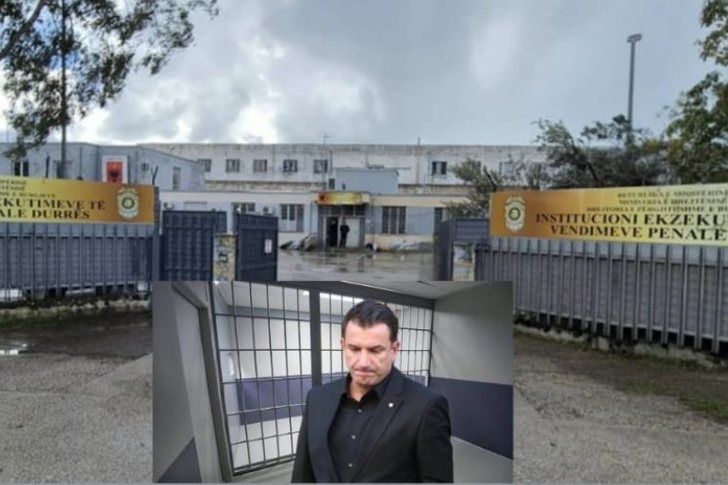
EXCLUSIVE/ What is happening in Durrës Pri...
Mero Baze and Veliaj attack Rama/Corrupt p...
Facts/ How Sokol Sadushi "raped" the Crimi...
Degradation of Veliaj's propaganda/ Attack...
https://www.cna.al/aktualitet/detaje-nga-operacioni-si-u-a...
What is happening in the QSUT?/ When hospi...
SCANDAL/ Agim Ismaili signed the tender fo...
KPP is violating national security/ IT pro...
Investigation into terror over business/ J...
Demolition of villas in Sauk/ IKMT remembe...
Another member of the Constitutional Court...
https://www.cna.al/kosova-bota/zgjeđetjet-ne-kosove-dalin-...

Ardit Bido, with several versions about th...

The hearing for "Partizan" is postponed / ...
The 40s of Mero Baze and Erion Veliaj Sep...
Appointments in the 'Rama 4' government/ H...

CNA has launched another investigation that could lead to ...

Irfan Hysenbelliu is a businessman that we call "Irfan the...

In March 2026, CNA launched another investigation centered...
The arrested mayor of Tirana, Erion Veliaj, with 13 charge...

The Special Board of Appeal (KPA) decided this Monday ...

The KPA vetting decided this Thursday to dismiss the p...

Suela Salavaçi, a prosecutor in the Prosecutor's Offic...

The Special Board of Appeal reinstated the prosecutor ...

Police have arrested a 34-year-old woman at Rinas Airport ...

A serious accident has occurred on the Lezhë-Shëngjin axis...
A serious incident has occurred in Morina, Kukes. Citizen...

The bad weather that swept the country on Tuesday evening ...

This Wednesday, our country will be under the influence of...

All of Southern Europe will face changing weather conditio...

Albania was hit by temperatures significantly higher than ...

For the first time, Pogradec welcomed the Inter-Lake Chess...

Prime Minister Andy Burnham has announced that most bus fa...

France's parliament has passed a law to ban social media f...

US Secretary of State Marco Rubio arrived in Manila on Jul...
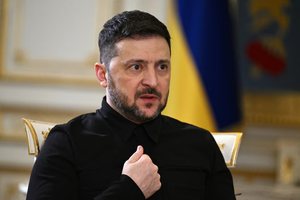
In the space of a few days, Ukrainian President Volodymyr ...

At a time when industrial products are increasingly taking...

Trust among people is not just a three-syllable word. It c...

Master of humor Todi Llupi has passed away at the age of 7...

The ninth edition of "MIK Festival" kicked off with one of...

Businesses will no longer be required to simply register t...

Despite economic growth and income in recent years, Albani...

This Wednesday, one US dollar is bought for 81.4 lek and s...

Construction company licenses will have a validity period ...