


Businessman Artur Shehu breaks his silence: I am a long-time land owner in Zvërnec, I don't know the investors at all
Albanian businessman Artur Shehu spoke on the Opinion show...

Albanian businessman Artur Shehu spoke on the Opinion show...

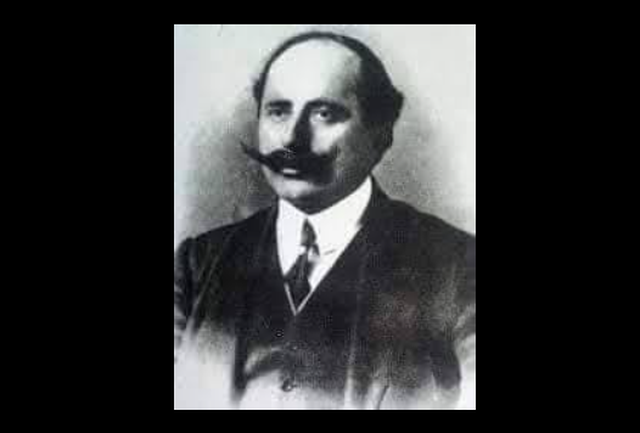
by Uran Butka
The proclamation of the Albanian Self-Government of the Korça region on December 10, 1916 is a major event in the history of Albania.
During World War I, Albania became a battlefield for the warring European and Balkan powers, for their own interests. The Greek government took advantage of this situation to penetrate its army into Albania and by the end of 1914 Korça and Gjirokastra were occupied by it. The Serbian armies reached Durrës. Meanwhile, Northern and Central Albania had been occupied by the Austrians, who, after defeating the Serbs, had advanced to the vicinity of Korça. The Italians had taken positions in the Gjirokastra district and in part of Kolonja, as well as on the island of Sazan and in Vlora.
In October 1916, the French army occupied the Korça region. The existence of Albania was also weighed down by the secret Treaty of London for the partition of Albania.
When the French army arrived in this region, it was faced with a large armed Albanian movement, which fought for the expulsion of the Greek invaders from the region, because it considered the Greek occupation to be more dangerous, not only because they had proven it during the years 1912-1914, for their chauvinism and unprecedented massacres against the population, but also because Korça and Gjirokastra had been designated in the secret Treaty of London as territories that would be given to Greece.
The patriotic forces of the Korça region reacted and surrounded the city of Korça: Sali Butka's detachments, collaborating with the Austrians, stretched from Kamenica to the Melçan tekke, and Themistokli Gërmenji's forces, with Bulgarian-Macedonian support, from Podgoria to Melçan. The two commanders made an agreement to militarily tighten Korça and keep it under control. The Melçan tekke would be their common center.
Commander Sali Butka sent the following requests to the military authority in Korça, Colonel Burnazel:
1) The Albanian flag should be raised in Korça. 2) Albanian national schools should be opened in Korça and Greek schools should be closed. 3) The French army should leave the city of Korça and stay in Debojë, at the barracks.
(Petro Harizi, “Chronological History of the Korça Region”)
In these unfavorable strategic and military circumstances for the French, General Sarrej sent Colonel Deskoins to Korça with two infantry battalions and cavalry squadrons and an artillery battery, with clear instructions: "The General does not want any Greeks of any kind, nor Italians, nor Essatists in Korça."
On November 23, 1916, the colonel expelled the Greek governor Argyropolos from Korça with all his entourage and dispersed the gangs of the Andarts. Decuan appreciated the Albanian national sentiment in Korça, which according to him “the Greek occupation could not let it breathe, but could not suffocate it.”
On November 24, Themistocles presented himself to the French authorities and met with Colonel Deskoins.
Themistocles' words are famous: "I am an Albanian patriot. I have no reason to be hostile to the French. I have never been against you, but with those who seemed to me to guarantee the freedom of my homeland. I see the Greeks as our greatest enemies. I have taken up arms to fight them. Now that the French authorities have removed the representative of the Greek government from Korça, I no longer have any reason to remain in the mountains. I come to you as a completely loyal man, Kimen at your disposal. I ask for nothing more than to help you and to put my influence over the populations at your service."
Even from these patriotic words of Themistocles, it is clear that the main danger for the Korça region was the Greek one.
The French Colonel Descoins assessed the Albanian patriotic forces as follows: “To the west of Korça, the Austro-Albanian gangs of Sali Butka. The totality of the gangs of Sali Butka had the strength of several French battalions. To the north of Korça, the Bulgarian-Albanian gangs of Themistocles had the numerical strength of a French battalion.
Surrounded by Albanian fighting forces, the French colonel made a breakthrough to contact Sali Butka.
He sent a military delegation led by Major Masjet to Sali Butka, along with a delegation of Korça citizens. The talks were successful.
Sali Butka's requests, dated December 3, 1916:
1. The self-government of the kaza of Korça will provisionally include Bilisht, Kolonjë, Opar and Gora, until the other provinces are liberated.
2. The official flag will be the flag of Skanderbeg with the double-headed eagle.
3. The official language will be Albanian.
4. A commission of five patriots will be formed, elected by fighters of the national movement. The commission will fulfill the duties of a government with the right to make laws, appoint and dismiss officials, change and regulate everything it deems useful and reasonable.
5. The administration will be composed of proven patriotic elements.
6. The courts will operate in the Albanian language and with personnel capable of fulfilling their duties.
7. Education will be entirely Albanian, with sound national foundations.
8. All Greek propaganda schools to be closed
9. Post offices and telegraphs will depend on the Albanian administration
10. A police force to be formed to maintain the peace of the city.
11. An Albanian gendarmerie with Albanian commanders to protect the country.
12. The French command is obliged to protect the self-government of the Korça kaza from any threat
13. The French government assumes the moral obligation to support the rights of Albania and especially of the Korça kaza in the conference that will be convened when the war is over. (P.Katro: Who is Sali Butka, Tirana 2020)
Themistokliu, Tefik Panariti and Llazo Progri, appeared in the office of Colonel Descoins and handed him Sali Butka's envelope with the demands of the Albanian side. "Yesterday afternoon at 3.30 Themistokliu and I paid a visit to Colonel Descoins, where we also found Major Massiet, who received us with extraordinary familiarity and cordiality. The Colonel, shaking hands with Themistokliu, shakes his hand and says: "I am truly touched by the magnificent reception and honors that were given to Major Massiet and the commission that I sent to Sali Butka.
The major gave me a vivid and detailed description of yesterday's meeting, with the impression of a feeling of love and admiration, both for Sali Butka and for his secretary with French culture and for the valiant combatants of Albania. I was particularly impressed by the content of Sali Butka's letter with its conditions inspired by a high sense of patriotism and which in essence do not differ from those we discussed together. I want to express my joy for this and consider us both from now on as your most sincere friends. Sali Butka's conditions (which he showed you) I am studying with attention and will forward them to my chairman, with a long and very favorable report, as they strengthen and consolidate your work.
Colonel Deskoins accepts in his book "Six Months of History of Albania" Sali Butka's proposals and the turn his proposals took for the proclamation of the Albanian Self-Government of Korça.
"This evolution could have taken place gradually, if a personal insight of Sali Butka, who from the Melçan tekke observed and felt the aspirations of his compatriots, had not come and caused the accelerated flow of events. On the evening of December 3, I received a letter from him, in which he announced to me that he was completely willing to lay down his arms, if the command proclaimed the independence of the Korça Kaza, under the military protection of France. It goes without saying that I was not competent to make the decision that Sali Butka wanted, but it was my duty to study the issue as fully as possible and to give the Commander-in-Chief all the elements of the decision that he would take in this matter" - Colonel Desoins.
Colonel Deskoins considered Sali Butka's requests from a military point of view, that is, he considered the consequences that accepting or rejecting Sali Butka's proposals would have on the operations of the Allied armies in the East. He addressed the matter, along with his reasoning, to Commander-in-Chief Sarrej in Thessaloniki and received from him a positive response, which approved Deskoins' views and Sali Butka's requests. He immediately called Themistocles and conveyed the two telegrams from Thessaloniki. The colonel gives a high and touching assessment of Themistocles: "His satisfaction was of the deepest. Indeed, he saw his dream, the independence of his country, realized, and he would be the main forge of this historical event."
Military Commander Dekuan responded positively to Sali Butka:
"To Mr. Sali Butka
Commander of the Albanian Volunteer Fighters, Melçan
According to the instructions received from the Commander-in-Chief of the Allied Armies of the East, General Sarrej, I have the honor to inform you that the Allied Command views with favor and appreciates your patriotic movement for the rights of the Albanian people for freedom and independence. It also took into account the wishes expressed in your letter of the 3rd of this month, which it found reasonable, and I am authorized to communicate its consent and approval to you. Please accept, Mr. Commander, the expressions of my highest consideration.
Colonel Dekuan,
Commander of the Korça District"
Sali Butka was pleased with the fulfillment of the proposed conditions:
"Major," he wrote to Major Masjet, "I am very pleased with the general's response and please write to him expressing my deep gratitude, along with my congratulations on the victory of the Allied powers. Also, please pay homage to the colonel and assure him of my loyalty. Since today I am spiritually united with you and await the opportunity to fully join your ranks" - Sali Butka.
Chronicler Petraq Katro, in the book “Who was Sali Butka”, Tirana, December 2020, writes:
“On Saturday morning, Sabri Panariti, sent by Themistocles, arrived and informed us confidentially that our conditions were accepted and that he would officially notify us. Sabri also told us that the next day, December 10, a protocol for the self-government of the Korça Kaza would be signed, the national flag would be raised and a government council would be elected.
Colonel Deskoins, together with his staff and Themistoleus, worked all night and drafted the document declaring the self-government of the kaza of Korça, which, according to Deskoins, would constitute in a way the “Fundamental Status of the Autonomous State of Korça” (Deskoins “Six Months of History of Albania, Paris”).
In the Protocol dated December 10, 1916, it is sanctioned: "According to the desire of the Albanian people, which it confessed through its representatives, the Kazan of Korça, together with the regions of Bilisht, Opar and Gora, form the self-governing province of Korça to be governed by Albanian governors, under the protection of the command of the French army". (Protocol of December 10, 1916)
Kazan would be governed by a commission of 14 Albanians, 7 Christians and 7 Muslims, the official language would be Albanian, the Albanian flag of Skanderbeg, with a tricolor ribbon of France. Themistokli Germenji was appointed Chief of Police, while Petro Harizi was elected Secretary General of the Government Council.
Dekuani describes the moment when the Protocol was publicly announced:
"Themistocles went out onto the balcony, addressed the people with a speech and, amidst cheers, unfurled the flag of Skanderbeg, tied with the French colors, in the place where the Greek flag had flown days before."
This was an extremely important historical act in the history of Korça and Albania, because it affirmed the ethnic Albanian character of the Korça province and its administration by Albanians. It was an agreement with political and military content reached on the basis of parity and mutual interest, but with national values ??for us, not only at that moment, but also later during the confrontations at the Peace Conference, so that Korça would ultimately remain with Albania.
. The French themselves were also interested in such an agreement. “To escape the risk of compromising our situation in Korça, we had to do something to bind the Albanian population to us in an irrefutable and definitive way” - wrote Deskoins.
Similarly, General Sarrej telegraphed to the French Ministry of Foreign Affairs in March 1917: “Korça wanted to be independent and it became so. Since then, peace has reigned in this province” (History of the Albanian People, 2007)
Prominent patriots from Korça and Kolonja, such as Petro Harizi, Petraq Katro, Thoma Katundi, Dr. Mborja, Tefik Panariti, Nilollaq Zoi, Baba Zylfo, Qazim Panariti, Hajdar Kolonja, Hysen Nikolica, etc., also helped in this historic achievement.
The proclamation of Albanian Self-Government in the Korça kaza saved the Korça region from Greek occupation, united it with Albania, and later influenced the decision-making of the Great Powers at the Peace Conference, so that Korça would remain with Albania.

For more than three decades, Albanians have been told that...
I came across such a post online today. This is the bigges...

At the end of November, the National Security Strategy (NS...

Beyond the petty village vendettas, the games they play wi...
A news story appeared in the media yesterday about the rec...
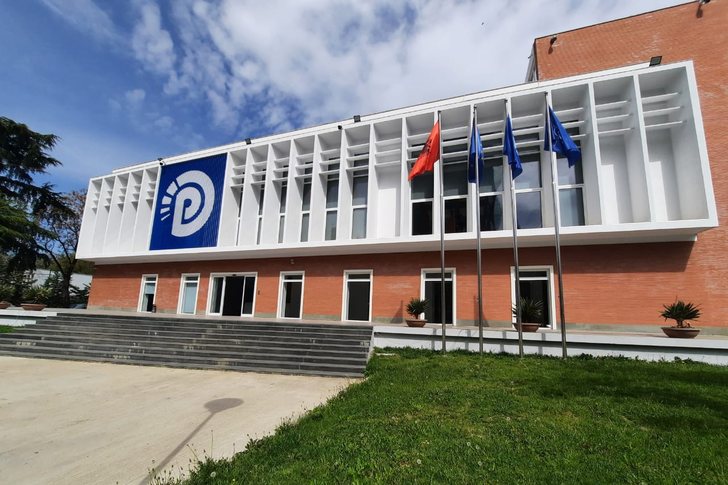
I have never been against the opposition. This is not a de...
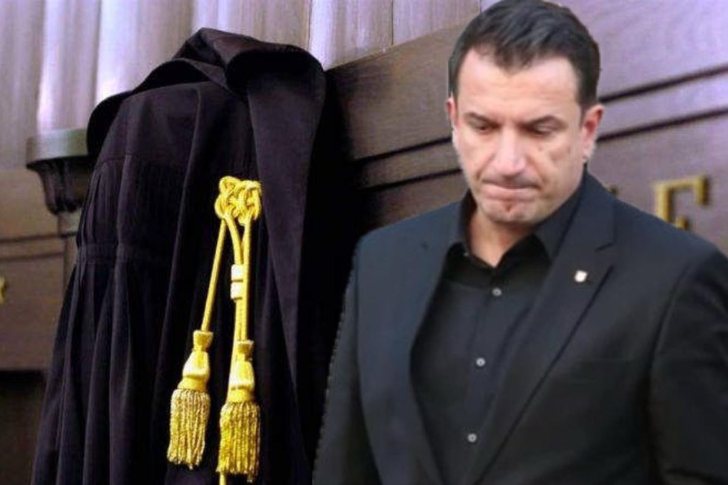
In the media, every time there is a court session at the G...
In my new novel "The Second Punishment of Eve" (Papirus Pu...
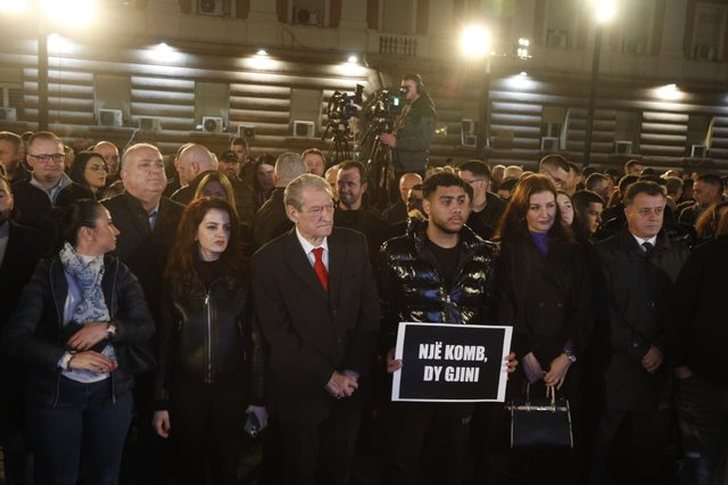
Three protests, the one by the DP, the one initiated by Ad...
“Nuk ka mjekë spitali. Shkojmë nga Përmeti në Tepelenë për...
1-Small parties do not accept candidates from the DP, ther...
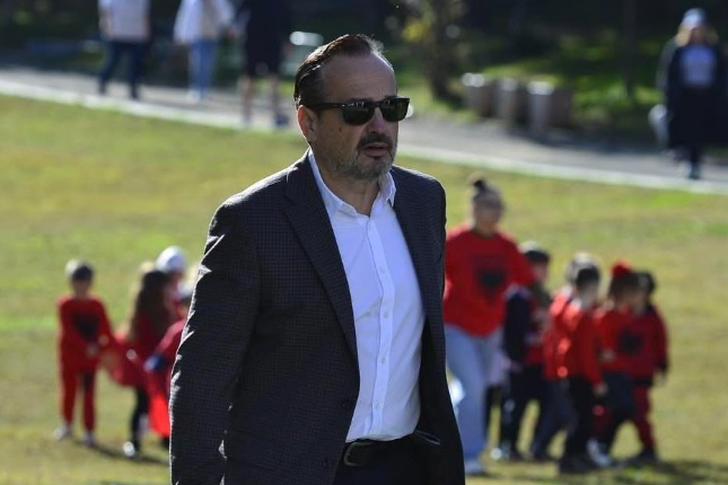
There are moments in a country's history when laws are no ...
Myth Two: QUARANTINE Myth: Quarantine was "invented" to c...
The law clearly explains it: a candidacy for the People's ...

The Democratic Party has maintained a very good stance on ...
In the 1980s, the fashion for sleeveless dresses came into...

Once again about heroism and the collapse of the dictators...
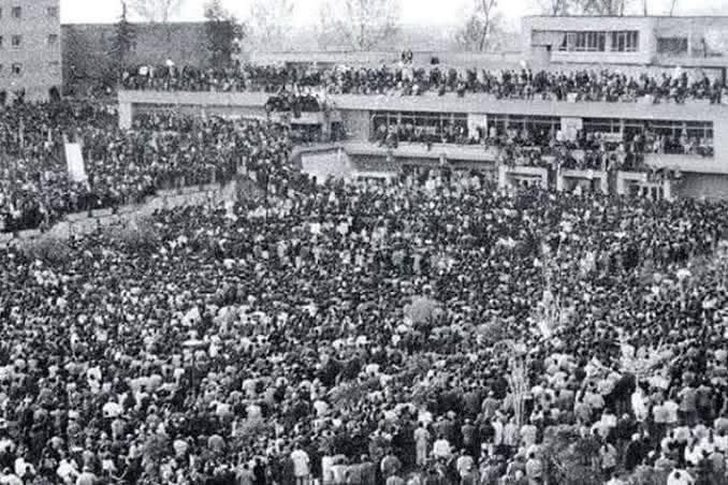
Albania marks today the 35th anniversary of the beginning ...
Once, with cynicism and black humor, Edi Rama sincerely be...
December 8 is not just a date or a historical event; nor i...
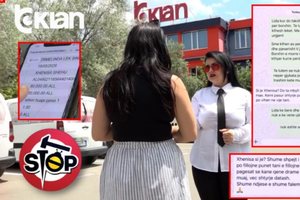
The next case broadcast on the show "Stop", this Thursday,...
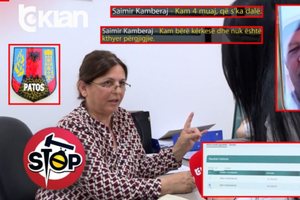
The case published this Thursday, June 4, on the show "Sto...

The protests of recent days related to the situation in Zv...
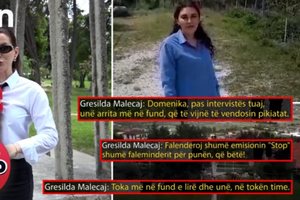
The case addressed this Wednesday, June 3, on the show "St...

The Special Board of Appeal (KPA) decided this Monday ...

The KPA vetting decided this Thursday to dismiss the p...

Suela Salavaçi, a prosecutor in the Prosecutor's Offic...

The Special Board of Appeal reinstated the prosecutor ...
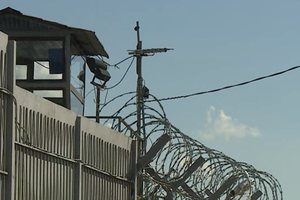
A convict was found dead today in the premises of the Pris...
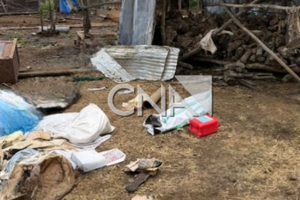
Several images provided by CNA show the area where this mo...
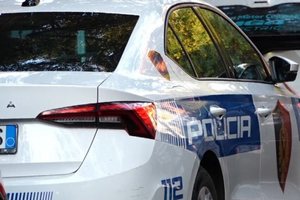
A quantity of explosive material exploded this morning at ...
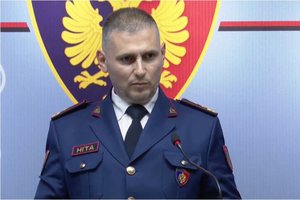
The Head of the State Police, Skënder Hita, expressed his ...

For many children and teenagers, the long summer holidays ...
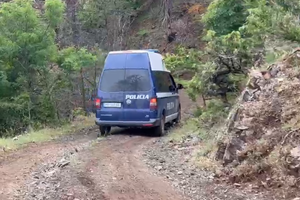
Witnesses in Lozhan, Maliqi, have shared details from the ...
Albania is facing an unprecedented demographic transition,...
On Thursday, our country will be affected by unstable weat...
Russian President Vladimir Putin said the war in Ukraine c...
An extraordinary story of survival has been recorded in Ne...
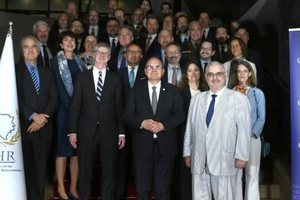
The Peace Implementation Council in Bosnia and Herzegovina...
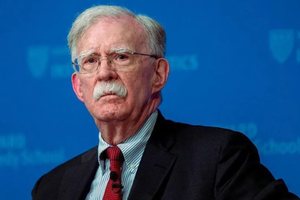
John Bolton, the former national security adviser to US Pr...
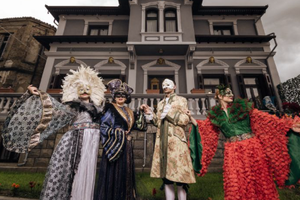
Korça is ready to open the summer season with one of the c...
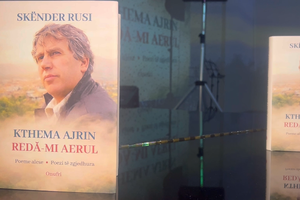
Two years after his passing, the renowned Korçë poet Skënd...
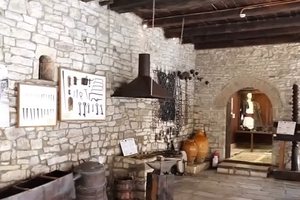
The Ethnographic Museum of Berat has opened its doors to v...
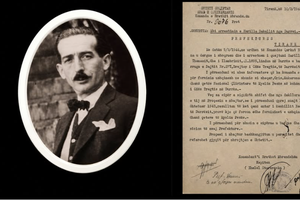
The story of Harilla Bakalli is one of the most chilling t...
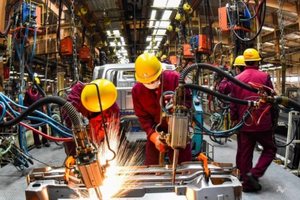
The government aims to transform the country's industrial ...
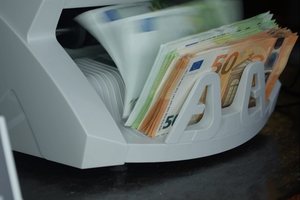
Kursi i këmbimit të euros me lekun ka rënë më tej këtë jav...
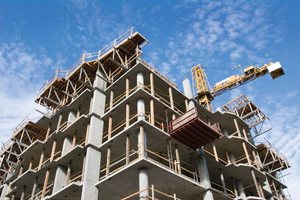
Profit margins in the construction sector have increased s...

The Transparency Board, at its meeting today, decided to i...