

7 lessons from the Declaration of Independence
The Declaration of Independence on November 28, 1912 h...


November 28, 1944 is not only the day of Independence, but also the day of the Liberation of Albania. Although, even today, the descendants of the Stalinist dictator continue to celebrate Liberation Day according to the Enveristo-Serbian rite on November 29, i.e. the date forged by Enver Hoxha by order of Belgrade, even after celebrating the first two years of this holiday on November 28.
The importance of this position lies in the fact that Enver Hoxha falsified this date as well, in order to unite this holiday, not with Liberation Day, but with the national holiday of the Federation of Yugoslavia, with the day of its announcement in Jajce, on November 29 of the year 1943.
So, he falsified the date of Liberation so that, after the union of Albania as the 7th republic with the Federation of Yugoslavia, the Albanians would also celebrate on November 29, together with the other republics, but of course not Jajca, because there they did not have been, but the Liberation of the country.
However, unfortunately, even to this day, there are Albanian speakers who, in the example of Edi Rama, the argat of Belgrade, or Pashiq of Tirana, continue to have Belgrade as their Mecca. On that note, I will dwell on another fundamental aspect of this date, the most undeniable historical truth, that November 28, 1944 marked not only liberation from a foreign occupation, but also the replacement of that occupation with an occupation double, another foreign invasion and an internal invasion, like never before. This, after an Albanian-Serbian clique sat on the throne of power in Tirana, with the main project of destroying the independent state of the Albanians.
Today, historians and researchers, domestic and foreign, with their serious and numerous publications, based on thousands of documents from the archives of the country, those of the Allies of the war and other countries, have rewritten history in the light of the truths. undeniable historical. They, with their very important works, have melted the ice, the high mountain of falsifications of Hodgist historiography, like the rays of the sun. Therefore, today, based on scientific historical truths, is the time for deep reflection by every Albanian, wherever he lives, about our history as a whole, as well as in this particular case, also around this date.
The studies, the fundamental publications of this quarter of a century, based on thousands of documents and reports of the time, have exhaustively proven that JB Tito and the Communist Party of Yugoslavia, for the interests of Serbdom, established with two main goals, with their envoys, in November 1941, in Tirana, the Communist Party of Albania, as a branch of the Communist Party of Serbia, led by Popovic-Mugosha.
The first and most important goal was the creation of the "Trojan Horse", i.e. a Yugoslav party and movement in Tirana, directed, ordered and used by them against the Albanian cause. The second purpose was that, following the orders of the Comintern after the Nazi attack on the Soviet Union, this Albanian force and movement, led by the Serbs, mobilized the Albanians in the war against the invaders.
In this context, the Serbian-Montenegrin communists wrote the program of this party without ever referring to Kosovo and the Albanian issue, put Miladin Popovic at its head and appointed Enver Hoxha and other vassals around him.
So, the Serbian-Montenegrin representatives of the Communist Party of Yugoslavia (KPJ), as Tito himself claims, founded, led and ordered the Communist Party of Albania (KPSH) and its partisan units throughout the war as a Yugoslav party and movement, and more specifically Serbian.
PKJ, with its Trojan Horse, PKSH successfully managed to block the unification of Albanians in Albania and other territories, that is, the unification of the entire Albanian nation in the fight against the invaders.
They, with the direct help of PKSH and Enver Hoxha, and Albanians of Kosovo origin, such as Fadil Hoxha, etc., who were sent there on a mission, managed to place Kosovo under the control of PKJ, despite the fact that the Kingdom of the South Slavs, neither and their federation, did not exist. Tito and PKJ, through their Yugoslav movement that they founded in Tirana, accomplished the above, completely excluding the national issue from the PKSH program.
Likewise, they imposed the immediate cancellation of the Mukje Agreement, the ignoring and annihilation of the Bujan Agreement, and ordered the dispatch of Albanian partisan brigades and divisions to Kosovo under the pretext of liberation from the Germans, but in fact, as a vanguard of its invasion by Serbian-Montenegro divisions and its placement in military administration by Tito.
In addition to these, historians and researchers have proven with indisputable documents that: the Yugoslav leaders and their tool, Enver Hoxha, after September 1943, degraded the Albanians' fight against the invaders into a mainly civil fratricidal war and that the KPSH, as they unanimously accepted, Enver Hoxha himself and the other leadership of this party in the second Plenum of Berat, implemented a terrorist political line during the war, that is, acted as an organization terrorists, committing in dozens and hundreds of cases genuine terrorist acts.
The studies of the last decades based on countless documents have proven that the Serbs and Enver Hoxha and their other Albanian vassals at the head of the partisan army of Albania committed genocide and serious crimes against humanity against the Albanians during the war against the invaders.
This terrorist clique violated on hundreds and hundreds of occasions the international conventions of Geneva, The Hague, for the protection of the civilian population, prisoners of war, the sick and wounded of war, etc.
The truth forces you, therefore today, it is in the interest of every Albanian, in his relationship with the historical truth of the nation, to ask the question: Were we Albanians really freed on November 28, 1944?
In trying for an objective answer to this question, we will find that the truth of our liberation, and here I am not talking about the date 28 or 29, but about liberation as such, is a two-sided coin.
On the one hand, it is true that, in relation to the German occupation, we were liberated, after the Germans, who were losing the war, withdrew from Albania, and we came out of the Second World War ranked on the side of the victorious Allies.
On this same day, Enver Hoxha was installed in Tirana with his government as the winner and delivered a long victory speech. For this historical act, thousands of boys and girls, men and women of our nation sacrificed their lives and youth during the war, and tens of thousands of others fought with courage and determination against the Nazi fascist invaders and thus placed Albania on the right side of history.
The honor, for those who sacrificed their lives for the ideals of freedom, will remain eternal. Their blood and sacrifice is the foundation of our national freedom. However, this will remain the honor for all those who fought against the invaders for national freedom and did not behave like Cain to their brothers during the war, did not commit acts of terrorism, genocide and crimes against humanity. Whereas, the latter, for their crimes, have ended up where they belong, as executioners of their people, in the dustbin of history.
I want to add here, that these historical truths cannot be denied, regardless of the monstrous manipulations and falsifications of the war by Hodgist historians, such as: increasing the number of casualties by several times, inventing battles that were not even fought, exaggerating the losses of caused to the enemy, etc., etc.
These truths about the partisan war cannot be denied, just like the genocide and crimes against humanity that the Albanian-Slavic communist leadership committed during the war with its terrorist phalanxes, systematically during the war, and for which they deserve every punishment, even not the fratricidal and civil character that dominated this war cannot be denied either, since Enver Hoxha and his clique for the purposes of personal power and ordered by his Serbian masters, given to her after the signing of the historic Mukje Agreement in September 1943.
In her idea, the war against the invaders was a just war.
The Anglo-American allies had recognized, valued and supported, financed and supplied the partisan army with weapons, uniforms, food, and specialists. Their governments had welcomed the struggle of the Albanians against the invaders from the beginning. Undeniably, the communist partisan forces were the most organized and numerical units in the theater of war in Albania, and this, not because of their broad support among the people. But, first of all, because of the undeniable weaknesses of the Albanian nationalists. It is just and fully justified, and I think mandatory, the harsh condemnation of all the inhumane anti-national attitudes of the Serbian-Albanian clique that led the Paris war. But it is very wrong to deny the war, the blood shed and the great sacrifices that the partisans made for freedom.
We must never forget that being on the right side of the Second World War had a special importance for Albania. This, not only for the national dignity of the Albanians, but also for the fact that, with all the support that the allies had given to the Albanian people's fight against the invaders, those who at the head of the time had left it open and here, apparently, shared the influence of Greece, the issue of defining the borders of Albania. According to them, Albania's borders would be determined after the war at the Peace Conference. It must be said that, although the war was on the side of the allies, the Albanian nation was de facto treated as lost and remained fragmented as it was unjustly before the war and even worse, the allies at the request of Greece left open the possibility due to the Italian-Greek war of treating Albania as a losing party. Here, more than in any other direction, lies the undeniable importance of Albania's ranking on the side of the allies. After ranking on the opposite side, it could also be accompanied by heavy penalties as the losing party. But it should not be denied that the issue of establishing Albania's borders at the Peace Conference carried within itself the possibility of a request from the Albanian side for the union of Kosovo and other Albanian territories with Albania, of course this in the event that the Albanians would fight unitedly against the invaders. Nazi-fascists, as they decided even after the mediation of the British allies in Mukje.
But the other side, the black side of the medal of November 28, 1944, that is, the date of Liberation, is that this date would not actually mark the true liberation of the Albanians and Albania, but would only mark or bring about the replacement of the German occupation with its specifics, with the Serbian, Yugoslav invasion, many times more dangerous for the very existence of the Albanian nation, as well as the establishment of the most brutal 46-year dictatorship, with monistic, as the most barbaric internal invasion that the Albanians had known in their entire history. So, this day of November 1944, instead of being the day of the national miracle and the year 1944 being an annus mirabilis, is the day of deciding that a black invasion and an annus horribilis for Albanians.
Here below I will briefly dwell on the establishment of the Serbian, Yugoslav occupation after November 28, 1944 in Albania.
The replacement of the invasions happened because, in Tirana, the party and the army established, directed and led by the Serbs of PKJ and Tito, and their tool Enver Hoxha, who after selling Kosovo, had decided and worked to come to power, would come to power. together with Belgrade for the ominous and anti-national project, the annexation of Albania as the 7th Republic of Yugoslavia. So, on November 28, 1944, Albanians celebrated liberation, freedom, cheering for an Albanian-Serbian terrorist clique that installed itself in power in Tirana and entered a new double occupation, the Serbo-Yugoslav occupation and the communist occupation.
Father Zef Pllumi, a witness to the liberation of Shkodra, writes in his masterpiece 'Just show me' that: on November 29, Shkodra was found filled with Yugoslav flags and that in the belfry of the city's Cathedral, the Albanian flag without a star was replaced from a partisan with the Yugoslav flag. So, in the eternal city of the Albanians, the flag of the new conquerors was flying as a tragic proof of the replacement of the conquerors. The flag of the fleeing conqueror was replaced not by the national flag, but by the flag of the new conqueror. Thus, on November 28, 1944, Albanians celebrated liberation, freedom, cheated as never before in their history, and most of them probably not realizing that on this very date they entered a new occupation. More precisely, they cheered on that day an Albanian-Yugoslav clique led by Enver Hoxha, who was installed in power with the macabre project of annihilating their national freedom, the independence of Albania and its annexation as the 7th Republic in the Federation of Slavs. the south dominated by the Serbs, the centuries-old enemies of the Albanian nation.
After this day, i.e. November 28, 1944, the installation in Tirana of the Albanian-Serbian clique of Enver Hoxha, the placement of northern Albania and then Kosovo by Tito under military occupation and administration, genocide and crimes against humanity in Albania and Kosovo will they would take tens of thousands of innocent lives or they would remove hundreds of thousands of Albanians from the country. With this brutal violence and terror against the Albanians, Tito with his vassal Enver Hoxha, with their partisan armies, would continue to walk resolutely in the implementation of the ?ubrilovi? doctrine in Kosovo, but in some way also in the north of Albania and manu militari would eliminate every obstacle on the way to the complete re-annexation of Kosovo as a province of the Republic of Serbia, as well as to the annihilation of the independence of Albania and the union of the latter with Federation of South Slavs, as its seventh Republic.
The annexation of Albania by the Yugoslav Federation was the last act of the great Albanian tragedy that Josif Broz Tito, PKSH and Enver Hoxha were carrying out against the Albanians. This act came as the culmination of the installation of the Trojan horse in Tirana, the total ignoring during the war by Enver Hoxha of the issue of Kosovo and other Albanian countries in the former Yugoslavia, their placement under the KPJ and the full support of the Serbian occupation of these Albanian lands. The annexation of Albania as the 7th Republic of former Yugoslavia was a project of Tito and the Yugoslav leadership since the war years.
With the inclusion of Albania as the 7th Republic of the Yugoslav Federation, in addition to the old dream of Serbia, its exit to the Adriatic, Durrës, according to them, the problem of the Kosovo Albanians in the framework of the Federation of Yugoslavia would receive a final solution. It even seems that for this project, they had convinced even Stalin himself, who, according to Milovan Gjilas, had ordered them to "devour Albania" in the meeting with Tito and his delegation in Moscow. Indeed, in the AVNOJ document, in November 1943, the Yugoslav communist leadership did not invite the representatives of Kosovo at all and, contrary to what it had promised, left Kosovo as a province of Serbia. At this conference, Tito proclaimed on paper the Federal Republic of Yugoslavia and its units or republics. In this document, he had left open the possibility of accepting other republics into the federation, of course without nominally citing Albania, but understanding, first of all, that.
So that after November 28, 1944, not by chance, but in function of the implementation of the project of the annexation of Albania by Tito's federation, in the offices of the new government in Tirana, at all its levels in the party, government, army, police , insurance, education, trade, construction, mining, etc., etc., thousands of Yugoslav advisers, the real decision-makers of the country, would flood. Rapid Yugoslavization and in every cell of the Albanian state and society was their main mission. Even the Yugoslav authorities, with Hoxha's permission, would install in Shkodër, legally, a section of their infamous OZNA service, which operated and exercised terror, just like in Kosovo, independently and with full authority over the Albanian citizens there. the entire north of the country. This section of the OZNA, independently of the Albanian authorities, stopped, arrested, kidnapped and packed off to the former Yugoslavia, and even shot inside the territory of Albania, hundreds and hundreds of Albanians, whom this service considered anti-Yugoslav . In close cooperation with Tito's advisors and with special zeal and enthusiasm, the communist leadership of Albania would complete and sign with lightning speed, as early as December 1944, the Treaty of Cooperation and Bilateral Assistance between Tirana and Belgrade, as the legal antechamber of the union between the two countries. The lightning treaty was signed by Marshal Tito himself.
The two governments, in the process of the complete union of the two countries, signed a series of other agreements for economic, customs and monetary union. Quite different from what was presented later by Hodgist historians, E. Hoxha signed and agreed to deploy Yugoslav army divisions in Albania, and after that, he proposed to Tito the unification of the armies with a common Command and General, i.e. the unification of the command soldiers of both armies.
In the educational system of Albania, at all levels, Serbian became a compulsory language. Their schools, classrooms and yards were filled with songs and cheers for Marshal Tito. Music, folklore, and other Yugoslav artistic productions filled the void created by the ban on the literary and artistic works of Albanian writers and artists who had not supported or opposed the establishment of the communist regime in Albania. Enver Hoxha gave speeches in Kuç e gjetiu against Fishta, he would compare the genius of the epic of our letters with Vladan Gjeorgjevic, the former Serbian prime minister who had committed massacres against Albanians and said that "Albanians are primitive people".
The Albanian economy was placed under the hands and control of tens of hundreds of Yugoslav enterprises that were rapidly established in Albania. All commercial exchanges were made almost exclusively with Belgrade. From these exchanges, Belgrade robbed Albania of a colossal amount of over 200 tons of gold and thousands of tons of other goods, which the communist rulers confiscated from Albanian merchants, entrepreneurs and citizens and took from Yugoslavia against the factory value, wagons, worthless scrap metal. For Enver Hoxha and his Serbophile anti-Albanian suite, the disappearance of independent Albania from the map and its union with the Yugoslav Federation as the 7th Republic, was the best and safest future for the Albanian nation.
In the context of the annexation of Albania and the annihilation of its independence, at the meeting of the Political Bureau on January 8, 1945, Enver Hoxha, as the main promoter of the union of Albania with Yugoslavia, proposed "the union of the PKSH with the PKJ on a federal basis, with a general secretary of the NPSH, Marshal Tito, as a necessary condition for the union of Albania with the Yugoslav Federation." Enver Hoxha would prove his determination for the disappearance of Albania's independence and its union as the 7th Republic with the Yugoslav Federation through a letter addressed to Josif Broz Tito, regarding the union of Albania with Yugoslavia. In this letter, among other things, Enver Hoxha writes: "by Comrade Savo, another step forward has been suggested to us in relation to the formation of our states, that is, in the event that we go as soon as possible to the union of our two peoples," and that: "this union, there is nothing formal, but it is deeply felt in the hearts of our people. We must work concretely for the federation and for this thing, in our country we work with all forms," ??and continues: "but the issue is that we must take the first initiative to request this thing, as suggested to us by the Yugoslav comrades who I mentioned above." Hoxha also states: "We need to be told by you if the moment has come when we should consider the issue of unification and come to conclusions." And, finally, he writes: "We are convinced that, like the Central Committee of Yugoslavia, it will clarify and advise us on the steps, and socially on this important issue for both our countries."
Tito's statement, given to the AP agency in 1946, is in this line, that "Kosovo and other Albanian territories will be annexed to Albania". This statement was made solely with the project of "devouring ethnic Albania", that is, Albania, Kosovo and other Albanian territories, as well as their transformation into the seventh Republic of Yugoslavia.
This ominous project, in which the clock of the Albanian nation had stopped even walking with the clock of Belgrade, which was going safely and unstoppably towards its realization, would fail only because of the worsening and rapid breakdown of relations between Stalin and Tito , this breakdown had nothing to do with Albania or Albanian-Yugoslav relations, but of course, now Stalin would not accept the annexation of Albania by his enemy Tito.
These data irrefutably prove that what is called the date of liberation and that the Albanian left as a whole, from Enver Hoxha to today's neo-blokmen and Edvin Kristaq Rama, holds for genuine ideological reasons as their main holiday, they always celebrate it , more than any other holiday, is simultaneously for the Albanian nation a day with a black mortgage, even with black in the calendar of the Albanian state. This day marks the departure, the withdrawal of the last German from Albania and the establishment of the new and complete occupation of the Albanians by the Serbs, their centuries-old enemies. Albanians and Serbs had faced each other dozens and dozens of times over the centuries. From the middle of the 1800s onwards, the Serbs had completely won all the wars against the Albanians, they had come to Durrës and occupied most of their territories, they had committed genocide and the most terrible massacres against them.
But in all these wars, the Serbs had the political, military and financial help of the biggest empires of the time, except Austria-Hungary. Whereas their greatest victory over the Albanian nation, the victory of November 28, 1944, the Serbs did not achieve with the support and direct intervention of the great powers, but through the Albanians, the Yugoslav movement that they founded and led in Albania and Kosovo with Enver Hoxha and his tools. It is tragic that today, after 80 years, the Albanian left in Albania, led by Belgrade's argat Edi Ramë, after all, the former invaders of that time, are our friends and strategic partners, celebrate the day of the German's departure as its main holiday. the last from Albania and the first day of the Serbian invasion, and this only as a legacy of the barbaric and traitorous fathers. It is tragic that today, after 8 decades, Edvin Kristaq Rama declares to the Albanians that he has a friend and is proud of his friendship with the Serbian president Aleksandër Vucic, the former Goebbels of Milosevic, who during his last visit to the North of Kosovo will swore that Serbia will become bigger, of course by taking and clearing other territories of Kosovo.
Repeatedly, this Serbo-mad would declare that the goal of the Albanian leadership in Kosovo is: "the destruction of our state", that is, it wants to keep the state of Serbia in the Independent Republic of Kosovo. It is tragic that today, after two decades of the liberation of Kosovo, the argat of Belgrade in Tirana, or the Pashiqi of Tirana, just like Enver Hoxha, Miladinet Dushanet, Fadil Hoxhet, hold in their hands and wave the black flag of Greater Serbia. In the project of division and dismemberment of Kosovo, Edvin Kristaq Rama, in an act of open national treason, joined Albania in the Belgrade-Skopje-Tirana Trilateral Alliance and placed Kosovo in the grip of hostile Serbian-Albanian-Macedonian cliques in the "Open Balkan" initiative. , with which, together with his patron, he openly opposed the EU initiative, the Berlin process.
After the barbaric aggression of Vladimir Putin's Russia against Ukraine and the imposition of sanctions by the European Union and NATO on Russia, the little Putin of the Balkans, Aleksandar Vucic, refused to implement these sanctions. Edi Rama, as Vucic's vassal, went from summit to summit openly calling for Serbia not to be asked to implement the sanctions and directly defending his master and Serbia's transformation into a de facto powerful Russian rearguard, more than never in a little Russia in the Balkans. Meanwhile, this fierce enemy of the Albanian nation would be the first in Europe to, in a shameful and hostile act, impose sanctions on Kosovo.
In addition to these, Edi Rama, as a vassal of Belgrade, is implementing the policy of depopulation and denationalization in Albania. With violence, terror, theft of votes, robbery of billions and billions of euros from the funds and public assets of Albanians, worse than any other conqueror in his entire history, he transformed Albanians into people of rafts and deboded with poverty and killing hope from the country. In 10 years, only in the Schengen area, 1.1 million Albanians, or 38% of the population, ie more than any civil war against another nation.
Today, he has concentrated all the powers in his hands, he has created the first and only narco-state in Europe, based on crime, drugs, and theft of Albanians. So today, for every Albanian, the call is for a battle without return to overthrow his regime.
PS: This article is reprinted with changes due to currentness.
I also add that in this article I only focused on a tragic aspect that holds in itself what is celebrated as the day of liberation and not on its most catastrophic aspect, as the first day of the establishment of the most barbaric dictatorship of all time in Albania, Hoxha dictatorship./ CNA

The Declaration of Independence on November 28, 1912 h...
November 28, 1912, not only the marked date of the declara...
In advance, I would like to join the congratulations of al...
It has been a few days since the "Fan Noli" school in Tira...
To understand what happened instinctively, each asks a...
Many have tried to analyze the outcome of the US elect...
Albert Vataj's full text: He is the most beautiful ma...
Nothing in this world and beyond it is not a coincidence b...
Uncertainties are the circles that accompany the life ...
Remember that the Albanian language has 36 letters includi...
"Only Albanians and Chechens kill without motive" wa...
The artist Prime Minister announced today before the A...

When the car crushed the first man, the chorus of those wh...
When a mother sends her child to kindergarten, the hop...
Stop it: All vulgar and banal TV shows. All debates ...
In that small resting place between the crammed palaces, t...
The average American While the liberal press is melting d...
The tragic event that happened at the Fan Noli school in T...
The budget is one of the most important moments in the...
In our small Albania, greater than the love for the ho...
Irfan Hysenbelliu claims to be a big businessman, an hones...
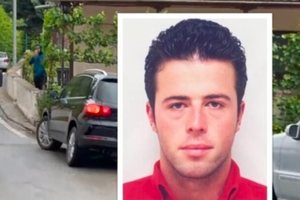
The murder of officer Enea Mekolli in the line of duty has...
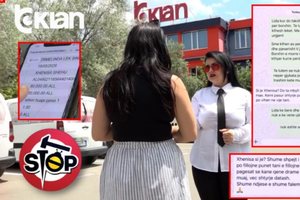
The next case broadcast on the show "Stop", this Thursday,...
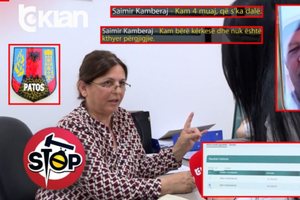
The case published this Thursday, June 4, on the show "Sto...

The Special Board of Appeal (KPA) decided this Monday ...

The KPA vetting decided this Thursday to dismiss the p...

Suela Salavaçi, a prosecutor in the Prosecutor's Offic...

The Special Board of Appeal reinstated the prosecutor ...
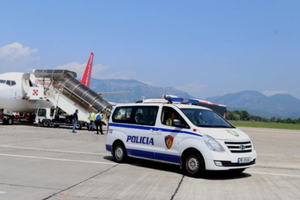
Following the cooperation of Interpol Tirana with Interpol...

An accident occurred this Saturday morning at Shkëmbi i Ka...
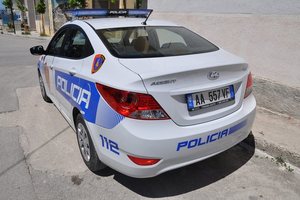
A TNT explosion occurred in Lezha in the early hours of th...
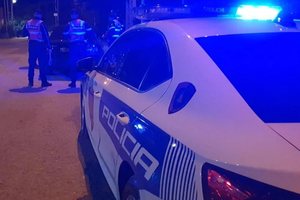
A massive brawl was recorded on Friday evening in Saranda,...
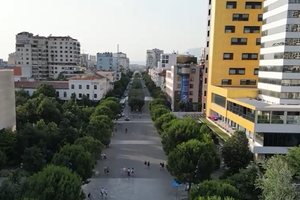
Albanians are officially the hardest working people in Eur...
This Saturday will be characterized by mostly clear weathe...
Today our country will be affected by stable weather condi...

For many children and teenagers, the long summer holidays ...
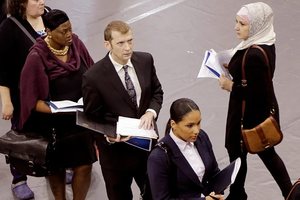
Millions of Europeans still apply for jobs without knowing...
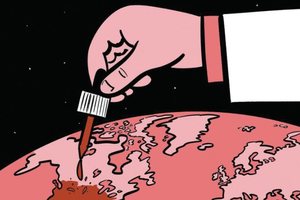
Following the Covid-19 pandemic, the World Health Organiza...
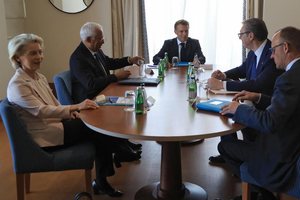
Leaders of the European Union and Western Balkan countries...
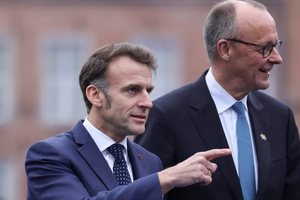
On the eve of the EU-Western Balkans summit, Germany and F...
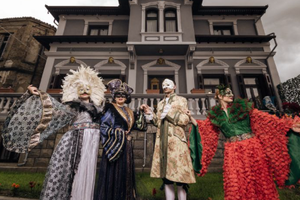
Korça is ready to open the summer season with one of the c...
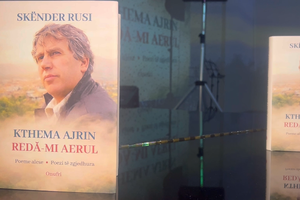
Two years after his passing, the renowned Korçë poet Skënd...
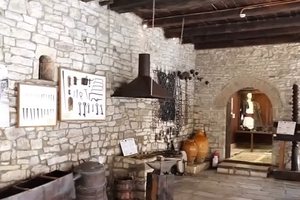
The Ethnographic Museum of Berat has opened its doors to v...
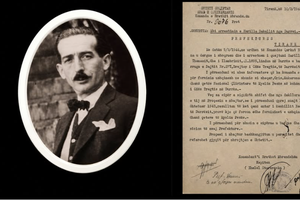
The story of Harilla Bakalli is one of the most chilling t...

The Transparency Board, in today's meeting, decided to red...

This Saturday, one US dollar is bought for 81.4 lek and so...
Despite years of efforts at regional cooperation and free ...

Albania is the country with the highest level of severe ma...