


Hita's absence from the commission irritates the opposition: If he is not capable, he should leave
The Head of the State Police, Skënder Hita, did not appear...

The Head of the State Police, Skënder Hita, did not appear...

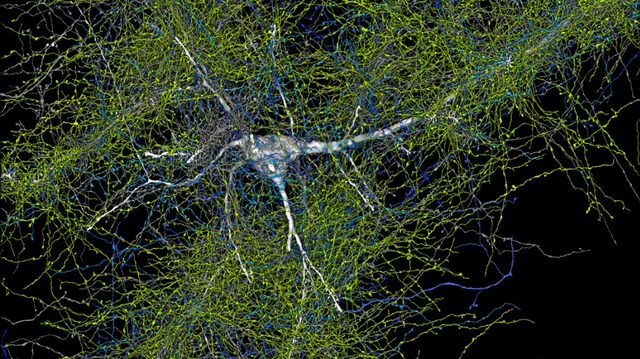
Ten years ago, Dr. Jeff Lichtma, a professor of molecular and cellular biology at Harvard University, took a small brain sample into his lab.
Although small, 1 cubic millimeter of tissue was large enough to contain 57,000 cells, 230 millimeters of blood vessels and 150 million synapses.
"It was less than a grain of rice, but we started cutting it and looking at it, and it was really beautiful," he said.
"But as we were gathering the data, I realized we just had way, way more than we could handle."
Ultimately, Lichtman and his team ended up with 1,400 terabytes of data from the sample, roughly the content of over 1 billion books.
Now, after a decade of close collaboration between the lab team and scientists at Google, that data has turned into the most detailed map of a human brain sample ever created.
300 million images
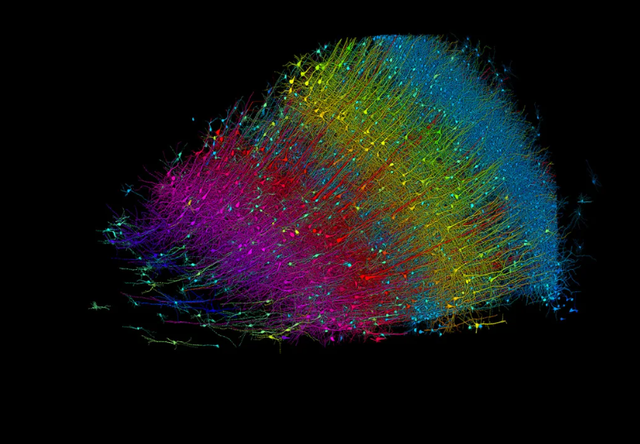
The brain sample came from a patient with severe epilepsy. It's standard procedure, Lichtman said, to remove a small part of the brain to stop seizures, and then look at the tissue to make sure it's normal. "But it was anonymous, so I knew almost nothing about the patient except their age and gender," he said.
Lichtman knew that Google was working on a digital map of the brain of a fruit fly, released in 2019, and had the right computing hardware for the job. He got in touch with Viren Jain, a senior research scientist at Google who was working on the fruit fly project.
"There were 300 million separate images," Jain said.
To understand the images, scientists at Google used AI-based processing and analysis, identifying what kind of cells were in each picture and how they were connected. The result is an interactive 3D model of brain tissue and the largest dataset ever created at this resolution of a human brain structure. Google made it available online as "Neuroglancer," and a study was published in the journal Science at the same time, with Lichtman and Jain among the co-authors.
Understanding the brain
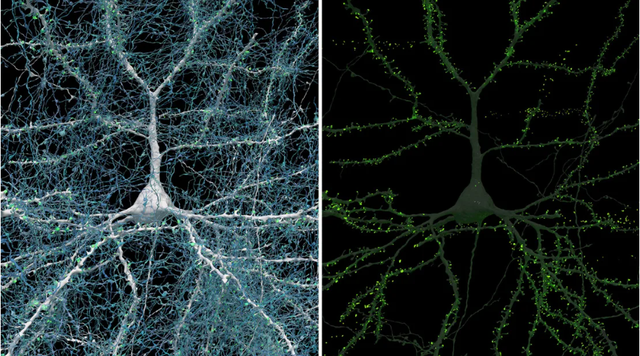
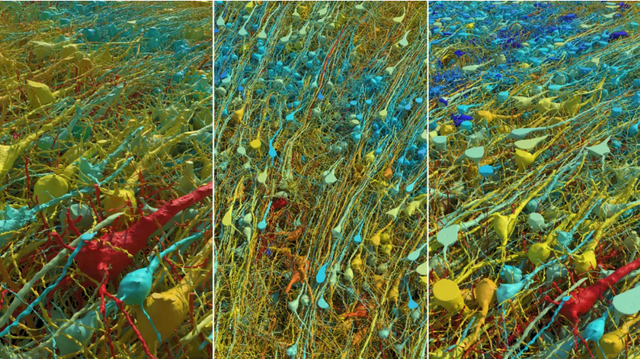
The collaboration between the Harvard and Google teams resulted in colorized images that make individual components more visible, but are otherwise a true representation of the tissue.
"The colors are completely arbitrary," Jain explained, "but beyond that, there's not a lot of artistic license here. The whole point of this is that we're not making it up, these are real neurons, real wires that exist in this brain , and we're really just making it convenient and accessible for biologists to see and study."
The data contained several surprises. For example, instead of forming a single connection, pairs of neurons have more than 50.
"That's like if two houses on the same block had 50 separate phone lines connecting them. What's going on there? Why are they so strongly connected? We do not yet know what the function or importance of this phenomenon is, we will have to study it further", he said.
Eventually, observing the brain at this level of detail could help researchers understand unsolved medical conditions, according to Lichtman.
“What does it mean to understand our brain? The best we can do is to describe it, and hopefully from these descriptions some realization will come about, for example, how the normal brain is different from the brain that is disordered, in adult psychiatric illness or developmental disorders. like the autism spectrum — that kind of comparison will be very valuable,” he said. "Ultimately, it will give us insight into what is wrong, which, in most cases, we are still in the dark about."
Lichtman also believes that the dataset may be filled with other amazing details that, because of its size, have yet to be discovered: "And that's why we're sharing it online, so anyone can look at it and find things," he added. Next, the team behind the project aims to create a complete map of a mouse's brain, which would require between 500 and 1,000 times the amount of data of a human brain sample.
"That means 1 exabyte, which is 1,000 petabytes," Lichtman said. "A lot of people are thinking hard about how we're going to do this and we're in the first year of a five-year proof of principle. I think this would be a watershed moment for neuroscience, to have a complete wiring diagram of the mammalian brain; it would answer many, many questions. And of course, it would reveal many other problems, things we hadn't expected."
What about mapping an entire human brain? That would be 1,000 times larger, Lichtman explained, meaning the data would amount to 1 zettabyte. In 2016, this was the size of all Internet traffic for the year, according to Cisco. At the moment, Lichtman said, not only would it be difficult to store that much data, but there would be no ethically acceptable way to source a clean, well-preserved human brain.
Opening of new ground
Researchers in the same field, who were not involved in the work, expressed their excitement when approached by CNN for comment.
"This study is amazing, and there's a lot to learn from data like this," said Michael Bienkoski, an assistant professor of physiology and neuroscience at the University of Southern California Keck School of Medicine.
"Most of what we think we understand about the human brain has been extrapolated from animals, but research like this is critical to discovering what really makes us human. Visualizing neurons and other brain cells is really challenging because of their density and complexity, and the current dataset doesn't capture the longer-range connections," Bienkoski said.
"From what other brain regions do these inputs come, and where do the outputs go after they leave the area? But seeing all these different types of cells and their interactions is incredible and makes you appreciate what a masterpiece of architecture life has given us," he added.
Andreas Tolias, a professor of ophthalmology at Stanford University in California, agreed. "This is a remarkable technical study that reconstructs the structure of the human cortex at high resolution," he said. “I was particularly excited about the discovery of rare axons capable of forming up to 50 synapses. This finding is intriguing and raises important questions about their computational roles.”
The brain mapping project opens the door to future investigations, according to neuroscientist Olaf Sporns.
"Each human brain is a huge network of billions of nerve cells," said Sporns, distinguished professor of psychological and brain sciences at Indiana University. "This network allows cells to communicate, in very specific patterns that are essential for memory, thought and behavior. Mapping this network, the human connector, is critical to understanding how the brain works," he added, noting that the study paves the way for this important goal and offers exciting new opportunities for exploration and discovery./ CNA


The National Oceanic and Atmospheric Administration, NOAA,...

Nuk është më një ngjarje e rallë që stuhitë e pluhurit të ...
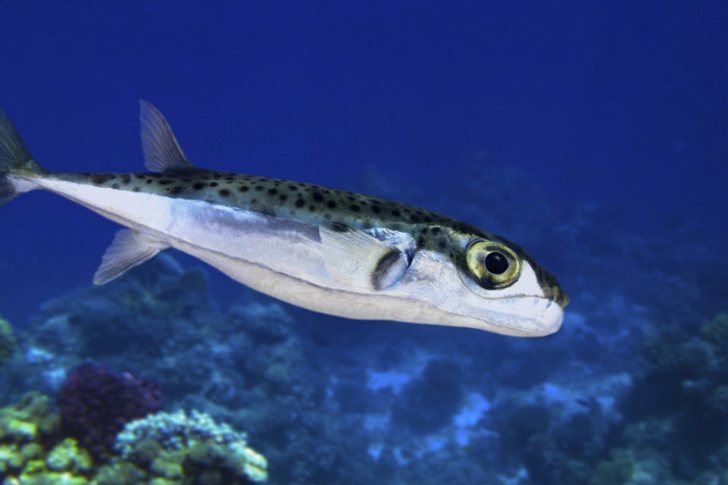
Seven silver-banded fish (Lagocephalus sceleratus) were sp...
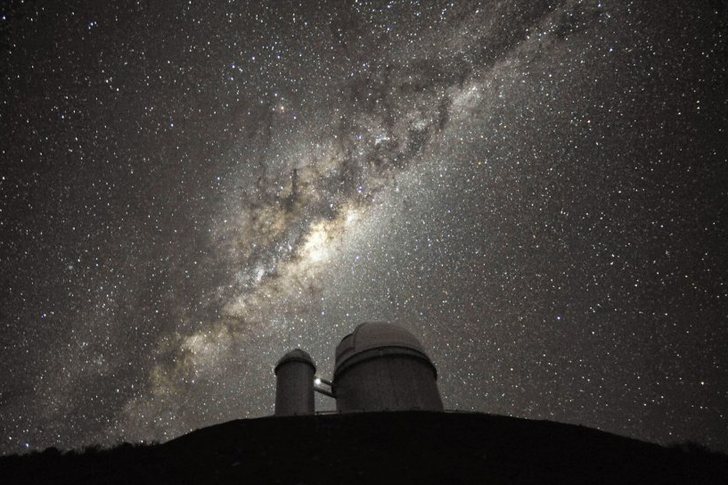
"Milky Way" is the beautiful and poetic name given to the ...

One of the common questions that comes up in skin care is ...

Researchers from the Royal Veterinary College in the Unite...
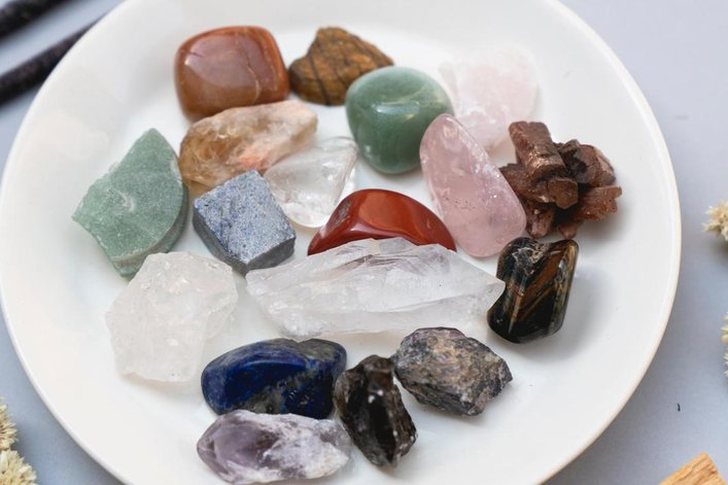
The study of crystal science in the context of dating is b...

A recent study done in Japan found that writing down how y...

Dogs are one of the pets, much loved by people. They are o...

Two NASA astronauts will be heading to the Internation...

Jakarta is located on the northwest coast of the island of...

According to the Guinness Book of Records, Afshin Esma...

Attractive tropical "mountain flame" trees are winning the...
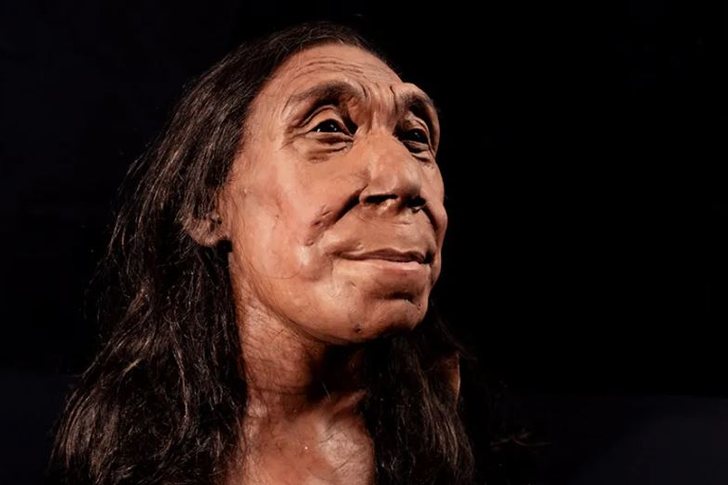
Scientists have created an incredible reconstruction of wh...

The ruins of an almost 300-year-old city have resurfaced a...

Një nekropol pararomak me një thesar të vërtetë artefa...

A relaxing walk along the seashore is something many of us...
Making money without having to get out of bed sounds like ...

Under the bright lights of New York's Times Square, Ni...
Corals around the world are bleaching and even "dying" as ...

CNA has launched another investigation that could lead to ...

Irfan Hysenbelliu is a businessman that we call "Irfan the...

In March 2026, CNA launched another investigation centered...
The arrested mayor of Tirana, Erion Veliaj, with 13 charge...

The Special Board of Appeal (KPA) decided this Monday ...

The KPA vetting decided this Thursday to dismiss the p...

Suela Salavaçi, a prosecutor in the Prosecutor's Offic...

The Special Board of Appeal reinstated the prosecutor ...

A serious accident has occurred on the Lezhë-Shëngjin axis...

A serious incident has occurred in Morina, Kukes. Citizen...

The bad weather that swept the country on Tuesday evening ...

A road accident occurred this evening on Nikolla Zoraqi St...

This Wednesday, our country will be under the influence of...

All of Southern Europe will face changing weather conditio...

Albania was hit by temperatures significantly higher than ...

For the first time, Pogradec welcomed the Inter-Lake Chess...

Prime Minister Andy Burnham has announced that most bus fa...

France's parliament has passed a law to ban social media f...

US Secretary of State Marco Rubio arrived in Manila on Jul...

In the space of a few days, Ukrainian President Volodymyr ...

At a time when industrial products are increasingly taking...

Trust among people is not just a three-syllable word. It c...

Master of humor Todi Llupi has passed away at the age of 7...

The ninth edition of "MIK Festival" kicked off with one of...

Businesses will no longer be required to simply register t...

Despite economic growth and income in recent years, Albani...

This Wednesday, one US dollar is bought for 81.4 lek and s...

Construction company licenses will have a validity period ...