


"With fake but original FB"/ Rama stings Qori, Lapaj and Shehaj
Prime Minister Edi Rama has ironically mocked the infiltra...

Prime Minister Edi Rama has ironically mocked the infiltra...

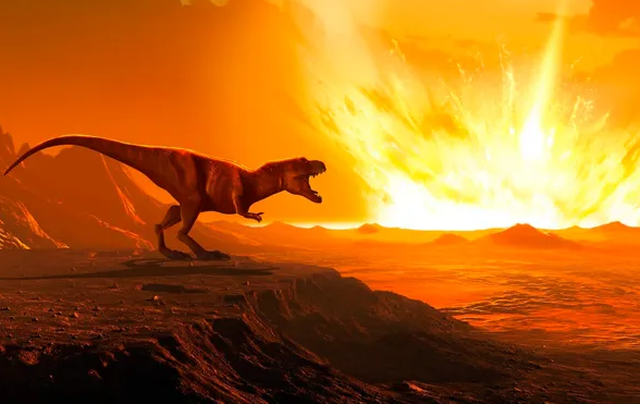
When an asteroid hit the Gulf of Mexico 66 million years ago, the Earth was changed forever. The impact caused a mass extinction event, killing about 60 percent of the planet's species, including all non-avian dinosaurs.
Now, new evidence suggests that the asteroid after the crash didn't come from nearby, but from far away: beyond the outer reaches of the Solar System, in fact.
The authors of the research, published in the journal Science, say that this evidence finally settles long-standing debates about this crucial part of the planet's history. "This is one of those studies that makes you stop in your tracks and think about the cosmic interconnectedness of everything," paleontologist Prof Stephen Brusatte, who was not involved, explained to BBC Science Focus.
"It's amazing that one day, 66 million years ago, dinosaurs around the world were going about their business as they had been for tens of millions of years, and then suddenly this asteroid arrives out of nowhere and changes the world forever.
But it didn't come from nowhere, it had an origin, and that origin was in the far reaches of our Solar System, beyond Jupiter.
This moment in time, between the Cretaceous and Paleogene eras, is captured in the chemistry of rock layers buried beneath the Earth's surface, all over the world.
In geology, this layer of rock is known as the K-Pg boundary. Here, scientists have previously found high levels of platinum group elements (including iridium, ruthenium, osmium, rhodium, platinum and palladium).
These elements are rare on Earth but common in meteorites. However, some scientists have previously thought that the high levels of these elements could have been caused by widespread volcanic activity.
Others thought that the specific composition of the elements, known as the isotopic signature, more closely matched that of the asteroids.
To resolve the debate, the researchers took samples from the K-Pg boundary. By comparing samples from other asteroid impacts, the team found that the levels of ruthenium (Ru) isotopes were not similar to those from Earth or other types of meteorites.
Instead, they closely matched extraterrestrial carbonaceous chondrites: a type of asteroid that forms in the outer solar system.
“To think that this piece of space debris, from such a faraway place, somehow, against the odds, crossed paths with Earth and the dinosaurs. It's such an impossible story, but it actually happened," said Brusatte./ CNA


Hair loss is a problem that causes concern, even in some c...
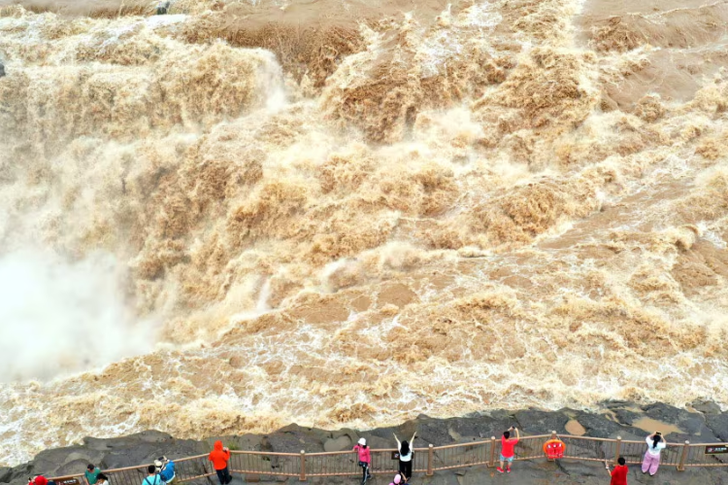
Perhaps the photos partly convey the idea of the spectac...

The habit of pilots not to wear beards responds to a r...
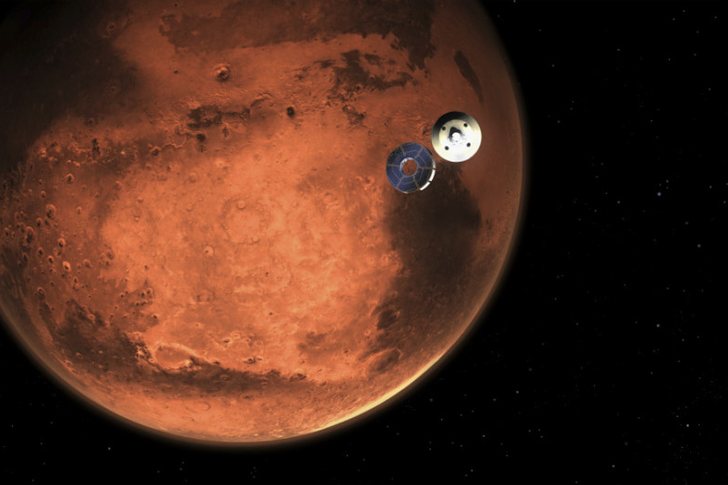
There is a possibility that a large reservoir of water...

Director James Cameron has announced the title of his new ...

A new study has found that teenagers who use their smartph...

Packaged greens are a grocery list staple for a reason. Th...
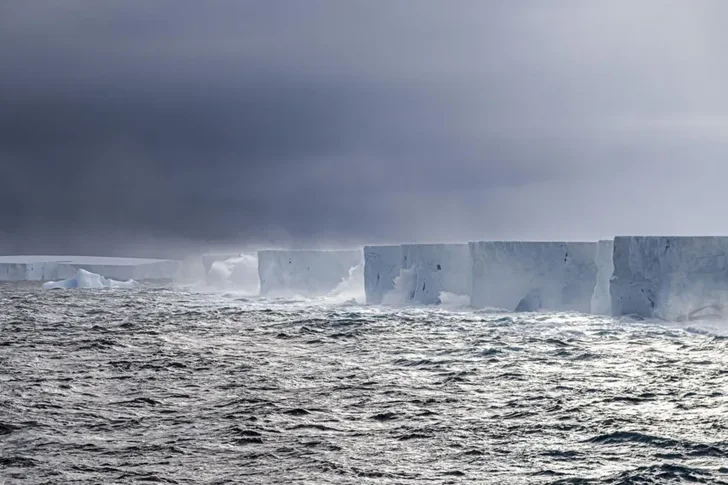
Something extraordinary has happened to "A23a", the larges...

A mysterious monolith was discovered again in the moun...

Sweat is necessary for the body. It is not a bad sign at a...

Smelling stress in humans affects dogs' emotions and can c...

Vienna has been declared the best city in the world to...
NASA's Cassini spacecraft, which has been on a mission to ...
Scientists have confirmed the discovery of a cave on the m...
Two pistols owned by the French emperor Napoleon Bonap...

"A new discovery may provide some clues about Jesus' child...
Crows, the ubiquitous urban bird, can vocally count to...
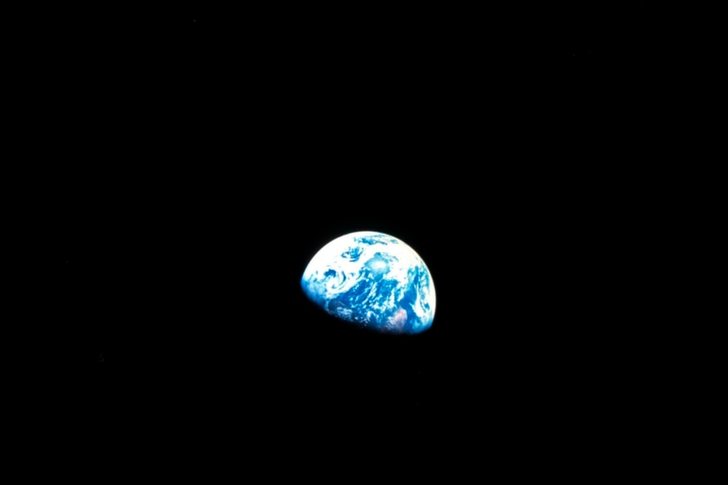
Climate change is not solely responsible for rising sea le...

Quhet cochineal dhe është një insekt që është endemik ...
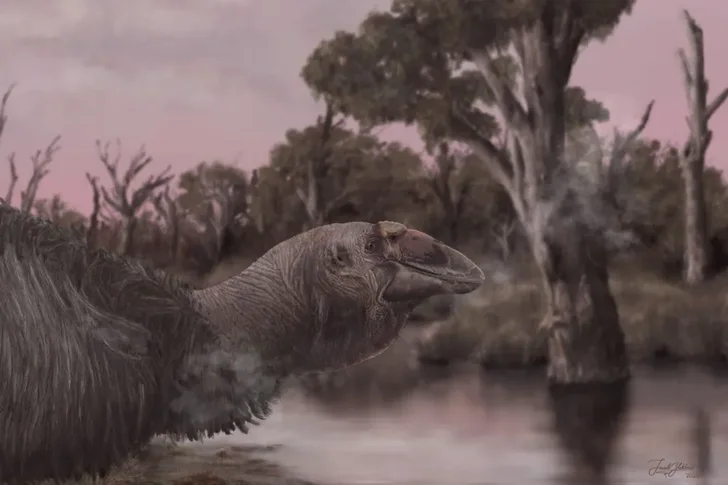
Researchers have discovered fossils of a prehistoric "gian...

CNA has launched another investigation that could lead to ...

Irfan Hysenbelliu is a businessman that we call "Irfan the...

In March 2026, CNA launched another investigation centered...
The arrested mayor of Tirana, Erion Veliaj, with 13 charge...

The Special Board of Appeal (KPA) decided this Monday ...

The KPA vetting decided this Thursday to dismiss the p...

Suela Salavaçi, a prosecutor in the Prosecutor's Offic...

The Special Board of Appeal reinstated the prosecutor ...
The bad weather that swept the country on Tuesday evening ...

A road accident occurred this evening on Nikolla Zoraqi St...

Three people were shot and wounded in Elbasan last night b...

A serious incident occurred this Tuesday in the Yrshek are...

This Wednesday, our country will be under the influence of...

All of Southern Europe will face changing weather conditio...

Albania was hit by temperatures significantly higher than ...

For the first time, Pogradec welcomed the Inter-Lake Chess...

Prime Minister Andy Burnham has announced that most bus fa...

France's parliament has passed a law to ban social media f...

US Secretary of State Marco Rubio arrived in Manila on Jul...

In the space of a few days, Ukrainian President Volodymyr ...

At a time when industrial products are increasingly taking...

Trust among people is not just a three-syllable word. It c...

Master of humor Todi Llupi has passed away at the age of 7...

The ninth edition of "MIK Festival" kicked off with one of...

Businesses will no longer be required to simply register t...

Despite economic growth and income in recent years, Albani...

This Wednesday, one US dollar is bought for 81.4 lek and s...

Construction company licenses will have a validity period ...