



The International Monetary Fund, based on Article IV of the Mission, has emphasized that by the end of 2025 the Albanian government is expected to have a public debt of around 54% and by the end of 2030, that is, when the Albanian government's project is to enter the country into the EU, the public debt will reach around 50%.
In fact, these are percentage figures provided by the IMF and appear to be decreasing compared to past governments.
But it's enough to do some simple calculations to understand how much the debt would be if the government had made more favorable policies and been more careful with public debts.
When the Socialists came to power in 2013, the debt was around 68%. We recall here the deep global economic crisis, the blow that the economy took in 2008-2009 in Greece, in Europe, which came as a result of the global crisis originating from the USA, and in the end Albania was a "sandwich" or let's say "hamburger meatball" between Italy and Greece.
After the economic shock in Greece and Europe, remittances fell in 2010 and the euro exchange rate at that time went to somewhere around 125 lek and up to 140 lek in 2012.
A public debt handed over by the democrat government in 2013 at 68% of Gross Domestic Product. Today, the Albanian government, according to the IMF, is heading towards a debt of 54%.
But let's remember that today the euro is exchanged for about 97 lek.
So, it is between 30 and 45 lek less than when the socialists took power, and with a simple calculation, the foreign exchange rate is about 30-40% cheaper, if we take it on average.
So, debt is traded about 30-40% cheaper than it was traded in 2011-2012 or in 2013 when it was 68%.
If the debt were traded at this value at that time due to the exchange rate decrease and the pace that the government would follow were those of yesterday regarding public debt, today Albania would not have a debt higher than 40-45%.
It could have been even lower, but considering three important moments such as the 2019 earthquake, the 2020 pandemic, and Russia's war with Ukraine in 2022, which brought strong economic blows, it must be said that the government should have at least a debt of around 40-45% today.
If these three factors were not present, the debt would have to be even lower, considering that the exchange rate is lower than during the previous government.
We must also take into account the fact that the money received by the Albanian state on the foreign market is much more than before 2013, where the first Eurobonds were for 250 million euros, while now it is going to 700-750 million euros and more.
What the IMF says, 54%, is good news for reducing public debt, but in fact, with the exchange rate and the depreciation of the euro, it shows that the government has not been in its proper role and policies and with a clear and genuine strategy to have a lower and more stable public debt.
So, the government has not reduced the debt with its savings or repayment policies, but rather the devaluation of the euro has reduced it to the maximum./ CNA

This Saturday, one US dollar will be bought for 83.2 lek a...
In the wake of a fiscal peace that the government is widel...
Following the confusion created among farmers and processo...
This Friday, one US dollar will be bought for 83.2 lek and...
In 2026, 2.5 million real estate properties are expected t...
The IMF, in its statement at the end of its autumn mission...
The report on Albania, drafted by the International Moneta...
A report prepared for Albania by the International Monetar...
The Economy Committee has announced vacancies for 3 member...
This Thursday, one US dollar will be bought for 83.2 lek a...
The new fiscal package, which will bring changes to the VA...
Minister of Finance, Petrit Malaj, presented the draft bud...
European stocks showed mixed signals this Wednesday, somew...

Albania allocates much less funds from the public budget f...

The deduction of 48 thousand lek from the taxable income b...

This Wednesday, one US dollar will be bought for 82.8 lek ...
The voluntary private pension market continued to expand i...
Deputy Minister of Infrastructure and Energy, Besjan Kadiu...
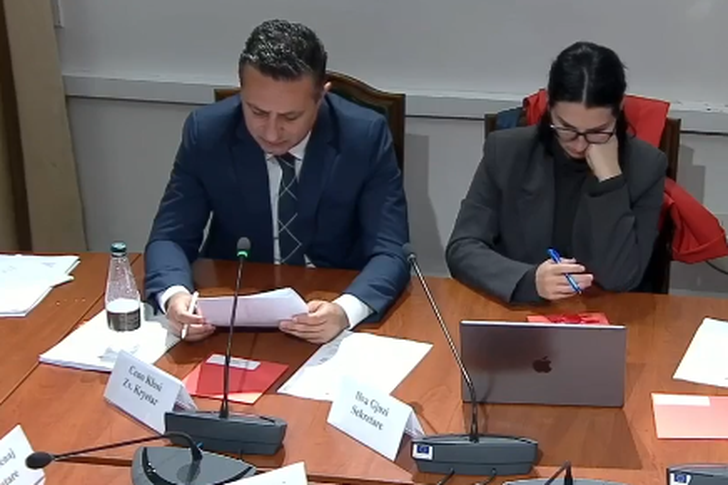
Socialist Party MP, Ceno Klosi, at the meeting of the Natu...
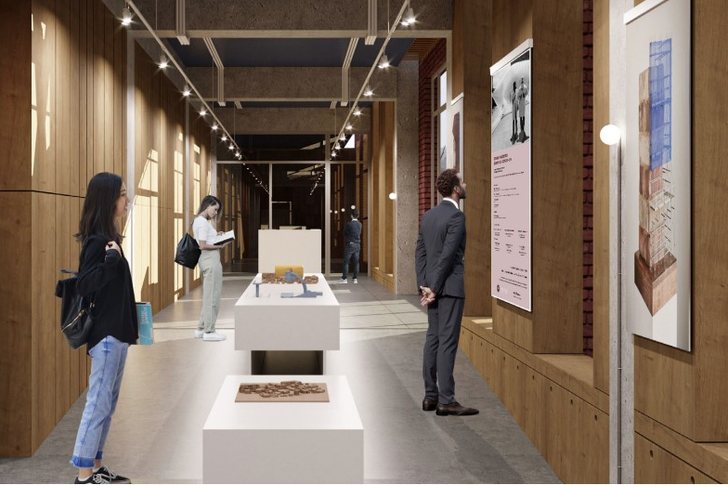
The Albanian Development Fund announced this Monday the wi...
Irfan Hysenbelliu claims to be a big businessman, an hones...

The murder of officer Enea Mekolli in the line of duty has...
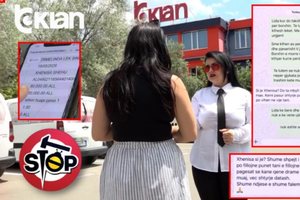
The next case broadcast on the show "Stop", this Thursday,...
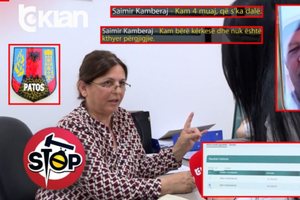
The case published this Thursday, June 4, on the show "Sto...

The Special Board of Appeal (KPA) decided this Monday ...

The KPA vetting decided this Thursday to dismiss the p...

Suela Salavaçi, a prosecutor in the Prosecutor's Offic...

The Special Board of Appeal reinstated the prosecutor ...
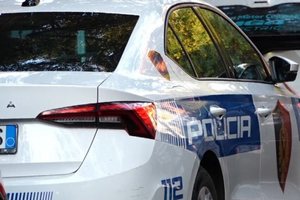
A 38-year-old man was arrested today near the Kamza turnof...

A money changer in Durrës lost 60 thousand euros after bei...
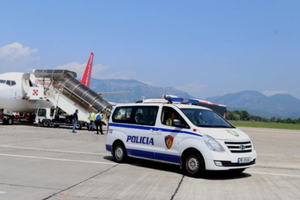
The 6 citizens captured in Dubai, members of criminal grou...
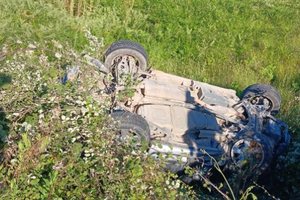
A serious accident occurred on the Kardhiq-Delvinë axis, i...
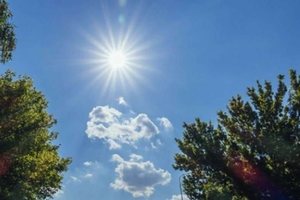
Today our country will be affected by stable weather condi...

For many children and teenagers, the long summer holidays ...
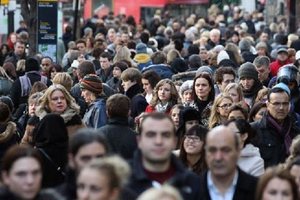
Albania is facing an unprecedented demographic transition,...

On Thursday, our country will be affected by unstable weat...
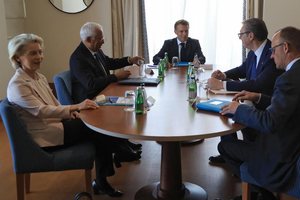
Leaders of the European Union and Western Balkan countries...
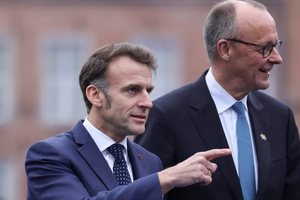
On the eve of the EU-Western Balkans summit, Germany and F...

Russian President Vladimir Putin said the war in Ukraine c...
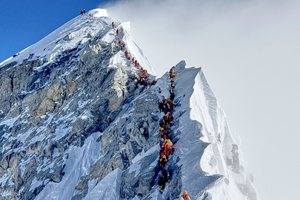
An extraordinary story of survival has been recorded in Ne...

Korça is ready to open the summer season with one of the c...
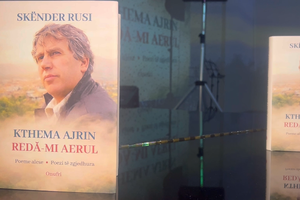
Two years after his passing, the renowned Korçë poet Skënd...
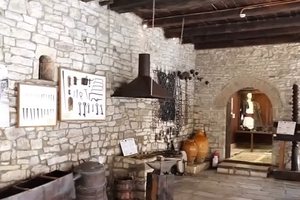
The Ethnographic Museum of Berat has opened its doors to v...
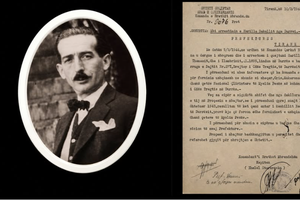
The story of Harilla Bakalli is one of the most chilling t...
Despite years of efforts at regional cooperation and free ...
Albania is the country with the highest level of severe ma...

This Friday, one US dollar is bought for 81.3 lek and sold...
The government aims to transform the country's industrial ...