


Today's weather/ Here's how many degrees the thermometer will show
Today our country will be affected by stable weather condi...

Today our country will be affected by stable weather condi...

If there are institutions where complex macroeconomics, energy strategy, green fields like wheat and football fields, and participation in the World Cup, are resolved within the time it takes to drink a macchiato freddo or create a post on social media, they are the coffee shop and the virtual keyboard of the Albanian mobile phone.
Our public debt—many times greater than our foreign, domestic, or trade deficits—is made up of three myths. These myths appear and re-appear with greater force whenever there is an energy crisis, a food crisis, or a national soccer team plays. But why do they remain unresolved and each subsequent discussion becomes even more heated than the last?
When we can't solve the real economy and development, it seems that three simpler dilemmas are enough: "We have so much oil, why don't we rebuild the refinery we had?", "Why do we import so much food, when we have enough barren land, it just needs to be worked!?", and "We have football talents, a federation and designer jerseys, passionate fans and epic commentators, why aren't we in the World Cup yet?".
These are old dilemmas, but market economics and statistics have neither sentiment nor patriotism for these three areas that have remained hostage to the collective memory. Let's face the coldness of the numbers and the complexity index to understand why real solutions are much more boring and engineering than social posts and replies in the comments.
Oil: The Illusion of the “Balkan Sheikhs”
Myth: We extract oil. Let's build a refinery, even a small one, and have cheap fuel "Made in Albania".
Market reality, economies of scale: Building a modern refinery that meets EU standards requires an investment of 2 to 5 billion euros. In the global industry, a refinery is profitable only if it processes a minimum of 5 to 10 million tons per year. Albania consumes a total of about 600,000 tons. Our market is approximately 10 times smaller than the “functional minimum”.
The Small Refinery Illusion: “What if we built a refinery just for the roughly 15,000 barrels per day we produce?” A cheap mini-refinery, 30-50 million euros, runs only on light oil. Our Patos-Marinza oil is heavy and full of sulfur—practically liquid tar.
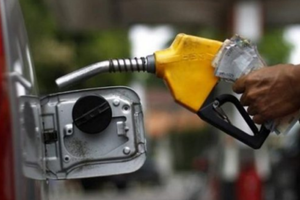
To convert this tar into diesel fuel (Euro 5), desulfurization plants are needed, which brings the cost of the mini-refinery to 300-500 million euros. Keeping this facility operational for such a small volume means that a liter of Albanian diesel—or oil, as it is popularly called—at the pump will cost 30-40% more than the diesel we import by ship.
To translate it into numbers: while the cost of importing a liter of oil (excluding taxes and VAT) from Greece, Italy or Russia is estimated at around 0.60 – 0.65 euros, the cost of domestic production from this mini-refinery will go to around 0.90 – 0.95 euros per liter due to the extreme cleaning costs and small volume.
For such domestic production to make minimal economic sense at these costs, Brent oil on the international market would have to jump into an anomaly or crisis at over $150 per barrel.
These calculations, meanwhile, do not even include the heavy environmental costs. Historically, the former Ballsh refinery or Azotik i Fier did not factor these damages into the price. They paid the real cost with colossal externalities: the ecological destruction of oil-bearing regions, rivers, and the poisoning of the area. A new refinery, incorporating these environmental standards, would drive the cost of production per liter to even higher levels.
The Export Paradox – Why do foreigners buy Albanian oil?: If it’s tar, why do they buy it from us? First, most of our oil is not refined for car fuel; it goes into bitumen, road asphalt, or fuel oil or “Bunker Fuel”, heavy fuel for ships. Second, foreign refineries buy it cheaply on the stock exchange and blend it—mix it with lighter, more expensive oil to reduce costs.
Third, those who refine it are mega-refineries with investments of around 10 billion euros in Italy, Spain, etc., which process 400,000 barrels per day, making their refining cost per liter quite low.
Why is there a lack of investment in large refineries? It is not just a lack of desire, but a rational economic rationale. A large refinery requires about 3 decades of legal and political stability to reach the point of self-repayment, while in Albania the rules of the game and taxes tend to change with each political cycle.
Moreover, the Mediterranean market is oversaturated with existing refineries. Italy and Greece have the infrastructure and often refine below capacity. Building from scratch in a global market that is moving away from oil towards green energy—where 90% of the product must be exported to compete with the very low marginal costs of the world giants—is a risk that no investor takes.
Complexity Index – Refining requires 95/100 compared to the current capacity of the Albanian economy which is 15/100. A refinery is a chemical “city” with towers, pipes and equally digital infrastructure and sensors, with petrochemical engineers, analysis laboratories, which requires complex trading on stock exchanges and multi-million maintenance.
Managing it requires capital and expertise that exceeds our institutional capacity to oversee safety, standards, and often revenues and profits. Building a refinery today for our market is like building a giant factory for the production of videocassettes.
Agriculture: Bell's Work vs. the Triple Helix
Myth: We have the land and the sun. We just need to get down on our knees, build greenhouses, and feed Europe.
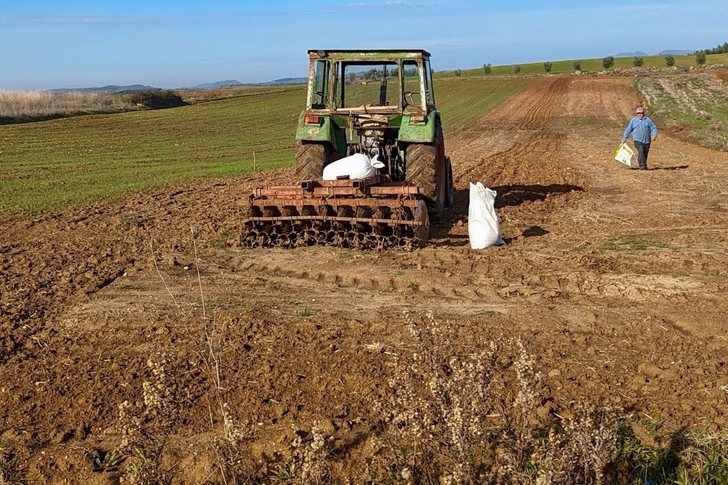
Market Reality, the economy of hectares: The average farm area in Albania is about 1.2 hectares, divided into several plots. It is impossible to amortize the purchase of modern technology on such small plots.
We are faced with the Netherlands, with a similar land area, which exports 120 billion euros of agricultural products per year, also through 9,000 hectares of heated glass greenhouses, hydroponics, and LED lights.
In 1 square meter they produce over 70 kg of tomatoes; in our solar greenhouse, we reach 10-15 kg. But while agriculture there is an industry—where the quantity, cost, and harvest time are known precisely and long-term contracts are made on this basis—Albanian production still remains sporadic and without contracts.
The Myth of “Country Bread” and Wheat: Another Albanian illusion is that we can be competitive in cereals simply because we have land and once said that we produce our own bread. The reality of production shows that Ukraine, although in total war, achieves an average yield of about 5 tons per hectare thanks to quality land and extreme specialization, while in Albania the yield moves to 3.5-4 tons.
But the real difference lies in the cost per unit: in Ukraine, giant agricultural farms and companies buy chemical fertilizers and inputs in trainloads, or at wholesale prices and use satellite technology. Meanwhile, the Albanian farmer buys inputs in retail and much more expensively.
A combine harvester in the Ukrainian steppes harvests hundreds of hectares without stopping, minimizing the cost of fuel per ton, while in Albania, the fragmentation of the land forces the machinery to spend more time and oil on the road than on harvesting. After all, the logistics of shipping grain from Black Sea ports costs less per quintal than hand-picking grain from hundreds of small Albanian farms. This makes imported grain mathematically cheaper than domestic production.
Complexity Index, Netherlands 98/100 versus Albanian agriculture at 15/100. Dutch agriculture is based on the "Triple Helix": Wageningen University and many other professional universities develop scientific research and plant genetics, the Government there intervenes with technological subsidies, while the Private Sector guarantees automated cold logistics and positioning on the international stock exchange.
This unbroken chain makes agriculture a branch of engineering. In front of this complex system lies our reality: a single farmer with a plastic greenhouse, without insurance, waiting for the collection point to find the most suitable market for him, praying to be saved from floods in winter and droughts in summer.
Football: From “Street Talent” to Club Engineering
Myth: We have strong talent and passion, why aren't we in the World Cup? Neither Messi nor Ronaldo had the conditions; they got out of the way.
Market Reality, the Law of Probability: Data for every 1 million inhabitants clearly shows that success is pure mathematics of massiveness and infrastructure. For every 1 million inhabitants, Germany has about 84,000 registered football players and 960 standard pitches; The Netherlands has about 67,000 players and a record of about 1,800 football pitches; Italy has about 24,000 players and about 450 standard pitches. Meanwhile, Albania has about 8,000 players and is estimated to have 20-30 functional standard pitches (11v11) for 1 million inhabitants. The gap is not in talent, but in the chances for talent to develop and be discovered.
The Myth of the Street: Portugal has around 20,000 registered players per 1 million inhabitants and futsal integrated into every school, a genuine nationwide potential. Argentina has 56,000 officially registered players per 1 million inhabitants through the giant “Baby Fútbol” system with over 3,300 clubs. Messi didn’t come “off the street”; he was part of an organized club, “Grandoli” from the age of 5.
Complexity Index, German DFB 90/100 vs. Albanian FSHF 20/100. Modern football functions like a corporation (not a corporation): it uses Big Data for movement analysis, sports science, regenerative medicine and has strict financial laws. In the face of this engineering stands our football, which has historically suffered from presidentialism.
Clubs that are often sporting institutions only on paper, but in reality are toys in the hands of people with dubious pasts or local “strongmen.” In an environment where the club is used for influence and the coach is dismissed with a phone call from the VIP stand, long-term planning and sports engineering die before they are born.
Institutional area
In public policy analysis, the belief that a complex problem has a simple solution often stems from a lack of depth of information about the problem itself.
This phenomenon, where lack of expertise creates absolute certainty, known as the Dunning-Kruger effect, often dominates public discourse, but cannot serve as a basis for economic strategy. Nostalgic calls for self-sufficiency or the search for quick fixes reflect a vacuum in institutional debate, as well as the absence of a real development plan.
Building sustainable industries requires integration into global value chains, economies of scale, and long-term engineering systems. Ignoring this complexity for the sake of popular narratives is not just a misunderstanding of the free market; it is a cost that a developing economy cannot afford to pay.
Building industries requires prudent policies, transparent capital, and slow, boring, but absolutely necessary work. It is precisely this institutional “boringness” that produces well-being, while the illusion that “things happen and are discussed” simply masks crises and departures, leaving us to endlessly revolve around the same dilemmas for decades./ Monitor Magazine

According to Eurostat, in 2025, around 47.3% of the electr...
The country's oil supply is at risk. Following yesterday'...
A recent report by the European Bank for Reconstruction an...
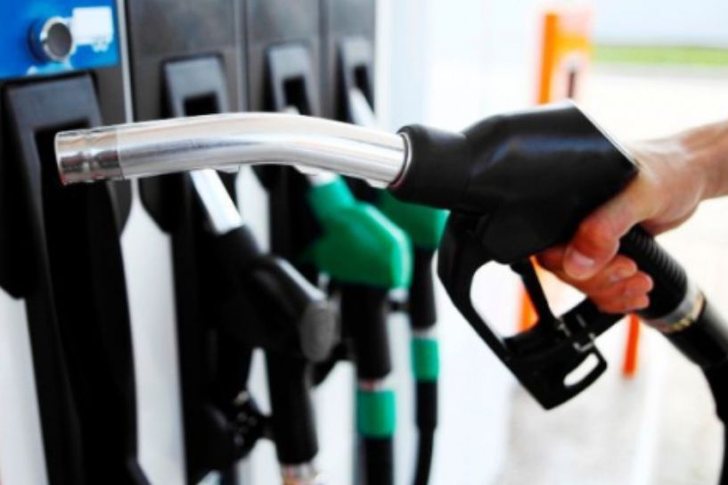
The Minister of Economy, Delina Ibrahimaj, stated that the...
The Minister of Economy, Delina Ibrahimaj, stated that the...
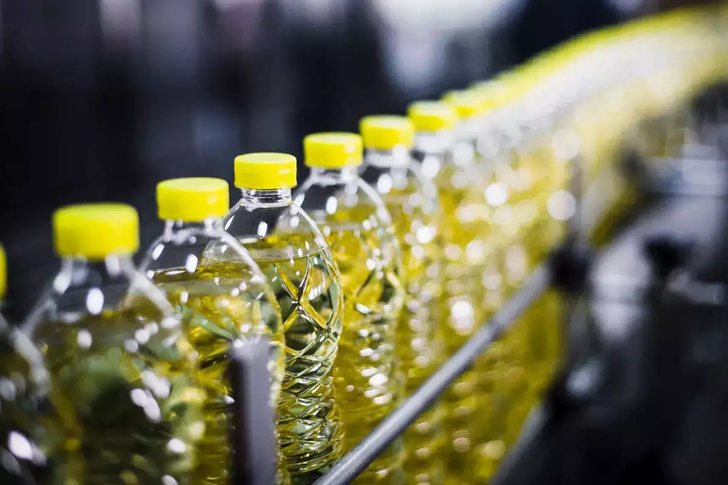
In the domestic market, in addition to the increase in oil...
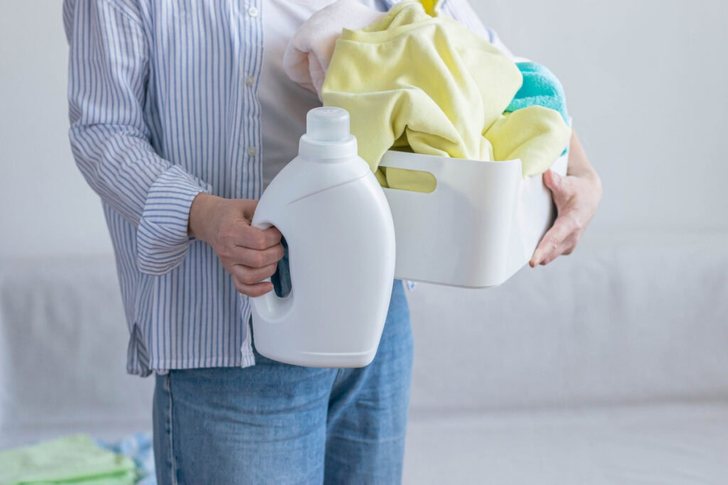
After fuel prices increased by 22% and cooking oil by up t...
2025 was the fifth year that the agricultural sector recor...
This Friday, one US dollar is bought for 82.5 lek and sold...
Holanda rifitoi “fronin” e investitorit kryesor të huaj në...
The General Directorate of Local Taxes and Tariffs at the ...
The queue of vehicles has increased at the gas station in ...

This Thursday, one US dollar is bought for 82.3 lek and so...
Jet Bank completes the licensing process from the Bank of ...
The Governor of the Bank of Albania, Gent Sejko, held a pr...
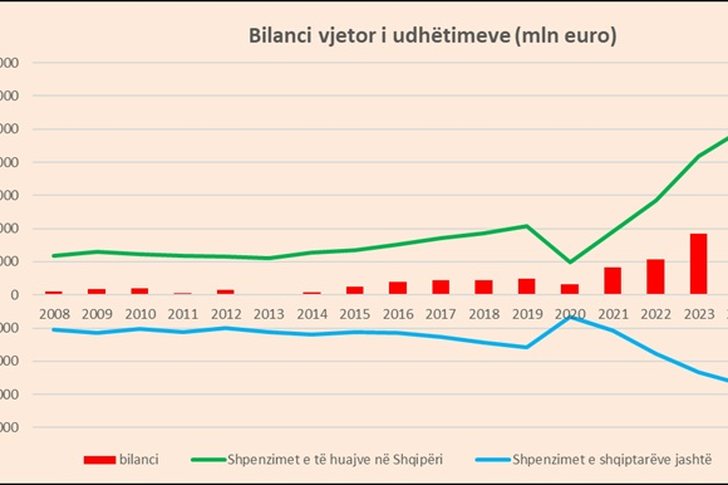
Paratë që emigrantët sjellin te familjet e tyre në Shqipër...
Although the pace of entry of foreign nationals slowed sig...
Tourism has not managed to catch up with the positive grow...
The increase in fuel prices in Albania has increased the m...
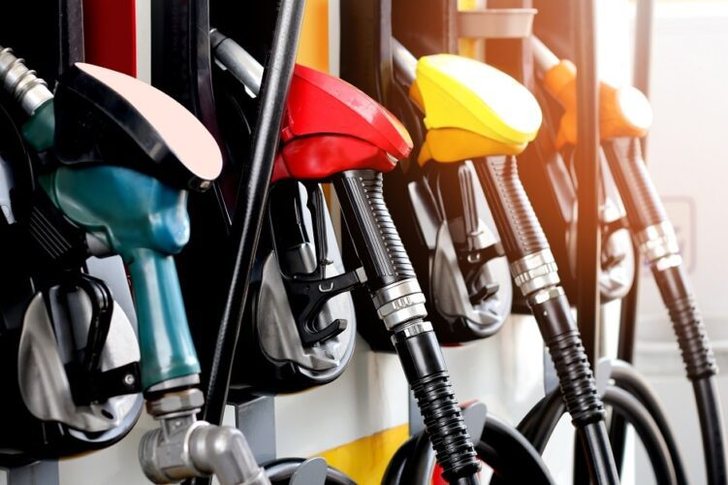
Today, a liter of diesel in the retail market is traded at...
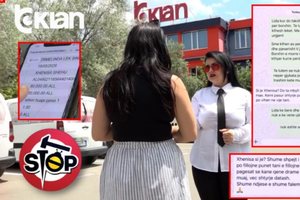
The next case broadcast on the show "Stop", this Thursday,...
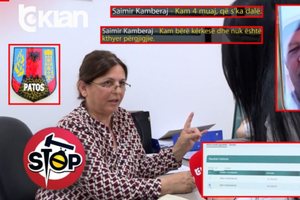
The case published this Thursday, June 4, on the show "Sto...

The protests of recent days related to the situation in Zv...
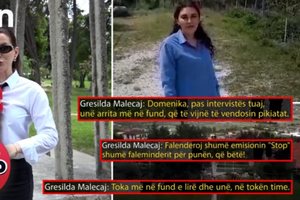
The case addressed this Wednesday, June 3, on the show "St...

The Special Board of Appeal (KPA) decided this Monday ...

The KPA vetting decided this Thursday to dismiss the p...

Suela Salavaçi, a prosecutor in the Prosecutor's Offic...

The Special Board of Appeal reinstated the prosecutor ...
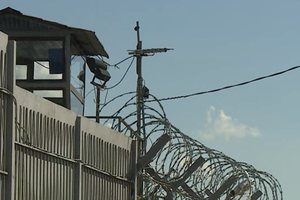
A convict was found dead today in the premises of the Pris...
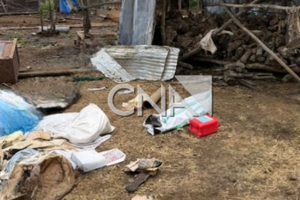
Several images provided by CNA show the area where this mo...

A quantity of explosive material exploded this morning at ...
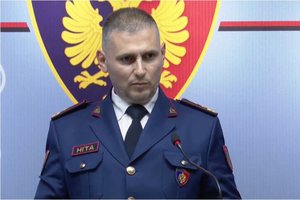
The Head of the State Police, Skënder Hita, expressed his ...
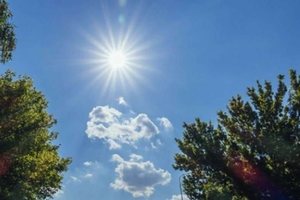
Today our country will be affected by stable weather condi...

For many children and teenagers, the long summer holidays ...
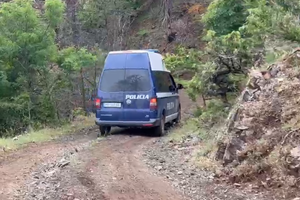
Witnesses in Lozhan, Maliqi, have shared details from the ...
Albania is facing an unprecedented demographic transition,...
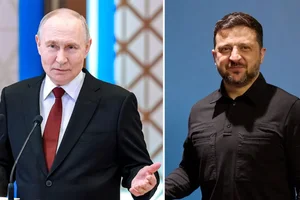
Russian President Vladimir Putin said the war in Ukraine c...
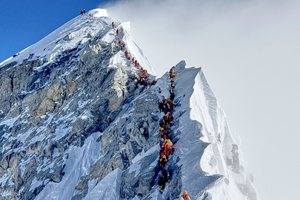
An extraordinary story of survival has been recorded in Ne...
The Peace Implementation Council in Bosnia and Herzegovina...
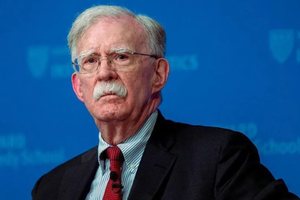
John Bolton, the former national security adviser to US Pr...
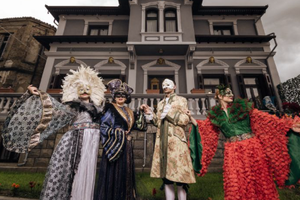
Korça is ready to open the summer season with one of the c...
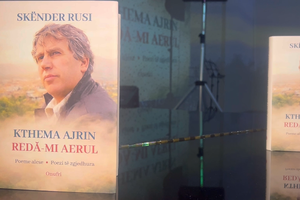
Two years after his passing, the renowned Korçë poet Skënd...
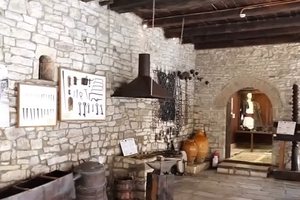
The Ethnographic Museum of Berat has opened its doors to v...
The story of Harilla Bakalli is one of the most chilling t...
The government aims to transform the country's industrial ...
Kursi i këmbimit të euros me lekun ka rënë më tej këtë jav...
Profit margins in the construction sector have increased s...
The Transparency Board, at its meeting today, decided to i...