


Detaje nga vetëvrasja e Olsi Ibros/ Dyshohet se piu fostoksinë para se hidhej nga pallati
Detaje të reja kanë dalë nga ngjarja e rëndë që ndodhi...



The concept of work, according to the traditional description, has changed. Today we are talking about a new way of doing work, the one where the employee is evaluated not based on positions, titles, previous work roles or academic achievements, but based on the skills he possesses and benefits during the employment cycle.
Since the beginning of the era of industrial development, the job position has been the defining structure of the organization and management of every aspect of work. This approach made sense as long as changes in business occurred at a slow, predictable pace and the worker was just a cog in the cogs of the great industrial machine.
The skills-based approach requires a conceptual leap from the first steps of the employee's work experience cycle, from hiring to performance measurement, development and acquisition of new skills, reward and career progression.
It requires that the organization get to know the skills of its employees well and be able to engage them not according to job positions and formal roles, but according to the skills they have/can acquire over time, skills that can go beyond the formal job position.
This is especially necessary, at a time when the battle for talent is getting stronger and with the growing role of technology and Artificial Intelligence.
Deloitte defines "skills" as "hard" or technical (such as coding, data analysis and accounting); human or soft (such as critical thinking and emotional intelligence); and the potential that an individual has (including hidden qualities or abilities that can be developed and lead to future success).
The word “skills” describes employees as unique individuals – each with a range of interests, passions, ambitions, work styles or cultures, as well as preferences for where and how work is organized, and more.
This new trend of organizing work based on skills, turns out to be very important to be addressed by 64% of professionals participating in the "Deloitte" survey on Human Capital Trends in Albania for 2024.

Meanwhile, if we look at their level of readiness to address this trend (to implement it), this percentage is much higher than in other Central and Eastern European countries, which leads us to believe that companies in the country may have a limited understanding of the complexities of applying this trend that many businesses in developed countries are facing.
These data best demonstrate that the traditional approach is a process so deeply ingrained in the way companies have operated and currently operate that it is hard enough to imagine any other way of managing work and employees.

To better understand the competency-based approach, organizations participating in Deloitte's survey were asked to provide their thoughts on the statements in the table below.
Interestingly, the survey participants in our country estimate that they are able to effectively use the skills of employees and, moreover, estimate that they have the necessary information on the skills and abilities that their workforce possesses.

Compared to other organizations participating in the survey in the Central and Eastern European region, we note that their trust is much lower than that of the organizations participating in the survey in our country, which once again highlights the potentially limited understanding of this development trend .

What makes it even more necessary to address this development trend, is the fact that employees of generation X (1965-1980) may have changed 1 or 2 employers throughout their career and already for generation Z (1996-2010) studies extended show us that their average lifespan in a working relationship is 2-3 years.
They change jobs, to get to know themselves more and to understand what they want to do with their lives, whether it requires them to do different jobs, but doable by the skills they possess or can learn.
If organizations are not sufficiently ready to enable their employees within the organization to put into practice the skills they possess or enable them to acquire new skills on an ongoing basis, the risk of them leaving will be higher.
According to "Deloitte" studies, there are several reasons for moving towards a skills-based approach, but the main ones are:

To thrive, organizations must give employees the opportunity to engage in tasks and perform based on their skills, interests, and individual potential, not just on the basis of their employment experience or credentials for a position or position. specific job role.
This requires that organizations have the willingness to engage employees in work not only based on the skills they currently possess, but also based on those skills and abilities they may acquire in the future./ Monitor.al

Detaje të reja kanë dalë nga ngjarja e rëndë që ndodhi...
The Mayor of Vlora, Ermal Dredha, reacted to the video...

Businesses and services around the world are gradually ret...

After being sworn in as an MEP in the European Parliam...

The steady decline of the euro in exchange for the lek in ...

The tourist season and summer vacations have increased...

Since 2012, the government has integrated the financing of...

This Saturday we are introducing you to some of the ma...

Non-resident visitors to accommodation facilities in t...

The fires in the forest surfaces for several weeks continu...
The former Minister of the Interior, Sandër Lleshaj, a...

A problem in Microsoft's "Cloud" network has blocked work ...
The Regional Directorate of Road Transport Services Ma...

PD MP, Oerd Bylykbashi, spoke about the Electoral Refo...

On Friday, the Special Court accepted a summary trial ...
Prime Minister Edi Rama today held a meeting with busi...

According to the data from the National Operational Ce...

The former official of the Ministry of Environment, Pë...

The candidate of the SP for the Municipality of Himara, Va...

The next session in the Special Appeal for former Prim...

A mountain of documents for a flagrant case, in the na...

The Democratic Party has denounced a tender held by the Hi...
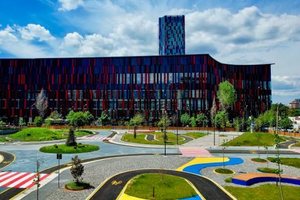
Since the summer of 2020, the Mayor of Tirana, Erion Velia...

The leader of the Democratic Party, Sali Berisha, denounce...

The Special Board of Appeal (KPA) decided this Monday ...

The KPA vetting decided this Thursday to dismiss the p...

Suela Salavaçi, a prosecutor in the Prosecutor's Offic...

The Special Board of Appeal reinstated the prosecutor ...

Following intensive controls and work based on police inte...

A road accident was recorded on Saturday morning on the Le...

A serious incident is reported to have occurred today in G...

A fatal accident has been recorded on the Fier-Lushnjë hig...

Today our country will be affected by stable weather condi...

Albania is leading a painful demographic process that plac...

On Friday, our country will be affected by stable weather ...

On Thursday, our country will be affected by stable weathe...

US President Donald Trump announced in a post on the Truth...

A serious rail accident occurred today in Munich, Germany....

The Iranian Central Military Command, Khatam al-Anbiya, an...

Four months of war have fundamentally changed relations be...

The promotion of the book by author Aleksandër Ikonomidhi ...
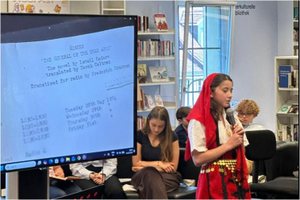
The Albanian Embassy in Switzerland has organized an eveni...

This Wednesday, the prominent actor of Albanian cinema, Gj...

Several archaeological excavations conducted during this s...

In the Balkans, few tourism markets are expanding at the p...

Demographic experts Ilir Gëdeshi and Russell King conclude...

This Saturday, one US dollar is bought for 81.8 lek and so...

Urban development, transport, energy, forestry and agricul...