


Businessman Artur Shehu breaks his silence: I am a long-time land owner in Zvërnec, I don't know the investors at all
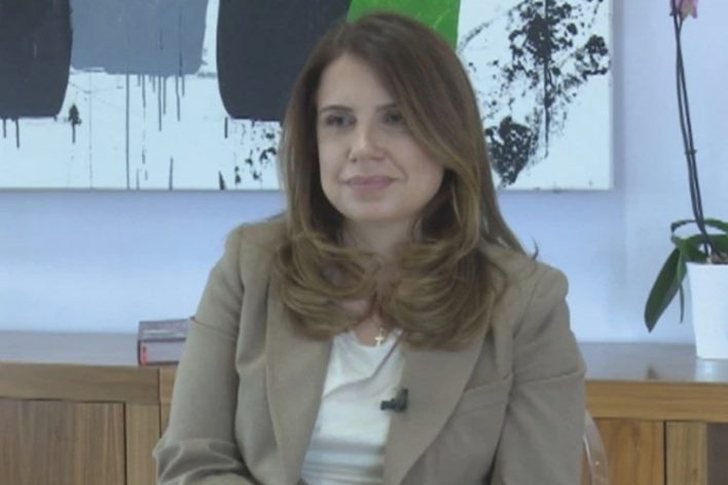
Albanian businessman Artur Shehu spoke on the Opinion show...

Albanian businessman Artur Shehu spoke on the Opinion show...

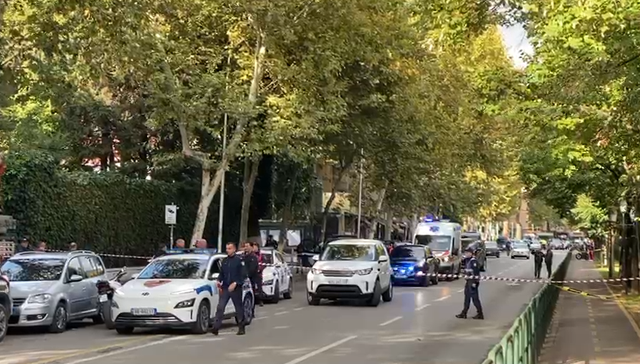
It had never happened before that a judge was murdered in a courtroom. The numerous chronicles of murders now have this event in their archives.
All the effort to make a comment, a note, or anything similar under the emotional weight of pain, stopped.
Even the attention, not only of the public, but of the government, the state, and colleagues, has now left the murder in the courtroom and inside the court of the late judge Astrit Kalaja forgotten in the suburbs.
Of course, life flows at its own pace and is subject to its own laws. However, this does not justify forgetting. And when I talk about forgetting, I do not mean that every day we sit and write or talk about Astrit Kalana.
This burden of pain falls on his wife, children, relatives, and friends.
I'm talking about that other kind of forgetfulness; the one when the event is neglected, when no attention is paid to it and everyone runs away from it, walks away and says now this is just the prosecutor's job.
Those days were difficult and full of pain for the family, others, the President of the Republic, the Prime Minister of the country and after them ministers, deputies, judges, prosecutors, lawyers and officials of various levels, did the usual. They also went to pay their respects at the funeral with the judge's body that was placed in the lobby of the Palace of Congresses. They also gave interviews after the tribute and they did very well.
However, that alone is not enough.
I don't want to be cynical and say they did it formally, because I trust their sensitivity, firstly human and then also state-level due to the responsibilities they exercise.
But, honoring the judge killed in the line of duty, given all the circumstances and problems that event entails, requires a responsible and detailed analysis by all institutions that are directly or indirectly related and have responsibilities.
The Municipality of Shkodra, the Prefecture, the State Police, the Ministry of Interior, the Ministry of Justice, the Council of Ministers, the Supreme Judicial Council (KLGJ), etc., have the duty and responsibility to analyze the event.
What the prosecution does is another matter. I'm talking about the analysis as a reflection of state responsibility.
What are the causes of the conflict? Were there other ways to resolve it without letting the course of events escalate to the crime of murder?
What motives have kept the resentment and conflict burning for so long, and what has fueled the hostility of the parties to the conflict?
I understand the reason for the public stance of the Minister of Internal Affairs, who said, and I quote: "The State Police forces - which must be clarified to the public that, according to the law, they have no responsibility for controlling entry and exit and security within court buildings - immediately intervened at the scene." But I do not justify it, because I do not believe that the minister's duty is limited to that.
The Minister should have ordered the start of a detailed analysis to understand whether or not the police structures in Shkodra had information and knowledge about the problem, about the conflict. And if so (for me it certainly did!), how was the entire conflict handled and managed over the years?
Such an analysis would give her the opportunity to learn whether the local police structures in Shkodra have fully fulfilled their duty, from the inspector of order and the one responsible for crimes in the areas where the citizens in conflict lived, or in the area where the object for which they have been in conflict for so many years is located, to the leaders of the regional police. This practice would give her, as the highest leader of the Ministry of Interior, the opportunity to learn and understand where to intervene, what to improve and what to correct.
Only after this analysis would the Minister understand how wrong the position is that the State Police forces, based on the law, have no responsibility for controlling entry and exit and security within court buildings.
This is also an issue to be considered, but, accepting the minister's reasoning, the question arises: what about recognizing the conflict situation that eventually leads to criminal events, is the State Police responsible under the law? Yes, is the State Police obliged under the law to intervene to prevent criminal acts? What about the other fact that the murderous citizen travels from Shkodra to Tirana with an unauthorized weapon with him, who is obliged to detect and prevent it, the fire service or the State Police?
So the problem lies not only in whether or not the State Police has legal responsibility for controlling entry and exit and security within court buildings, but in the entirety of the functioning and action of its structures for the prevention of criminal events.
The property conflict has been known for a long time in Shkodra. It has been a situation that could not be ignored. On the contrary, it should have been a priority for the police services, with the aim of preventing crime.
Not for comparison, but only as an example of the reaction, I am bringing to the reader's attention the dismissal of the director of the Shkodra Police for illegal construction in Theth, despite the fact that he had no responsibility for the reality created there by the inaction of other actors.
Since we are talking about the conflict that started in Shkodra, have the municipality and the prefecture there conducted any analysis of why the situation reached the point of murder in the courtroom? Were these institutions aware of the problem between them and were they committed to finding ways to resolve it, because ultimately it is a property conflict between the residents of that municipality, which was the first actor in the granting, sale or purchase of property.
How did the cooperation between the police, the municipality, and the prefecture function, and did these institutions have the ability to solve, and therefore prevent, the murder?
This question brings us to the Council of Ministers. Did the government meet after the event? Did it analyze it?
Has His Excellency, the President of the Republic, requested information from the government or the responsible ministries and does he have any real picture of how the state institutions have functioned?
If so, what was the result and was the government or any other state institution found to be responsible?
I don't want to prejudge or accuse anyone, because maybe all of what I'm saying was made up. I'm simply asking questions, raising concerns about the lack of analysis, as long as there is no information about what was done and how people reacted after the event.
The same logic applies to the High Judicial Council; to the analysis of the conditions of the court where the crime occurred, but also to all other courts, to the working environments, security standards, support services, and everything related to their normal functioning.
The Court of Appeals in Tirana is the very ugliness of the system, and the criminal incident that occurred there is a direct indictment of all those who talk about the successes of justice reform and who now have the shamelessness to preach to us the balance between the justice of the law and divine justice.
The late Judge Astrit Kalaja is no longer alive. The crime that took his life must be analyzed in detail, with great seriousness and with legal and state responsibility.
Otherwise, the lack of analysis, lack of reflection, and failure to take responsibility can kill again!


Several democratic leaders have accepted several governmen...

For the government, Binaj should not be eliminated as an i...
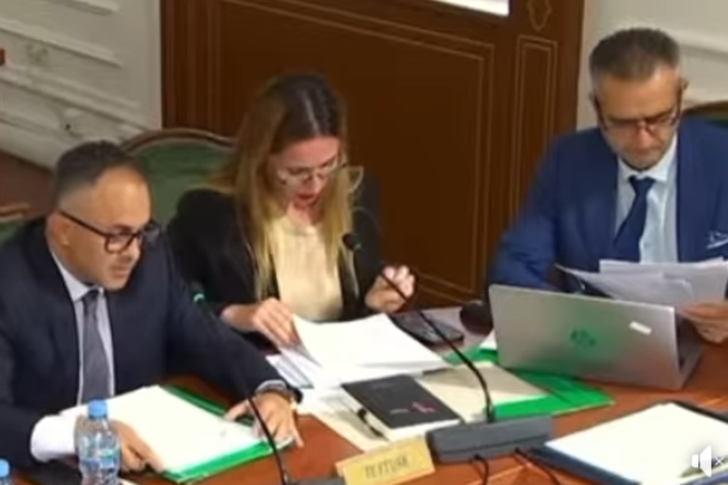
I still can't understand how Fatmir Xhafaj, and with him U...
It is a truly strange city. The buildings are not arranged...

The Democratic Party did not field a candidate for the Tir...
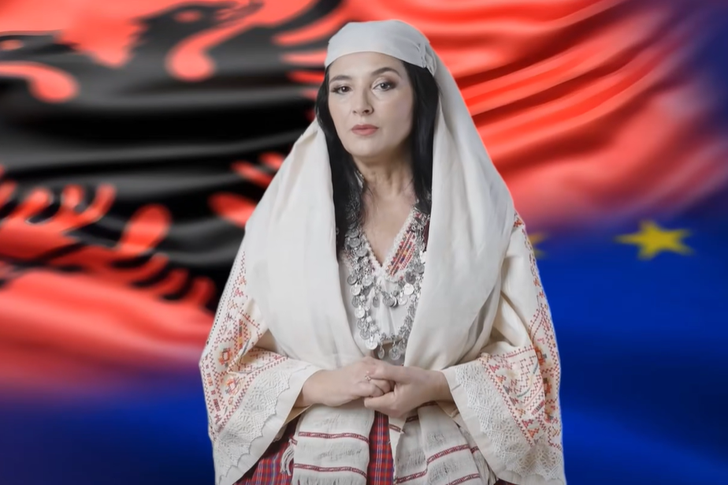
This morning, while I was scrolling to see how happy peopl...

The one who comes out with pathetic speeches, with program...

Among other achievements, the signing of the Peace Agreeme...
In a distorted landscape of words spilled haphazardly on t...

Why is the conflict over the Vlora Airport Concession more...
This in the photo is the house of my great-grandfather, Eq...

Problematic use of social media has increased by 49%. OECD...

What is being noticed in this avant-garde generation or "N...
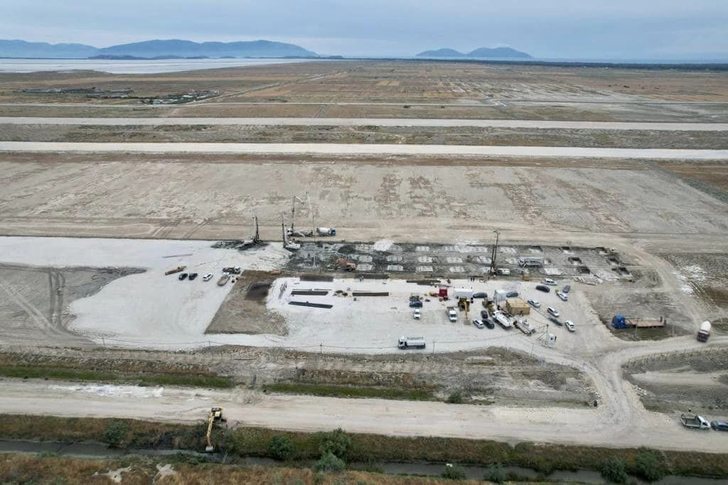
There are several dark spots in the Pacolli-Vlora Airport ...
Edwin John Mark John spoke well to me, but I ignored his ...
The candidate who seeks to give citizens a future that he ...
The Renaissance will further mask the evil intent of the b...

Periodic reports by the OSCE/ODIHR, civil society, the EU,...

"Harbut" is still used today as a slur or as a definition ...
Recently, I have been following with great concern the att...

The next case broadcast on the show "Stop", this Thursday,...
The case published this Thursday, June 4, on the show "Sto...

The protests of recent days related to the situation in Zv...
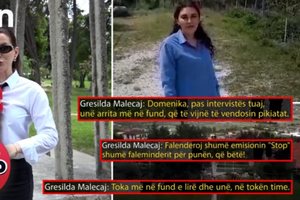
The case addressed this Wednesday, June 3, on the show "St...

The Special Board of Appeal (KPA) decided this Monday ...

The KPA vetting decided this Thursday to dismiss the p...

Suela Salavaçi, a prosecutor in the Prosecutor's Offic...

The Special Board of Appeal reinstated the prosecutor ...
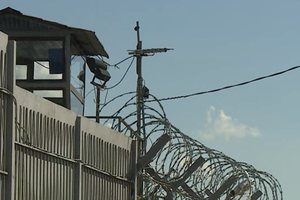
A convict was found dead today in the premises of the Pris...
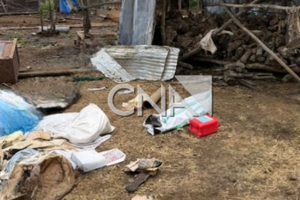
Several images provided by CNA show the area where this mo...

A quantity of explosive material exploded this morning at ...
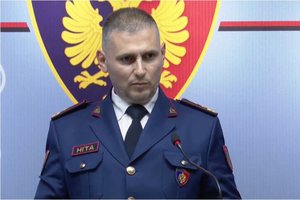
The Head of the State Police, Skënder Hita, expressed his ...

For many children and teenagers, the long summer holidays ...
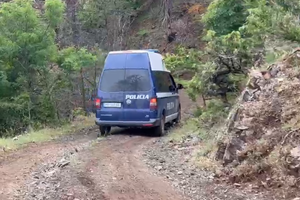
Witnesses in Lozhan, Maliqi, have shared details from the ...

Albania is facing an unprecedented demographic transition,...

On Thursday, our country will be affected by unstable weat...

Russian President Vladimir Putin said the war in Ukraine c...
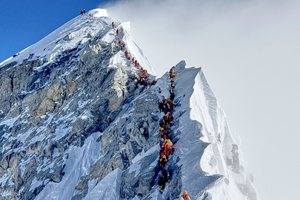
An extraordinary story of survival has been recorded in Ne...
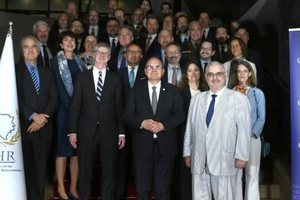
The Peace Implementation Council in Bosnia and Herzegovina...
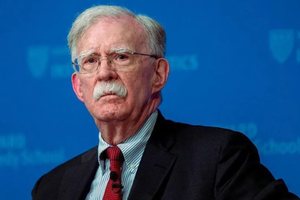
John Bolton, the former national security adviser to US Pr...
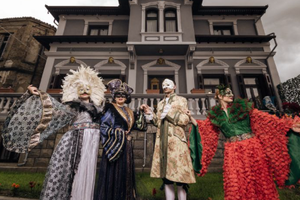
Korça is ready to open the summer season with one of the c...
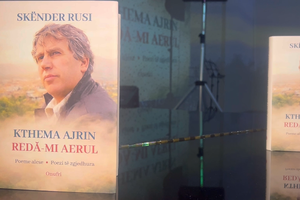
Two years after his passing, the renowned Korçë poet Skënd...
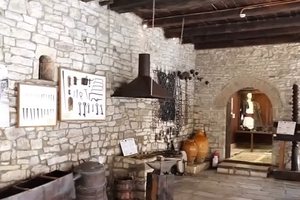
The Ethnographic Museum of Berat has opened its doors to v...
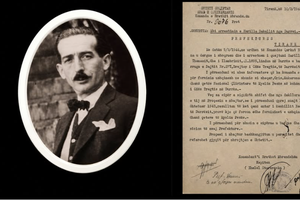
The story of Harilla Bakalli is one of the most chilling t...

The government aims to transform the country's industrial ...

Kursi i këmbimit të euros me lekun ka rënë më tej këtë jav...

Profit margins in the construction sector have increased s...

The Transparency Board, at its meeting today, decided to i...