

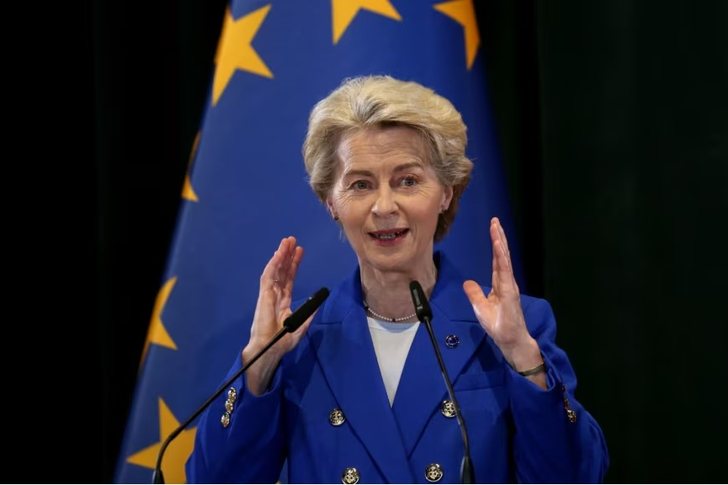
Ukraine peace talks/ Von der Leyen: Deployment of multinational troops is being planned
European Commission President Ursula von der Leyen, in an ...


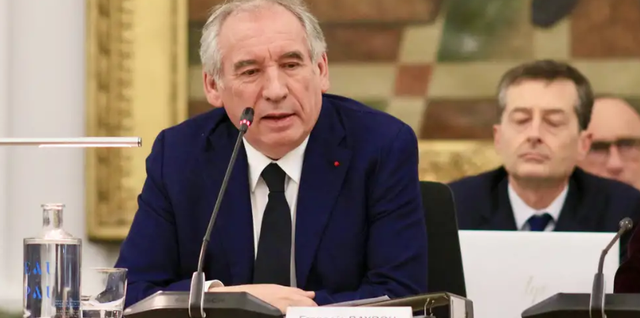
Prime Minister Bayrou has raised the issue of a vote of confidence. If the centrist politician fails on September 8, the government in France could still fall.
François Bayrou seemed calmer than expected last week, when he said in a subdued voice that he had asked the President to call an extraordinary session of Parliament on September 8, where a vote of confidence would be held before budget debates began.
With the surprise move, the prime minister hopes to win support for his planned austerity budget, which is facing widespread opposition in France. The minority government is planning savings of just over 44 billion euros to reduce the deficit to 4.6 percent of gross domestic product (GDP) next year - still far from EU criteria. Among the symbolic measures is the cancellation of two public holidays.
With this vote of confidence, Bayrou is taking a step that threatens more than just his career. If it fails, President Emmanuel Macron will be forced to replace the fourth prime minister and appoint a fifth head of government in about 600 days - after Élisabeth Borne, Gabriel Attal and Michel Barnier.
A level of change that is otherwise known in France only since the time of the Third Republic.
Policy comparable to 1932/33?
At the time, in the early 1930s, France was suffering from the effects of the Great Depression. Governments came and went, prime ministers fell every month. Between 1932 and 1933, the Third Republic went through six prime ministers. A record that speaks of its political paralysis.
The cause was almost always the same: disagreement over the budget. Tax increases, cuts, special taxes - all these plans failed. Thus, the budget became an obstacle that undermined faith in democracy and paralyzed the Third Republic.
Bayrou's dilemma
Ninety years later, some things look similar. France today is burdened by a mountain of debt exceeding 3 trillion euros, and the interest burden eats tens of billions from the budget every year.
Brussels is pushing for austerity measures, while financial markets are closely following Parisian policymakers. After Bayrou's announcement, the stock market reacted by falling prices and rising interest rates on government bonds, which this month even temporarily exceeded Greece's levels. Without a credible consolidation plan, Paris faces a downgrade from the rating agencies.
With its budget, the government is relying on a mix of subsidy cuts, curbed growth in social spending and moderate tax increases for high-income earners - a "soft austerity" approach that economists have been calling for years. But the problem lies not with the numbers, but with Parliament.
France's united opposition
Since the summer 2024 elections, the Government has lacked an absolute majority in Parliament, which is practically divided into three main blocs: the far-right Rassemblement National (RN), the center-right party supporting President Macron, and the left-wing alliance.
The RN is now openly calling for new elections. "We will vote against the vote of confidence. Only a dissolution will give the French people the opportunity to decide their future," declared Marine Le Pen on Platform X. She herself, following a court case, is unlikely to run again in new elections.
Instead of austerity measures, the RN is calling for investments in the police, the army and strengthening purchasing power. The party aims to finance this through new debt.
The left also criticizes Bayrou and his policies. The far-left La France Insoumise (LFI) is planning a general protest action, a kind of strike, for September 10.
The Greens, Communists and Socialists have also ruled out any support for Prime Minister Bayrou, who currently does not have a majority. Socialist leader Olivier Faure spoke of an "unfair budget" and promised an "alternative budget" in a television interview.
Austerity measures are also controversial in the conservative camp. Xavier Bertrand, President of the Hauts-de-France region, warned against disproportionately burdening the middle classes. A too-tough line, they say, will not solve the debt problems and will only strengthen the RN, which is leading in the polls.
Government warns against IMF intervention
The government itself is seeking a vote of confidence, while simultaneously warning of the consequences of failure. Finance Minister Éric Lombard declared on French radio on Tuesday that they do not want to pursue "a policy of fear," but the risk is real: In the worst case, even the International Monetary Fund could intervene.
"Our responsibility is to maintain the confidence of the markets. We are on the right track," Lombard assured. According to the minister, France is already at risk of paying higher borrowing costs than Italy.
He announced a "restructuring and justice budget" for 2026. Savings of 44 billion euros are planned.
The political fate of François Bayrou
Prime Minister Bayrou is in a dilemma. Without significant cuts, he will lose the confidence of the markets. With drastic cuts, he will not secure a parliamentary majority for the 2026 budget. The vote of confidence is therefore also a test of the stability of the entire system. If the Prime Minister fails on September 8, President Macron, who supports the austerity budget, will face difficult decisions. Will he call new parliamentary elections after just one year? Will he rely on a government of experts or a prime minister from another camp? Or, a year and a half before the presidential election, will he even question his mandate to pave the way for an early transfer of power?
For now, there are many questions, but the central question remains unanswered: How do you govern a country whose finances are spiraling out of control when no majority is willing to bear the burden?/ DW

European Commission President Ursula von der Leyen, in an ...

The United Kingdom has secured a £10 billion deal to suppl...
A magnitude 6.0 earthquake, with a depth of 8 km, has caus...
British authorities confirmed a case of H5N1 bird flu this...

Autoritetet greke po vijojnë një hetimi për të gjetur një ...
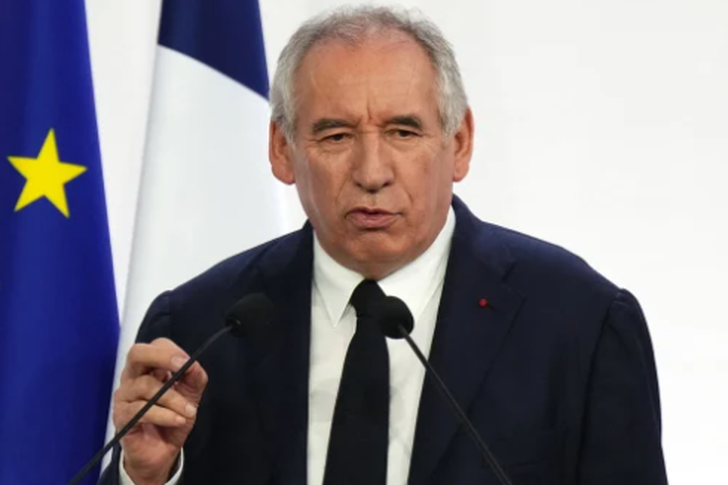
The French prime minister is fighting to keep his job in a...
European Commission President Ursula von der Leyen said in...

A serious accident was recorded this Sunday in Zabel i Ulë...

Former Thai Prime Minister Phaetongtarn Shinawatra was dis...
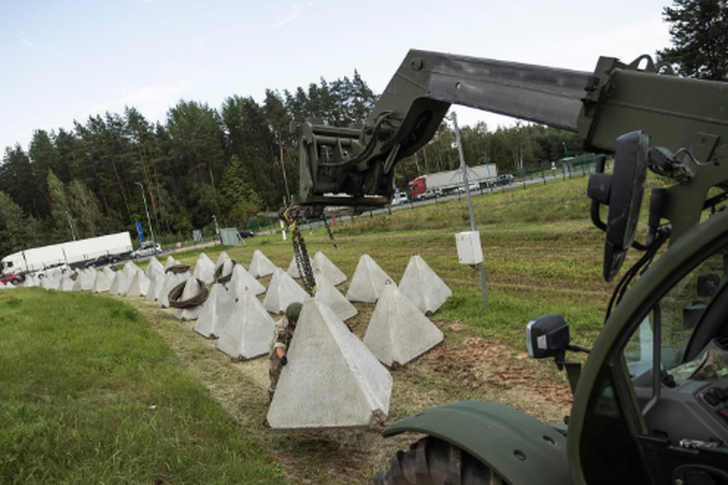
Lithuania has completed the installation of so-called "dra...
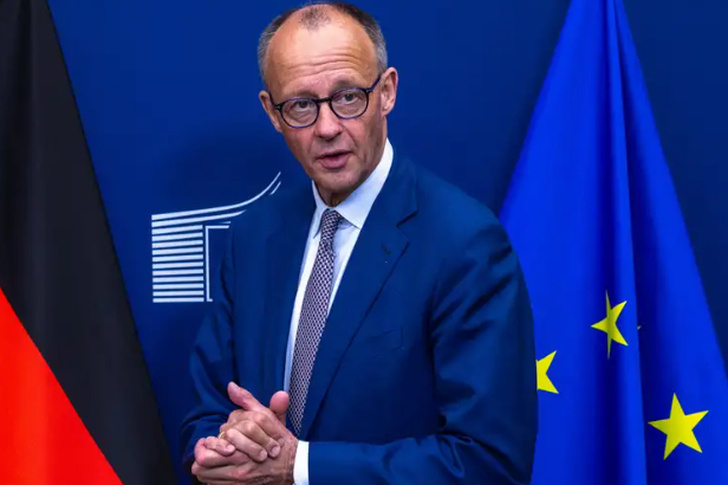
German Chancellor Friedrich Merz stated that the duration ...

Bota u përfshi nga pikëllimi 28 vjet më parë kur jeta e Pr...
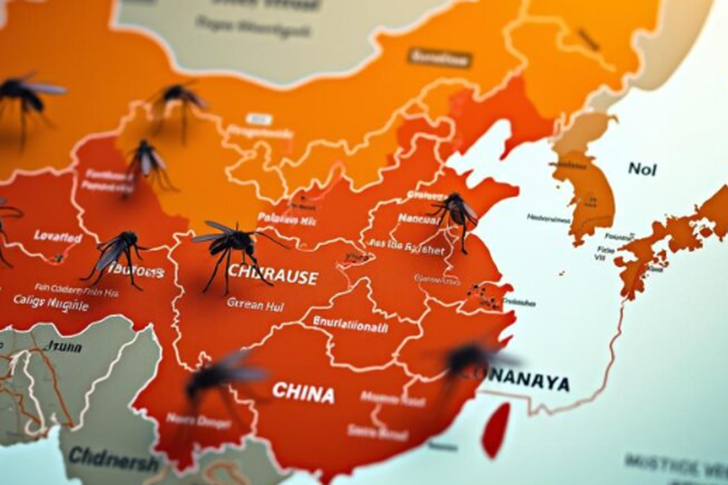
The US Centers for Disease Control and Prevention (CDC) ha...
Russian drone attacks on energy facilities in northern and...
Pope Leo XIV has reiterated his call for an immediate ceas...

President Trump cast doubt on the prospects of a meeting b...

Russian President Vladimir Putin and Indian Prime Minister...
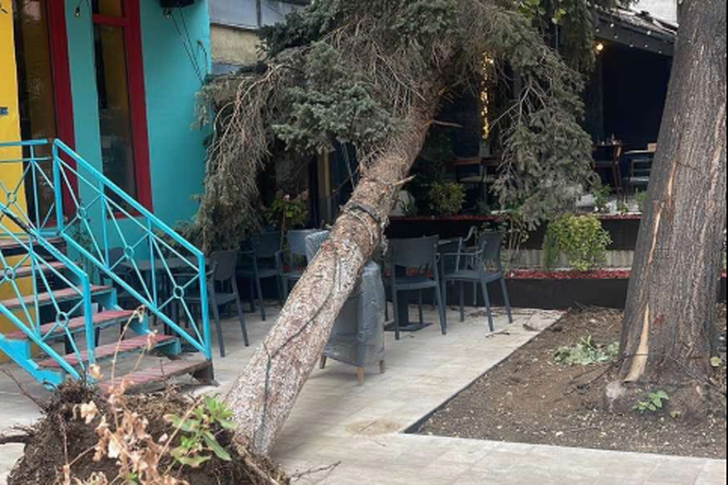
Storms with heavy rainfall seem not to have spared the cap...
Presidenti ukrainas Volodymyr Zelensky dhe kryeministri in...
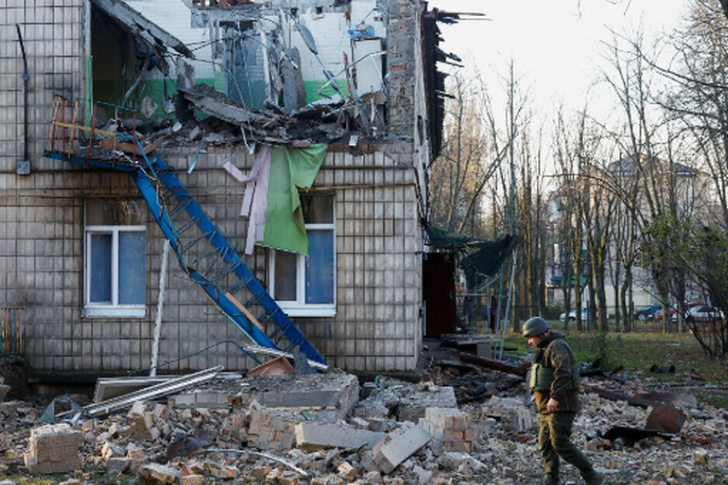
A massive Russian attack in Ukraine killed three people an...
Irfan Hysenbelliu claims to be a big businessman, an hones...

The murder of officer Enea Mekolli in the line of duty has...

The next case broadcast on the show "Stop", this Thursday,...
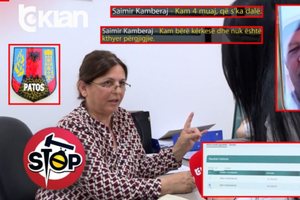
The case published this Thursday, June 4, on the show "Sto...

The Special Board of Appeal (KPA) decided this Monday ...

The KPA vetting decided this Thursday to dismiss the p...

Suela Salavaçi, a prosecutor in the Prosecutor's Offic...

The Special Board of Appeal reinstated the prosecutor ...

An accident was recorded a few minutes ago on the Pogradec...
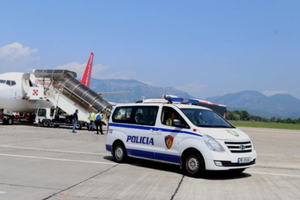
Following the cooperation of Interpol Tirana with Interpol...

An accident occurred this Saturday morning at Shkëmbi i Ka...

A TNT explosion occurred in Lezha in the early hours of th...

Albanians are officially the hardest working people in Eur...

This Saturday will be characterized by mostly clear weathe...
Today our country will be affected by stable weather condi...

For many children and teenagers, the long summer holidays ...

US Defense Secretary Pete Hegseth declared that Europe is ...
A federal judge in Rhode Island struck down a Trump admini...

Thousands of Kosovo citizens living abroad are voting phys...
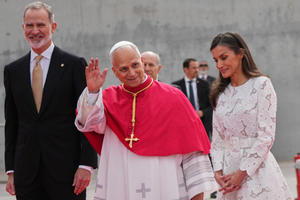
Pope Leo XIV arrived in Madrid this Saturday, where he beg...

Korça is ready to open the summer season with one of the c...

Two years after his passing, the renowned Korçë poet Skënd...

The Ethnographic Museum of Berat has opened its doors to v...
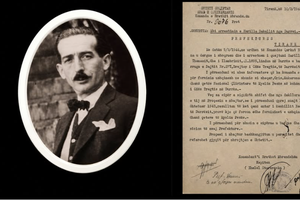
The story of Harilla Bakalli is one of the most chilling t...
The Transparency Board, in today's meeting, decided to red...

This Saturday, one US dollar is bought for 81.4 lek and so...

Despite years of efforts at regional cooperation and free ...

Albania is the country with the highest level of severe ma...