


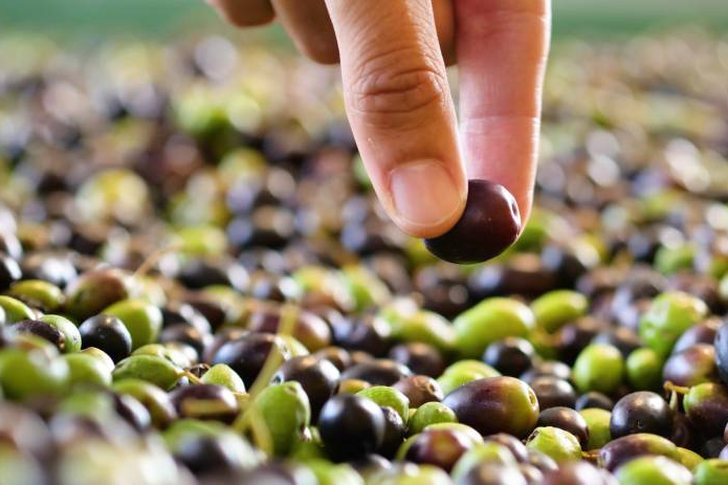
Decline in production increases olive oil price by up to 11%, making exports difficult
For many areas of the country, this year the amount of oli...


Although in 2024, the Albanian economy has maintained growth of around 4%, at the same levels as previous years, if the contributors to this performance are seen in detail, the reality is disappointing.
Instead of relying on manufacturing, construction, trade and services or industry, it has been sustained mainly by the fiscal effect of net taxes and public spending on administrative salaries, emphasizing a growth model driven by consumption and budgetary policy, not by the real productive base.
For the first time in post-transition history, the state was the largest contributor to the economy in 2024, accounting for more than half of growth. Ironically, the fact that the state is accounting for more than half of economic growth harks back to the socialist economy, where growth relied on the state rather than real production.
At a result of 4%, net taxes had the highest impact of 1.97 percentage points. “Public administration and defense; compulsory social security” was the second contributor with 0.91 percentage points, as a result of the increase in public sector wages.
Private enterprise contributed only 1.97 percentage points, down from 3.84 percentage points in 2023, or 96% of that year's growth.
In 2024, private entrepreneurship contributed only 49% of total economic growth. This is the lowest historical contribution of businesses since 1996, when INSTAT reports data (the years 1997 and 2020 are excluded, when the economic trend was negative due to the pyramid crisis and the Covid 19 pandemic, respectively).
GDP performance in 2024 has been kept artificially higher through increased fiscal revenues, not through real growth in production or exports.
Revenues from VAT and excise duties have increased, due to higher prices and domestic consumption, also driven by tourism, but this does not necessarily represent sustainable economic growth.
The government has also encouraged this trend, through the policy of increasing salaries in the public administration for two consecutive years, in an attempt to compete with the region and push private enterprises to make the same move (also through the minimum wage), without worrying much about the connection with productivity, thereby "embarrassing" manufacturing enterprises.
The consequences are being felt in the economy. If we remove the state contribution, growth in 2024 is only 1.97%, down from 3.84% last year, being the lowest level since 2013 (always excluding the year of the pandemic).
A more detailed analysis by economic activity shows an unstable, if not random, economic pattern. “Construction”, “Accommodation and food services”, “Electricity, gas supply”, which were the main contributors to growth until 2023, had a minimal effect in 2024.
Construction is a cyclical sector that seems to have reached a new maturity, although there are still many projects on the horizon that have received permission to develop from the National Territorial Council. In 2023, construction brought almost a third of the growth, while in 2024, the contribution dropped to 13%.
The high pace of construction, in a strange correlation that has little to do with supply and demand, or with rising incomes and wages, has only made apartments more expensive for locals, especially in the capital.
The average price of housing in Tirana has reached around 2 thousand euros per square meter, tripling compared to two decades ago and making the Albanian capital among the most unaffordable in Europe, in relation to purchasing power, according to Numbeo data, being an additional factor that has increased the cost of living, in addition to food products.
"Accommodation and food services", a sector driven by tourism, is again failing to have a dominant effect, providing limited impact (8% growth in 2024 from 23% in 2023).
INSTAT data shows that value added in this sector is growing much more slowly than income, signaling a lower effect on the economy.
Energy is a sector entirely dependent on the weather, with hydropower still accounting for over 90% of the total, although the share of photovoltaics is also slowly increasing. Its contribution to growth was 4% in 2024, down from 20% in 2023.
"Professional, scientific and technical activities", or liberal professions, one of the indicators of the development of the modern economy, because it represents the analytical and creative capacity of the economy and the source of innovation for other businesses, which was growing rapidly in recent years, shrank significantly in 2024, contributing less than 1% of growth, from 12% in 2022.
The government's attempt to heavily tax this activity in 2024, which temporarily failed after a reversal from the Constitutional Court, seems to have been reflected in its decline.
"Wholesale and retail trade" is also making a low contribution, with 12% of total growth, as emigration has negatively affected consumption, which has not been fully recovered from tourism. The rise in prices, while having a positive impact on the contribution of net taxes, by increasing budget revenues, has reduced the purchasing power of the population.
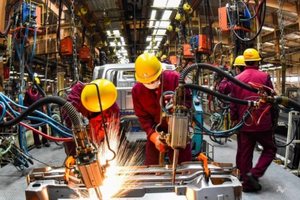
Other important sectors for employment, such as agriculture, the extractive and processing industries, have made negative contributions for three consecutive years, reflecting the structural difficulties of the real economy such as the low level of investment, high energy costs and labor shortages./ Monitor

For many areas of the country, this year the amount of oli...

An analysis of the periodic survey by the Bank of Albania ...

Despite the fact that 83 percent of Albanians are daily in...
Despite the fact that after 2014, with the amendment of th...
This Tuesday, one US dollar will be bought for 82.5 lek an...
Silver hit a new high on Monday as traders placed speculat...

The General Directorate of Taxes has announced that salari...
Home loans continued to grow in October, confirming a low ...
Autumn cultural tours managed to compensate for the declin...
This Sunday, one US dollar will be bought for 82.9 lek and...
This Saturday, one US dollar will be bought for 82.8 lek a...
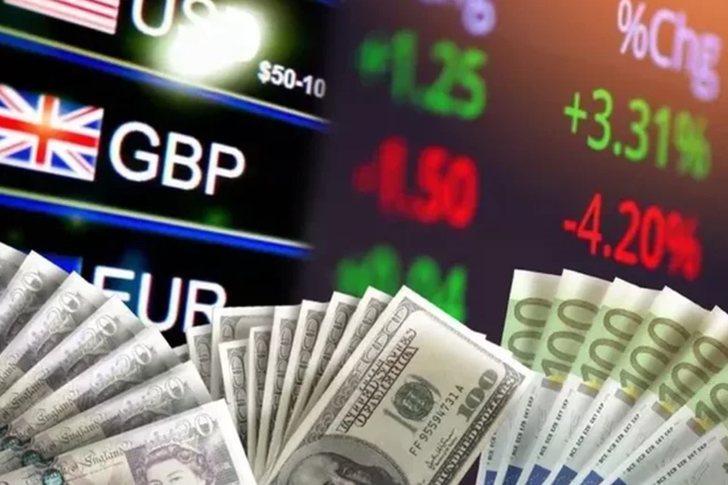
This Friday, one US dollar will be bought for 82.9 lek and...
The banking sector's net interest income is declining for ...

The insurance market is growing at double-digit rates this...
Vehicle imports into our country are growing rapidly, espe...
Planned expenditures for the Ministry of Defense have incr...
This Thursday, one US dollar will be bought for 83 lek and...
The year 2025 has turned out to be an unfavorable year in ...
Credit to the economy further emphasized the upward trend ...

The year 2025 is expected to end with expenses for providi...
Irfan Hysenbelliu claims to be a big businessman, an hones...

The murder of officer Enea Mekolli in the line of duty has...
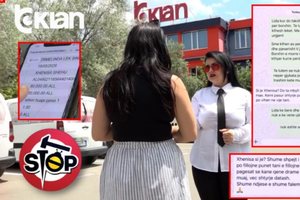
The next case broadcast on the show "Stop", this Thursday,...
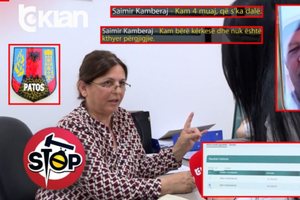
The case published this Thursday, June 4, on the show "Sto...

The Special Board of Appeal (KPA) decided this Monday ...

The KPA vetting decided this Thursday to dismiss the p...

Suela Salavaçi, a prosecutor in the Prosecutor's Offic...

The Special Board of Appeal reinstated the prosecutor ...

A 38-year-old man was arrested today near the Kamza turnof...

A money changer in Durrës lost 60 thousand euros after bei...
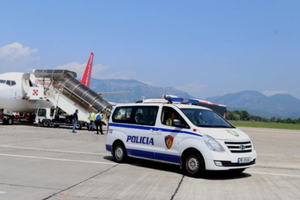
The 6 citizens captured in Dubai, members of criminal grou...
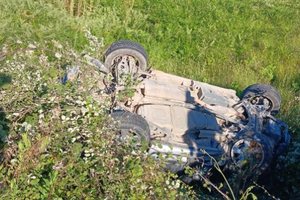
A serious accident occurred on the Kardhiq-Delvinë axis, i...
Today our country will be affected by stable weather condi...

For many children and teenagers, the long summer holidays ...
Albania is facing an unprecedented demographic transition,...
On Thursday, our country will be affected by unstable weat...
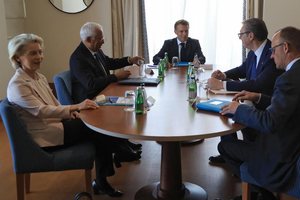
Leaders of the European Union and Western Balkan countries...
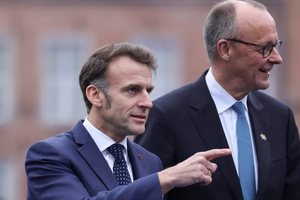
On the eve of the EU-Western Balkans summit, Germany and F...

Russian President Vladimir Putin said the war in Ukraine c...
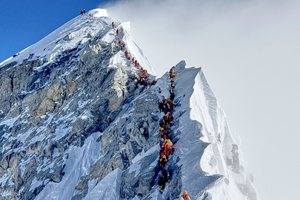
An extraordinary story of survival has been recorded in Ne...
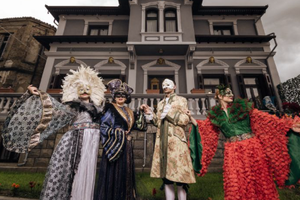
Korça is ready to open the summer season with one of the c...
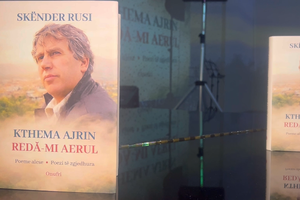
Two years after his passing, the renowned Korçë poet Skënd...
The Ethnographic Museum of Berat has opened its doors to v...
The story of Harilla Bakalli is one of the most chilling t...
Despite years of efforts at regional cooperation and free ...
Albania is the country with the highest level of severe ma...

This Friday, one US dollar is bought for 81.3 lek and sold...
The government aims to transform the country's industrial ...