

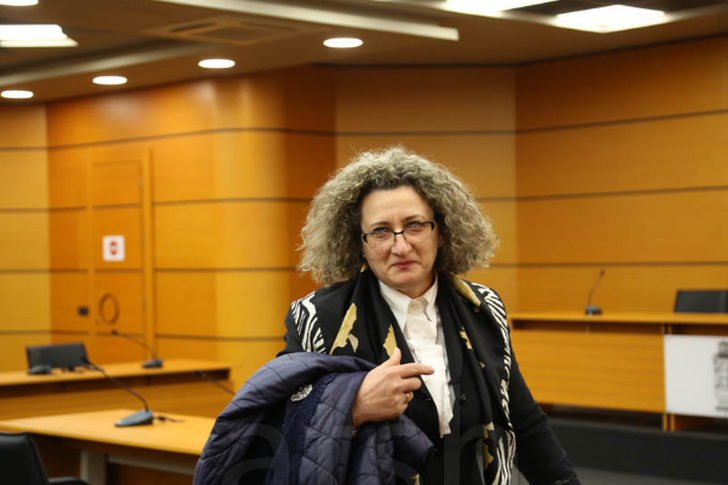
The process for dismissing the case in charge of Judge Irena Gjoka is postponed
The process for dismissing the case in charge of the judge...


The United Panels of the Supreme Court "overthrow" Sokol Sadushi and do not kneel in front of his scenarios.
The United Colleges have only made partial interventions and corrections to the previous decision of the unified practice on security measures, without overturning the 2011 decision, leaving it in force and making some partial corrections. So, it has simply been an update and refresh.
In the decision taken, the United Colleges have defined three main rules for security measures.
The Joint Panels determined that the burden of justifying the need for the imposition and continuation of the measure of "prison arrest" lies with the prosecution.
The decision of the United Colleges
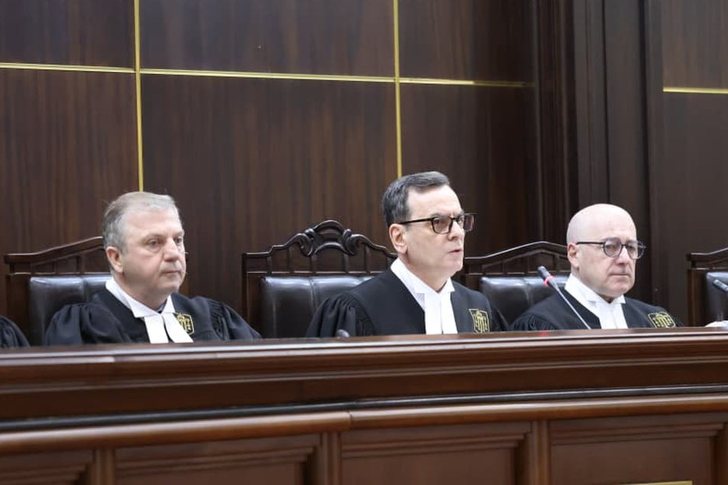
The Joint Panels of the Supreme Court, composed of 16 judges, have reached a decision on the standards that should guide courts in the determination and implementation of the personal security measure "prison arrest".
The case was examined following the initiative of the President of the Supreme Court, who, in exercising the constitutional and legal role of the Supreme Court to guarantee a uniform, stable and predictable judicial practice, set in motion the Joint Panels to respond to concerns identified in judicial practice regarding the manner in which the measure of "prison arrest" was requested, justified, controlled and implemented, as well as to orient this practice towards constitutional and conventional standards for the protection of personal freedom.
The Joint Panels assessed that judicial practice required clarification, precision, standardization, change and further development in the way of understanding and implementing the measure “prison arrest”. Through this decision, the Panels orient the courts towards implementing standards in accordance with the Code of Criminal Procedure, the Constitution and the jurisprudence of the European Court of Human Rights, reiterating that the most severe restriction of personal freedom cannot be based on general formulations, but requires concrete, individualized and verifiable reasoning.
The United Colleges established three main rules:
Firstly, the previous formulation, according to which, when the security measure “arrest in prison” is requested or imposed, the court is not obliged to realistically analyze alternative measures and it is sufficient to justify that the chosen measure is appropriate for the specific case, is not in accordance with Articles 228-230 and 245/1, letter “ç”, of the Code of Criminal Procedure, as well as with Article 5 § 3 of the European Convention on Human Rights. For this reason, the court is obliged to realistically examine the less restrictive measures of personal freedom and to expressly justify why they are not sufficient in the specific case. This justification must be individualized, based on facts and directly related to the specific circumstances of the case.
Secondly, the measure “prison arrest” is of an exceptional nature and can only be imposed when other measures are inadequate. The dangerousness of the act and the perpetrator cannot be inferred solely or mainly from the nature of the criminal act or from the margin of punishment, but must be based on a concrete assessment of the circumstances of the case, the manner of committing the act, the consequences, the personality, behavior and personal and family data of the person against whom the measure is requested.
Third, the burden of justifying the need for the imposition and continuation of the measure of “prison arrest” lies with the prosecution. The court has the obligation to verify and justify this need at every stage of the proceedings. Its decision-making cannot be conditioned by the presentation or not of “positive evidence” by the defendant.
This decision is of particular importance for the judicial system and for the protection of fundamental rights, as it clarifies the conditions, limits and manner of justification of the measure “prison arrest”, in accordance with the Code of Criminal Procedure, the Constitution and the standards of the ECHR. In this way, the Joint Panels strengthen the consistency, uniformity and predictability of judicial practice, placing at the center the guarantees of personal freedom and the need for real, concrete and proportional judicial control.
In the specific case, the United Panels upheld the decision of the Court of Appeal of General Jurisdiction, assessing that the prosecution's recourse was not supported by law.
The full and reasoned decision of the United Colleges will be made available within the legal deadline and will be sent for publication in the Official Gazette.

The process for dismissing the case in charge of the judge...
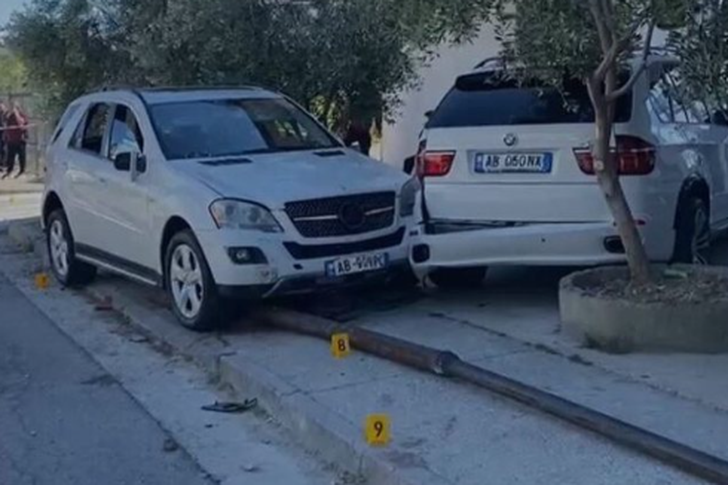
Former Minister of Justice, Eduard Halimi, reacted today r...
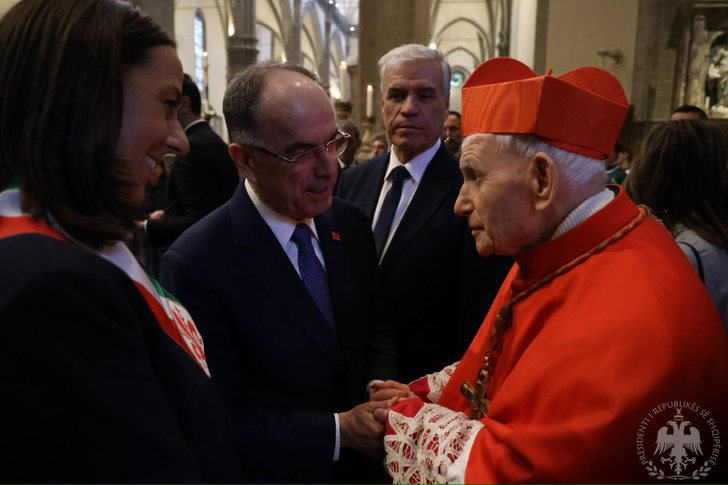
The President of the Republic, Bajram Begaj, was present a...
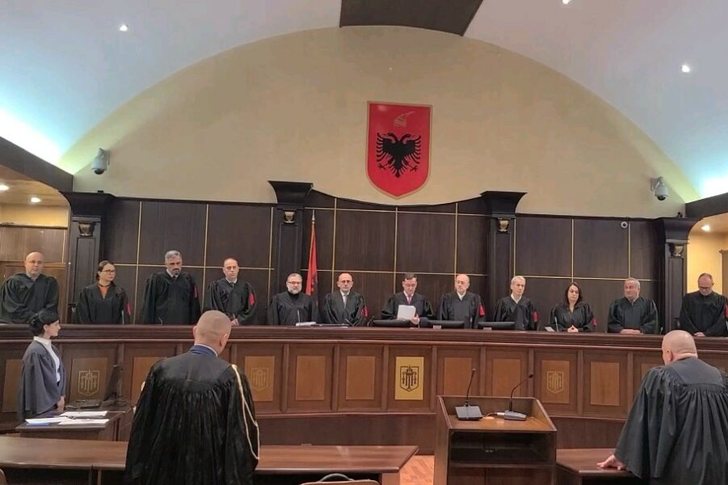
The Supreme Court is expected to hold a meeting of the Joi...
Former officials of the "Bankers" company appeared today a...

Former head of KESH, Erald Elezi, and former head of ARRSH...
The Shkodra Prosecution Office completed the investigat...
The Special Court of Appeal has rejected the request of th...

Safety expert, Gert Metani, shared some explanations based...
New details are being learned regarding the condition of t...

Democratic Party MP Belind Këlliçi has reacted to the trag...
The Supreme Court will announce today the decision on the ...

At first glance, the offices look like any other modern co...

The use of generative artificial intelligence is spreading...
The leader of the Democratic Party, Sali Berisha, has reac...
The head of the Audiovisual Media Authority, Armela Krasni...
Prime Minister Edi Rama has reacted on the 'X' platform to...

The Ministry of Health and Social Protection has shared de...
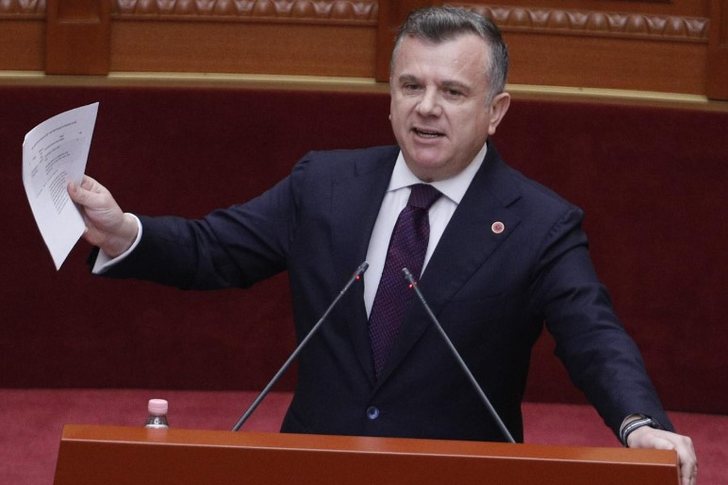
Socialist MP Taulant Balla reacted a few minutes ago regar...

The Director of the Albanian Road Authority, Ami Kozeli, e...

Irfan Hysenbelliu claims to be a big businessman, an hones...

The murder of officer Enea Mekolli in the line of duty has...

The next case broadcast on the show "Stop", this Thursday,...
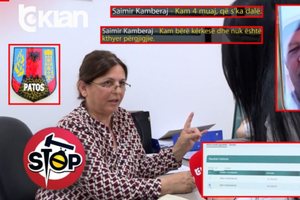
The case published this Thursday, June 4, on the show "Sto...

The Special Board of Appeal (KPA) decided this Monday ...

The KPA vetting decided this Thursday to dismiss the p...

Suela Salavaçi, a prosecutor in the Prosecutor's Offic...

The Special Board of Appeal reinstated the prosecutor ...

A road accident has been reported on the Fier-Levan axis, ...

An accident was recorded a few minutes ago on the Pogradec...

Following the cooperation of Interpol Tirana with Interpol...

An accident occurred this Saturday morning at Shkëmbi i Ka...

Albanians are officially the hardest working people in Eur...

This Saturday will be characterized by mostly clear weathe...
Today our country will be affected by stable weather condi...

For many children and teenagers, the long summer holidays ...

The military advisor to Iran's supreme leader, Mohsen Reza...

US Defense Secretary Pete Hegseth declared that Europe is ...
A federal judge in Rhode Island struck down a Trump admini...
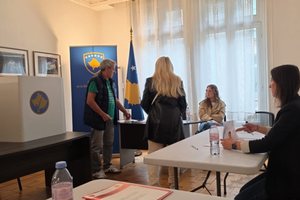
Thousands of Kosovo citizens living abroad are voting phys...

Korça is ready to open the summer season with one of the c...

Two years after his passing, the renowned Korçë poet Skënd...

The Ethnographic Museum of Berat has opened its doors to v...
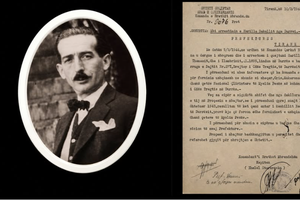
The story of Harilla Bakalli is one of the most chilling t...

The Transparency Board, in today's meeting, decided to red...

This Saturday, one US dollar is bought for 81.4 lek and so...

Despite years of efforts at regional cooperation and free ...

Albania is the country with the highest level of severe ma...