

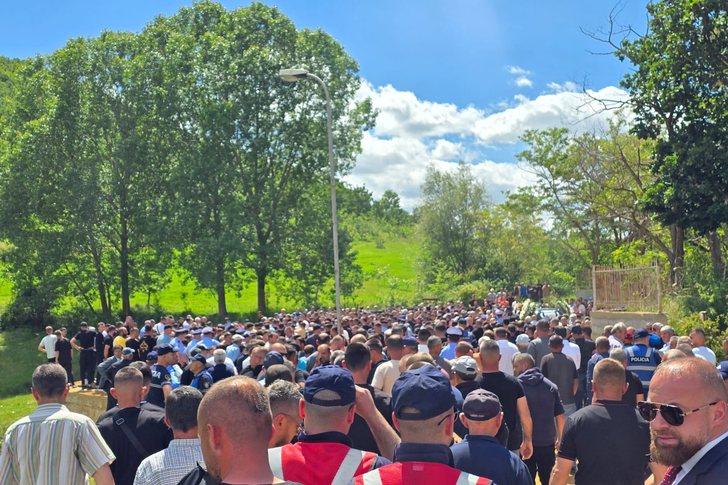
PHOTO-Hundreds of citizens at the final farewell of Enea Mekolli, Martyr of the Homeland
Amidst the pain and numerous tributes, family, friends, ci...


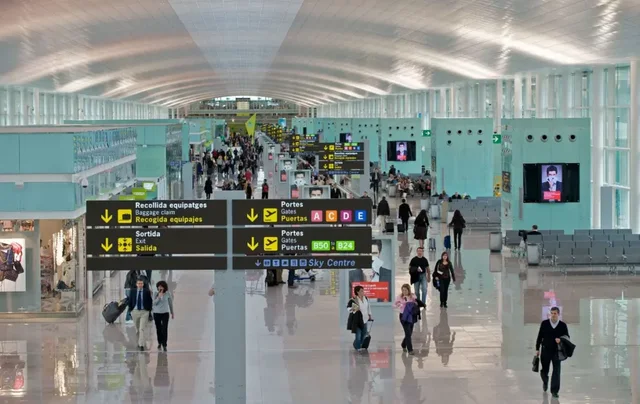
For the first time since the recovery of European air transport after the Covid-19 pandemic, passenger traffic has fallen compared to the same period last year.
The number of passengers at the European airport network fell by 0.7% in April 2026, compared to the same month last year, according to the European airports organization ACI EUROPE.
The group says that, although the decline is small, it "marks an important moment."
April's performance reflects a combination of factors, including the conflict in the Middle East, which mainly affected the non-EU+ market, the partial relocation of the Easter holidays to March this year, as well as strikes that hit the German market hard.
The EU+ market continues to grow, while regional and national differences are deepening
While passenger traffic in the non-EU+ market fell by 7.6%, the EU+ market continued to expand, recording a growth of 0.6%. EU airports alone grew by 1.4%.
Within the non-EU+ market, airports in Israel (-73.4%) suffered significant losses, while airports in the main market of Turkey also recorded a decline in passenger traffic (-5.1%). There were also declines in Georgia (-16.3%) and Azerbaijan (-12.9%), as a result of their exposure to developments in the Middle East region.
Meanwhile, several smaller markets in the west of the non-EU+ area continued to record impressive growth: North Macedonia (+30.6%), Albania (+25.3%) and Moldova (+24.6%).
Among the largest EU+ markets, airports in Spain (+3.7%) and Italy (+2.2%) had the best results, while those in Germany (-8.5%), the United Kingdom (-2.1%) and France (-0.9%) recorded declines in passenger numbers.
The best performances in the EU+ were recorded by airports in Slovakia (+125.2%), Slovenia (+14.6%), Estonia (+12.1%), Malta (+13.5%) and Poland (+8.3%).
On the other hand, airports in Cyprus (-16.1%) and Iceland (-11.7%) had the largest declines, followed by Austria (-7.4%) and Switzerland (-6.1%).
"April marks a clear turning point for European air traffic. While we were already seeing a normalization of passenger traffic growth after the strong recovery after the pandemic, geopolitical instability, especially the war in the Middle East, is further weighing on growth and highlighting large differences in performance between markets," commented Olivier Jankovec, Director General of ACI EUROPE.
Europe's largest and smallest airports were most affected
Overall, “major” airports (-3.5%), along with “mega” (-1%) and “large” airports (+0.1%), were the segments most affected by the conflict in the Middle East, as they concentrate the bulk of Europe's air connections with this region.
Among the major airports, only Barcelona (+4.1%), Madrid (+3.3%) and Amsterdam-Schiphol (+2.7%) saw passenger traffic increase in April.
Munich (-16.4%) and Frankfurt (-11%) recorded the strongest declines, mainly due to no less than seven strike days during the month.
Istanbul Airport (-6.8%) and Istanbul Sabiha Gökçen (-3.4%) — which are usually among the best performers — saw declines in April. Traffic also fell at London Gatwick (-8.8%) and London Heathrow (-5.34%). Meanwhile, Rome-Fiumicino (-0.6%) and Paris-CDG (0.0%) remained almost unchanged.
In contrast, medium (+2.1%) and small (+5.5%) airports, whose networks are mainly within Europe, remained largely unaffected. This was due to the fact that low-cost airlines did not reduce capacity, as well as due to a shift in demand from long-haul to medium- and short-haul.
However, compared to pre-pandemic levels in 2019, small airports continued to perform the worst, at -27.7%. This reflects structural changes in market conditions and major challenges to their financial sustainability.
Goods and aircraft movements
Cargo traffic at European airports fell by 5.3% during April, while the number of aircraft movements marked a slight decline of 0.8%.
Data by airport groups
In April, airports that handle more than 40 million passengers per year (Majors), those with 25–40 million passengers (Mega), with 10–25 million passengers (Large), with 1–10 million passengers (Medium) and with less than 1 million passengers (Small) reported average changes of -3.5%, -1%, +0.1%, +2.1% and +5.5%, respectively, compared to a year earlier.
The airports that reported the most dynamic growth in passenger traffic compared to April 2025 are as follows:
Majors: Barcelona BCN (+4.1%), Madrid MAD (+3.3%), Amsterdam AMS (+2.7%), Paris CDG (0%), Rome FCO (-0.6%).
Mega airports: Málaga AGP (+9.5%), Zurich ZRH (+6.1%), Copenhagen CPH (+5.8%), London STN (+3.1%), Palma de Mallorca PMI (+2.6%).
Large airports: Tirana TIA (+25.3%), Charleroi CRL (+16.2%), Malta MLA (+13.5%), Milan LIN (+13.3%), Kraków KRK (+13%).
Medium airports: Bratislava BTS (+144.7%), Skopje SKP (+31.1%), A Coruña LCG (+25.4%), Chi?in?u RMO (+24.6%), Timi?oara TSR (+21.5%).
Small airports: Stockholm BMA (+699.8%), Bucharest BBU (+210.6%), Hatay HTY (+165.8%), Córdoba ODB (+135.1%), Friedrichshafen FDH (+89.1%)./ Monitor

Amidst the pain and numerous tributes, family, friends, ci...

Prime Minister Edi Rama has commented on Albania's integra...
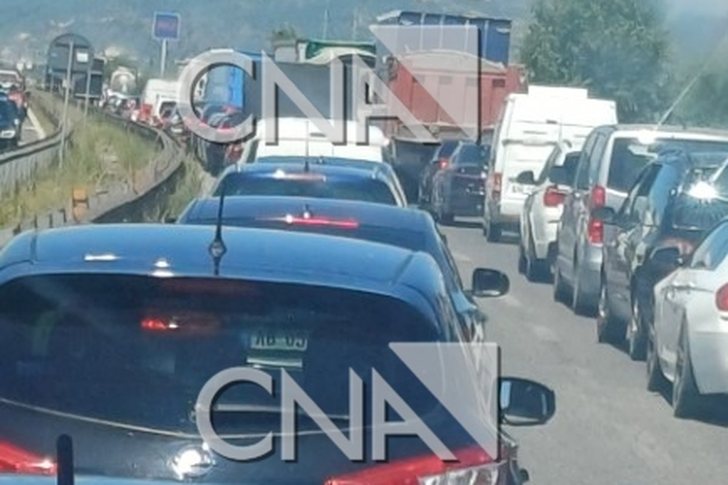
Traffic on the Fier-Lushnje axis is paralyzed. According t...

The next session at the Special Court for the case against...

The Special Court is reviewing the case against the leader...

The uncle of the murdered officer, Enea Mekolli, Hazbi Mek...
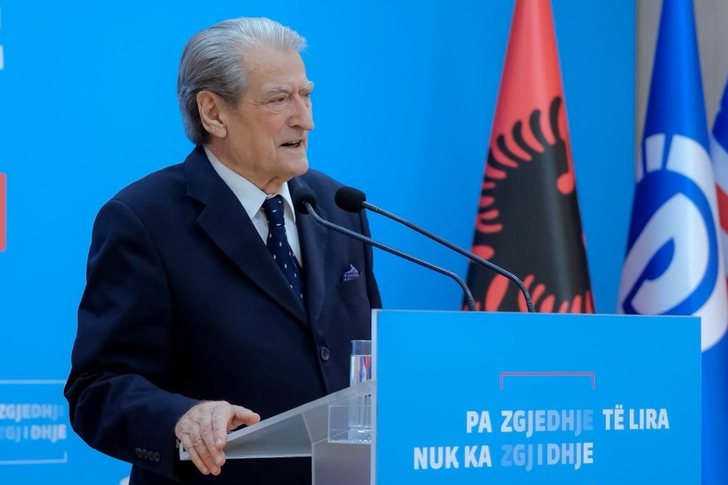
The leader of the Democratic Party of Albania, Sali Berish...
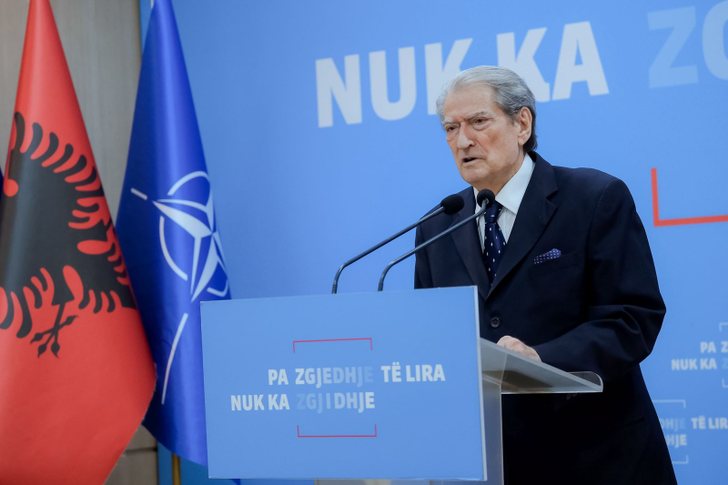
The leader of the Democratic Party, Sali Berisha, has requ...

Tributes have been paid to police officer Enea Mekolli, wh...
DP leader Sali Berisha has reacted to recently revealed de...
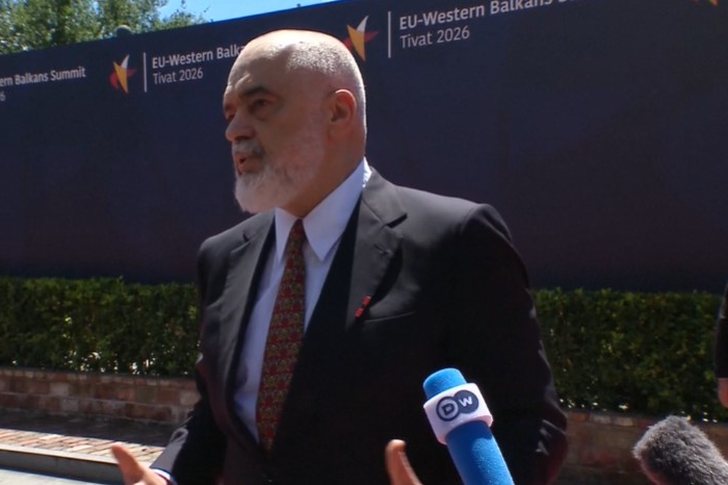
Prime Minister Edi Rama spoke to the media ahead of the EU...

President Bajram Begaj participated in the tributes in hon...
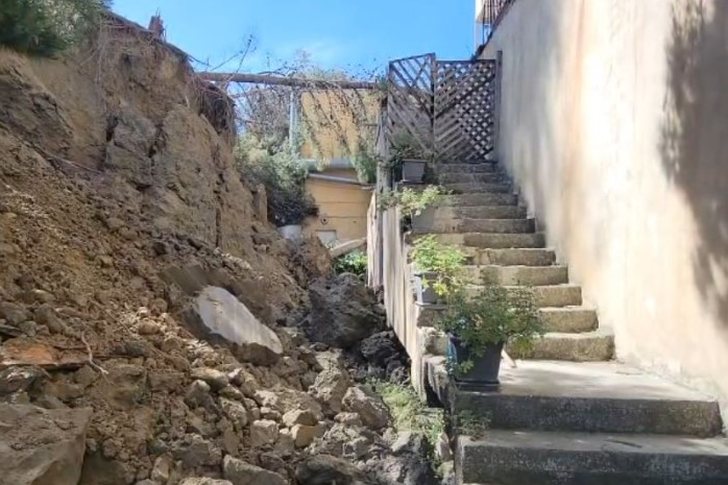
Landslides were recorded on Currila Hill in the early hour...
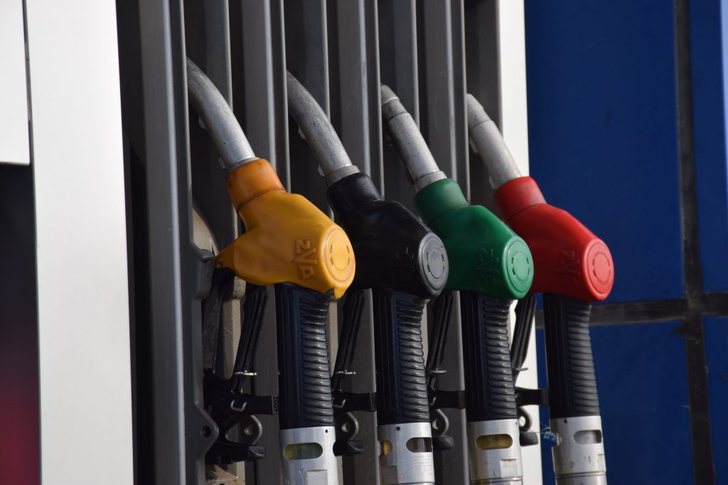
The Transparency Board has announced that the retail price...

Sessions have begun at the GJKKO for the case of PL leader...

Today, the GJKKO will hold a hearing against former PL Pre...

This Friday, tributes are being held in honor of the offic...

Investigations into the serious incident in Lozhan, where ...
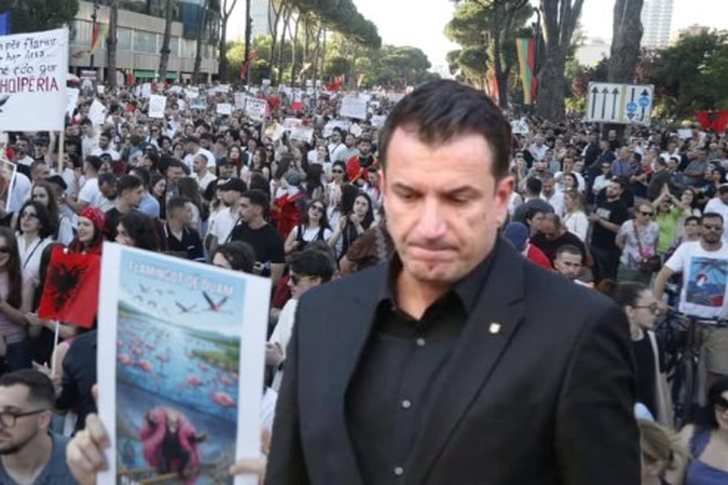
Some of the public figures, the so-called "VIPs", who toda...
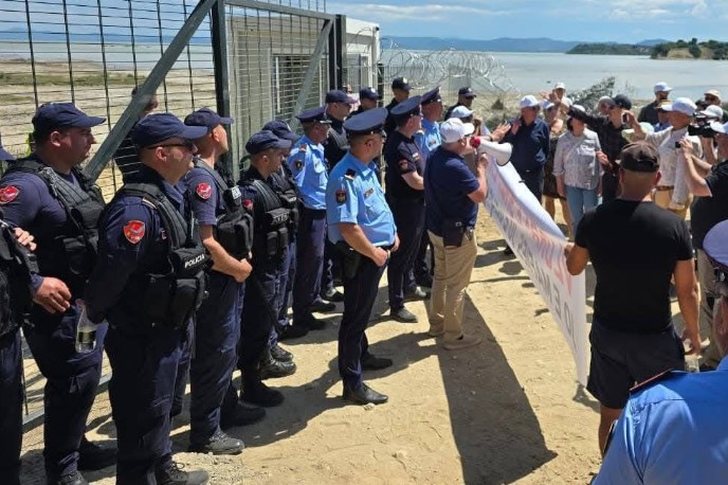
Albanian businessman Artur Shehu spoke on the Opinion show...

Irfan Hysenbelliu claims to be a big businessman, an hones...

The murder of officer Enea Mekolli in the line of duty has...

The next case broadcast on the show "Stop", this Thursday,...
The case published this Thursday, June 4, on the show "Sto...

The Special Board of Appeal (KPA) decided this Monday ...

The KPA vetting decided this Thursday to dismiss the p...

Suela Salavaçi, a prosecutor in the Prosecutor's Offic...

The Special Board of Appeal reinstated the prosecutor ...

A 38-year-old man was arrested today near the Kamza turnof...

A money changer in Durrës lost 60 thousand euros after bei...
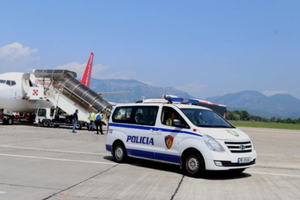
The 6 citizens captured in Dubai, members of criminal grou...

A serious accident occurred on the Kardhiq-Delvinë axis, i...

Today our country will be affected by stable weather condi...

For many children and teenagers, the long summer holidays ...
Albania is facing an unprecedented demographic transition,...

On Thursday, our country will be affected by unstable weat...
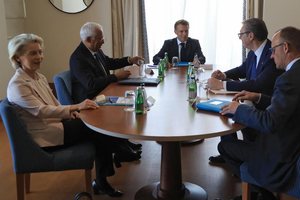
Leaders of the European Union and Western Balkan countries...

On the eve of the EU-Western Balkans summit, Germany and F...

Russian President Vladimir Putin said the war in Ukraine c...

An extraordinary story of survival has been recorded in Ne...

Korça is ready to open the summer season with one of the c...

Two years after his passing, the renowned Korçë poet Skënd...

The Ethnographic Museum of Berat has opened its doors to v...
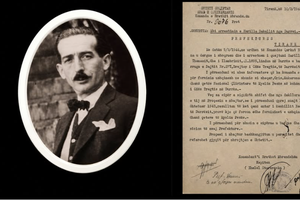
The story of Harilla Bakalli is one of the most chilling t...

Despite years of efforts at regional cooperation and free ...

Albania is the country with the highest level of severe ma...

This Friday, one US dollar is bought for 81.3 lek and sold...

The government aims to transform the country's industrial ...