


Residence permit for foreigners, for January-June over 18 thousand applications, 61% of them for work
Over 18,000 foreign citizens from 140 countries have appli...


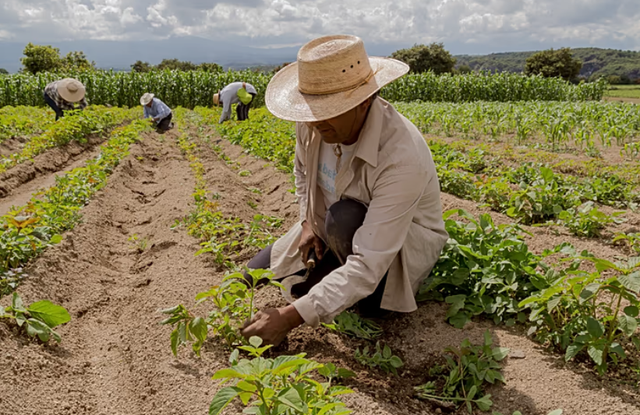
Rising energy and fertilizer prices are expected to continue to fuel food inflation worldwide, the UN warned in its latest report. This, in turn, could increase the cost of a healthy diet and jeopardize progress in the fight against global hunger.
Conflicts and disruptions in global energy markets could push millions of people into hunger by driving up the costs of fuel, fertilizers and food, the head of the Rome-based International Fund for Agricultural Development warned. The warning comes as a new United Nations report shows that global progress in the fight against hunger remains fragile.
The UN's food security report, released on Tuesday, found that global hunger has eased slightly in recent years, but predicts that more than 500 million people could continue to face chronic hunger by 2030.
Africa is expected to bear the brunt of this crisis.
In an interview with The Associated Press this month, IFAD President Alvaro Lario said that geopolitical tensions and potential disruptions to shipping and energy supplies, including uncertainty around the Strait of Hormuz during the Iran war, could leave another 9 to 18 million people facing famine if these shocks continue.
"We are living in a period when the number of conflicts is at an all-time high and continues to increase," Lario said, adding that "every time there is conflict, hunger, population displacement and the number of refugees also increase."
Conflicts are driving up energy and fertilizer prices
According to Larios, ongoing conflicts, such as the war in Iran and the Russian invasion of Ukraine, are the main factors that are increasing the prices of energy and fertilizers.
By disrupting shipping and supplies of agricultural inputs and energy, these conflicts are inflicting another inflationary blow on food systems around the world. The impact is particularly severe on smallholder farmers, many of whom depend on oil to pump water, harvest crops, and transport their produce to market.
This is particularly concerning, as the cost of a healthy diet around the world is already rising.
According to the UN report, the average global cost of a healthy diet increased to $4.28 in purchasing power parity terms per person per day, from $3.44 in 2021.
Latin America and the Caribbean recorded the highest costs, at $4.91 according to purchasing power parity.
The cost of a healthy diet varied significantly from region to region, depending on differences in agro-food systems. Animal products, vegetables and fruits accounted for the largest share of the cost, compared to staple foods containing starch.
Even activities after the products leave the farm, such as processing, logistics, and wholesale, accounted for 40 percent of the total cost.
Since these activities are particularly vulnerable to supply chain disruptions caused by conflict, it is even more important to build more efficient and sustainable systems in these areas, especially to reduce the costs of perishable foods.
Similarly, more investment in infrastructure, development, research, irrigation and cold chains is needed to reduce the cost of a healthy diet. Reforms in subsidies and the regulatory framework, along with trade facilitation, can also help achieve this goal.
Lario also emphasized that hunger and conflict often feed each other, creating a cycle that is difficult to break without more stability.
“Ending hunger and making healthy diets affordable require political commitment, sustained investment and supportive policies,” said Qu Dongyu, FAO Director-General.
“Recent crises — from natural disasters, such as the COVID-19 pandemic, to man-made disasters, such as conflict hotspots, the war in Ukraine, the crisis in Gaza, and the recent disruption in the Strait of Hormuz — have demonstrated both the resilience of agri-food systems and the need to further strengthen them to better serve the world's most vulnerable people, farmers, and consumers,” Dongyu added.
Climate shocks add to the pressure
The new report identifies affordability as one of the biggest challenges to food security in the world. Even though food production continues to increase, about a third of the global population still cannot afford a healthy diet. According to Larios, in low-income countries, that figure rises to about 77 percent.
“The biggest challenge is no longer simply producing enough food, but making healthy diets affordable,” he said.
Climate change is putting further pressure on food systems and livelihoods in rural areas.
Lario noted that floods, prolonged droughts and extreme temperatures are increasingly disrupting agriculture around the world and have become a common reality for many communities.
According to him, governments should focus on resilience and adaptation before disasters strike, rather than relying solely on emergency responses after them.
“This is just becoming the new normal,” Lario said. “We’re seeing flooding in a lot of places. We’re also continuing to see droughts that have been going on for four or five years.”
The fund is increasing investments in climate adaptation programs that aim to help rural communities withstand floods, droughts and extreme temperatures, he said. Support is urgently needed for the millions of small farmers who produce a large part of the world's food supply, he said.
The report singles out Africa as the world's most urgent food security challenge.
For the first time, the continent has surpassed Asia as the region with the largest number of people suffering from hunger, and by 2030 it could be home to nearly 60 percent of the world's chronically malnourished people.
Lario attributed this change in part to rapid population growth and slower economic progress compared to parts of Asia. He called for more investment in agriculture, infrastructure and food systems.
According to him, African countries currently import food worth almost $100 billion, or 87.7 billion euros, each year. This highlights the need for stronger domestic production, better storage and distribution capacities, and more developed regional trade networks.
Conflicts, disruptions in energy markets and climate extremes risk derailing progress if governments do not invest in more sustainable food systems, Lario said./ Euronews

Over 18,000 foreign citizens from 140 countries have appli...

This Wednesday, our country will be under the influence of...

All of Southern Europe will face changing weather conditio...
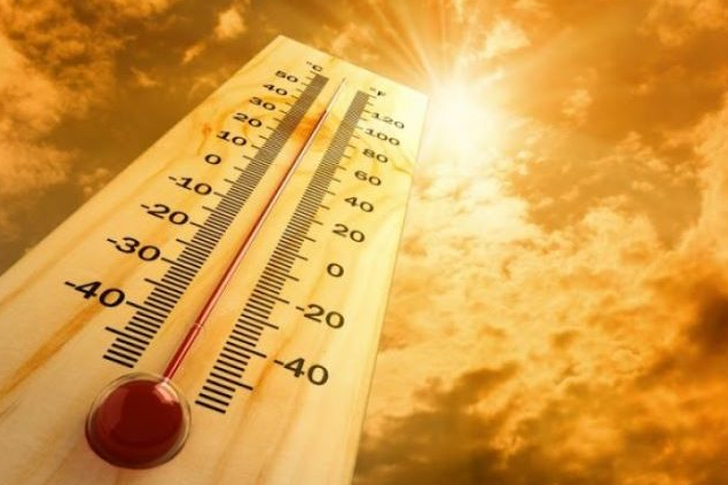
Albania was hit by temperatures significantly higher than ...

For the first time, Pogradec welcomed the Inter-Lake Chess...

Albania has achieved a record for the employment of foreig...

Today our country will be under the influence of relativel...

Another humanitarian aid shipment from Germany has arrived...

Residents of the village of Memëlisht in the Municipality ...

On Monday, our country will be under the influence of rela...
On Sunday, our country will remain under the influence of ...

The World Health Organization described extreme heat in Eu...

Systematically in the last 15 years, circulatory system di...
Today, our country will remain under the influence of stab...
On Friday, our country will remain under the influence of ...

Demographic trends in Europe are revealing a new complex r...
Today, our country will remain under the influence of stab...
Today, our country will remain under the influence of stab...

The latest report compiled by the European Transport Safet...

The Albanian woman is on average 2 years older than the Al...

CNA has launched another investigation that could lead to ...

Irfan Hysenbelliu is a businessman that we call "Irfan the...

In March 2026, CNA launched another investigation centered...
The arrested mayor of Tirana, Erion Veliaj, with 13 charge...

The Special Board of Appeal (KPA) decided this Monday ...

The KPA vetting decided this Thursday to dismiss the p...

Suela Salavaçi, a prosecutor in the Prosecutor's Offic...

The Special Board of Appeal reinstated the prosecutor ...

Citizen MH, 61, a fisherman, was found dead near the islan...

Another phase of the international operation, codenamed "T...

Police have arrested a 34-year-old woman at Rinas Airport ...

A serious accident has occurred on the Lezhë-Shëngjin axis...

The Institute of Geosciences has shared a forecast for wea...
Rising energy and fertilizer prices are expected to contin...

Over 18,000 foreign citizens from 140 countries have appli...

This Wednesday, our country will be under the influence of...

Prime Minister Andy Burnham has announced that most bus fa...

France's parliament has passed a law to ban social media f...

US Secretary of State Marco Rubio arrived in Manila on Jul...

In the space of a few days, Ukrainian President Volodymyr ...

At a time when industrial products are increasingly taking...

Trust among people is not just a three-syllable word. It c...

Master of humor Todi Llupi has passed away at the age of 7...

The ninth edition of "MIK Festival" kicked off with one of...

Businesses will no longer be required to simply register t...

Despite economic growth and income in recent years, Albani...

This Wednesday, one US dollar is bought for 81.4 lek and s...

Construction company licenses will have a validity period ...