

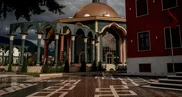


Bektashism is a mysterious sect (tariqat), more mysterious than the great monotheistic religions. It is immersed in the mists of history. Ali, the fourth caliph, who is the "prophet" of the Bektashi sect (in terms of importance, some put him after, and some next to, Muhammad), is believed to be a historical figure, just like his sons Hasan and Hysen , as well as the twelve famous imams, but immediately after that the chaos begins. It is somewhat strange, since as a rule, the later an event appears or occurs in history, the more enlightened it turns out to be. While with Bektashism, the opposite has happened. Less is known about Haxhi Bektashi, the founder of the Bektashi order, than about Ali and his sons, who lived 600-700 years earlier.
It is said (there is no historical document that proves it: it's just the Bektashi who say it) that Haxhi Bektashi was born in the 13th century, somewhere in Iran, and then moved to Anatolia, in the village of Kirshehir. Even about Balim Sultan, who gave a concrete form to this order, who spread and codified the creeds, practices, rituals and hierarchical ranks and who created the first great flock of believers (this is for the Bektashi as St. Paul is for the Christians) is no longer known a lot, however, he lived until the beginning of the 16th century. Much more is known about the large Albanian families of the same time.
We Albanian Bektashis feel most connected to Sari Salltik, who lived in the 13th century, which is the century of Haxhi Bektashi. The data on the origin and his life are messy and contradictory, but the Albanians, it is not clear how, have made a "saint" of theirs, and they hold the opinion that he is the one who brought Bektashism to us. How? Why? When? The answer is given only by a legend that the Crutans told to Alexandre Degrandi, the French consul in Shkodra at the end of the 20th century, who visited the supposed grave of Sari Salltik in their city: "A kuchedra with seven heads became a great trouble for the inhabitants of Kruja, and for an unnamed prince of theirs, who was also the father of a beautiful girl, because he asked a local resident for dinner every day.
Thus, every evening one was seen climbing up the mountain to go to the top, to the cave where the anthropophagous being lived. When it was the prince's daughter's turn, a white-bearded dervish appeared. This was Sari Salltiku. When he found out what it was like, he took the girl and went to the cave. On the way he stopped once and asked her to clean the lice he had caught during the journey. He put his head on the lap of the girl, who was not yet ready to believe in his sudden kindness. It trembled like a perch. He didn't understand what was happening. A mind told her that the old man was a kuchedra of his own kind, and so she had fallen from the rain to the hail. But it was in vain. Sari Salltiku was her guardian angel. He took that road not to get any scraps of his own flesh, but to be eaten tooth for tooth with the dog. And cut off all seven heads. In return, the prince offered his daughter in marriage, but the dervish, reading a lack of desire in the servant's eyes, replied that 'dervishes cannot take a wife against her will'.

He went to live in the kuchedra cave, but his lonely life there was a frightening déjà vu for the inhabitants of Kruja, who therefore decided to kill him. Sari Salltik heard the news and was furious. He rode a mule, which had to take four steps to take him to Corfu, where he died after some time. Traces of mule horseshoes are believed to have remained in Krujë, Shijak, Durrës." It is not understood why he made the first steps small (Krujë-Shijak, Shijak-Durrës), and the last step he made so big (from Durrës to Corfu). It is also not well understood how the body of Sari Salltik was found buried in Kruja, whose inhabitants wanted to kill him. Mysteries of legends.
But let's leave the stories for a moment. Bektashism was most likely brought to these parts by the Janissaries, who were usually Albanians, Bosnians and other Slavs from the Balkans who were recruited as children as part of Devshirme, a practice of kidnapping children from Christian families with the aim of became Muslims and soldiers. A revitalization of the tariqat was noticed at the end of the 18th century and at the beginning of the 19th century, and Ali Pasha Tepelena must also have had a hand here. There is no evidence that he himself was a Bektashi, much less a solid one, but there are many who believe that he promoted Bektashi for his own purposes. In this period, many mosques were built, among which the one of Prišta in Skrapar, which is one of the most important in the history of Bektashism in Albania. Mit'hat Frashëri, in fact, somewhat shifts the construction of this teqe in time. It says that it was built in 1855. By Baba Tahiri.
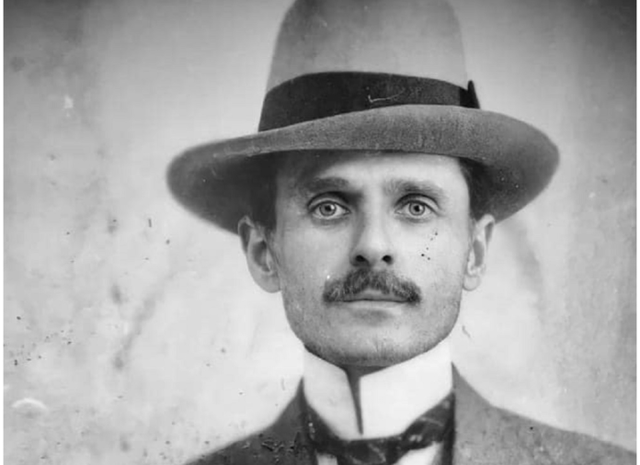
Just when it was thought that Bektashism was gaining strength, disaster struck. On June 15, 1826 (Ali Pasha was no longer in this world), Sultan Mahmud II put the janissaries in prison. It's a metaphorical way of saying "it went to hell", because in reality the destruction was caused by firearms. About four thousand janissaries died that day, who had turned into a state within a state. A few weeks later, by means of a sultanic decree, the Bektashi Order was banned. Anyone known to be a member was persecuted. In Albania, the Bektashis survived, however, and waited for better times, which came in the second half of the century. When the renaissance efforts began to wake up the Albanians from their slumber or to raise the Albanian nation from the ruins, the Bektashis recovered and played an extraordinary patriotic role.
They were also favored because they were a "religion" unrelated to any of the great powers or neighboring countries. The Catholics were mixed with the Austrians and the Italians, the Orthodox with the Serbs in the north and the Greeks in the south, and the Sunni Muslims with the Turks. The Bektashi "belonged only to their nation". And they tried to turn their faith into a national religion. They were inspired by Naim Frashëri, but also inspired the latter. Many Albanians learned from him what this sect was. But even Naimi himself invented Bektashism more than he interpreted or elaborated it.
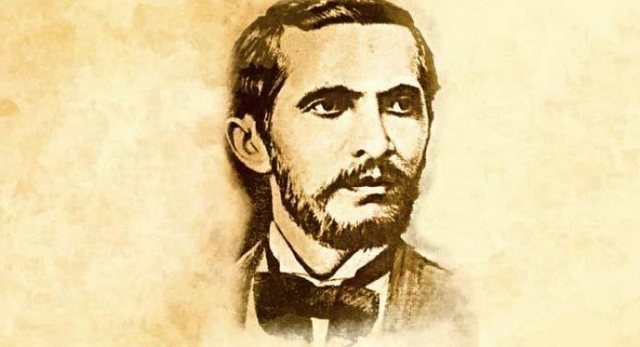
His Bektashism resembles a naive, lustful, free religion, without clear and clear rules, in short, a religion that comes after the Albanians, who want not to spoil either themselves on earth or God in Heaven , but at the same time it defends important principles and values, which someone has made a capule, without bothering to legitimize them with any of their doctrinal sources. Rather they behave as the essence of human wisdom through the ages rather than a coherent religious system. What is it about? Such principles and values ??are best revealed by the following Naimian phrases: “Eat a straw yourself? The next bite is forgiveness for the one who has nothing to eat"; or "Don't leave a mother without a baby and a baby without a mother"; or "when a girl is born to you, don't let it be difficult for you, [because] one is like a boy, like a girl, like a man, like a woman"; or "little ones are not taught (educated, educated) by beating and scolding them, but better, more gently, with wisdom"; or "for the one who works, there is no shortage, since God has blessed the work"; or "there is no one in life more evil than the traitor of the nation and the motherland"; or "he who gives to the poor lends to God"; or "what you don't want others to do, don't do to them" (the Golden Rule known in all major cultures of the world); or "those who believe in the true God, the immortality of the soul, and do good, the great God loves them, be they Muslims, be they Christians, be they Israelis..."; or "you Muslims, do not speak to Christians and Israelis except with the most beautiful words"; or "[o men], if you do not want to go astray from the right, take only one wife, because God did not give man two hearts"." It seems as if it has ground the good features and tribal sides of all the doctrines of civilizations, solidarity, respect for the family, gender equality, the attitude against violence, the cult of work, patriotism, inter-religious tolerance, monogamy, etc.
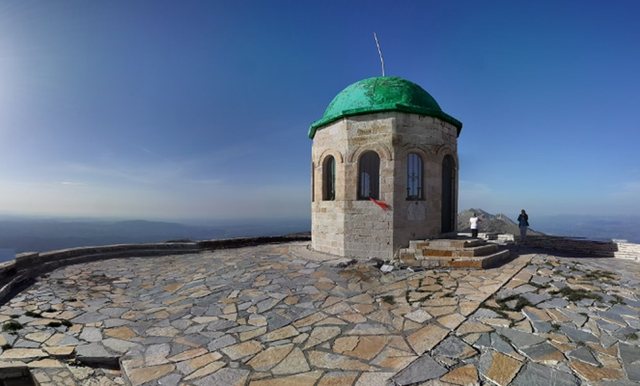
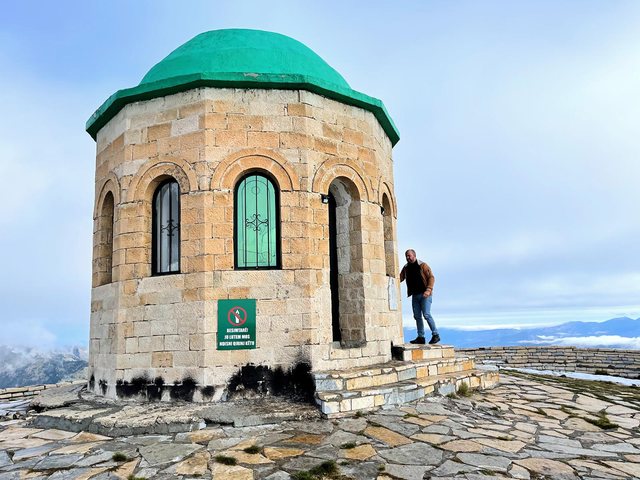
Another important character of Bektashism is Abbas Ali, who is honored with great fanfare at the top of Mount Tomori, where he is said to have his grave. Every end of August, thousands of pilgrims of the Bektashi faith hold their breath there. They go in groups, boys and girls, often as a family. They buy a sheep in the surrounding villages, or even there in the country, where there are whole herds of cattle. They give it to someone to cook, but a part they do everything themselves: butcher it, hang it somewhere, strip it, put it on a spit and roast it in an outdoor fire. The peak of Tomori is occupied those days by boys and girls who drink, shout, sing, make love in the blood of cattle. Before or after this visit, they never forget to throw some lek near the supposed tomb of Abbas Ali.
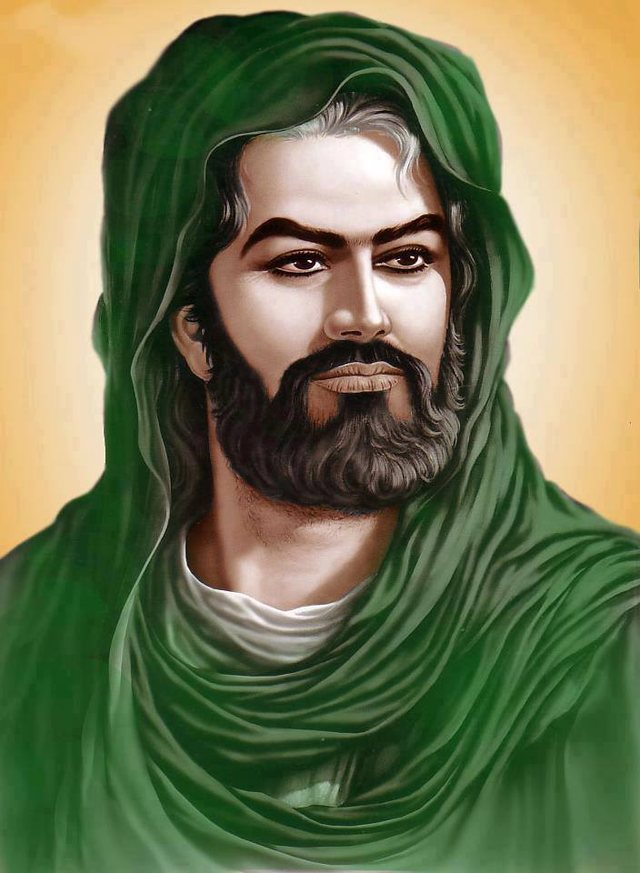
The Bektashi believe that the hero of Karbala is buried in Kulmak. But history says something else: "Abbas Ali, the son that the famous caliph Ali had with his second wife (after the death of his first, Fatima, who was Muhammad's daughter), mounted the horse, broke the siege of Yazid's supporters, and went to fill water in a spring, near the Euphrates, because his people, especially the women and children, among whom was a granddaughter named Sakina whom he loved very much, were suffering from thirst. As he returned with the bucela (cacek) full, although he was thirsty, he did not take a single sip, as it seemed unfair and manly to drink water in front of Sakina. Yazid's soldiers shot him in the back and took his arm; when he threw the bucket of water on the other arm, they shot him again, injuring that arm as well; he succeeded, however, in grasping the bucella with his teeth, until a penultimate arrow fell upon the vessel itself, and the water was all poured out on the ground; this caused him pain in his soul, as his mission failed and the surrounded children were dying of thirst, but a last arrow did not leave him time to live with that suffering; it hit him in the eye and went over his head, and after that Abbas Ali fell from the horse, and fell to the ground, where he died. It is AD 680, and Hijri year 61.”
It was Sami Frashëri, in his encyclopedic work 'Kamus al-alam', who maintained the thesis that Abbas Ali's grave is in Tomor. And others after him, because they liked this legend, kept it alive. In an article of his own, referring to Margaret Hasluck, who was on the top of Tomori in 1930, Jorgo Bulo says that the Albanian Bektashis make another connection, not at all legendary, between Abbas Ali of Mount Tomori: "A dervish named Hajji Babai, seeing the pilgrims who ascended Tomor every mid-August to pray to a pagan deity, went to Karbala, took a hand from the real grave of Abbas Ali, brought it to the top of the mountain, and the place where he threw it consecrated it as the second tomb of the saint." The Bektashis have not paid much attention to those who defend this version which, in essence, somehow flattens the symbolism of their pilgrimage. It is one thing to go and pray in front of the remains of a saint, and it is quite another to go and pray in front of a handful of dirt taken from his grave, which is thousands of kilometers away, somewhere near Baghdad, on the banks of the Euphrates.
Evliya Çelebiu talks about the mountain of Tomori, "two hours away from the south of Berat, where medicinal plants much sought after by Latinistan and Western doctors grow, and where it is worth going for a picnic and hunting", but he never refers to it as a holy place for the Bektashis, although he does not forget to talk about the latter.
Likewise, the French geologist Ami Boué and the English historian William Martin Leake, who traveled much later to the countries inhabited by Albanians, do not speak of the "holy mountain". Like Celebiu, the French mentions Tomori, he also mentions the Bektashis, but he did not notice any connection between them. While the Englishman himself was in Tomor, at the very top, while making his way from Korça to Berat. He left travel notes. It talks about a "pilgrimage" that took place in the month of August (also in June and July), but it is about that of the Vlach shepherds of Myzeqe (Mizakia) who took their cattle to the unspoiled summer pastures of Tomori. And the only connection of this mountain with religion in the memories of the British person passionate about antiquity, can be found in a proestos (monk or priest) of Tomori, with the surname Pope, who had been dead for some time. He mentions it because, forced by the torrential rain, he hosted them in the house, where others were already living.
Surprisingly, even Henry Fanshawe Tozer did not come around to the idea that Tomori was a center for the Bektashis. He has not been on that mountain, but he has talked about it. More precisely, they have spoken to the berats. And to distinguish it as special, they have mentioned the fact that there is eternal snow on its top, and that they used that snow instead of ice for their needs at the dining table.
Only Antonio Baldacci, who was in the 90s of the XIX century, mentioned "the top of Abbas Ali". How is it possible that neither Çelebiu in the 17th century, nor Boué, Martin Leake and Fanshawe Tozer in the early 19th century have talked about the Bektashi festival? This is a question that does not have an exact answer, but it is likely that the Bektashis "made Tomor theirs" at the end of the 19th century. A little later, exactly in 1916 (so says Mit'hat Frashëri), the Teqeja of Abbas Ali was built. From dervish Iljazi.
The pilgrimage to that mountaintop is an ancient ritual, however. William Martin Leake tells us that Tomori, referred to in ancient publications as Tomaros, is the "Throne of the Gods" and the location of the temple of Dodona. Naim Frashëri has recited this claim: "Says Herodotus/Once upon a time the weather/There was a church in Tomor/House of God". Sami Frashëri, in the same way, has shown that he enjoyed believing that Mount Tomaros, which is described by ancient authors, was Mount Tomori. "Tomori is Dodona, the place where the temple of the Pelasgians was," says Sami, but on the other hand there are many others, perhaps the majority, who think that the literal Tomaros, which is spoken of, is a mountain near Ioannina, and Dodona, land with its shadow, so mentioned by ancient authors, is nearby. While Çajupi, although orthodox from Sheperi i Zagoria, sang to Baba Tomori like no one else. He opens his poem with these verses: "People used to come to you/to learn what God commands/I also pray to you crying/to learn what you say about Albanians." Then, he makes the mountain speak and give advice to the Albanians who have forgotten their motherland and are divided by religions. Although he calls it the throne of God, he addresses Tomori as if he were God himself.
Most likely, Baba Tomori was a pagan Illyrian god. The Albanologist Maximilian Lambertz recounts the legend that existed about Baba Tomori, and says, among other things, that he, Tomori, in the role of a mythological character, had fallen in love with the most beautiful of the earth, whom he carried at night and, with when the day dawned, she trusted the wind to take her to her sister, the most beautiful of the seas; Father Tomori had also taken Berat under his protection, and for this reason he ate wildly with "father" Shpirag, giving and receiving each other many wounds, which are nothing but today's spoons and spoons that go down their slopes; while the tears of the fairest of the earth, who helplessly followed that duel, created the river of Osum.
A similar fable is narrated by Eqrem bey Vlora who, while explaining and interpreting the popular beliefs in Toscana, speaks of Tomori and Shpiragu as two divas. "Tomori struck with a sword, and Shpiragu hit him with a club, and as a punishment God hardened his husband and wife like two mountains. The gorges and abysses are nothing but wounds," says Eqrem Vlora in his notes entitled "From Berati to Tomor and Return".
There is also an oral tradition that speaks of a church of Saint Mary on Mount Tomor and of the pilgrimage of the Orthodox faithful on August 15, the day of Saint Mary of August, which is the celebration in honor of the day when the Blessed Lady appeared to her the door to heaven. But this history that burdens the place of their cult with different symbols is not what spoils the work of the Bektashis. On the contrary, there could not be a more suitable place of worship for them, who are part of a sect that mixes "narratives, legends, superstitions, magical practices, trance techniques and Manichean approaches" (according to Abdulkadir Haas), "pagan cults, Greek, Christian, Zoroastrian, Mazdaic, Jewish, probably also Buddhist" (according to John Kingsley Birge), "ancient, pre-Turkish, pre-Islamic and Islamic elements" (according to Ahmet Jashar Oçak), and - when it comes to Albania - " one like the Albanian temperament, which has given Bektashism such a form, in which social organization, behavior, liberal ideas come to the fore, and not the religious-superstition side or the formal dogmas of religion" (according to Margaret Hasluck) .


As today one year ago, the Serbian paramilitary forces...

The list of opportunities as well as security risks is...
One of the words I hate the most is "participation". Whoev...

There is no limit to Bollino, or Carlo, with K or with...
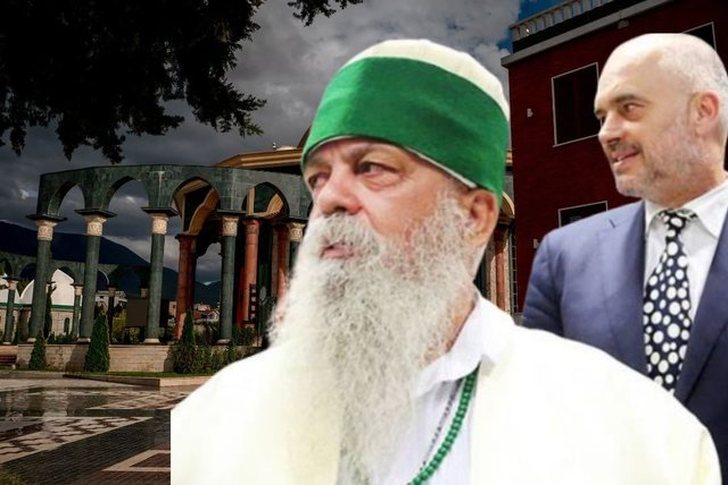
The work for the creation of the Bektashi State on the out...

The place where Catholics, Orthodox and Muslims sit cr...
What can you expect, that this stan will produce any other...
In flagrant excess of its competences, the Constitutio...

She almost lost her breath and almost passed out, when she...
In the episodic paragraphs with political submissions,...

The use that the left renaissance entourage has made of th...
Sali Berisha has not missed the opportunity to confirm him...

Edi Rama has responded flame by flame to the mocking storm...
This list of names came to mind after reading the full...

Of course, I follow with strategic interest, somewha...
I thank Leka Bungon, who found the time to answer me, on a...

Today, an absurd situation prevails in the Albanian opposi...

Altin Duman's SPAK has finally won the first serious publi...

The new justice, which had a lot of expectations, so far i...

With unparalleled patriotic enthusiasm and inspiration, th...

Irfan Hysenbelliu claims to be a big businessman, an hones...

The murder of officer Enea Mekolli in the line of duty has...

The next case broadcast on the show "Stop", this Thursday,...
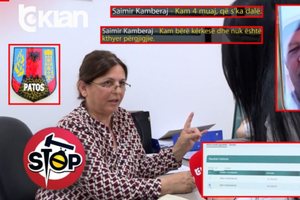
The case published this Thursday, June 4, on the show "Sto...

The Special Board of Appeal (KPA) decided this Monday ...

The KPA vetting decided this Thursday to dismiss the p...

Suela Salavaçi, a prosecutor in the Prosecutor's Offic...

The Special Board of Appeal reinstated the prosecutor ...

A road accident has been reported on the Fier-Levan axis, ...

An accident was recorded a few minutes ago on the Pogradec...
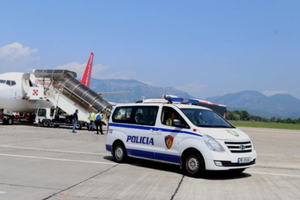
Following the cooperation of Interpol Tirana with Interpol...

An accident occurred this Saturday morning at Shkëmbi i Ka...
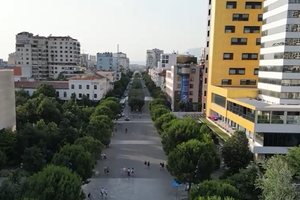
Albanians are officially the hardest working people in Eur...
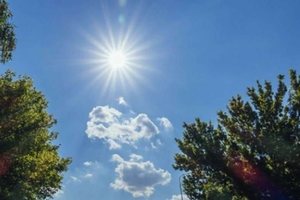
This Saturday will be characterized by mostly clear weathe...
Today our country will be affected by stable weather condi...

For many children and teenagers, the long summer holidays ...

The military advisor to Iran's supreme leader, Mohsen Reza...

US Defense Secretary Pete Hegseth declared that Europe is ...

A federal judge in Rhode Island struck down a Trump admini...
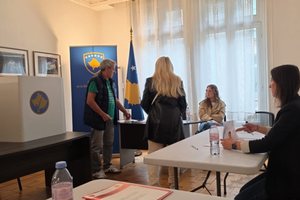
Thousands of Kosovo citizens living abroad are voting phys...
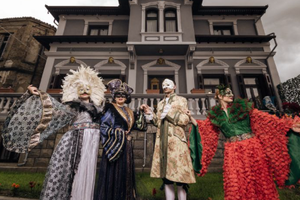
Korça is ready to open the summer season with one of the c...
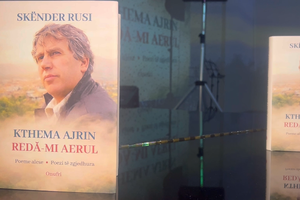
Two years after his passing, the renowned Korçë poet Skënd...
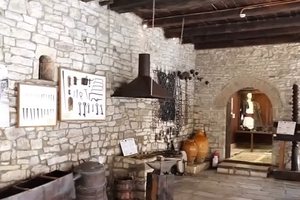
The Ethnographic Museum of Berat has opened its doors to v...
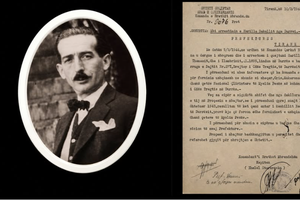
The story of Harilla Bakalli is one of the most chilling t...

The Transparency Board, in today's meeting, decided to red...

This Saturday, one US dollar is bought for 81.4 lek and so...
Despite years of efforts at regional cooperation and free ...

Albania is the country with the highest level of severe ma...