

Equation with many unknowns!
LSI requested and will receive 10 MPs in the safe seat...


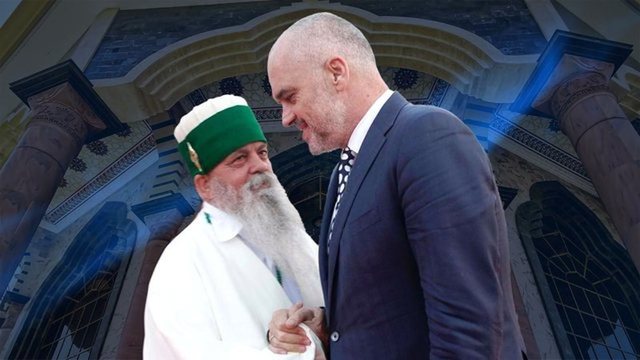
Prime Minister Edi Rama announced plans for the creation of the "Sovereign State of the Bektashi Order" in Tirana. The World Grandmother welcomed the news, while the move was met with surprise and skepticism by public opinion.
While announcing his plan for the creation of a sovereign state of the Sufi Bektashi order, Prime Minister Edi Rama chose to paraphrase Albanian Nobel laureate Mother Teresa: "Not everyone can do great things, but we can do small things with great love." .
Speaking from the United Nations General Assembly on Sunday, Rama said the sovereign enclave, which will resemble the Vatican, will be a "new center of moderation, tolerance and peaceful coexistence".
Founded during the thirteenth century in the Ottoman Empire, the Bektashi Order moved its center to Tirana since 1929.
The Albanian government plans to build on the surface of 27 hectares, the micro-state called "Sovereign State of the Bektashi Order", which will have its own borders, administration and passports.
The Grandmother welcomes the "extraordinary initiative"
The news became public after Saturday's article in the "New York Times", where Rama first announced the creation of a new Muslim state within the Albanian capital.
The Prime Minister officially announced this project a day later, from the headquarters of the United Nations Organization.
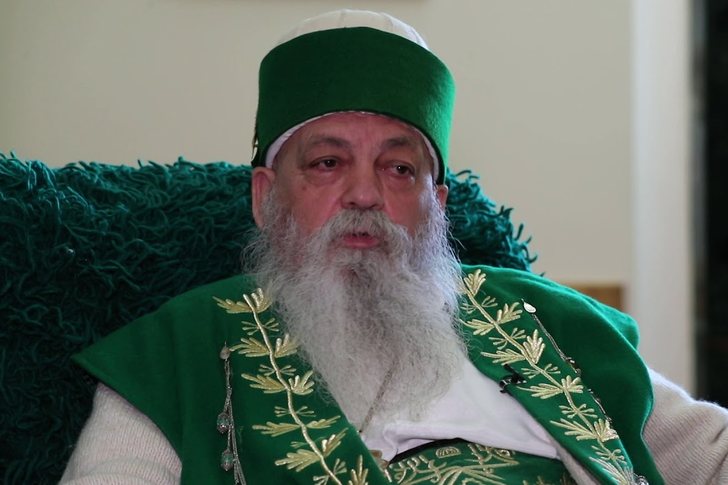
For the leader of the Bektashis, Haxhi Dede Baba, known as Baba Mondi, this is an "extraordinary initiative, which will usher in a new era for world religious tolerance and the promotion of peace.
"The Bektashi Order, known for its message of peace, tolerance and religious harmony, will gain sovereignty similar to the Vatican, allowing it to autonomously govern religious and administrative matters" - said in the official reaction of the Archdiocese.
An unprecedented move
As usually happens in Albania, this time too experts and the public were completely left in the dark about the details of the government's plan. For many of them, the idea "grew out of nowhere".
Besnik Sinani, researcher at the Center of Islamic Theology at the University of Tübingen in Germany, at the same time co-founder of the "Konak" Institute based in Tirana, tells Deutsche Welle that "this is an unprecedented case in the revitalization of contemporary religion".
"The weak comparison with the example of the Vatican, an agreement imposed on the papal state in 1929 by Benito Mussolini, does not fit the historical context," Sinani told DW. "Currently, the Albanian government has not offered a single convincing argument to justify such an action."
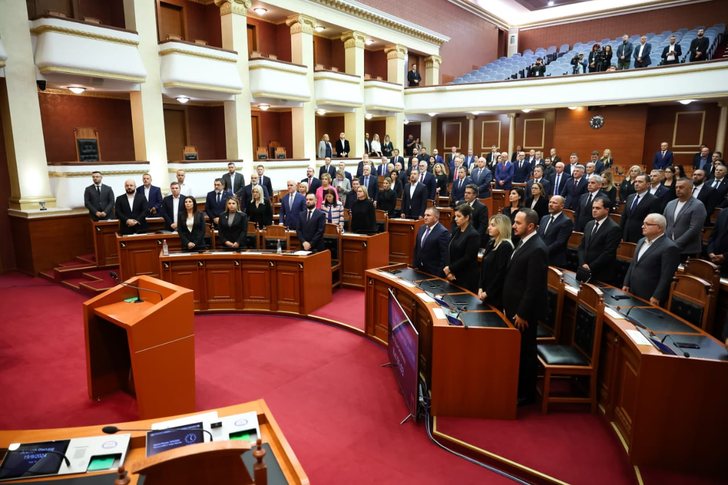
The plan must be approved by Parliament
Albert Rakipi, president of the Institute of International Studies, argues that this is not an ordinary issue for the government to decide. "Despite not talking about the establishment of a state in the classical concept - with a certain population, with a certain territory, with the respective institutions that a state has such as: the army, the police, the courts, the tax office and other related structures with internal sovereignty - it will be a decision that must be passed by the parliament" - he told DW.
Rakipi continued, stressing that there are also important aspects related to external sovereignty that need to be clarified.
In fact, there is significant uncertainty about how the sovereignty of this micro-state will be recognized.
In Article 1 (2) of the Constitution of Albania, it is provided that "The Republic of Albania is a unitary and indivisible state". This means that to change this article, the government would need a majority of 94 votes, or 2/3 of Parliament.
Impact on religious harmony?
For a long time, Albania has been noted for religious harmony and tolerance. Mosques and churches often stand side by side and interfaith marriages are widely accepted in society.
According to last year's census, more than 50% of Albania's population declared themselves Muslim, and about 115,000 people registered as Bektash. Catholics and Orthodox make up the rest of the population.
How can this plan affect the relations between religions in the country?
Rakipi does not think that this idea will negatively affect the balance, understanding and religious harmony that exists in Albania between religious communities, because the Bektashi community has historically served as a bridge of union and cooperation between Muslims and Christians.
"I think it is a good investment, especially for the promotion of tolerance, the culture of cooperation and coexistence in a context of dramatic developments, such as the conflict in the Middle East," he told DW.
Not everyone agrees
Unlike Rakipi, the Muslim Community of Albania said that it considers this initiative "as a dangerous precedent for the future of the country" and emphasized in the reaction to the media and public opinion that it is the sole and official representative of the Islamic religion in Albania.
"This initiative, for which we are known through the media, has not been consulted with the religious communities, which for such cases have also set up a special institution, praised by all Western countries, such as the Interreligious Council of Albania".
Besnik Sinani thinks that this plan will have its impact between religions in Albania, because as he says, there is no current situation in the country that justifies such a decision.
"The claim that this supposed Bektashi state will positively affect a climate of tolerance in the region is unfounded," he told DW. "If realized, it is likely to disrupt the historic agreements between religion and the state in Albania, which was created on the vision of the founding fathers of the Albanian state, many of whom were Bektash."
'Not an Islamic State'
Many experts are concerned that this move could lead to labeling Albania as an "Islamic state".
But Albert Rakipi, international relations expert, emphasizes that Albania is not planning the establishment of an Islamic state in its capital. "An Islamic state is another reality on the theoretical and practical level," he says. "Not all states whose population is Muslim are Islamic states. In an Islamic state, the organizing ideology of this state is religion, i.e. Islam, and in most cases Islam also serves as the organizing ideology of society".
Why exactly in these moments and for what reasons Rama undertook this initiative, are unknown. Many questions still require answers. "Many should remember that the Albanian government has been involved in various world political tensions, tensions based on religion" - said Sinani. "Albania accepted an organization previously considered a terrorist organization by the United States, Mujahedeen-e-Khalq, which is committed to overthrowing the Iranian government. It has accepted members of the Gulen Movement, which is considered a terrorist organization in Turkey , or former Guantanamo Bay detainees whom the US government could not send to their countries of origin".
The Bektashi order insists that beyond skepticism, "the new state will have no other goal than spiritual leadership"./ DW

LSI requested and will receive 10 MPs in the safe seat...
For two days I have been trying to find out about this new...
Bektashism is a mysterious sect (tariqat), more myster...
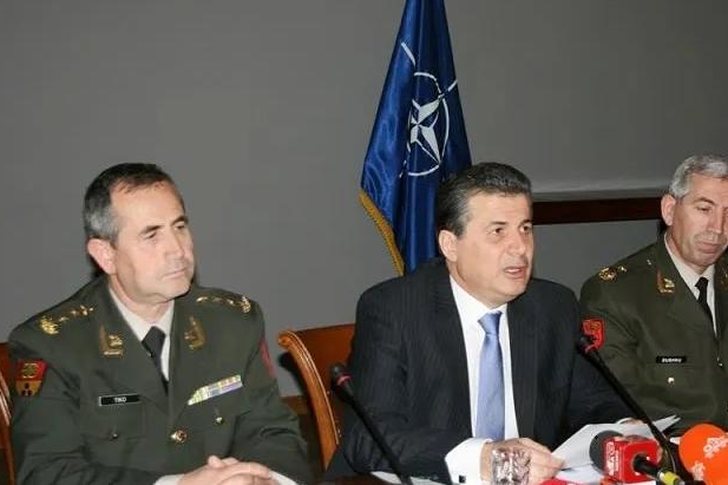
As today one year ago, the Serbian paramilitary forces...

The list of opportunities as well as security risks is...
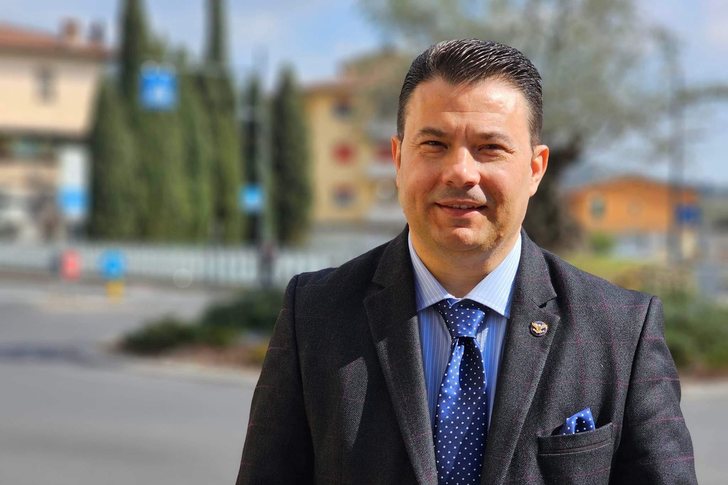
One of the words I hate the most is "participation". Whoev...

There is no limit to Bollino, or Carlo, with K or with...
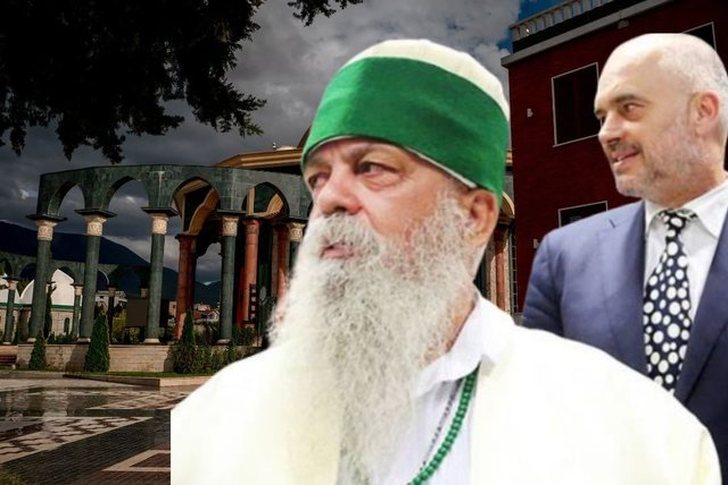
The work for the creation of the Bektashi State on the out...
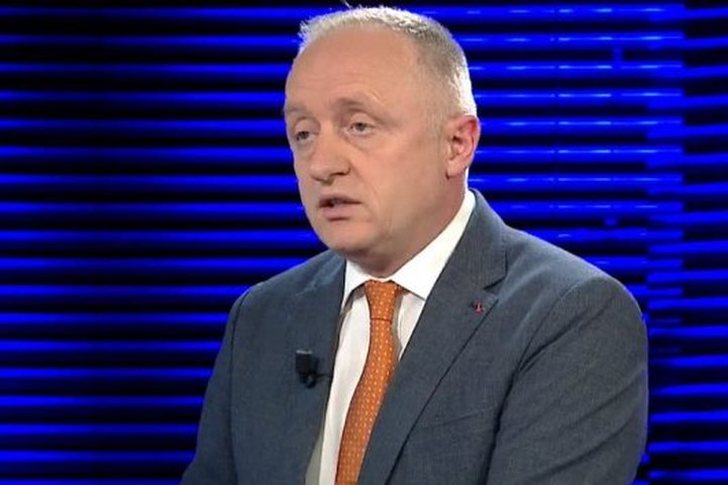
The place where Catholics, Orthodox and Muslims sit cr...
What can you expect, that this stan will produce any other...
In flagrant excess of its competences, the Constitutio...
She almost lost her breath and almost passed out, when she...
In the episodic paragraphs with political submissions,...
The use that the left renaissance entourage has made of th...
Sali Berisha has not missed the opportunity to confirm him...
Edi Rama has responded flame by flame to the mocking storm...
This list of names came to mind after reading the full...
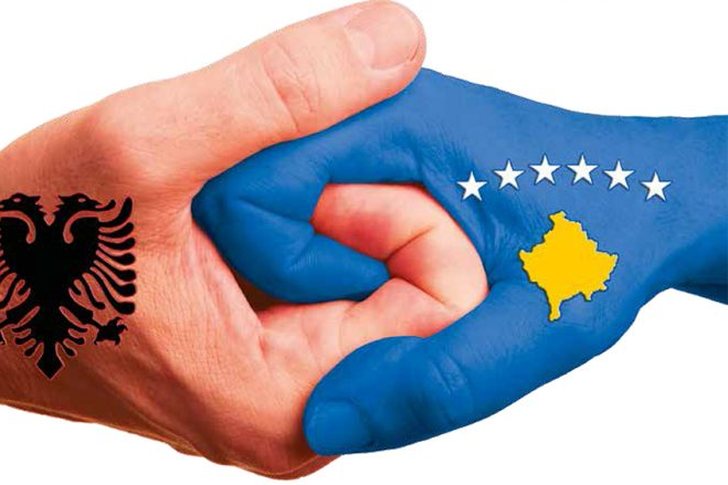
Of course, I follow with strategic interest, somewha...
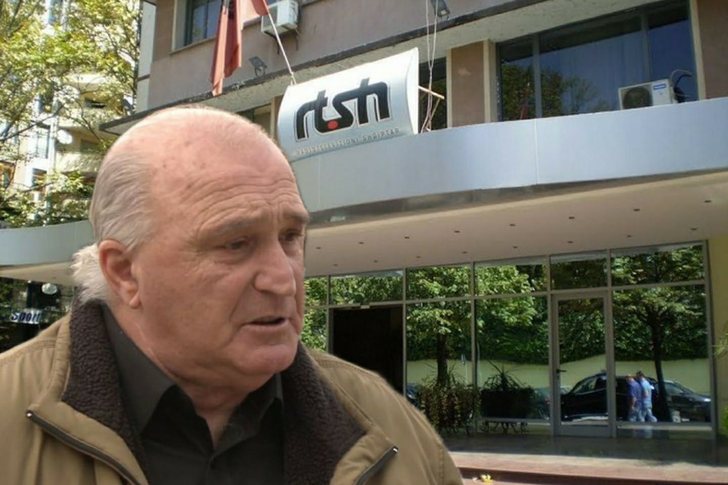
I thank Leka Bungon, who found the time to answer me, on a...

Today, an absurd situation prevails in the Albanian opposi...

Irfan Hysenbelliu claims to be a big businessman, an hones...

The murder of officer Enea Mekolli in the line of duty has...

The next case broadcast on the show "Stop", this Thursday,...
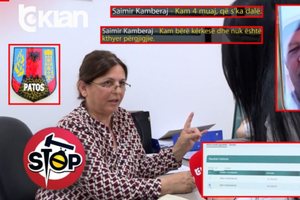
The case published this Thursday, June 4, on the show "Sto...

The Special Board of Appeal (KPA) decided this Monday ...

The KPA vetting decided this Thursday to dismiss the p...

Suela Salavaçi, a prosecutor in the Prosecutor's Offic...

The Special Board of Appeal reinstated the prosecutor ...

A road accident has been reported on the Fier-Levan axis, ...

An accident was recorded a few minutes ago on the Pogradec...
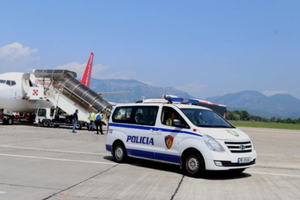
Following the cooperation of Interpol Tirana with Interpol...

An accident occurred this Saturday morning at Shkëmbi i Ka...
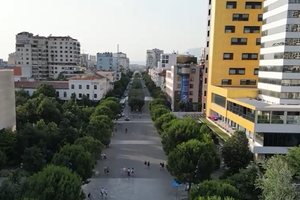
Albanians are officially the hardest working people in Eur...
This Saturday will be characterized by mostly clear weathe...
Today our country will be affected by stable weather condi...

For many children and teenagers, the long summer holidays ...
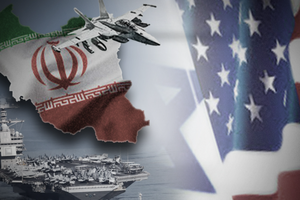
The military advisor to Iran's supreme leader, Mohsen Reza...
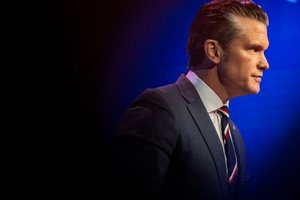
US Defense Secretary Pete Hegseth declared that Europe is ...
A federal judge in Rhode Island struck down a Trump admini...
Thousands of Kosovo citizens living abroad are voting phys...
Korça is ready to open the summer season with one of the c...
Two years after his passing, the renowned Korçë poet Skënd...
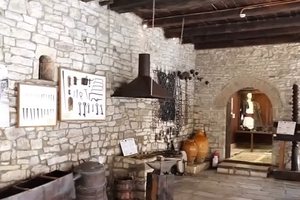
The Ethnographic Museum of Berat has opened its doors to v...
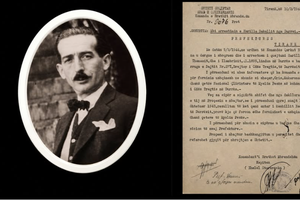
The story of Harilla Bakalli is one of the most chilling t...

The Transparency Board, in today's meeting, decided to red...

This Saturday, one US dollar is bought for 81.4 lek and so...
Despite years of efforts at regional cooperation and free ...

Albania is the country with the highest level of severe ma...