



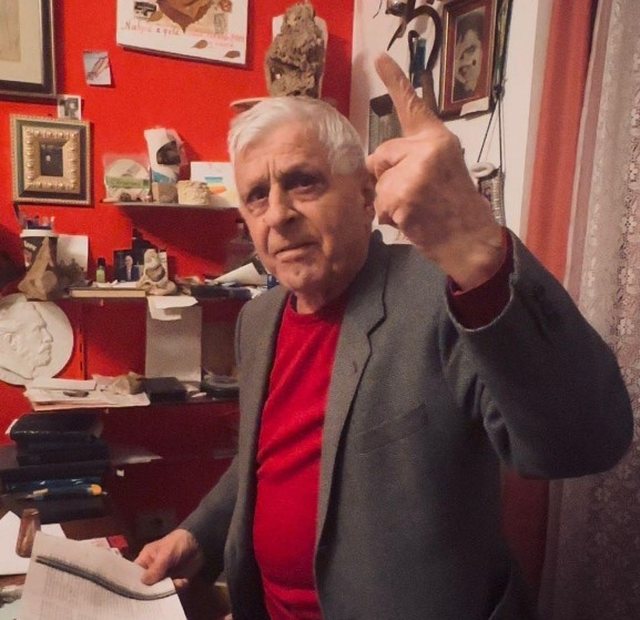
Thinking that the 85th anniversary of the birth of the writer Koço Kosta would serve as an occasion to organize some appreciation and honoring activity, or some scientific conference — as, in fact, the part of the ministry that deals (if!) with cultural affairs should do, or the literature section at the Academy of Sciences, the National Library, the Faculty of Philology and the literature department at the University of Tirana or at any other university, the municipality of Gjirokastra, the municipality of Tirana, or anyone else who should be remembered — I prepared an essay in the form of a modest analysis of his abundant, rich, diverse, problematic, provocative and, not infrequently, controversial creativity. I think that such occasions, together with the writer, honor literature and national culture.
But they also serve to analyze phenomena, values, problems, trends, and everything else related to literary development.
However, despite the fact that no one remembered the writer Koço Kosta on the 85th anniversary of his birth — he is neither the first nor the last — he and his work are and will always remain a supreme and dignified height and representative of Albanian literature.
Meanwhile, while thanking with special and deserved affection the writer and translator Bujar Hudhri, who published my essay in today's issue of ExLibris, I am also offering it to you, dear readers, why not, also to make it the subject of discussion and debate.
Enjoy reading!
In the history of Albanian literature of the second half of the 20th century and the post-communist period, Koço Kosta represents one of the most special cases of a writer who cannot be read within the traditional schemes of Albanian realism. He remains outside socialist realism, but also outside the critical realism of the transition and classical European postmodernism. His work creates an autonomous universe, where history, memory, eroticism, language and absurdity intertwine in a dark and fragmented existential structure.
If the novel “Absurdity” can be considered the conceptual pinnacle of his creativity, it does not represent a break from previous works, but the open naming of a poetics present since its beginnings. From “Unë dhe komiti” (1969), to “Mëhalla e Pelës” (2023) and to the novel in manuscript “I shkreti Foto Pagunë” which I have had the fortune to read, through his novels, novellas and stories, the same anthropological universe appears: the Albanian man as an alienated being, spiritually torn and incapable of creating lasting relationships with reality.
In this sense, Koço Kosta is not simply a writer of the absurd; he is an anatomist of the crisis of Albanian being during the time of socialism and the subsequent transition.
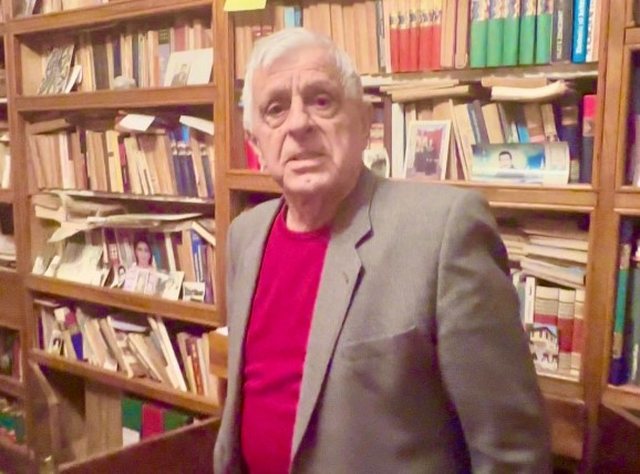
The absurd in Koço Kosta's work is not presented only as a psychological atmosphere or narrative technique. It is the way in which the individual experiences existence in a world where the relationships between man, truth, and reality have dissolved.
In the European tradition, the absurd is associated with the metaphysical crisis of modern man; in Camus with the silence of the universe, in Kafka with the elusive bureaucracy, in Beckett with the emptiness of expectation. In Koço Kosta, the absurd takes on an Albanian historical and cultural dimension: it arises from the deformation of consciousness under the pressure of history.
In totalitarian systems, absurdity is created by total control over private life, ideological surveillance, and the disappearance of individuality.
But the greatness of Koço Kosta's vision lies in the fact that the absurd does not end with the fall of the totalitarian system. In the post-communist period, it transforms into the absurdity of moral and spiritual emptiness.
Thus, his work shatters the illusion that political freedom is enough to liberate man. In Koço Kosta, the individual remains "hostage" and "wounded" even after the fall of the system that oppressed him.
In this context, even nature loses its realistic neutrality and becomes an emotional reflection of the inner crisis:
"Everything came alive again, and on the white gravel by the water, on the stones raised right in the middle of the clearing under the unreadable, curled branches of the trees, a joyful scene was created. So joyful! So powerful, with such lust and passion and lust you have cooked us, oh River!"
Oh our Heaven! (Absurdity).
Here the landscape does not function as decor, but as an existential explosion.
One of the fundamental axes of Koço Kosta's creativity is alienation. His characters are not action heroes, but beings lost in a reality they cannot understand or control.
They live in constant uncertainty, cannot communicate authentically, and are often reduced to grotesque figures. This depersonalization is one of the most modern features of his prose. Often the characters remain nameless and are identified through physical details or the atmosphere of the narrative.
This process culminates in “Those Two and Others,” where the main characters are called the Red Fish and the Handsome Boy. These are not nicknames, but forms of disintegrated identity. The character no longer exists as a social individual, but as a figure of perception and state.
In one of the strongest scenes of the novel:
“Outside the Gallery, across on the sidewalk, he finally stopped, took off his glasses, turned to the Red Fish, laughed, looked straight at him, spanked him with his long arms, and kissed him.
And cried.
Do you know how touched I was? Even now that I remember it, I'm touched. For the head
Mom!
He cried with joy, because he was there with her. That they met together there at Rembrandt's. I can't explain it, I can't describe it. He was going crazy with joy! Like lovers! (The two of them and others).
This moment shifts human relationships from social realism to an existential intimacy, where art becomes more important than identity.
In totalitarian systems, the individual loses himself due to the lack of individual freedoms; in transition, due to moral fragmentation and spiritual emptiness. This deformation is also clearly visible in the way education is described in the novel "The Absurd":
"Our village! They bring us to schools too to teach us to tear, to eat, to spy on our friends. What are they not doing to mold us into wicked and uncouth people? God!"
Thus, Koço Kosta creates the figure of the "centerless man": a being who wanders between fear, desire, memory, and loneliness without managing to build a complete identity.
One of the most important artistic aspects of Koço Kosta's work is the tendency towards the dissolution of the traditional narrative structure.
In socialist realism, the narrative was supposed to be linear, the conflict clear, and the ending optimistic. Koço Kosta sabotages this model from within.
In his prose, time is fragmented, memory constantly intervenes in the narrative, the real and the unreal coexist, and the subjects do not develop according to classical logic. The narrative often takes on a hallucinatory and enigmatic character, interrupted by metaphorical outbursts and psychic states.
"Oh, the village with so many troubles!"
These emotional outbursts bring Koço Kosta closer to the modern European tradition of Kafka, Beckett, and the 20th-century existentialist novel. Yet he remains deeply Albanian in atmosphere, historical trauma, and collective sensitivity.

In Koço Kosta's literary corpus, space is not a neutral backdrop where events unfold. It is a psychic structure and metaphor for the characters' existential crisis.
The city, the village, the street, the inn, the snowy season, the provincial night or the urban outskirts build a topography of anxiety and loneliness. Space in Koço Kosta does not orient you; it loses you. The characters move constantly, but they do not arrive anywhere. The road does not lead to a solution; it becomes a metaphor for the loss of meaning.
As in Kafka, the individual wanders in a reality that he cannot fully understand. But unlike Kafka, Koço Kosta's labyrinth is profoundly Albanian: with the humidity of the province, the moral closure of the community, and the historically inherited collective silence.
Nature is not presented as romantic harmony, but as a reflection of man's inner disorder. Snow appears as a figure of isolation and emotional numbness; night as a territory of anxiety; rain as an atmosphere of moral ambiguity.
One of the most distinctive features in most of his works is the presence of animals as narrative beings: horse, mare, dog, donkey, cow. In “Mëhalla e Pelës” they are not rural decor, but part of the emotional structure of the world:
“Pelo Xhurapa’s horse… went towards the mare.”
Animals often seem more natural and unchanging than humans. They maintain a connection to instinct and nature, while humans appear deformed by history and ideology.
In this sense, space in Koço Kosta always has two levels: a realistic and concrete one and a metaphysical and psychological one. His Albania seems simultaneously real and hallucinatory; not only a place, but also a state of mind.
Eroticism in Koço Kosta's work does not have a sentimental or romantic function in the traditional sense of Albanian literature. It is related to loneliness, anxiety, and the individual's desperate need to escape from existential emptiness.
In his work, human relationships are deeply fragile. Characters come closer physically, but remain spiritually distant. The body becomes a means of communication where language fails, but even this communication remains temporary and incomplete.
Therefore, eroticism in him has a tragic dimension.
The characters seek warmth, shelter, and temporary oblivion from the absurdity of the world in the bodies of others. But this suspense is short-lived; reality always returns with the same feeling of emptiness.
In this sense, even the fragments with a strong sensual charge are not constructed as a hymn to erotic pleasure, but as a manifestation of a deep inner turmoil. In describing the woman “like a teenage sorcerer”, the narrator remains fascinated by physical beauty, but at the same time is overcome by an unquenchable anxiety. The statement: “My eye, my soul is not satisfied with a woman. She is within me, so I find no rest”, shifts eroticism from the bodily dimension towards an existential experience, where desire does not bring peace, but a stronger awareness of the lack and impossibility of fulfillment.
At this point, eroticism in Koço Kosta approaches the modern European tradition where the body is not a symbol of harmony, but a place where anxiety, fear and the awareness of human failure appear. Even in Kafka, the body and human relationships often appear as spaces of anxiety, alienation and inability to communicate. Desire and closeness do not bring fulfillment, but a sense of insecurity and existential isolation. Eroticism, when it appears, is not liberating, but burdened with psychological tension and lack of harmony.
Even the female characters are not constructed according to traditional models of idealization. They are complex, wounded, and enigmatic figures. The woman in his work is not a "romantic muse," but a being as lonely and alienated as the man.
Love in Koço Kosta does not save man from absurdity; it only makes more visible the tragic need for closeness and the impossibility of fully realizing it.
One of Koço Kosta's greatest aesthetic achievements is language. He moves away from transparent realism and direct communication.
Language in him becomes metaphorical, symbolic, poetic, and often delirious. Words do not just show the world; they show the crisis of its very perception.
This makes his prose intense, dark, and filled with inner poetic tension. In this sense, Koço Kosta creates what can be called the realism of traumatized consciousness.
The crisis of language is clearly evident in the way the description of the body and feeling does not remain at a referential level, but explodes into poetically and emotionally charged figures. Expressions such as: “She was adorned even more. Very beautiful. Beautiful like a teenage girl who had her first morning…” show that language is not simply describing an external reality, but is reconstructing it through a strong subjective and imaginary filtering. Likewise, the intensity of the narrator’s emotional interventions, such as: “My bewildered eyes did not know where to stop!” or “My eye, my soul is not satisfied with a woman”, shifts the prose towards a state where words no longer control experience, but on the contrary, the excessive erotic experience dissolves the stability of language. In this way, in Koço Kosta language itself becomes a sign of a troubled consciousness, where reality is not presented, but is experienced as a metaphorical and emotional explosion.
One of the most important dimensions of Koço Kosta's creativity is the linguistic and ethnographic richness that permeates his work. Beneath the surface of existential absurdity and modern narrative structures, his works maintain an organic relationship with Albanian cultural memory.
He achieves a rare combination: modernist experiment and preservation of Albanian linguistic memory.
Koço Kosta's prose is characterized by an extremely rich lexical fund, where the words of everyday conversational speech, regional idioms, old Albanian words, terms of rural life, and a modern metaphor with a poetic charge coexist.
He does not use sterile language or a dry institutional standard. On the contrary, his language preserves the rhythm of oral articulation, the spirit of popular discourse, and the emotional coloring of living Albanian.
In many fragments of his prose, the word serves not only as a means of communication, but as a carrier of collective memory.
This makes Koço Kosta's language simultaneously modern and archaic, poetic and popular, philosophical and earthly.
This appears in the register of everyday language, where the dialogue preserves the structure of popular discourse:
"You haven't thrown away your samara? Next fall."
"The man's head doesn't fit. What a pity!"
Even the animal world is included in this living language system:
"The young horse spoke with whinnying sounds inside its long throat."
In this respect, he creates an intermediate syntax between modern psychological narrative and traditional Albanian conversational discourse, combining it with ethnographic memory.
His syntax is not linear. It is fragmented, interrupted by memory, and follows the emotional rhythm of anxiety rather than the classical logic of narrative. This creates a prose with an inner poetic pulse and a constant sense of existential instability.
Another important element is the presence of the Albanian ethnographic world: customs, rites, rural spaces and traditional moral codes. But these elements are not presented in a folkloric or decorative way. Ethnography in him is not idealized; it appears as part of the memory of a world in disintegration.
He does not write about the village as a national myth, but about the gradual collapse of traditional structures and the disappearance of authentic human connections.
This creates one of the most interesting paradoxes of his work: while the narrative structure is modern and fragmented, the linguistic and ethnographic material remains deeply Albanian.
Koço Kosta modernizes the form, but preserves the cultural memory.
In the end, even when characters lose their identity and reality disintegrates, language remains the bearer of human memory. The absurd can deform life, history can wound the individual, but language still preserves the traces of man.
And precisely here lies the deepest humanistic dimension of Koço Kosta's work.
Koço Kosta occupies a special place in the history of modern Albanian literature. He does not fully belong to any dominant current, and this is precisely what makes him one of the most unusual authors of Albanian prose of the second half of the 20th century and the beginning of the 21st century.
In the era of socialist realism, when Albanian literature had to function according to ideological schemes of historical optimism and the positive hero, Koço Kosta gradually created a completely different world: dark, fragmented and aesthetically nonconformist.
He didn't oppose socialist realism with political statements; he rejected it aesthetically. The very way he constructed the character and the narrative was a form of artistic resistance.
Instead of the ideological hero, he brought the uncertain individual and the alienated being. Instead of transparent realism, he brought ambiguity, psychological fog, and the crisis of language.
After 1990, when many Albanian authors moved towards the chronicle of transition or postmodern formal experiment, Koço Kosta continued to maintain his fundamental axis: the analysis of the crisis of the Albanian human being.
He did not become a writer of political events; he remained a writer of anthropological trauma.
This distinguishes him from many transition authors who treated the fall of communism as a final liberation. For Koço Kosta, the collapse of the system does not heal the individual; it highlights the moral void, social fragmentation, and identity crisis.
In this respect, he is among the few Albanian authors who created organic continuity between totalitarian trauma and the post-totalitarian crisis.
From an aesthetic point of view, Koço Kosta represents a rare bridge between Albanian narrative tradition, European modernism, and contemporary anti-novel.
He does not seek to please the reader; he seeks to put him in crisis.
And this is precisely where its importance lies: Koço Kosta shifted Albanian prose from the narrative of reality towards the exploration of the traumatized Albanian consciousness.
Koço Kosta's work constitutes one of the darkest and deepest maps of the Albanian soul in modern literature. In it, history is transformed into anxiety, freedom into emptiness, eroticism into the impossibility of salvation, and the individual into a permanently alienated being.
But beyond the historical absurdity, his prose maintains a deep relationship with Albanian cultural memory. Through lexical richness, syntactic elasticity and ethnographic elements, Koço Kosta manages to save in art the traces of an Albanian world in disintegration.
He is a philosopher of the Albanian absurd, an architect of the modern Albanian anti-novel, and a cartographer of the crisis of the Albanian human being.
In the end, his work leads us to a bitter conclusion: political systems may collapse, but the wounds they create in human consciousness live on.
And that's exactly where Koço Kosta's literature begins./ CNA

....You too, dear Shpëtim Shëmili, were born on May 15, 19...
There's something strange about the fact that a competitio...
- Notes on the volume of poetry "Sin Sees Us in Every Mirr...
Bujar Hudhri is not just a publisher. He is one of those r...
Koço Kosta, since he appeared in Albanian literature with ...
Violinist Tedi Papavrami has been decorated with the "Star...
Today, May 6, marks the birth of Sigmund Schlomo Freud, on...
The film "Zgjoi" was screened at the "Lasgush Poradeci" Cu...
Korça welcomed the third edition of the Greek-Albanian Fri...
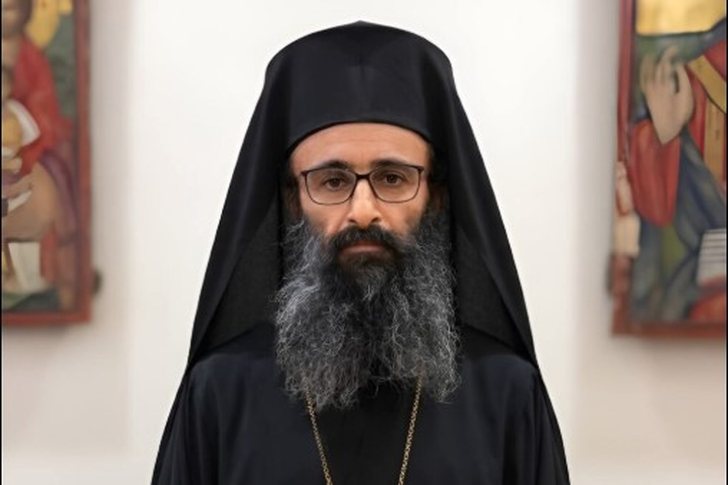
The Holy Synod of the Autocephalous Orthodox Church of Alb...
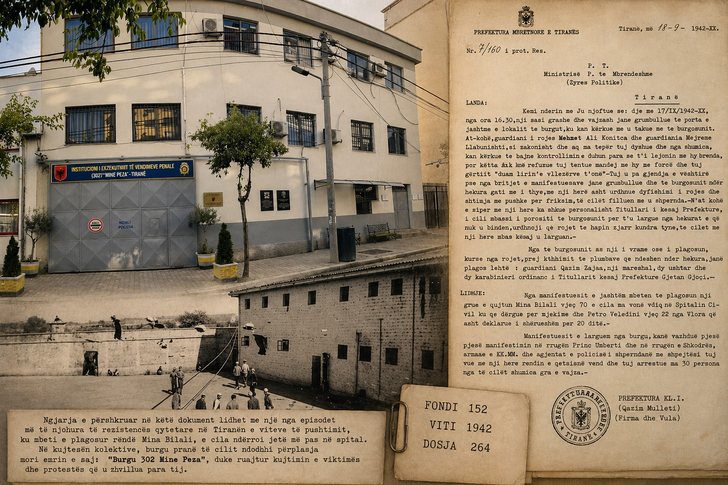
The event reflected in the archival document (Fund 152, ye...
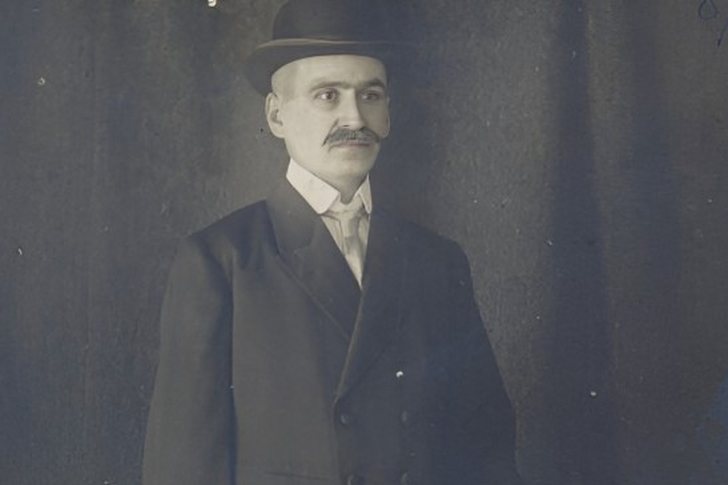
From the research conducted in the funds of the Central St...
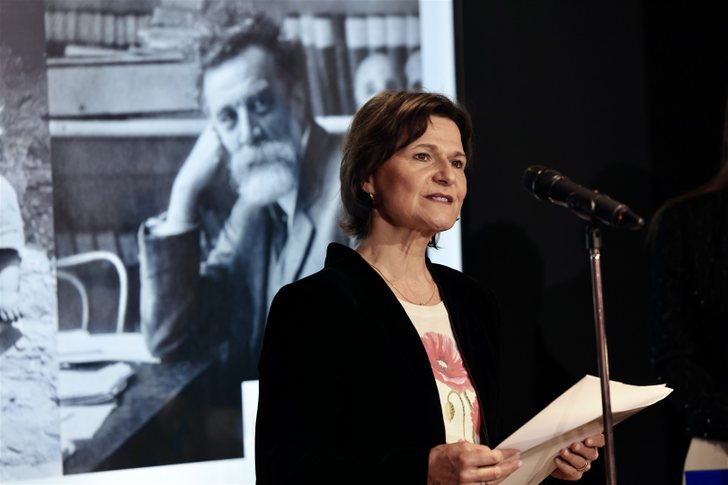
The Swiss Embassy returns to the Shkodran public for the f...
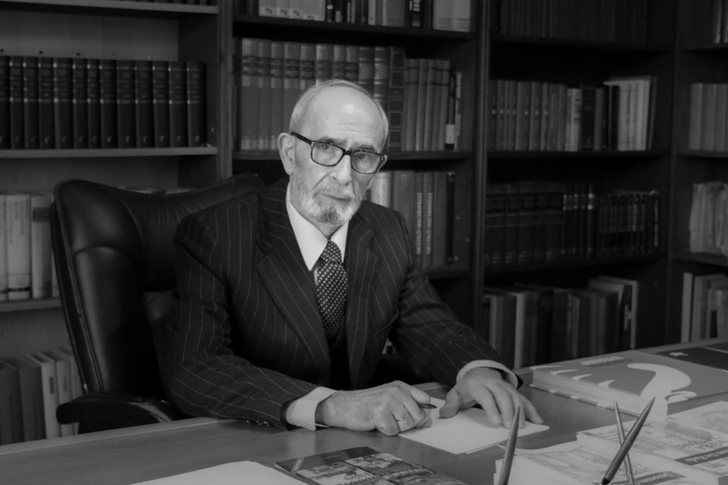
Rexhep Qosja was born in Vuthaj, in the Malësia region, th...
UNESCO today declared 12 new geoparks, bringing the total ...

April 23 is marked worldwide as World Book and Copyright D...

The Monastery of the Archangels in Derviçan, Dropull munic...

In a studio inside Hampton Court Palace in London, embroid...
The events leading up to the assassination of Avni Rustemi...
memory Since April 20, 2020, Rikard Ljarja has been detac...

Irfan Hysenbelliu is a businessman that we call "Irfan the...

In March 2026, CNA launched another investigation centered...
The arrested mayor of Tirana, Erion Veliaj, with 13 charge...
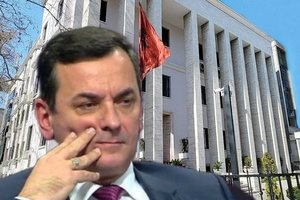
CNA has uncovered the tentacles of the head of the Supreme...

The Special Board of Appeal (KPA) decided this Monday ...

The KPA vetting decided this Thursday to dismiss the p...

Suela Salavaçi, a prosecutor in the Prosecutor's Offic...

The Special Board of Appeal reinstated the prosecutor ...
New details are being learned regarding the incident that ...

Several gunshots were reported this evening in Elbasan. T...
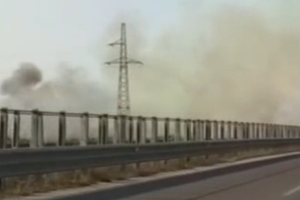
A section of the Fier-Vlora highway was engulfed in flames...

A road accident occurred this Monday near Gramsh. As repo...
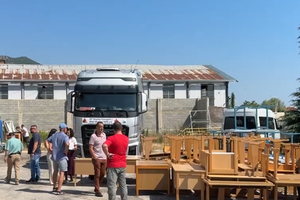
Another humanitarian aid shipment from Germany has arrived...

Residents of the village of Memëlisht in the Municipality ...

On Monday, our country will be under the influence of rela...

On Sunday, our country will remain under the influence of ...

US President Donald Trump responded with harsh rhetoric to...

US President Donald Trump said on Monday that Israeli Prim...

Hungary's Prime Minister, Péter Magyar, took many people b...

The mediators in the Middle East conflict between the Unit...

At a time when industrial products are increasingly taking...

Trust among people is not just a three-syllable word. It c...

Master of humor Todi Llupi has passed away at the age of 7...

The ninth edition of "MIK Festival" kicked off with one of...

Deputy Minister of Economy and Innovation, Enkelejd Musabe...

This Monday, one US dollar is bought for 81 lek and sold f...
In Golem and Durrës, the season seems dynamic: buses with ...

This Sunday, one US dollar is bought for 81 lek and sold f...