

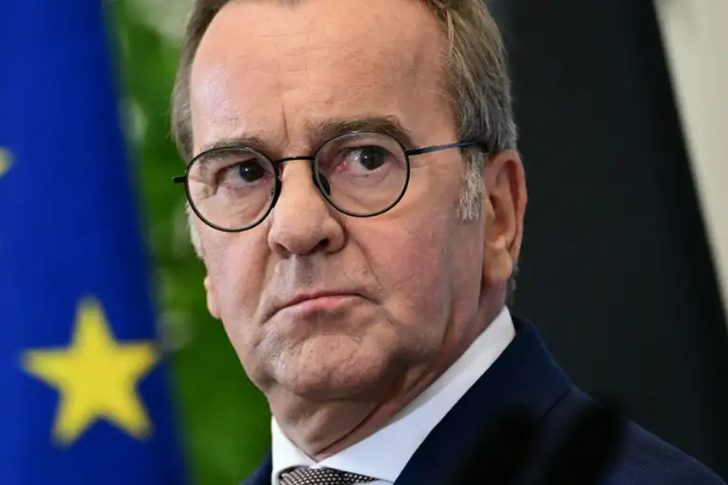
German Defense Minister criticizes Ursula von der Leyen
German Defense Minister Boris Pistorius criticized Ursula ...


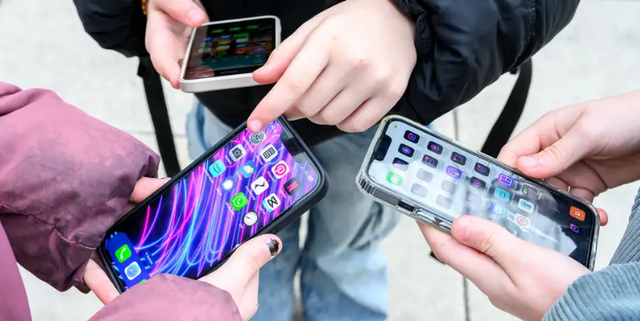
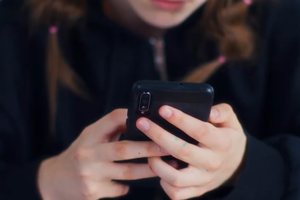
The summer holidays are over, school has resumed in many German states. And the heated debate about what to do with mobile phones continues.
On the first day of school after the summer holidays, Klara Ptak almost forgot her mobile phone at home. This is perhaps the best proof that the student representative at the Dalton Gymnasium in Alsdorf, North Rhine-Westphalia, Germany, has realized that she no longer needs it there. Since the end of April, the school has strictly banned mobile phones. For all classes.
The 17-year-old tells DW: "Now I can no longer look at my phone and send a quick text during recess. At first, many students wondered what the ban was for, but over time many have realized that it's not so bad and that there are actually many positive aspects."
However, opinions vary somewhat: "Teachers generally think it's very good, the younger students accept it, but the older ones aren't very happy about it," says Klara.
Dalton High School is one of many schools in Germany that no longer wants to sit idly by and watch the massive use of mobile phones by their students. After the Easter holidays, the "Smart Without Phones" concept was introduced as a test phase.
Since then, phones have been required to remain in bags from the beginning to the end of class. If a student is caught with a phone, it is confiscated and parents can only pick it up the next day at the school office.
"A total of 51 phones were confiscated, which is quite an impressive result for a school with 700 students," says Klara. "Now you can see that especially the younger children, the ones who used to stand in the schoolyard and look at their phones, are now playing football, badminton or some board games together. This is a big change."
Does banning cell phones make sense?
In Germany, there is a heated debate about the use of phones in schools. The Leopoldina Academy of Sciences proposes a ban on mobile phones until the tenth grade and advises that children under the age of 13 stay away from the internet and social media.
The Federal Government's Commissioner for Addiction and Drugs, Hendrik Streck, also calls for a gradual increase in the age limit for social media, but opposes a ban on mobile phones.
The Federal Student Conference also rejects a blanket ban on phones. Instead, it supports the active promotion of media literacy in schools.
What do parents say? They are quite irritated by this topic. A survey conducted by the public opinion research institute Forsa on behalf of the Kerber Foundation showed that the biggest stress factor for parents of children aged 12 to 18 is their children's media consumption.
The situation in Alsdorf
Maybe you should ask Martin Wieler, the principal of the Dalton Gymnasium in Alsdorf. He promoted the idea of ??banning mobile phones, just as he promoted digitalization at his school by introducing a school tablet for all students from the seventh grade. Wieler speaks proudly of the results of the phone ban project - his team discussed it in detail together with students, parents and teachers.
The results show that 90 percent of teachers support the ban. They notice significantly better social behavior and better concentration of students, especially among the younger ones. Also, the majority of students in the lower grades (up to 13 years old) consider the ban to be a very reasonable measure. Only students in the upper grades, those aged 16 to 19, remain quite skeptical. 85 percent of parents support the ban, noting that their children have become more independent and praising the increase in communication, even at home.
Solingen: Social media ban
A hundred kilometers to the east, in Solingen, they have gone one step further – with a project that is unique in all of Germany. Starting this school year, all fifth-grade students will be completely banned from using social media. Ten- and eleven-year-olds must also stay away from Instagram, Snapchat and TikTok at home. The idea came from Burkhard Brenken, a former school principal and now an inspector at the Düsseldorf district education office.
He tells DW: "Solingen is a special place because we were able to quickly convince the principals of all 13 high schools. This has started a unique educational partnership between schools, parents and children."
This means that everyone has signed a written statement of intent, pledging to implement the project together for a year. "The agreement is, of course, legally invalid," Brenken emphasizes. This is important to him: it is only a recommendation or an offer of service, and not an attempt by the school to interfere with the education of parents.
"Many parents we spoke to see a dramatic problem with risky online behavior. But children rightly say, 'You're isolating me, I'm the only one who doesn't have a phone and all my friends have one,' then this can only be solved through social coordination. It's almost impossible for parents to do it alone."
Parents want more information and rules
Alev Kanovski is familiar with all these discussions. Her daughter got a mobile phone at the age of nine, one of the last in her class. The trend is for children to get phones as early as primary school, Kanovski tells DW. The pressure that the child will otherwise feel excluded is great. Her daughter is now a fifth-grader in Solingen and was initially not at all enthusiastic about the ban on social media.
"As a mother, I sometimes felt overwhelmed, especially because of the pressure to allow phones and access to social media. Such projects should be introduced in more places, so that children can have a calm and distraction-free childhood."
The project will be evaluated in the coming months. It is being monitored by 50 trained media advisors in schools. These are students aged 12 to 14 who, due to their age, are familiar with the problems and concerns of fifth grade students.
They are supposed to protect them from the dangers of the internet. The initiator of the idea, Burkhard Brenken, hopes that the social media ban will be well received. "Schools are dealing with a lot more children and adolescents suffering from depression and anxiety disorders. It's a phenomenon that didn't exist to that extent ten years ago, and now it has really reached all schools. The pandemic has accelerated all this, but the problem existed even before."/ DW

German Defense Minister Boris Pistorius criticized Ursula ...

Tens of thousands of citizens in Serbia's capital, Belgrad...

Chinese President Xi Jinping and his Russian counterpart V...
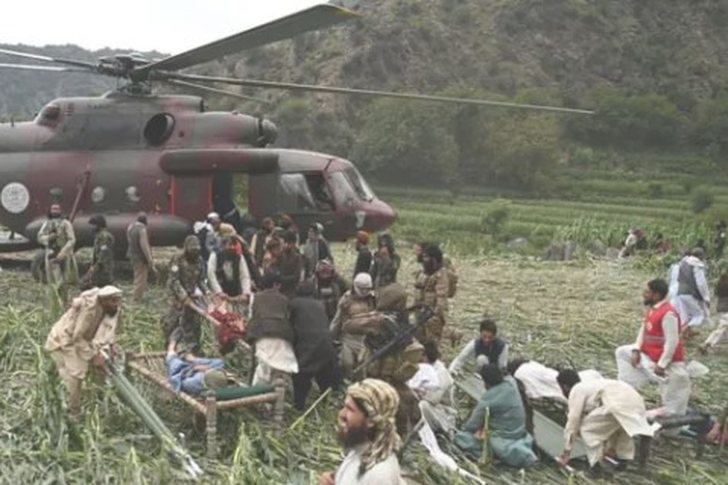
Yesterday's earthquake in Eastern Afghanistan caused over ...
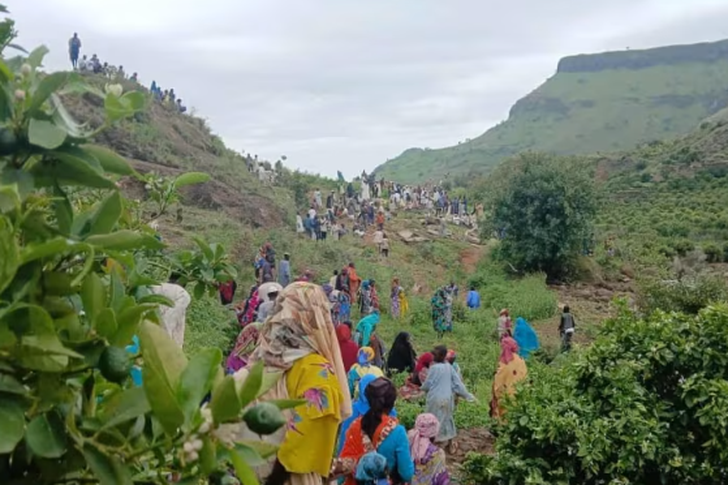
At least 1,000 people were killed in a landslide that dest...

Syria today carried out its first official crude oil expor...
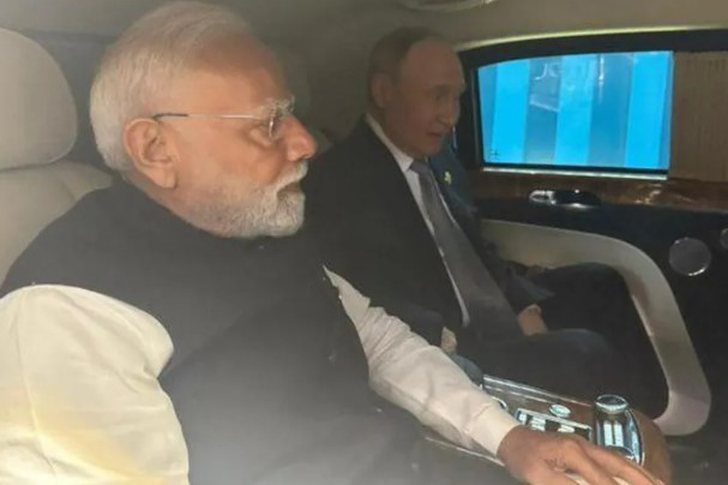
Indian Prime Minister Narendra Modi says he had a "deep" e...
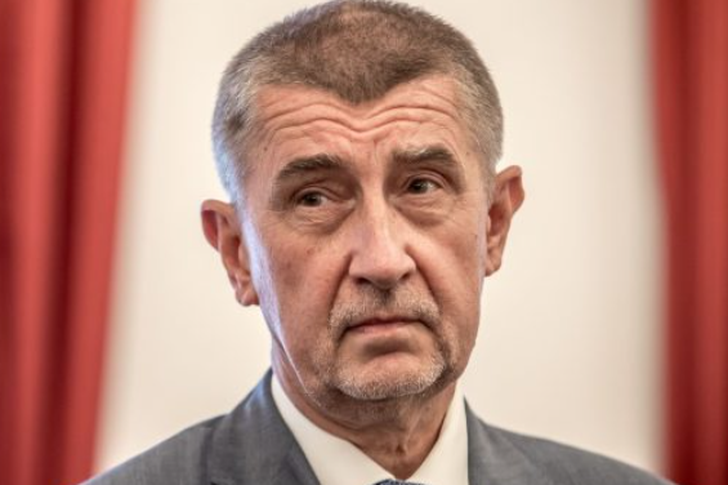
Former Czech Prime Minister Andrej Babis was hospitalized ...

North Korean leader Kim Jong Un left Pyongyang by train on...

Israel carried out airstrikes across the Gaza Strip on Mon...
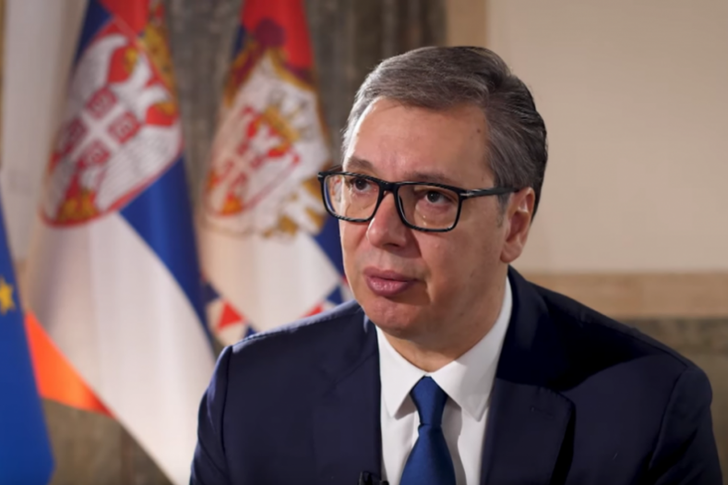
Serbian President Aleksandar Vučić will participate in a m...
Representatives of the Vetëvendosje Movement at the Centra...

Ukrainian President Volodymyr Zelensky will meet with Euro...

The United Kingdom has seen its hottest summer ever record...
Thousands of truck drivers in Bosnia have halted deliverie...
The President of Kosovo, Vjosa Osmani, received today in a...
The UN humanitarian agency says preliminary reports indica...
A suspected Russian hacking attack targeting Ursula von de...

Russian President Vladimir Putin said he had reached an ag...
The Presidency of the Assembly of Kosovo will meet today t...

Irfan Hysenbelliu claims to be a big businessman, an hones...

The murder of officer Enea Mekolli in the line of duty has...

The next case broadcast on the show "Stop", this Thursday,...
The case published this Thursday, June 4, on the show "Sto...

The Special Board of Appeal (KPA) decided this Monday ...

The KPA vetting decided this Thursday to dismiss the p...

Suela Salavaçi, a prosecutor in the Prosecutor's Offic...

The Special Board of Appeal reinstated the prosecutor ...

An accident was recorded a few minutes ago on the Pogradec...
Following the cooperation of Interpol Tirana with Interpol...

An accident occurred this Saturday morning at Shkëmbi i Ka...

A TNT explosion occurred in Lezha in the early hours of th...

Albanians are officially the hardest working people in Eur...

This Saturday will be characterized by mostly clear weathe...
Today our country will be affected by stable weather condi...
For many children and teenagers, the long summer holidays ...

A federal judge in Rhode Island struck down a Trump admini...
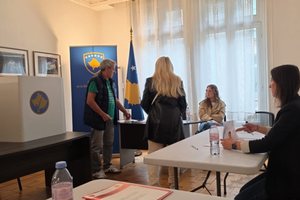
Thousands of Kosovo citizens living abroad are voting phys...

Pope Leo XIV arrived in Madrid this Saturday, where he beg...
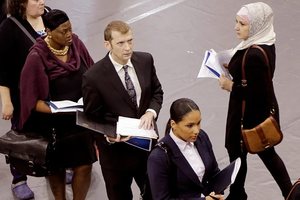
Millions of Europeans still apply for jobs without knowing...

Korça is ready to open the summer season with one of the c...

Two years after his passing, the renowned Korçë poet Skënd...

The Ethnographic Museum of Berat has opened its doors to v...
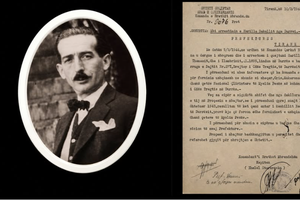
The story of Harilla Bakalli is one of the most chilling t...

The Transparency Board, in today's meeting, decided to red...

This Saturday, one US dollar is bought for 81.4 lek and so...

Despite years of efforts at regional cooperation and free ...

Albania is the country with the highest level of severe ma...