

Dollar drops drastically, euro rises/Exchange rate, April 4, 2025
Today in the foreign exchange market, the euro will be exc...


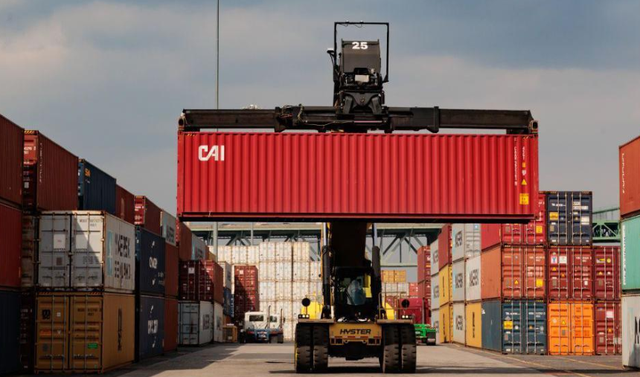
The new United States tariffs that came into effect the day before will apply to Albanian exports at a rate of 10%. These tariffs affect 1.9% of our country's total exports.
Tariffs against Albania are at the lowest base of 10%, as according to the White House announcement, the average tariffs that Albania applies to American imports are also 10%.
Last year, Albanian exports to the US reached a value of 7 billion lek, almost double that of 2019. Tariffing them at 10% is estimated at an additional cost of at least 7 million euros.
According to official data from INSTAT, about 41 percent of Albanian exports to the US are dominated by "Iron and Steel" which represents several chromium products and by-products, while the second largest export group is medicinal plants and oilseeds with 23% of the total.
Furthermore, 3% of Albanian exports to the US are represented by oils and resins that serve the cosmetics industry, beds and furniture, fish products, etc.
Tariffs with the US are expected to have a negative effect on medicinal plants, 16.4 million euros in direct exports.
Although far away, the United States of America is an important trading partner of our country. Last year, the US ranked fifth in terms of the value of imports and 13th in terms of exports.
US imports reached 20.5 billion lek in 2024, increasing by 19 percent from 2023. In the last four years, imports from the US in value have increased by 104%.
Last year, the US was Albania's main supplier of goods, along with Italy, China, Greece and Germany. In fact, imports from the US were even higher in value than those from Kosovo.
American imports accounted for 2% of total imports by 2024.
The American market is also important for our exports, as Albania directly and indirectly (through Germany) exports medicinal plants to American markets.
Last year, Albania's exports to the US reached 7 billion lek, with an annual decrease of 27%, as a result of the weakness that our exports suffered in general from the weakening of the euro.
Imports from the US are dominated by means of transportation, fuels, and aircraft and their parts.
The tariff policy being pursued by the new US administration could affect Albania indirectly rather than directly through traded goods. Economic experts believe that the trade war could bring a new wave of price hikes in global markets to which Albania could be fully exposed.
Albania's trade with the US accounted for 2.1% of its foreign trade volume last year, remaining unchanged over the last decade.
Since the US has become the most important export market for the EU over the last decade, the negative impact of high US tariffs on European goods and services will be significant for Eastern European countries, the Vienna Institute for Economic Studies analyzes.
While direct trade flows between our region and the US are limited, lower demand for European industrial products will negatively impact Central and Eastern Europe.
The region exports about 2% of the total to the US.
The new US tariff policy for the Balkan region resulted in higher values ??for Serbian exports (37%), Bosnian (35%), North Macedonian (33%), while a 10% tariff was imposed on Kosovo, Albania, and Montenegro.
The White House announced the new tariffs as a reciprocal relationship, also announcing that the three Western Balkan countries, Serbia, North Macedonia, and Bosnia, apply very high average tariffs on imports from the US.
Albania has the lowest level of export value to the US compared to other countries in the region except Montenegro.
In 2024, Albanian exports to the US reached a value of 74 million USD, or 1.9% of the total, while Bosnian exports to the US in the same year were 186.17 million US dollars and accounted for about 2% of the total.
In 2024, Serbia exported goods worth US$670 million to the United States, which was 1.8% of its total exports for that year. The main products that Serbia exports to the US include vehicles, fruits, raspberries, etc., animal feed, etc.
Last year, North Macedonia exported goods to the United States worth US$118.2 million, more than double compared to 2023. Sales to the US accounted for 1.4% of total exports to the US.
North Macedonia's exports to the US are represented by tobacco, clothing, and iron and steel products.
In 2023, Kosovo exported goods worth 102.5 million US dollars to the US, which accounted for 2.4% of total exports. While Montenegro had the lowest value in the Region at 10 million USD.
How were Albanian exports treated in the US before tariffs?
?Before the new tariffs announced by the Trump administration took effect on April 2, 2025, Albanian exports to the United States were subject to various tariffs, which varied according to the type of product and existing trade agreements.
Many Albanian products benefited from the US Generalized System of Preferences (GSP), which allowed certain goods to enter the American market without customs duties.
This means that a significant portion of Albanian exports entered the US without paying tariffs, while standard US tariffs were applied to products outside this program, which varied depending on the product.
The Generalized System of Preferences (GSP) offered tariff-free treatment for about 3,400 products from Albania and other developing countries.
Eligible products included most manufactured goods, some agricultural and fishery products, jewelry, carpets, and some types of chemicals, marble, and minerals. To benefit from GSP, products had to meet the origin criteria and be accompanied by a certificate of origin issued by the Albanian customs authorities.
For products that did not qualify for GSP, standard US (MFN) tariffs were applied. For example, imitation jewelry made of base metal had a tariff of 11%. Decorative ceramic (not porcelain) articles had a MFN tariff of 6% and a tariff for parts and accessories for optical equipment of 2%. From April 2, 2025, all Albanian exports to the US will be subject to a 10% tariff.
Negative effects stronger than expected
The tariff scheme announced by Donald Trump and the US administration is worse than expected, the Vienna Institute for International Studies analyzes. The main reason for this is that the assessment took into account not only monetary tariffs, but also non-monetary barriers, such as undervalued currencies and other related claims, which are summarized in a detailed report.
The 400-page report devotes 29 pages to the EU, highlighting that, in addition to tariffs, other issues such as import licensing for bananas, technical barriers to trade (TBT), sanitary and phytosanitary (SPS) measures related to European standards, procurement rules, intellectual property rights (IPR) and service barriers are taken into account in the new tariffs. Similar assessments are carried out for many other countries.
In fact, calculations of tariff rates have been much simpler: 'Reciprocal tariffs are calculated as the tariff rate necessary to balance the bilateral trade deficits between the US and each of its trading partners.
This calculation assumes that persistent trade deficits result from a combination of tariff and non-tariff factors that hinder trade balance. Tariffs work by directly reducing imports.' So says the website of the Office of the United States Trade Representative.
Based on these, large 'reciprocal tariffs' are imposed, of which only half will actually be implemented (which Trump called 'good' reciprocal tariffs).
For example, this would mean a tariff increase of 34% for China (from an estimated 67%), 20% for the EU (from 39%), 46% for Vietnam (from 90%), 64% for Taiwan (from 32%), 24% for Japan (from 46%), 26% for India (from 6%), 26% for South India (from 3%) and so on.
For some countries, including Albania, the estimated tariff is applied (e.g. 10% for the UK and Brazil). It is interesting to note that traditional US allies, such as South Korea (25%), Japan (32%), and Taiwan (46%), will face very high tariffs.
Secondly, it is worth noting that Russia is not on the list. In general, a basic tariff of 10% is announced for all countries and products.
The tariff increases mainly affect countries facing significant tariff increases and those with strong trade ties with the US, such as Colombia, Costa Rica, Cambodia, Israel and India. For the EU, approximately 7% of gross exports are destined for the US.
This decline in exports could have severe negative impacts on countries' GDP. According to estimates, EU GDP will fall by around 0.4%, with similar effects for Austria and Germany.
Trade wars often damage international relations. New trading blocs are created or existing alliances are strengthened in response.
In 2017-2018, the US imposed tariffs on hundreds of billions of dollars worth of Chinese goods. China responded with counter-tariffs on US agricultural goods. The effects created damage for US farmers, increased prices in the US, and shifted production to countries like Vietnam and Mexico.
Tariffs and counter-tariffs in global goods markets can cause a range of economic, political, and social effects, often escalating into “trade wars.” Initial analyses suggest that a decline in international trade is expected.
When a country imposes tariffs on foreign goods, they become more expensive, and domestic consumers tend to buy domestic products. The country affected by the tariffs may respond with counter-tariffs, which hurt the first country's exporters. This tariff exchange reduces the volume of trade between the countries and increases costs.
This situation produces rising prices for consumers. Imported goods become more expensive, leading to inflation (a general increase in prices) and this leads to a decrease in purchasing power. All this creates social discontent. When a country faces counter-tariffs, its exporters lose access to important markets.
There may be production cuts, layoffs and factory closures, especially in directly affected sectors. Governments can increase customs revenues in the short term, but if trade falls significantly, revenues may decrease in the long term./ Monitor Magazine

Today in the foreign exchange market, the euro will be exc...
Today in the foreign exchange market, the euro will be exc...

Banks are essential institutions for the economy for two r...

Today in the foreign exchange market, the euro will be exc...
From 1 April 2025, road and rail carriers will have to pro...
Today in the foreign exchange market, the euro will be exc...
The Eurobond issued by the Albanian government in February...
Today, March 31st, is the deadline for submitting the Annu...

Today in the foreign exchange market, the euro will be exc...
The favorable season with warm climate and increased deman...
The current account deficit worsened last year. According ...
Today in the foreign exchange market, the euro will be excha...
Behind the grand arches of Istanbul's Grand Bazaar, beyond...

Today in the foreign exchange market, the euro will be exc...
The manufacturing sector in our country has entered a long...

Today in the foreign exchange market, the euro will be exc...
The prices of fiscal stamps for excise goods are reduced b...
The euro-lek exchange rate marked a strong increase today....

The Tirana Chamber of Commerce and Industry and the Busine...
Turkey was the leading foreign investor in Albania last ye...

Irfan Hysenbelliu claims to be a big businessman, an hones...

The murder of officer Enea Mekolli in the line of duty has...

The next case broadcast on the show "Stop", this Thursday,...

The case published this Thursday, June 4, on the show "Sto...

The Special Board of Appeal (KPA) decided this Monday ...

The KPA vetting decided this Thursday to dismiss the p...

Suela Salavaçi, a prosecutor in the Prosecutor's Offic...

The Special Board of Appeal reinstated the prosecutor ...
Following the cooperation of Interpol Tirana with Interpol...

An accident occurred this Saturday morning at Shkëmbi i Ka...
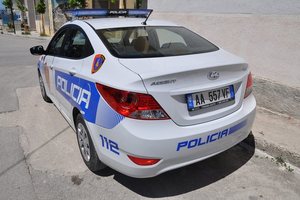
A TNT explosion occurred in Lezha in the early hours of th...

A massive brawl was recorded on Friday evening in Saranda,...
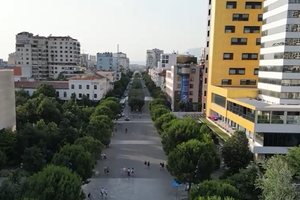
Albanians are officially the hardest working people in Eur...

This Saturday will be characterized by mostly clear weathe...
Today our country will be affected by stable weather condi...

For many children and teenagers, the long summer holidays ...

Millions of Europeans still apply for jobs without knowing...
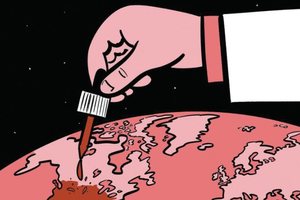
Following the Covid-19 pandemic, the World Health Organiza...
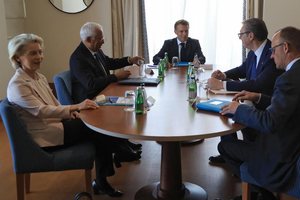
Leaders of the European Union and Western Balkan countries...
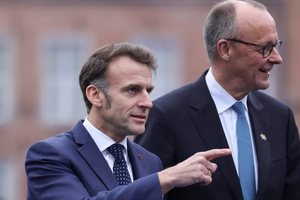
On the eve of the EU-Western Balkans summit, Germany and F...

Korça is ready to open the summer season with one of the c...

Two years after his passing, the renowned Korçë poet Skënd...
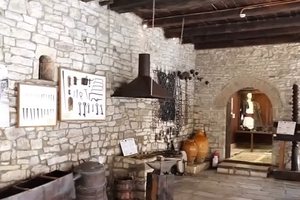
The Ethnographic Museum of Berat has opened its doors to v...
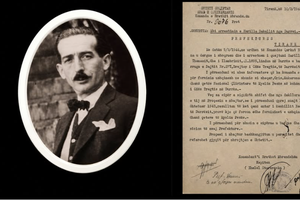
The story of Harilla Bakalli is one of the most chilling t...
This Saturday, one US dollar is bought for 81.4 lek and so...

Despite years of efforts at regional cooperation and free ...

Albania is the country with the highest level of severe ma...
This Friday, one US dollar is bought for 81.3 lek and sold...