

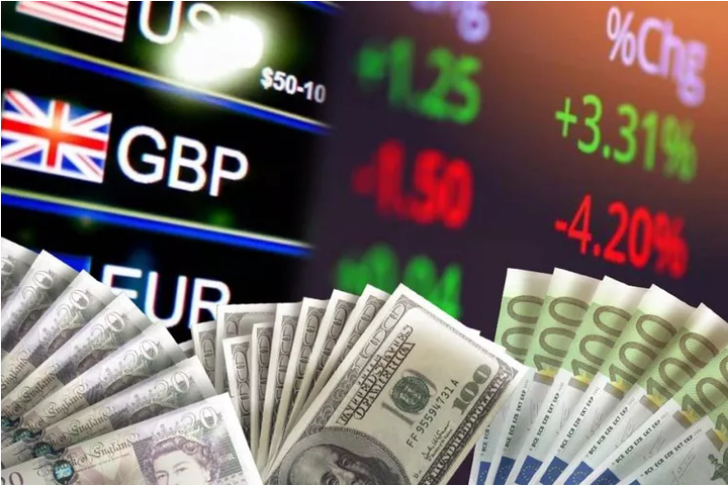
The drastic decline in foreign currencies continues/ Exchange rate, Thursday, January 8, 2026
This Thursday, one US dollar will be bought for 81.9 lek a...



The Bank of Albania has kept the countercyclical capital requirement rate for commercial banks unchanged at 0.5%, but has once again warned of a possible increase if lending continues to grow at high rates.
According to the regulation "On macroprudential capital additions", the countercyclical capital addition is specifically intended to slow down lending, if the regulator judges that this growth is too rapid and could potentially bring increased risks to financial stability.
In the periodic reassessment of the countercyclical capital requirement at the end of 2025, the Bank of Albania has once again highlighted the faster pace of credit growth compared to economic growth. In the first quarter of 2025, credit to the economy grew by 10.9% in annual terms, significantly above the annualized GDP growth rate for the same period of 5.4%.
Decision-making on the level of the countercyclical allowance is based primarily on the performance of the credit-to-GDP gap indicator. The above ratio shows the deviation of the value of the credit-to-GDP ratio for the economy from its long-term trend and is the main indicator signaling the possibility of excessive credit growth.
The values ??of the primary indicator remain negative, but the magnitude of the negative value continues to decrease at an accelerated pace. Specifically, in the third quarter this ratio was -3.44 percentage points, while the 2009-2025 average is estimated at -7.7 percentage points.
The gap for the “individuals” segment remained in positive territory for the second consecutive quarter (0.28 percentage points), reflecting the steady growth of credit to households.
Under these conditions, the Bank of Albania emphasizes once again that it is necessary to monitor their debt burden and the factors that affect the solvency of households.
On the other hand, the gap for the "business" segment remains in negative territory, but its trend of narrowing, in annual terms by about 1.3 percentage points, reflects the gradual improvement of businesses' access to credit.
According to the Bank of Albania, similarly to households, it is also necessary for businesses to assess whether the increase in debt has been accompanied by an increase in their production capacity and profitability, in order to timely identify pressures on solvency and the quality of the relevant loan portfolio.
Although the “credit-to-GDP ratio gap” is the main indicator, the practice of its implementation in other countries and in Albania has highlighted the slow response of this indicator in general, and its insufficiency to capture and highlight rapid developments in certain credit segments.
Therefore, the regulatory and methodological framework of the Bank of Albania provides that decision-making on the countercyclical supplement should also be based on the Supplementary Early Warning Indicator (SEWI).
The TPHP index value increased further to 0.66, more significantly exceeding the maximum limit suggested by the countercyclical rate setting methodology (historical average of 0.5) and has been largely above this limit since the end of 2021, signaling potential risks stemming from an overheating in the credit market and mainly of non-financial assets.
Recent developments reflect a positive but somewhat slower growth rate of the real estate loan portfolio compared to the previous quarter and the same period a year ago.
The growth of this credit category continues to exceed the nominal GDP growth rate and the growth rate of total bank credit outstanding. However, the current growth rate for this credit remains below the historical average.
The house price index has strengthened its upward momentum and has been above long-term growth levels for more than a year. In parallel, the increase in the ratio between real estate prices and rental prices indicates that purchase prices are growing faster than rents, for the fourth consecutive quarter. These developments point to strong market demand, but may also be associated with concerns about the long-term stability of price developments. Movements in real estate lending and changes in the house price index tend to have mutually reinforcing effects. This link is considered important for analysis and decision-making in the context of financial stability. Through the analysis of these two factors, as well as indirect information derived from the assessment of household debt, possible signs of systemic risks that may arise if real estate prices increase unsustainably can be identified.
With the aim of moderating credit growth rates, the Bank of Albania decided to increase the countercyclical capital surcharge (CUCC) rate in June 2024 and December 2024, by 0.25% each, to the current level of 0.50%. These increases in the CCU have entered into force to be met in June and December 2025, respectively.
At the same time, in order to maintain the quality of banks' exposures in the real estate market, in May 2025 the Bank of Albania decided to implement upper limits on two indicators of lending standards for real estate, the loan-to-value ratio and the debt service-to-income ratio of the borrower.
These limits are set differentiated by currency and by the purpose of the property purchase and apply from July 1, 2025.
The Bank of Albania states that, currently, the impact of all the above measures is being monitored to assess their appropriateness and the need for their possible addition./ Monitor

This Thursday, one US dollar will be bought for 81.9 lek a...

By 2026, all municipalities are expected to be integrated ...
The American Chamber of Commerce has praised the governmen...

Self-employed individuals who receive over 80% of their in...

The World Bank suggests that improving the public pension ...

Artificial intelligence is becoming increasingly present i...

This Wednesday, one US dollar will be bought for 81.7 lek ...
Finding a job abroad, even temporarily, has become a susta...
Budget revenues from Customs for 2025 reach a record figur...

Albanians' perception of the financial situation is signif...

Since the beginning of this year, the application of the b...
This Tuesday, one US dollar will be bought for 81.8 lek an...
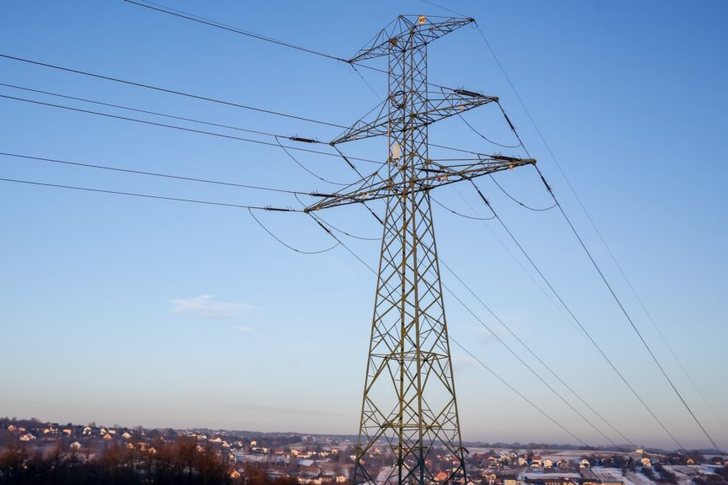
The Energy Regulatory Authority has requested that the Tra...

The performance of lending by non-bank financial instituti...

The Economic Sentiment Indicator (ESI) fell by 0.4 points ...
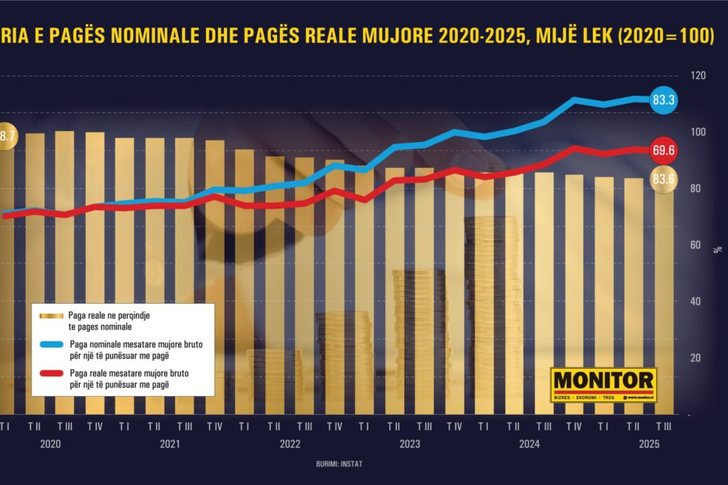
Have you noticed that even though you may receive more mon...

Budgetary expenditures are growing much faster than funds ...

This Monday, one US dollar will be bought for 81.2 lek and...
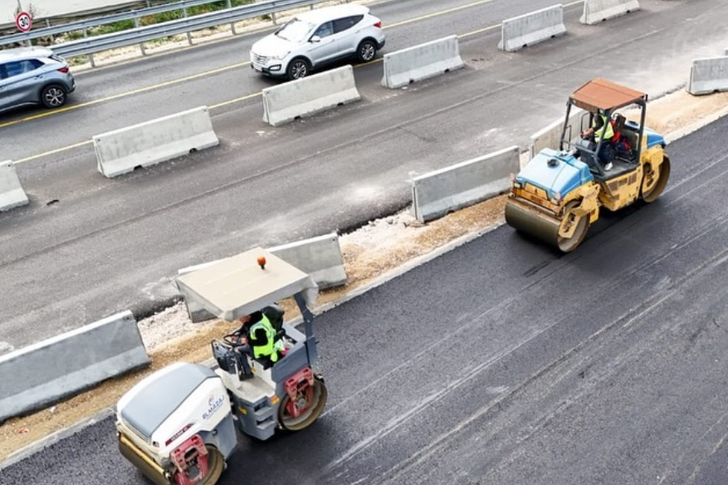
The planning and implementation of public investments duri...
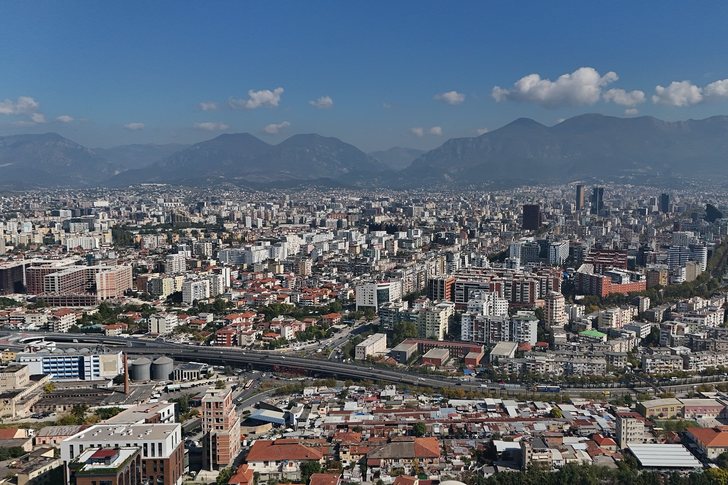
Tourism, rising construction costs and the circulation of ...

The murder of officer Enea Mekolli in the line of duty has...

The next case broadcast on the show "Stop", this Thursday,...
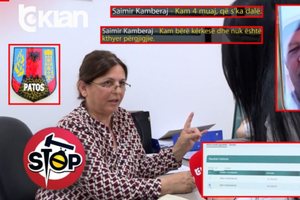
The case published this Thursday, June 4, on the show "Sto...

The protests of recent days related to the situation in Zv...

The Special Board of Appeal (KPA) decided this Monday ...

The KPA vetting decided this Thursday to dismiss the p...

Suela Salavaçi, a prosecutor in the Prosecutor's Offic...

The Special Board of Appeal reinstated the prosecutor ...

A money changer in Durrës lost 60 thousand euros after bei...
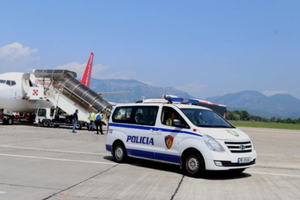
The 6 citizens captured in Dubai, members of criminal grou...
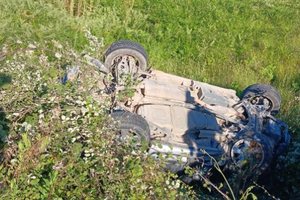
A serious accident occurred on the Kardhiq-Delvinë axis, i...

Authorities have conducted a large-scale anti-drug operati...
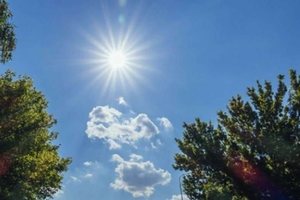
Today our country will be affected by stable weather condi...

For many children and teenagers, the long summer holidays ...
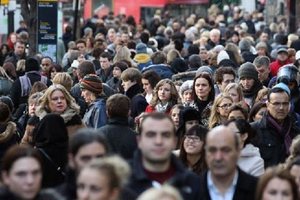
Albania is facing an unprecedented demographic transition,...
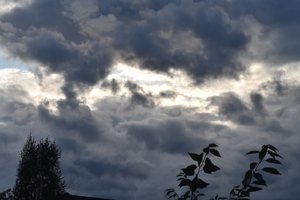
On Thursday, our country will be affected by unstable weat...

Russian President Vladimir Putin said the war in Ukraine c...
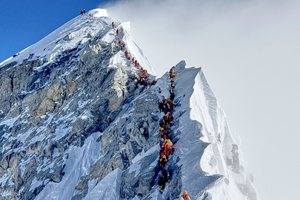
An extraordinary story of survival has been recorded in Ne...
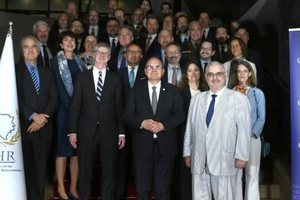
The Peace Implementation Council in Bosnia and Herzegovina...
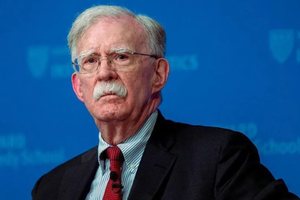
John Bolton, the former national security adviser to US Pr...
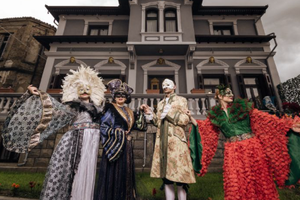
Korça is ready to open the summer season with one of the c...
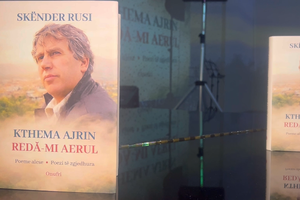
Two years after his passing, the renowned Korçë poet Skënd...
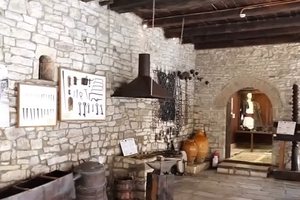
The Ethnographic Museum of Berat has opened its doors to v...
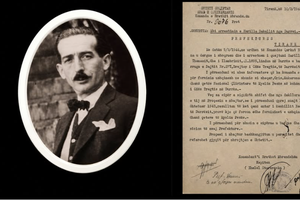
The story of Harilla Bakalli is one of the most chilling t...
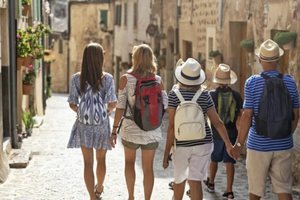
Despite years of efforts at regional cooperation and free ...

Albania is the country with the highest level of severe ma...

This Friday, one US dollar is bought for 81.3 lek and sold...
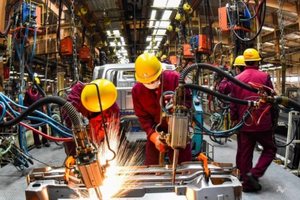
The government aims to transform the country's industrial ...