

Exchange rate, Sunday, January 4, 2026
This Sunday, one US dollar will be bought for 81.2 lek and...


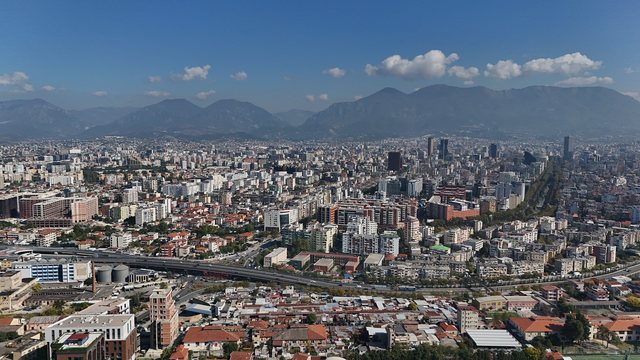
Tourism, rising construction costs and the circulation of informal money that is distorting the free market are some of the factors that, according to economic and urban planning experts, are driving the rapid increase in apartment prices in Tirana. As a result, buying a home is becoming increasingly unaffordable for middle- and low-income families. Meanwhile, rents exceed the limits of affordability recommended by international standards.
Buying an apartment in Tirana today is more difficult than three years ago, due to the rapid increase in prices that do not follow the average increase in income of middle-class families.
Currently, newer projects near the suburban areas are being sold at prices up to 2,000 euros/m² (the two-tower Tirana Tower project being built in Porcelan), while in the former Bllok, the price of apartments has reached 5,500 euros/m².
In Albania, the average gross monthly salary for 2024, according to INSTAT, reached 77.5 thousand lek per month, or about 770 euros. Salaries in Albania remain about 30% lower than in other countries in the region, led by Serbia, with an average gross salary of 1,150 euros per month.
As incomes continue to remain stagnant, the rise in apartment prices continues, making it impossible for the middle class, according to experts, to afford to buy an apartment.
Within 9 months of 2025, according to data from field sales offices, apartment prices in some areas of the capital have increased rapidly. Compared to February 2025, prices have increased from 10% to 33%, depending on the area and the building.
Measurement data from several indices simultaneously show that in Tirana, the increase in apartment prices has accelerated. In the first 6 months of 2025, data from the Fischer Index of the Bank of Albania showed that housing prices in the country increased by 14.6% compared to the previous six months, and by 41.7% compared to 2024.
By June 2025, according to the Keydata index, the average price per square meter of an apartment reached 1,830 euros. The average price was calculated based on data on the prices of existing apartments, i.e. for buildings built 5, 10 or 15 years ago.
Compared to 2005, the earliest year when the calculation began, prices are 2.8 times higher. The average price of apartments in 20 years has almost tripled compared to 2005.
In 2024, Albania was also ranked among the countries that have recorded the highest price increases in Europe, according to the report "On the Real Estate Index 2025", compiled by the international company "Deloitte".
The report noted that the average sales price of apartments in the country reached 1,620 euros/m². Compared to 2023, the average price increased by about 17%. In the report, Albania ranked second after Poland for the highest increase in property sales.
In Poland, the growth rate was 19.3%, but according to experts, this growth was influenced by the implementation of state housing subsidy policies.
According to Deloitte index data, in Tirana, the average sale price of apartments reached 2,000 euros/m². In downtown areas such as the former Blloku or Skanderbeg Square, average sale prices reached 3,000 to 3,500 euros/m².
Calculated by "Monitor", according to the methodology presented by "Deloitte", today, to buy a 70 square meter apartment in Tirana, an Albanian citizen needs about 19 gross annual salaries, much more than in less affordable European cities such as Athens or Amsterdam.
Due to the rapid pace of prices that do not follow the growth of family incomes, Stela Dhami from "Colliers Albania" points out that the affordability of purchasing an apartment in Albania is lower than in European Union countries.
"In Albania, the ratio between the sale price of real estate and the average income is a distant one. It takes a couple with an average income somewhere between 15–19 years to buy an apartment."
The standard in EU countries, taking an average, varies between 10–12 years. There are many factors that enter into this analysis, but the main ones are: high real estate prices in relation to average family income; high costs of mortgage loans, which remain with difficult financial conditions for the pockets of Albanian families.
Even for the economic expert, Elvin Meka, also Dean of the Faculty of Economics at "Tirana Business University", buying an apartment has become unaffordable for the middle class in Tirana, due to the increase in prices that is not synchronized with the increase in income.
"This strong jump in housing prices has significantly increased the pressure on all Albanian citizens, residents of Albania, and especially residents of the capital, who are now faced with a real estate market that is almost unaffordable and accessible, in a good part of its offer, by the majority of the population with middle and low incomes.
"Today it is obvious that individuals and families with average incomes are unable to respond to the current level of housing prices, not only in central areas, but also in peripheral areas, where prices continue to increase almost in sync with the pace of their growth in central and preferred areas," he asserts.
Rents exceed limits recommended by international standards
In addition to the high costs of purchasing an apartment in Tirana, the affordability of monthly rent remains a major challenge for families. Rising housing market prices are directly affecting family budgets, making housing increasingly unaffordable for a large portion of citizens.
According to the international coefficient used to assess housing affordability, rent is considered affordable when it does not exceed 30% of the monthly income of the family or individual.
When rent exceeds 30%, it is considered unaffordable and signals financial stress on a family for housing. If it reaches over 50%, this situation is called extreme “housing cost burden,” which increases the risk of housing insecurity.
"Continuous studies have been conducted that examine the ratio between a family's monthly income and expenses, to arrive at the golden rule, according to which a family should not spend more than 30% of its monthly income on housing," emphasizes Stela Dhami, a real estate market expert.
As of October, according to data from real estate agencies, in areas near the center of Tirana, average rental prices for 1+1 apartments range from 600 to 900 euros per month, while in the suburbs, rents are between 400 and 500 euros.
In 2024, the average monthly disposable income per capita (equivalent) was 51,000 lek.
A family with 3 members and a monthly income of 153,000 lek (51 thousand lek is calculated by INSTAT as the monthly income per capita), if paying a rent of 60,000 lek per month, is spending about 40% of its monthly income on housing.
According to this coefficient, the maximum amount that this family must pay for rent, to be considered affordable according to international standards, is around 47,430 lekë, which can only be afforded by renting 1+1 apartments in the Fresku and Kinostudio areas.
While for areas such as the former Blloku, the Paris Municipality, the Artificial Lake, Elbasan Street or the "Air Albania" stadium, the affordability coefficient is calculated at over 40%.
But in Albania, food spending continues to account for nearly 40% of the household budget, above the average for EU countries and the region. The European Union average is around 13% and the region's, below 35%.
In 2024, according to INSTAT data on household budgets, Albanian households spent an average of 93 thousand lek per month on consumption, an increase of 1.5% compared to 2023. Although total expenditures have increased, the structure of household budgets has remained almost unchanged, with food continuing to account for the largest share.
Monthly expenditures in 2024 for the "food and non-alcoholic beverages" group account for 39.6% of monthly expenditures, the same as a year ago, with an average amount of 36,879 lek.
How have apartment prices changed by 2025?
According to a field survey by "Monitor" within nine months of 2025, apartment prices in Tirana have increased significantly, with the areas with the fastest price increases being the former Blloku, near the Artificial Lake, Porcelani and the area near the Olympic Park.
On “Xhanfise Keko” Street in the Porcelani area of ??the “Tirana Tower” project, which includes the construction of two towers, one of which will be 34-storey, apartments are offered at prices starting from 1,800 to 2,000 euros/m² (depending on the location and floor of the apartment). The project is in the first phase of development and is expected to be completed within four years.
According to the sales office, prices vary according to the location of the apartment, and up to the 15th floor, the price is 1,800 euros/m². Above this floor, the offered price starts at 2,000 euros/m².
In February, according to data collected from sales offices in one of the completed buildings of the “Arlis” company on “Xhanfise Keko” street, prices ranged up to 1,500 euros/m². Compared to the same period last year, prices in this area have increased by 20 to 33%.
In the same area, another developer of a 9-story residential complex (opposite the former premises of the company "Aleat") offers apartments at a price of 1,600 euros/m², which represents an increase of about 7% compared to February.
The parking space has remained unchanged for the area, continuing to be sold for 25 thousand euros.
After the Covid-19 pandemic, in 2021, the maximum price recorded in this area reached 800 euros/m². Compared to four years ago, the sale prices of apartments in the area have increased by about 1.5 times.
Apartment prices have also increased in one of the new residential complexes being built near the Olympic Park. Currently, according to the sales office, apartment prices range from 2,500 to 3,000 euros/m². On the highest floors, apartments are offered at prices of 3,200 euros/m².
In February of this year, in the same project, apartment sales prices started from 2,400 to 2,700 euros/m². Within 9 months, prices have increased from 4 to 11%. The project is in the early stages of development.
From 2024, with the start of the fencing of the area, sale prices from 2,200 to 2,900 euros/m² were offered. The residential complex is expected to be completed within 3 years.
In the former Blloku area, within 9 months, sales prices have increased by 500 euros/m² or 10% in the same building.
In the construction being carried out opposite the "Rebeca" bar, according to the sales office, from 5,000 euros/m² that were offered in February, apartment prices have currently reached 5,500 euros/m². For office premises, sales prices reach up to 7,000 euros/m² according to the sales office.
In the area near the Artificial Lake, construction of a new project involving the development of 5 towers is expected to begin. According to the project's sales office, apartment prices will vary depending on location and orientation, starting from 2,800 - 3,000 euros/m², and up to 3,500 euros/m² for apartments with more favorable views.
A new residential complex in the “Dry Lake” area is being developed by the company “Fratari Construction”, with the expectation that the sale of apartments will start in the carbine phase. According to the company’s managers, prices in this project will range from 1,800 to 2,400 euros/m², depending on the floor and orientation of the apartment.
In addition to this development, the company plans to build another large residential complex in the Kashari area, with a housing capacity for about 12 thousand families. This project will have 17 residential buildings, including a 27-story building with a hotel function. Prices in this complex are expected to start from 1,400 euros/m².
Hajredin Fratari, the company's director, said that there is concrete interest in both projects for purchases. In the Dry Lake area, demand is dominated by buyers with credit, mainly local entrepreneurs. While in the Kashari project, in this first phase of interest and bookings, the interest of Albanians who have emigrated for decades, who plan to return to their homeland to spend their old age, is highlighted.
In other suburban areas of Tirana, apartments continue to be offered at sale prices of 1,400 euros/m², such as the Fresku and Shkoza areas. In these areas, prices have remained unchanged compared to last year.
Even on the second line of construction on New Boulevard, apartments continue to be offered at the same prices as at the beginning of the year, at the levels of 1800 to 1900 euros/m².
Factors that have influenced the price increase
The rapid increase in apartment prices in Tirana, according to experts, has been influenced by a number of factors, including increased demand for properties from tourism, construction costs from materials and taxes to the channeling of informal money into the construction sector with the aim of laundering it.
Stela Dhami, from Colliers Albania, highlights that the main reasons why Tirana is seeing a high increase in real estate prices are the rising cost of construction and the growing demand for investment in the real estate sector. Many apartments in Tirana, according to Ms. Dhami, are being purchased for daily rental or function as dental or medical clinics.
"The increase in apartment sales prices has been primarily influenced by the increase in construction costs, which includes construction materials since the Covid-19 pandemic and the cost of labor.
This has come about for several reasons, such as logistical changes and reduced production yields in the world, taking into account the geopolitical situation, but also due to the emigration that has been occurring in the country in the last decade.
Secondly, from the increase in the fiscal burden on the construction sector. Construction taxes are a significant burden for builders that is mainly transmitted to buyers through higher sales prices.
Thirdly, the lack of land for development in downtown areas, as well as the increasing cost of compensation to land owners, is further pushing builders to raise prices.
The increase in prices, meanwhile, has also been justified by the increased demand for housing from local residents who: 1) Buy for housing reasons for themselves or their children; 2) For investment reasons, knowing that real estate remains the only tangible investment by buyers; 3)
"For business reasons, especially in the city center areas, where many of the apartments have been converted for daily rental through their offering on the international Airbnb platform, or in function of the booming dental and medical tourism business," argues Ms. Dhami.
Professor Doctor Elvin Meka underlines that this situation is not simply the result of market demand for housing, but the consequence of a number of other factors that have distorted the balances.
From the growth of tourism and the market's orientation towards short-term rentals, to the growing demand from non-resident buyers, the channeling of informal cash flows, the increase in construction costs and the lack of control mechanisms over price speculation, all have interacted to produce this reality.
"This discrepancy has almost always been present in the market, but in recent years, the divergence and gap between them has become very deep, and this for several reasons.
Firstly, one aspect is related to the increase in real estate prices globally, following the Covid-19 pandemic, a trend that Albania was not overlooked either and which was mainly linked to a general increase in demand for them, as well as for the purposes of increasing tourist demand, which marked a significant increase after the opening from the pandemic.
Secondly, the rapid increase in construction costs, mainly as a result of domestic market problems with labor (the rapid increase in this cost and the construction materials themselves), fiscal policy (infrastructure impact tax), etc.
Third, the significant increase in demand from non-residents (including Albanians living abroad) for residential residences.
Fourth, the problems with the possible revaluation of these assets (which did not materialize as a process, bringing a significant reduction in supply on the market), as well as the fiscal and criminal amnesty announced but implemented (which created high expectations and consequently a high flow of money inflows into the construction sector).
Fifth, the channeling of informal flows (gray and black economy), which generally use the real estate market channel for their laundering.
Sixth, the strong growth of the tourism sector and the demand for short-term rentals, which has stimulated an increased demand from individuals for the purchase of housing, also through bank loans, which have seen a large increase over the last 2-3 years. Here, the effect of the “herd instinct” can also be considered, which emphasizes the purchase of real estate even more, in periods of rapid price growth.
Seventh, sustained economic growth has enabled greater availability for investment by certain social groups to invest in real estate.
Eighth, as a developing country, Albania is going through almost the same process of real estate price increases that has been seen in similar markets and economies and at similar stages of development.
Taken together, these factors have conditioned a strong and faster increase in real estate prices in relation to the overall increase in income (i.e. the pace of income growth in the economy has been lower than the effect of factors not directly related to economic growth)", he underlines./ Monitor

This Sunday, one US dollar will be bought for 81.2 lek and...

The global economy has been facing a slowdown in growth si...

It could have been much worse. In April 2025, as President...
Only 14.8% of Albanians over 15 years old were able to sav...
The implementation of the fiscal package, which includes 6...
As of today, the minimum wage in the country will be 50 th...
For most Albanian families, New Year's Eve dinner remains ...

At the end of November 2025, the budget balance (the diffe...
This Wednesday, one US dollar will be bought for 81.2 lek ...
Aktiviteti i ambulancave, poliklinikave dhe spitaleve publ...
The Albanian government has received around 589 million eu...
Kosovo is the main investor in Albania this year. Bank of ...

The insurance market has further expanded its profits in t...
This Monday, one US dollar will be bought for 80.6 lek and...

Updated official data show that there are currently 10 eco...
The way in which Gross Domestic Product (GDP) is growing s...
The number of emigrants returning after the pandemic has i...

This Sunday, one US dollar will be bought for 80.5 lek and...
In many cases, Albanian firms already have real experience...

Banking sector personnel expenses are increasing for the f...

The murder of officer Enea Mekolli in the line of duty has...
The next case broadcast on the show "Stop", this Thursday,...
The case published this Thursday, June 4, on the show "Sto...

The protests of recent days related to the situation in Zv...

The Special Board of Appeal (KPA) decided this Monday ...

The KPA vetting decided this Thursday to dismiss the p...

Suela Salavaçi, a prosecutor in the Prosecutor's Offic...

The Special Board of Appeal reinstated the prosecutor ...
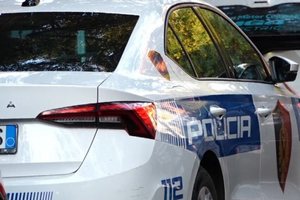
A 38-year-old man was arrested today near the Kamza turnof...

A money changer in Durrës lost 60 thousand euros after bei...
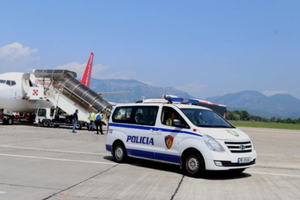
The 6 citizens captured in Dubai, members of criminal grou...
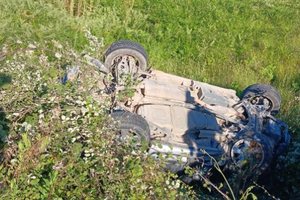
A serious accident occurred on the Kardhiq-Delvinë axis, i...
Today our country will be affected by stable weather condi...

For many children and teenagers, the long summer holidays ...
Albania is facing an unprecedented demographic transition,...
On Thursday, our country will be affected by unstable weat...
On the eve of the EU-Western Balkans summit, Germany and F...

Russian President Vladimir Putin said the war in Ukraine c...
An extraordinary story of survival has been recorded in Ne...
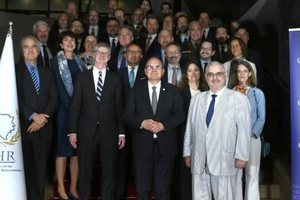
The Peace Implementation Council in Bosnia and Herzegovina...
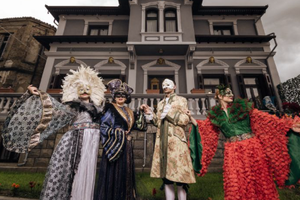
Korça is ready to open the summer season with one of the c...
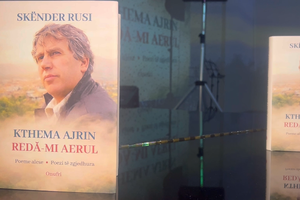
Two years after his passing, the renowned Korçë poet Skënd...
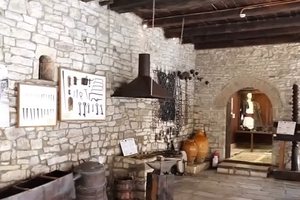
The Ethnographic Museum of Berat has opened its doors to v...
The story of Harilla Bakalli is one of the most chilling t...
Despite years of efforts at regional cooperation and free ...
Albania is the country with the highest level of severe ma...

This Friday, one US dollar is bought for 81.3 lek and sold...
The government aims to transform the country's industrial ...