


Euro "freezes", pound towards parity with the lek/ Exchange rate, July 16, 2025
Today, in the foreign exchange market, one US dollar will ...


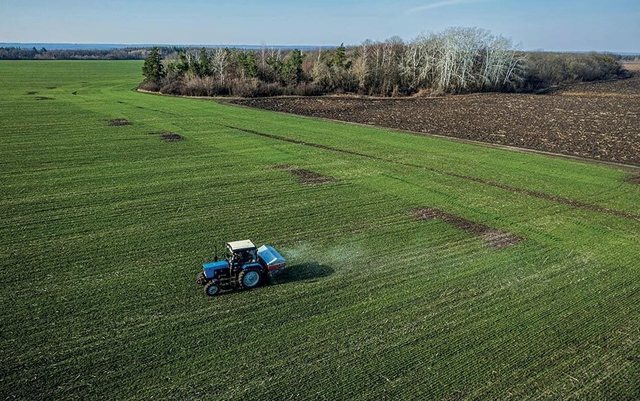
Following the completion of the action to control the invoice-based trading of livestock products, the government is preparing to restore a compensation scheme for farmers through VAT reimbursement at the 10% level.
According to sources for Monitor, a new draft law is ready, which foresees that compensation for farmers will be applied starting in 2026, as part of a broader reform to formalize the agri-food chain and reduce costs for local producers.
So far, there are 100,000 registered farmers nationwide with a NIPT who have the right to sell their products to processors, collectors or supermarkets, without a VAT invoice, but through an autoinvoice that is filled out by the buyer.
The refundable VAT scheme that benefited processors was completely abolished in 2022. After its abolition, where farmers benefited from trading products at a favorable price, the cost of production increased because the VAT paid is no longer credited and becomes part of the cost of the raw material.
Until 2017, the VAT refund for processors was 20%, which means that, for example, for each purchase of milk with a tax invoice from the farmer, the processor could credit this value to the deductible VAT.
This scheme made purchasing even at a high price economically viable for the farmer and ensured a stable profit margin for the industry.
From 2019 to 2022, the scheme changed. VAT on purchases (by farmers) was reduced to 6%. While VAT on sales of dairy products remained at 20%. This created a fiscal imbalance, as the industry paid more on output than it credited on input.
From 2022, the creditable VAT scheme was completely abolished, imposing 0% deductible VAT on milk purchases by farmers.
The Dairy Processing Industry Association proposed that the scheme be harmonized with regional practices, where purchase and sales VAT would be unified at 6% or 9%, to avoid tax inequalities.
The old scheme would be replaced with a fiscally neutral mechanism that does not penalize the processor. This proposal was not accepted by the Ministry of Finance in the 2022 budget.
Instead of VAT refunds, the government applied direct subsidies of up to 10,000 lek per head of cattle/cow to farmers.
But processors at the time stressed that the subsidy scheme would not have a direct effect on reducing the cost of raw materials for the industry. It does not guarantee formalization, because it is not linked to the actual volume of milk sold.
Unlike the region, where subsidies are given per liter of milk produced and delivered, Albania lacks this logic oriented towards formalized production.
The situation with the removal of creditable VAT, high animal feed costs due to land fragmentation and lack of irrigation created a chain of consequences in the sector, significantly reducing the volume of processing and putting the continuity of production capacities at risk, while the market is facing increasingly strong competition from imported finished goods.
Also, due to the cheaper price of selling milk abroad, imports continue to be at high levels, as milk produced by foreign farms is being used, mainly in the summer season, as raw material for domestic processors.
How domestic milk is being replaced by imports
In the period January-April 2024, 6 million liters of milk were imported, according to Customs data. This was the highest amount of milk imported since 2016. For January-April 2025, 5.1 million liters of milk were imported. Compared to the same period last year, imports decreased by 15.4%.
What is the aim of the action?
The launch of the tax authorities' action on July 14 to control the chain of trade in livestock goods from the farmer to the collector and the final consumer caused uncertainty among farmers in the first place and collectors, who began to ask each other for fiscal invoices, while transactions between them are documented with the buyer's auto-invoicing. Tax inspectors also began to ask street vendors for the origin of the goods.
Given the situation, the Tax Administration explained to Monitor that the focus of the action is to strengthen field control over the issuance of invoices for the trade of livestock products, which results in high informality in their trade, especially by large collectors and processors. Through this action, the taxes aim to increase revenues and strengthen the system for traceability of goods.
Despite the launch of the campaign, the billing scheme for the trade of livestock goods from the farmer to the collector via a fiscal invoice of the auto-invoice type, with the aim of subsequently marketing them to the final consumer, did not change. It will continue to remain the same. So, the farmer equipped with a NIPT sells his products to the collector, processor or supermarkets, while the latter are obliged to issue the auto-invoice in SelfCare.
The same scheme will continue to operate for the sale of farmers registered as taxpayers for the category "natural person" or "shpk". In this case, the fiscalized invoice for the sale of goods is issued by him. In this case, the self-invoice does not function.
Also, through a notification, Taxes announced that street vendors have no obligation to issue invoices and maintain tax documentation for goods.
Meanwhile, the Ministry of Agriculture and Rural Development, in its response, announced that food safety checks and the provision of tax invoices are not an action against farmers, but a step to formalize, strengthen and support the agricultural sector./ Monitor Magazine

Today, in the foreign exchange market, one US dollar will ...
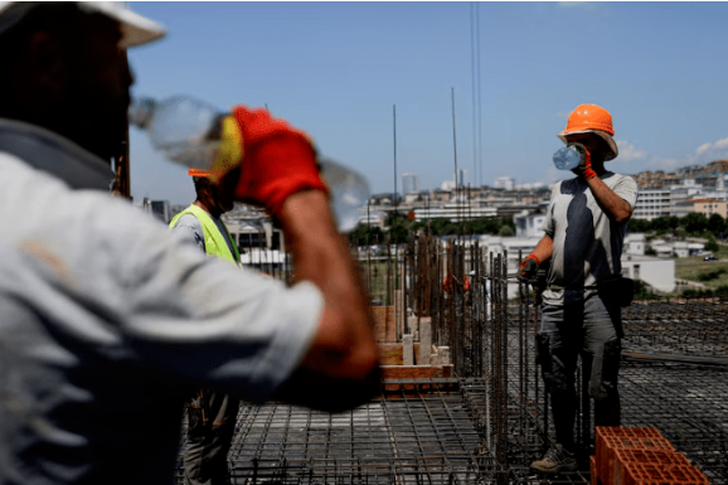
Last year was the warmest year on record both in Europe an...

Today, in the foreign exchange market, one US dollar will ...

Bitcoin's price hit a record high as the popular cryptocur...
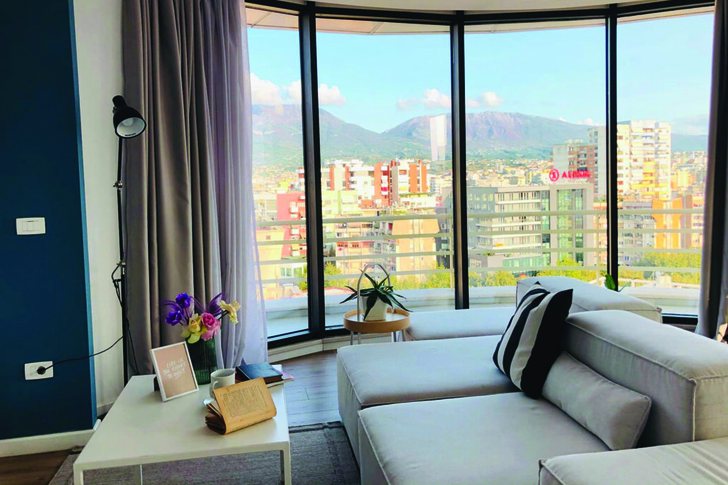
The increasing pressure in the rental market has also been...

While expectations were for tourism to grow by around 15% ...

Today, in the foreign exchange market, one US dollar will ...
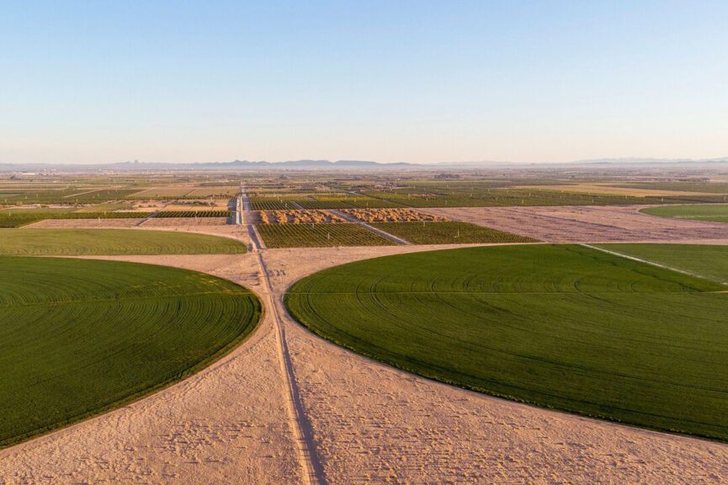
Ever since climate change was widely recognized as a probl...

Today, in the foreign exchange market, one US dollar will ...

Tax authorities have started collecting VAT from large com...
Today, in the foreign exchange market, one US dollar will ...
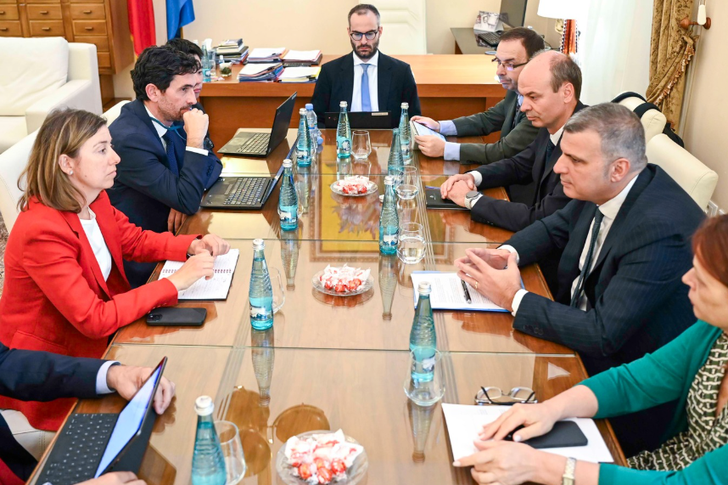
The Governor of the Bank of Albania, Gent Sejko, held a me...
The regulation that paves the way for the recognition of p...

Today, in the foreign exchange market, one US dollar w...
Today, in the foreign exchange market, one US dollar will ...
Today, in the foreign exchange market, one US dollar will ...

The new electronic register that municipalities will set u...
The mid-year amendments to the 2025 budget that were appro...

It takes an average Albanian family 16.3 years of work to ...

Today, in the foreign exchange market, one US dollar will ...

The murder of officer Enea Mekolli in the line of duty has...
The next case broadcast on the show "Stop", this Thursday,...
The case published this Thursday, June 4, on the show "Sto...

The protests of recent days related to the situation in Zv...

The Special Board of Appeal (KPA) decided this Monday ...

The KPA vetting decided this Thursday to dismiss the p...

Suela Salavaçi, a prosecutor in the Prosecutor's Offic...

The Special Board of Appeal reinstated the prosecutor ...

A money changer in Durrës lost 60 thousand euros after bei...
The 6 citizens captured in Dubai, members of criminal grou...
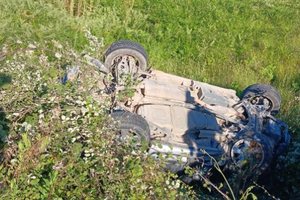
A serious accident occurred on the Kardhiq-Delvinë axis, i...

Authorities have conducted a large-scale anti-drug operati...
Today our country will be affected by stable weather condi...

For many children and teenagers, the long summer holidays ...
Albania is facing an unprecedented demographic transition,...

On Thursday, our country will be affected by unstable weat...
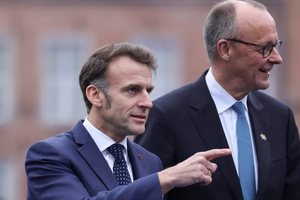
On the eve of the EU-Western Balkans summit, Germany and F...

Russian President Vladimir Putin said the war in Ukraine c...

An extraordinary story of survival has been recorded in Ne...
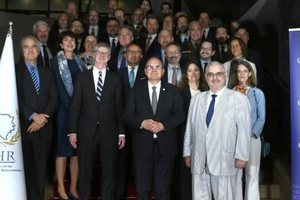
The Peace Implementation Council in Bosnia and Herzegovina...

Korça is ready to open the summer season with one of the c...
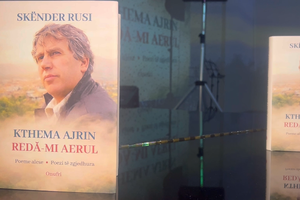
Two years after his passing, the renowned Korçë poet Skënd...
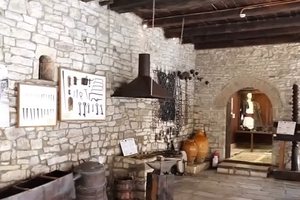
The Ethnographic Museum of Berat has opened its doors to v...
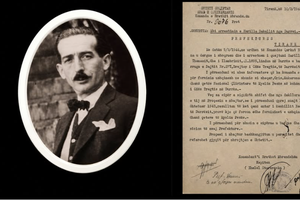
The story of Harilla Bakalli is one of the most chilling t...

Despite years of efforts at regional cooperation and free ...
Albania is the country with the highest level of severe ma...
This Friday, one US dollar is bought for 81.3 lek and sold...
The government aims to transform the country's industrial ...