


Hungary's parliament votes to remove president from office
Hungary's parliament has approved the dismissal of Preside...

Hungary's parliament has approved the dismissal of Preside...

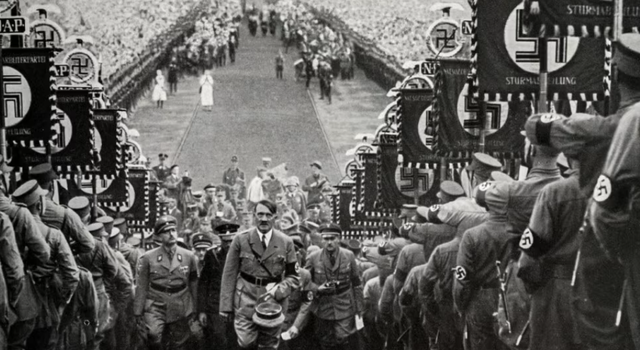
Operation "Valkyrie" (bomb attack of July 20, 1944) was the best known of the attempts to eliminate "Hitler", but not the only one. According to researchers, between 1933 and 1945, Hitler escaped death more than 40 times, often by a narrow margin or due to a series of favorable coincidences.
But was it just luck?
Hitler took great care of his personal security, one of the first actions he took in power was to raise a bodyguard group, in November 1933 the 1st Division Leibstandarte SS Adolf Hitler was born. At all times of the day he was accompanied by at least eight of these most loyal men, the only men authorized to bear arms in his presence.
But the obsession with personal security grew stronger as the war began to take a turn for the worse after 1942. An entire army armored division was raised to protect him, and he himself demanded that his meals be pre-tasted. For this function, several young women who went down in history as "Hitler's tasters" were registered.
The choice fell on women also because men were needed at the front. The Nazi leader, precisely to avoid ambushes, gave little information about his movements and often changed plans at the last minute. Therefore, anyone who wanted to make an attempt to kill him had to have, in addition to courage, a good amount of time, knowing that they would most likely have to change their plans quickly. Above all, he had to consider the possibility of failure and being killed by the bodyguards.
Perhaps for these reasons many of the plans to kill him failed or were abandoned before they could be put into action.
In 1934, for example, a plan to shoot the Nazi leader was conceived by the writer Edgar Julius Jung, who had the opportunity to approach the dictator as a ghostwriter who edited the speeches of the former chancellor and then the Nazi leader Franz von Papen .
Jung was part of a nationalist and conservative group hostile to Nazism, but did not act, due to a mixture of uncertainty and fear of Nazi reactions to the assassination of their leader. However, the writer could not hide his hostility towards the regime and was executed anyway, that same year.
At one point there were some members of the army who showed dislike for the National Socialist leader. A first signal in this sense was the so-called "Oster plot", named after General Hans Paul Oster, who led a group of opponents belonging to the high ranks of the Wehrmacht.
Their plan called for his capture in the Reich Chancellery premises by an assault team and his immediate shooting. It was never implemented because Hitler had, in September 1938, reached an agreement with British Prime Minister Chamberlain which seemed to avoid the war so feared by Oster's group.
Also in 1938, Swiss student Maurice Bavaud managed to gain a good position to shoot Hitler as he paraded through Munich during a commemoration. However, at the right moment, the student's view was blocked by the outstretched arms of the participants in the Nazi salute, and he could not kill him.
Fate saved the dictator a year later. A carpenter named Georg Elser planted 50 kilograms of explosives in the Munich beer hall where Hitler had attempted a coup in 1923.
The bomb missed its target for 13 minutes and killed 8 people. Elser was captured and tortured by the Gestapo to name his accomplices. The Nazis suspected that the British were behind the attack, but Elser always maintained that he had acted alone. He died in April 1945 in Dachau, where he had been a prisoner, shortly before the liberation of the concentration camp.
Something similar happened in 1940: the planned military parade on the Champs-Élysées in Paris, during which members of the army were supposed to liquidate it, was canceled at the last minute.
And again in March 1943 Hitler visited the troops involved in Operation Barbarossa in Smolensk (Russia). Here some officers had planned tyrannicide. After various hesitations and fear of the reaction of the SS, which was protecting Hitler, the conspirators decided to give one of the men in the escort a box with a bottle of liquor.
A time bomb was placed inside the package, which was supposed to explode during the flight to Berlin. However, the package with the bottle was placed in the hold of the plane and due to the cold the detonator did not work.
Things were no different in March 1943, when General Rudolf-Christoph Freiherr von Gersdorff decided to detonate a bomb on the premises where Hitler was to see an exhibition of weapons stolen from the Soviets. But he was there for only 10 minutes, too short for the timer set by the general, who, to avoid a needless massacre, deactivated the bomb.
The decision to escort instead saved the Führer when in 1944 Eberhard von Breitenbuch (the officer behind Marshal Ernst Busch) planned to shoot him during a public outing.
The officer had a pistol hidden in his trousers, but Hitler's guards allowed only the highest ranks of the army to approach the leader, and von Breitenbuch was not among them./ Adapted by CNA

If today it is one of the most famous areas for tourists a...
The last decade and a half has seen unrest across the glob...
August 23 is "Black Ribbon Day", the official European Day...

It's been a few years since Artificial Intelligence is...
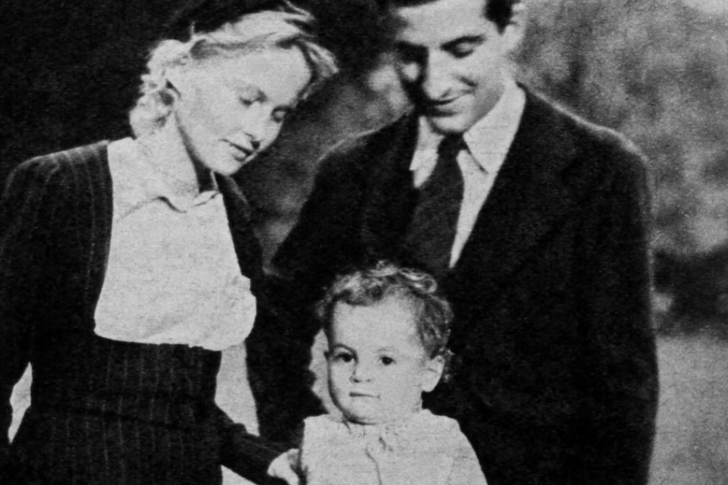
Tuscan physicist Bruno Pontecorvo (1913-1993), born into a...

Sweden has issued licenses to kill 20% of its brown bear ...
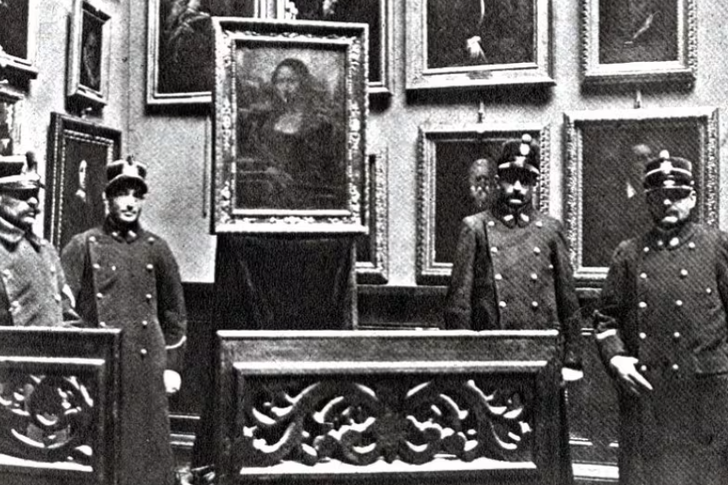
At seven o'clock in the morning on August 21, 1911, the da...
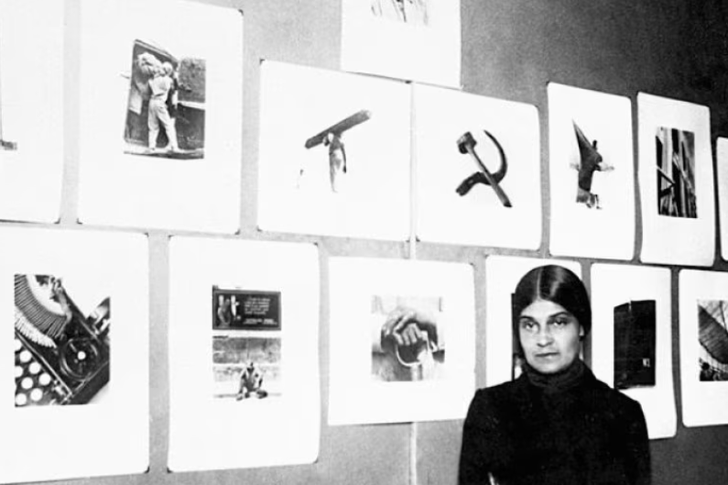
Tina Modotti, born in Friuli in 1896, is known as: actress...

During the 16th century in medieval Japan, wealthy married...
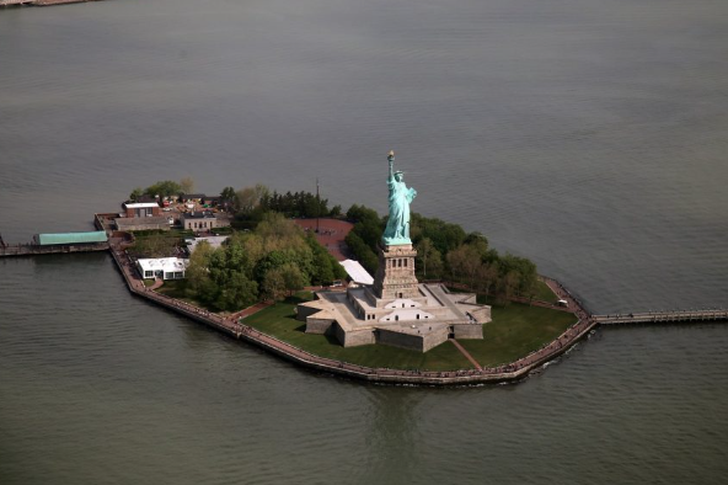
After being envisioned as a towering beacon to guide s...

In the mid-1300s, humanity faced one of its darkest chapte...

This summer the media has been filled with alarming re...

Flooding from heavy rain near Lake Pátzcuaro has caused th...

We all played the broken phone game in our childhood, ...
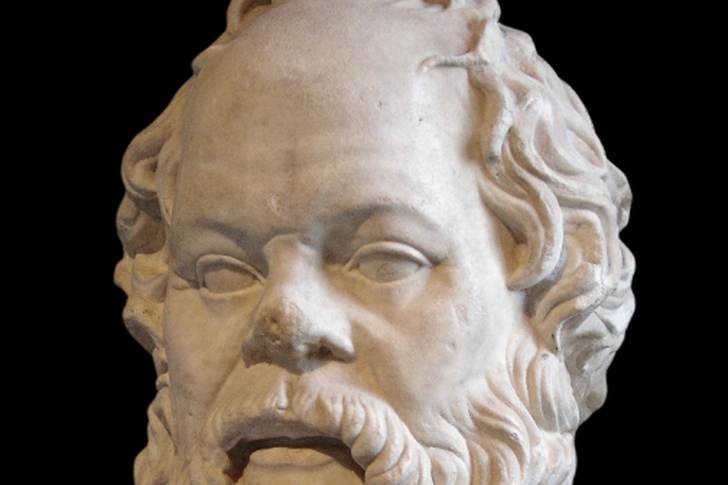
Socrates, the famous philosopher of ancient Greece, had a ...

To transport the stone blocks needed to build Djoser's pyr...

Whether you're watching from afar, cheering, competing...
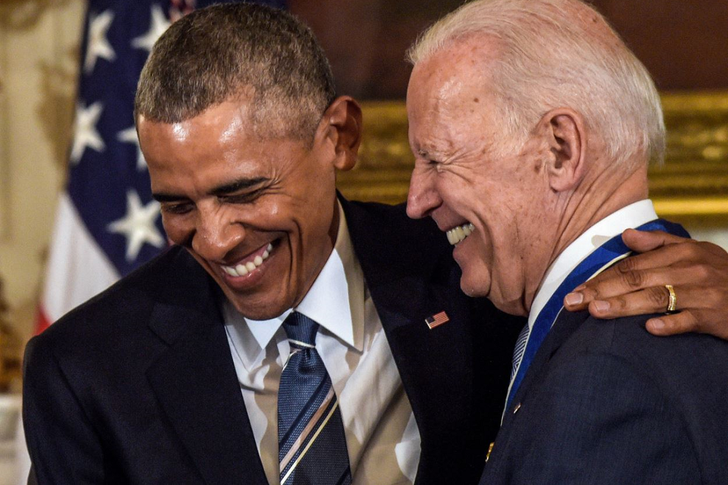
In the event that plan A is to 'revive' Joe Biden, and...
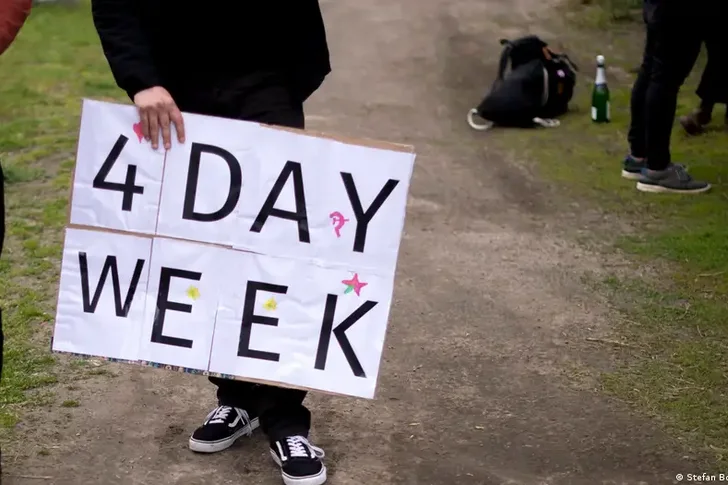
A carpet cleaning company, a construction company, a m...

Who are the main favorites in this European Championship? ...

On the morning of July 7, 2026, the Ministry of Culture ur...

After the disclosure of the portfolio of properties an...

For 6 months now, CNA has been sending several letters to ...
The word "fatherland" with properties is not enough. The m...

The Special Board of Appeal (KPA) decided this Monday ...

The KPA vetting decided this Thursday to dismiss the p...

Suela Salavaçi, a prosecutor in the Prosecutor's Offic...

The Special Board of Appeal reinstated the prosecutor ...
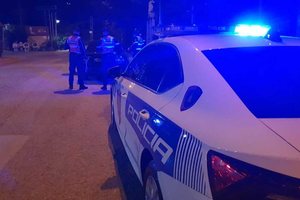
A knife attack occurred this evening in Fushë-Krujë. Acco...

A 44-year-old man in Saranda has been seriously injured af...

Spanish police have acted on an Albanian-Spanish criminal ...

New details have been revealed regarding the murder of Egl...

Today our country will be affected by stable weather condi...

In Albania, in 2024, 8,911 beds were available in public h...

Albania was included in the band of above-normal temperatu...

Today, our country will be affected by mainly stable weath...

Hungary's parliament has approved the dismissal of Preside...
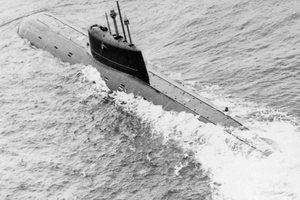
The Soviet nuclear submarine Komsomolets, which sank in th...
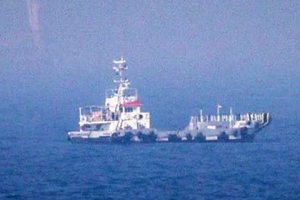
The United Arab Emirates has strongly condemned the attack...

The death toll from two powerful earthquakes that struck V...

The ninth edition of "MIK Festival" kicked off with one of...

A historic evening for Albanian culture was marked in the ...

When I turned 10, another building was built in front of o...
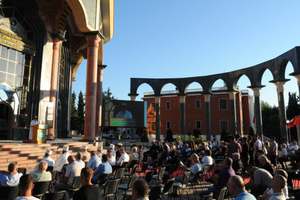
A special scientific conference was held by the World Bekt...
In addition to the effect on the decline in demand for rea...

This Tuesday, one US dollar is bought for 81.5 lek and sol...

The tax administration has announced the completion of the...

Albania has lost almost a quarter of its population since ...