


The master of humor, Todi Llupi, passes away
Master of humor Todi Llupi has passed away at the age of 7...

Master of humor Todi Llupi has passed away at the age of 7...

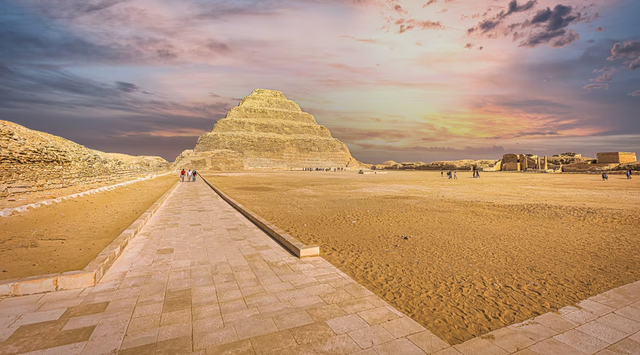
To transport the stone blocks needed to build Djoser's pyramid, the Egyptians developed a complex hydraulic system. This is the new hypothesis of engineers and hydrologists.
It's a question that has plagued archaeologists and researchers for years, and has been attempted several times recently: how were the pyramids built?
It seems unlikely that the giant stones were transported using only ramps, ropes and levers. Now a study published in Plos One hypothesizes that Djoser's pyramid was built using a hydraulic lifting system that allowed the stone blocks to be moved effortlessly.
The researchers decided to focus on the funerary complex, including the Step Pyramid of Djoser, built by the eponymous Third Dynasty pharaoh (2700-2620 BC) about a hundred years before that of Giza, because they wanted to understand how the techniques of building the era had evolved.
Combining data from satellite images and a hundred years of archaeological research, experts have made the first discovery about Gisr el-Mudir, a rectangular stone enclosure to the west of the complex whose function was previously unknown.
Satellite images show how the fence intersects perfectly with the dry river bed of what was then a seasonal stream, the Abusir, which flowed from the mountains at Saqqara, entering the Nile.
The researchers' hypothesis is that Gisr el-Mudir was a dam (or greenhouse), a type of dam, stream, used to control the flow of water and catch heavy sediments such as pieces of trees or rocks that could damage buildings in the stream the bottom.
Abusir waters purified in this way probably flowed into a pit 27 meters deep and 410 meters long, which then divided into at least three underground "compartments" and acted as a water purification system, eliminating sediments from the waters of the stream.
One of these compartments would have been connected to a seven-kilometer network of pipes that branched beneath the complex: one pipe led directly to a 28-meter-deep vertical well that emerged in the center of Djoser's pyramid. At the bottom of the well, archaeologists found a granite chest, with a hole and a large stone blocking the opening.
It would be a kind of hydraulic elevator, the water filled the well, allowing the raising of a floating platform (probably made of wood and therefore decomposed over millennia) which could hold up to a hundred tons of material at a time; to lower the platform, it was enough to empty the well. Since it is a seasonal stream, it is likely that the elevator has operated "in fits and starts" during the twenty years devoted to the construction of the pyramid.
The research team's next goal is to understand whether water was also used to help build later pyramids, particularly that of Cheops, or whether increasingly arid climate conditions make this method impractical./ Adapted by CNA


Whether you're watching from afar, cheering, competing...

In the event that plan A is to 'revive' Joe Biden, and...

A carpet cleaning company, a construction company, a m...

Who are the main favorites in this European Championship? ...

"Heydar Aljevi did not care that I was Armenian. What matt...

The successful film of director Christopher Nolan, "Oppenh...

Worry about layoffs, not burnout*. Worrying about being o...

Now that President Joe Biden and former President Donald T...
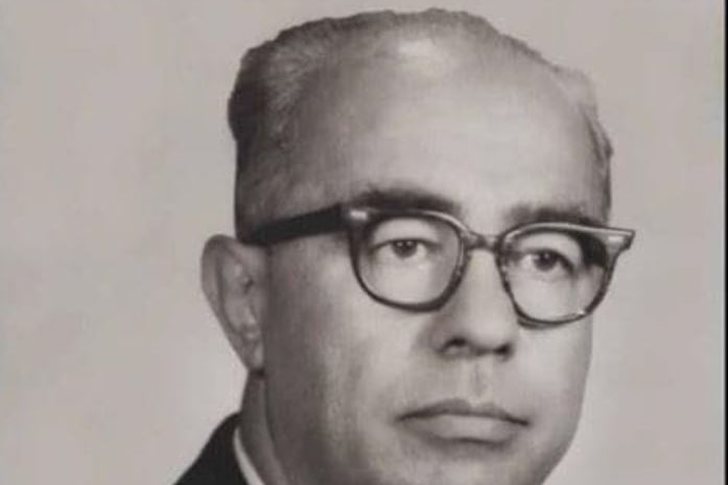
Communism is an unnatural philosophy of life, against ...
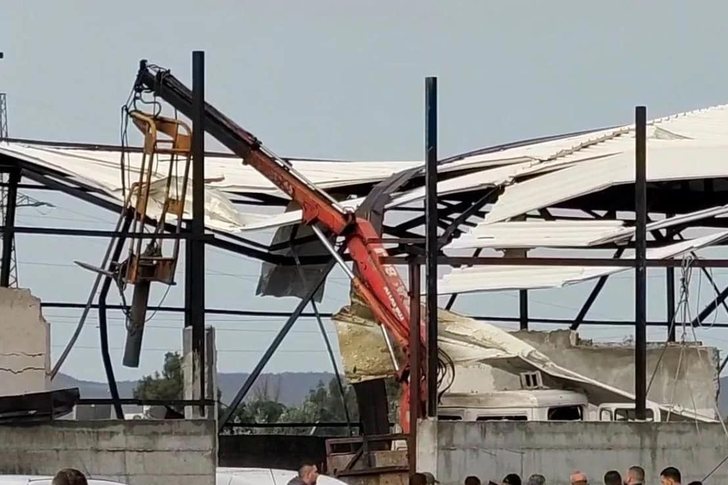
To work side by side with death! Years ago, in England, t...

The EU's goal was quite ambitious. 1 million artillery she...
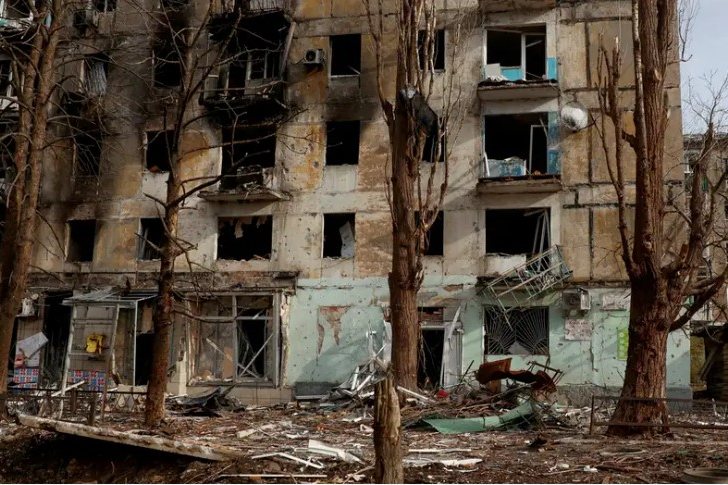
By 2026, Ukraine alone will lose the equivalent of about $...

It was a warm handshake between two statesmen, conducted i...

They say one thing and they do another. This expression is...

After World War II and Nazi Germany's murder of 6 million ...

"With courage and faith", this is the motto that accompani...

Everyone knows Hitler, Stalin, Mao and Pol Pot. But th...

Montesquieu, "De l'esprit des lois", (On the Spirit of Law...
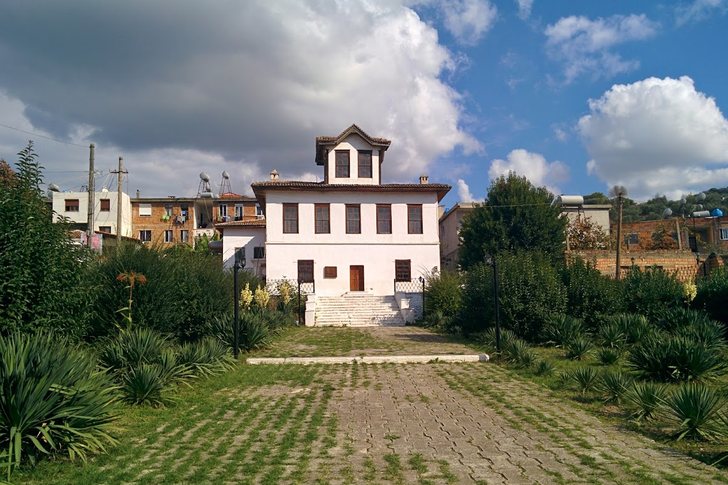
Sot është përvjetori i 104-rt i çeljes së Kongresit të...

Is it true that Big Brother is followed so much all ov...

On the morning of July 7, 2026, the Ministry of Culture ur...

After the disclosure of the portfolio of properties an...

For 6 months now, CNA has been sending several letters to ...
The word "fatherland" with properties is not enough. The m...

The Special Board of Appeal (KPA) decided this Monday ...

The KPA vetting decided this Thursday to dismiss the p...

Suela Salavaçi, a prosecutor in the Prosecutor's Offic...

The Special Board of Appeal reinstated the prosecutor ...

A knife attack occurred this evening in Fushë-Krujë. Acco...

A 44-year-old man in Saranda has been seriously injured af...

Spanish police have acted on an Albanian-Spanish criminal ...

New details have been revealed regarding the murder of Egl...

Renowned doctor Shkëlqim Balili shared some important heal...

Today our country will be affected by stable weather condi...

In Albania, in 2024, 8,911 beds were available in public h...

Albania was included in the band of above-normal temperatu...

A powerful heatwave has swept across Italy and other p...

Property owners in Europe face a range of tax obligations,...

Bhutan, Ghana and Nigeria charge visitors more for tourist...

Hungary's parliament has approved the dismissal of Preside...

Master of humor Todi Llupi has passed away at the age of 7...

The ninth edition of "MIK Festival" kicked off with one of...

A historic evening for Albanian culture was marked in the ...

When I turned 10, another building was built in front of o...

In addition to the effect on the decline in demand for rea...

This Tuesday, one US dollar is bought for 81.5 lek and sol...

The tax administration has announced the completion of the...

Albania has lost almost a quarter of its population since ...