


Scientists discover the right place to store milk in the refrigerator
Experts warn that we are reducing the shelf life of mi...


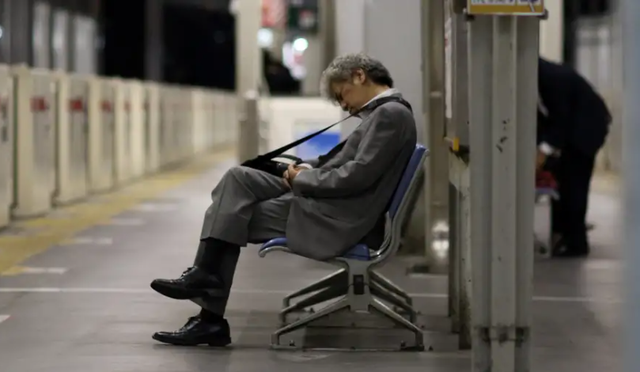
Japan's Ministry of Health and Welfare has called on the public to sleep longer and better, after two recent reports determined that Japanese people are not getting enough sleep.
And experts point out that lack of sleep is the main cause of many illnesses, mental health complaints and poor productivity in the workplace.
The authorities published the list of guidelines for the right amount of sleep in early October (2023) and will issue a full report by the end of the year. The move was prompted in part by a 2021 study by the Organization for Economic Co-operation and Development that showed Japanese people sleep an average of seven hours and 22 minutes a night. This was the least amount of sleep of the 33 nations included in the study.
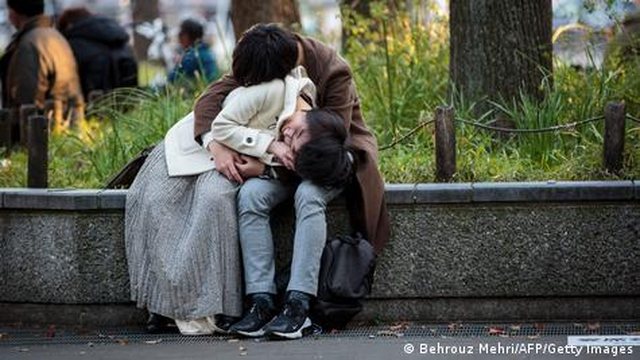
In Japan, 37.5% of men and 40.6% of women sleep less than six hours a night on average.
A separate report showed even more alarming results, researchers from the National University of Singapore and Finnish health technology company Oura Health Oy determined that the Japanese average only 6.1 hours of sleep per night, less than test subjects from any of the other 34 countries.
The Japanese Ministry of Health is now recommending that adults get a minimum of six hours, middle and junior high school children get eight to 10 hours, and elementary school children stay in bed for nine to 12 hours. hour. Children between the ages of three and five need 10 to 13 hours of sleep, the ministry said, while infants under the age of two should get 11 to 14 hours.
The ministry's recommendations are a step in the right direction, according to Dr Masashi Yanagisawa, director of the International Institute for Integrative Sleep Medicine at the University of Tsukuba. However, the guidelines did not identify the cause of the lack of sleep in most Japanese people or propose any medicine to help people sleep longer and better.
"There has been speculation as to why people in Japan sleep less, but there is no definitive, scientific answer," he told DW. "My theory is that it has to do with Japan's fundamental values ??and work ethic, perhaps best summed up in the phrase, "time is too valuable to spend sleeping."
Japanese began to spend more time working in the 1950s, when the economy was growing rapidly and the nation was pulling itself together to rebuild after the devastating years of war. Yanagisawa describes the period as "a state of national mania" as people worked hard and were well rewarded.
The flip side of this obsession with work, however, was that people slept less. And this was and still is harmful to their health.
"There are clear links between lack of sleep and a greater risk of depression, cardiovascular disease, some types of cancer, damage to the immune system and a variety of infections," Yanagisawa said. "And it can also lead to an inability to control emotions and moods, meaning people become angry, irritable, stressed and unable to control themselves."
Ironically, studies show that less sleep is also affecting people's skills in the workplace, with tired employees being less efficient and making more mistakes, causing companies problems and financial losses.
"I think the government has a right to be concerned about this problem, because I am also concerned," Yanagisawa said.
"In my opinion, a fundamental change in people's mentality is absolutely necessary," he said. "People have to set aside eight hours every day for sleep as a core time that cannot be touched. Then they have to arrange everything else around it: work, family, pleasures and entertainment."
The sleep expert says he's encouraged by the growing trend of workplace napping, or "inemuri," in Japan, which allows employees to nap in the office to recharge their batteries for the rest of the workday.
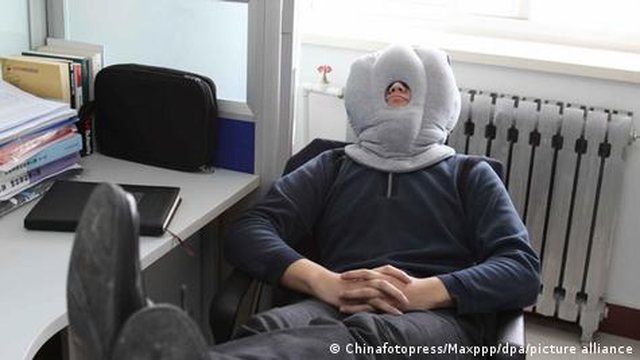
Building on this trend, a number of Japanese companies are introducing products designed to facilitate perfect sleep.
In August, Hokkaido-based Koyoju Plywood Corp installed two sleeping prototypes, called Giraffenap, in a cafe in Tokyo's Harajuku district. Giraffenaps have pillows and platforms designed to ergonomically support a person's head, bottom, legs and feet for a 20-minute nap.
Separately, an Osaka-based company called Atex recently developed the "Gogo no Makura," which translates as "afternoon pillow" and consists of a padded headrest with a hole in the center. Users are expected to place the pillow on their desks and rest their head on the pillow to sleep.
"Lack of sleep is a very serious problem for Japanese people, and now it is becoming more and more acceptable to take a short nap at the office," said Michihiro Fukano, the company's director.
The company is also happy to let its employees nap on the job while using their product, Fukano said but noted that he doesn't use an "afternoon pillow" himself.
"I'm lucky. "I never have a problem with sleeping and I tend to sleep a lot, so I can go through the day without sleep"./ DW

Experts warn that we are reducing the shelf life of mi...

Pothuajse çdo vend në këtë botë, nga qyteti më i madh ...

A tricky math question popping up online has people scramb...

This seemingly simple question has been extensively st...
In common parlance there is a very widespread tendency to ...
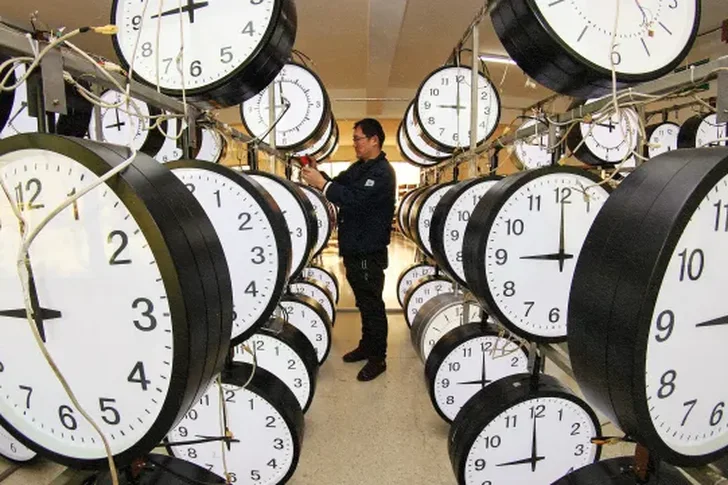
My 3 year old doesn't understand time. And I am not talkin...
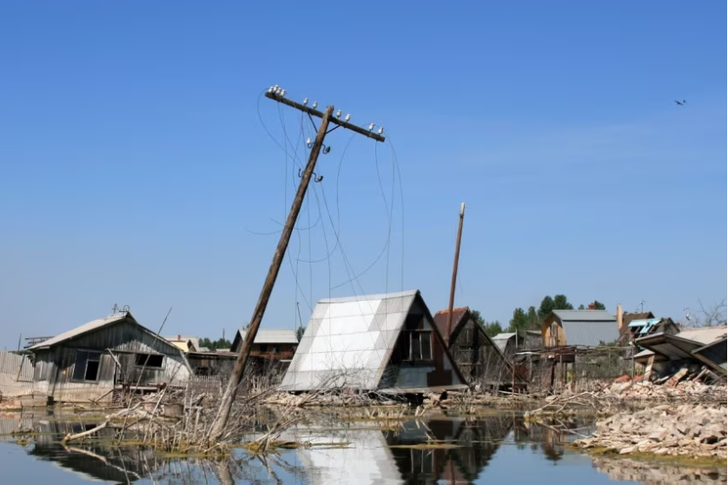
Recently, we have started to use the term "century floods"...

We all know the cartoon character of Shkrek, who is quite ...

How reliable is your memory? Do you remember what you were...

In 1899, Charles H. Duell, the commissioner of the United ...

Elephants, large mammals that live mainly in sub-Saharan A...

Americans call them "beer goggles". It's a term that r...

Duke nisur nga viti 2024, "Changi", një aeroport i Singapo...

In his book "DisConnected", Steve Taylor talks about how n...
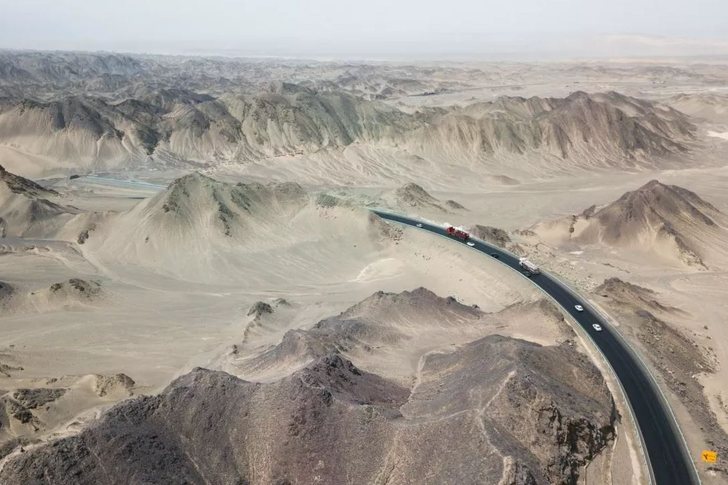
The Karakoram Highway is the world's highest internati...

A rare event has been recorded in India, where a baby was ...
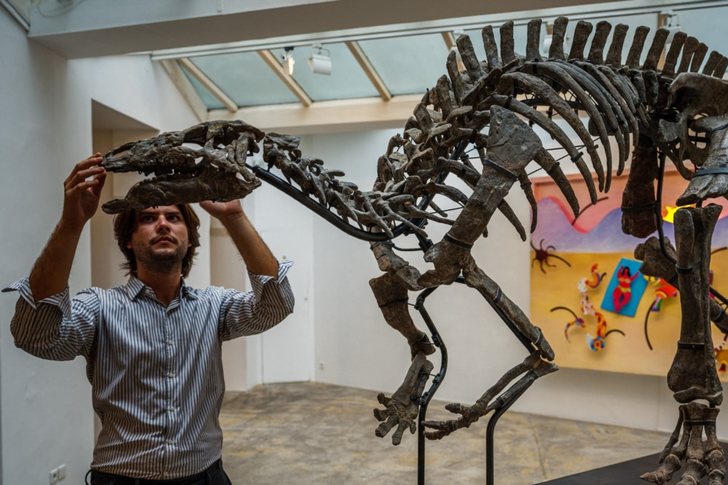
A nearly complete dinosaur skeleton will be sold at an auc...
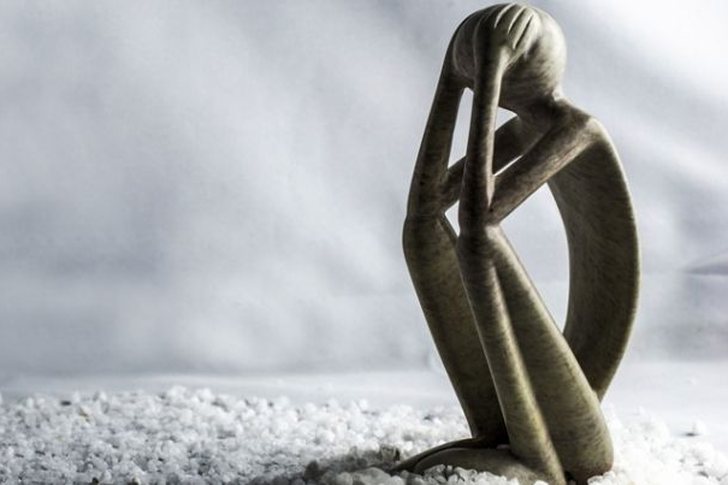
Many people with depression struggle to keep themselves bu...

The red fire ant, one of the world's most "invasive" i...
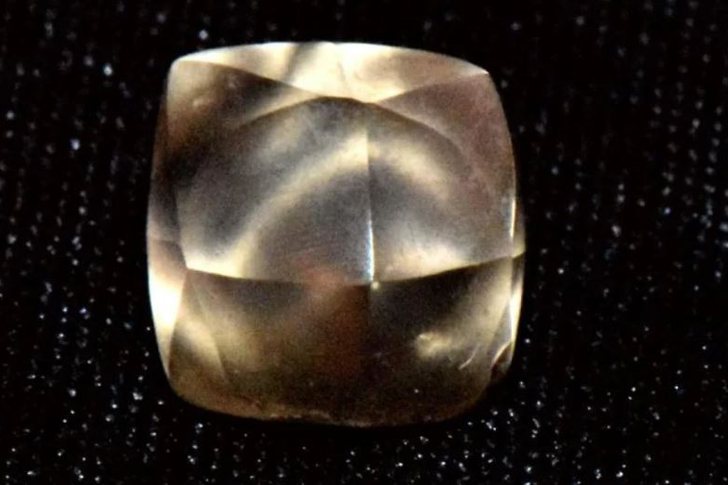
A 7-year-old girl has received the most precious gift for ...

CNA has launched another investigation that could lead to ...

Irfan Hysenbelliu is a businessman that we call "Irfan the...

In March 2026, CNA launched another investigation centered...
The arrested mayor of Tirana, Erion Veliaj, with 13 charge...

The Special Board of Appeal (KPA) decided this Monday ...

The KPA vetting decided this Thursday to dismiss the p...

Suela Salavaçi, a prosecutor in the Prosecutor's Offic...

The Special Board of Appeal reinstated the prosecutor ...

Citizen MH, 61, a fisherman, was found dead near the islan...

Another phase of the international operation, codenamed "T...

Police have arrested a 34-year-old woman at Rinas Airport ...

A serious accident has occurred on the Lezhë-Shëngjin axis...

Over 18,000 foreign citizens from 140 countries have appli...
This Wednesday, our country will be under the influence of...

All of Southern Europe will face changing weather conditio...

Albania was hit by temperatures significantly higher than ...

Prime Minister Andy Burnham has announced that most bus fa...
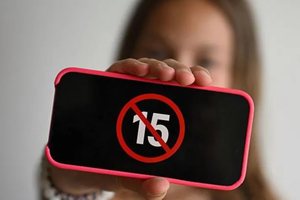
France's parliament has passed a law to ban social media f...

US Secretary of State Marco Rubio arrived in Manila on Jul...

In the space of a few days, Ukrainian President Volodymyr ...

At a time when industrial products are increasingly taking...

Trust among people is not just a three-syllable word. It c...

Master of humor Todi Llupi has passed away at the age of 7...

The ninth edition of "MIK Festival" kicked off with one of...

Businesses will no longer be required to simply register t...

Despite economic growth and income in recent years, Albani...

This Wednesday, one US dollar is bought for 81.4 lek and s...

Construction company licenses will have a validity period ...