

He cut short his visit to the US/Here's how President Vučić's health condition appears
News of Serbian President Aleksandar Vučić's hospitalizati...


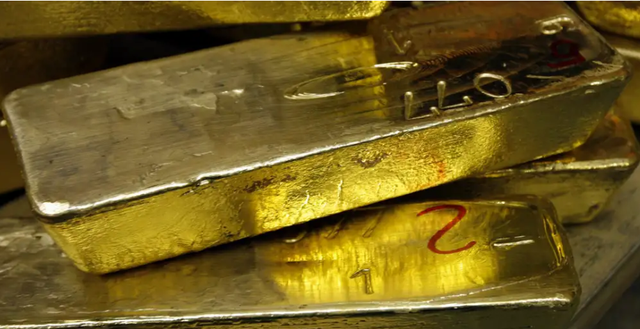
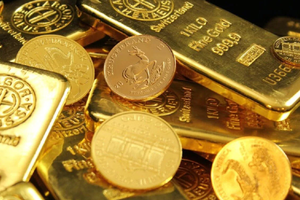
Almost half of Germany's gold reserves are still stored in New York and London. Why is that? And why doesn't the Bundesbank bring German gold home?
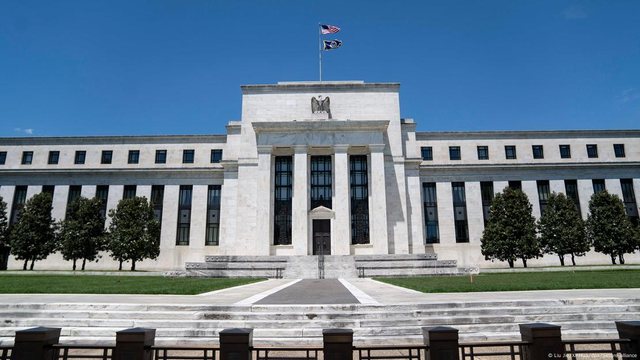
In times of cooling relations between Washington and Berlin, it may come as a surprise that more than a third of Germany's gold reserves are still held by the US Federal Reserve. There have been increasing calls recently for these reserves to be returned to Germany. "Bring our gold home," Michael Jäger, president of the European Taxpayers' Association, demanded on ZDF. Such demands have gained momentum following US President Donald Trump's repeated attacks on Federal Reserve Chairman Jerome Powell, with which he openly questions the independence of the US central banking system.
Indeed, Germany's gold reserves abroad have long been a controversial issue and are surrounded by a number of myths. The Deutsche Bundesbank has also played a role here. Until 2013, it published the total amount of reserves every year, but was largely silent about how these reserves were distributed internationally. Now, nothing has changed fundamentally: since then, the Federal Bank has strived for transparency.
How big are Germany's gold reserves?
Germany has the second-largest gold reserves in the world after the United States. At the end of 2024, according to the Bundesbank's annual report, they stood at 3,352 tons, corresponding to a record value of 270.58 billion euros. Of these, 1,710 tons, or about 51 percent, are stored in an undisclosed location in Frankfurt am Main. If we take into account the strong rise in the price of gold for a good quarter so far this year, the net value of the German gold market currently corresponds to around 340 billion euros.
How much German gold is still stored abroad?
1,236 tons of gold, or almost 37 percent of Germany's reserves, are stored in the vaults of the Federal Reserve Bank in New York. The remaining 409 tons, roughly 12.2 percent, are held by the Bank of England in London. Between 2013 and 2017, the Bundesbank reduced its holdings abroad. A total of 300 tons were moved from New York to Germany. The 374 tons previously stored in Paris were transferred in full. At the time, the Bundesbank justified its new storage concept with the changed geopolitical situation and the freed up vault capacity in Germany.
Is a further transfer of stocks planned?
There are currently no concrete plans for this. However, the Bundesbank refers to its depository concept, according to which: "The main factors for the storage of gold reserves are, above all, the objectives of security and marketability, so that the gold can be sold or exchanged for foreign currencies if necessary. The Deutsche Bundesbank regularly evaluates the depositors of its gold reserves based on these criteria," explains a spokesman. The cost-effectiveness of storage also plays a role. "The New York Fed is and remains an important depository for our gold in this context," said a Bundesbank spokesman. "We have no doubt that with the New York Fed we have a reliable and trustworthy partner for the storage of our gold reserves."
Why is German gold stored abroad?
The reasons lie in the post-World War II world economic order. After the Reichsbank's gold was confiscated by the Allies, the gold reserves of the new Federal Republic were zero. The Federal Republic's gold reserves were not sent to the USA, England or France, but were partly credited to Germany as payments for the high balance sheet surpluses from 1951. This was stipulated at the time by the rules of the then European Payments Union (EPU) and the Bretton Woods international monetary system. However, this gold was not sent to Germany, but mostly remained in the main gold trading centers in the USA, Great Britain and France.
As of 2013, 69 percent of Germany's gold reserves were stored abroad. Security considerations also played a role. During the Cold War, the Soviet Union's sphere of influence extended right up to the border of the Federal Republic of Germany, so it made sense to leave the reserves in storage locations further west.
How are reserves controlled?
While reserves in New York and London can be liquidated more quickly, the question arises as to how Germany can effectively control its reserves abroad. To this end, the Bundesbank sends inspection teams to New York and London "at regular intervals." These inspectors examine a pre-selected sample of gold bars that the foreign central bank physically presents to them. The bar data and purity are compared with German data. "Furthermore, the gold bars are weighed on site and checked for authenticity using our testing equipment," explains a Bundesbank spokesman. "At no point during these inspections were there any obstacles or restrictions on the part of the depository institutions, the New York Fed or the Bank of England."
In any case, access from the US or the UK is hard to imagine. "According to the principles of international law, foreign exchange reserves are protected from interference by the enforcement authorities of the host country," the Bundesbank explains. The Bundesbank publishes the exact holdings every year in its gold bar list, which lists every gold bar on a total of 2,373 pages./ DW

News of Serbian President Aleksandar Vučić's hospitalizati...
The Trump team has prepared a range of options to put econ...

Kosovo Prime Minister Albin Kurti has paid homage to the 1...
A man has been charged in Greece with espionage-related cr...

Ukrainian President Volodymyr Zelensky rejected the three-...
Serbian President Aleksandar Vučić was admitted to the Mil...

Pakistan tested a ballistic missile on May 3, as tensions ...
The session on the constitution of the Kosovo Assembly onc...

An unusual event occurred on the Geneva-Pristina flight. ...
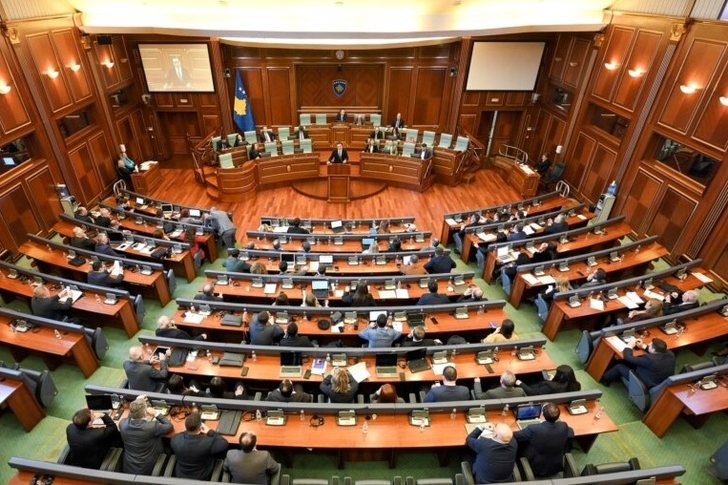
Kosovo will attempt today for the tenth time to elect the ...

Several people were injured in the southwestern German cit...

A magnitude 7.4 earthquake struck 219 km (136 miles) off t...
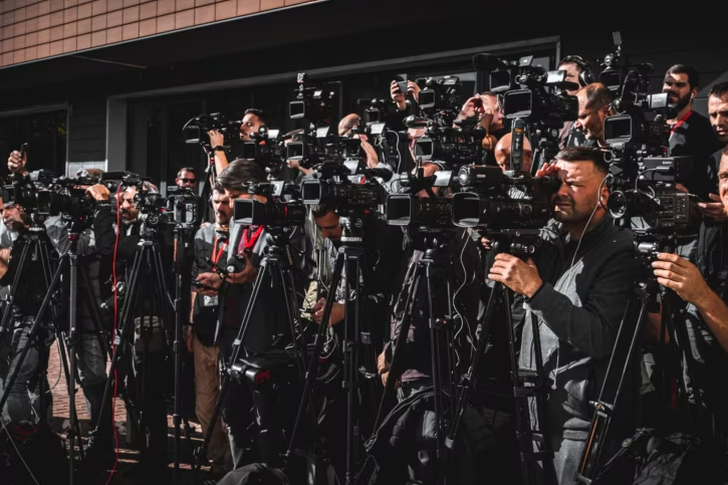
Kosovo has recorded the biggest decline in the last 15 yea...
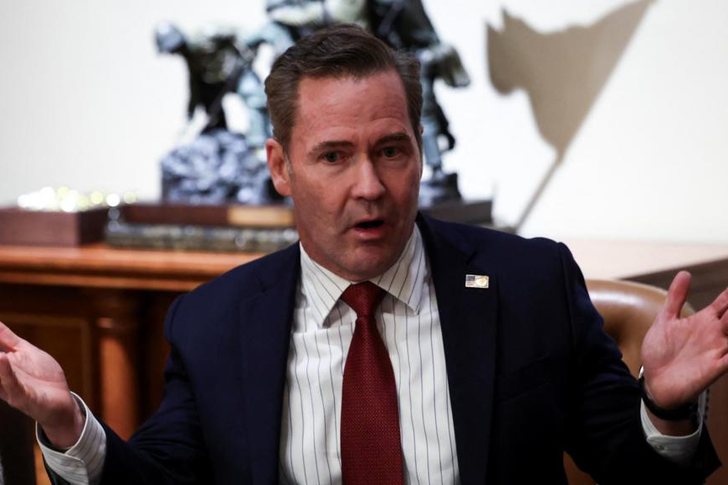
Mike Waltz, who just hours ago left his post as national s...

Thousands of Serbs on May 1st marked the six-month anniver...

Supported by most political forces, the EU institutions ha...
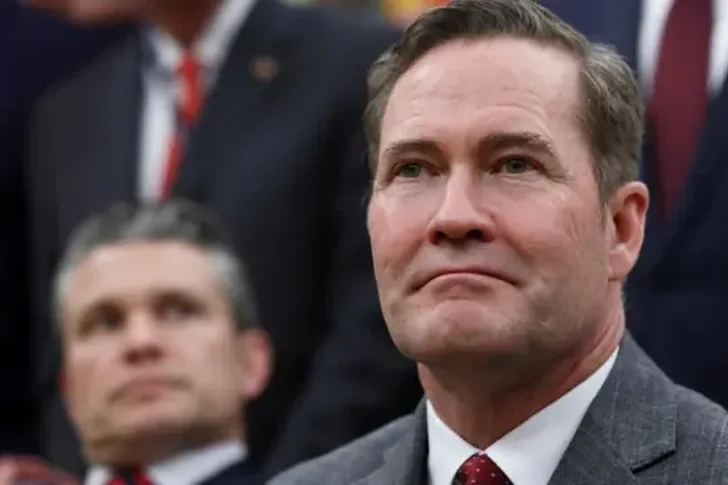
Trump's national security adviser, Mike Waltz, will leave ...
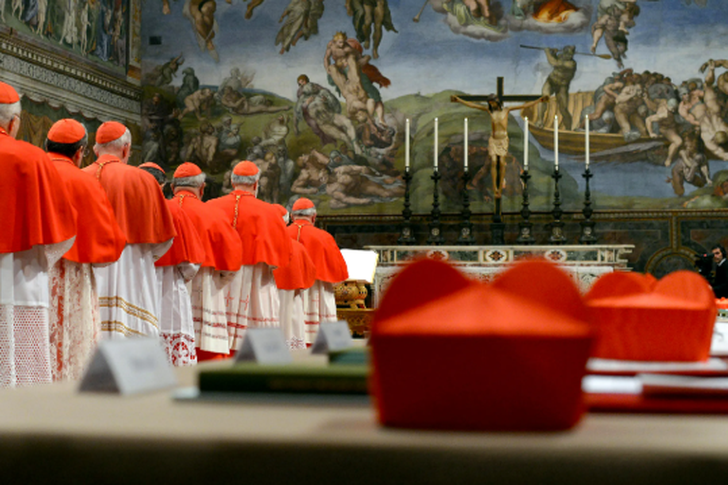
The conclave to elect the new Pope begins on May 7. While ...

The Russian military attacked several regions of Ukraine w...

The United States and Ukraine signed a long-awaited minera...

Dritan Prençi is the SPAK prosecutor who is sleeping on th...

The in-depth investigations that SPAK conducted into Ajola...

SPAK's standards, the way it investigates, how it secures ...

Irfan Hysenbelliu claims to be a big businessman, an hones...

The Special Board of Appeal (KPA) decided this Monday ...

The KPA vetting decided this Thursday to dismiss the p...

Suela Salavaçi, a prosecutor in the Prosecutor's Offic...

The Special Board of Appeal reinstated the prosecutor ...

A 33-year-old Albanian citizen was arrested in Italy after...

One of the perpetrators of the explosion that occurred yes...

A case of heroin trafficking from North Macedonia to Alban...

Details have been revealed from the investigation file for...

On Thursday, our country will be affected by relatively un...

Albania is facing a deep demographic crisis where official...
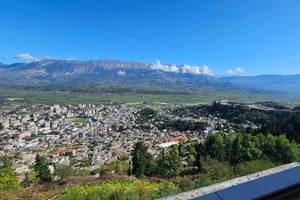
This Wednesday, our country will be affected by relatively...

The UN's World Meteorological Organization now warns that ...

German Chancellor Friedrich Merz (CDU) defended his govern...

US President Donald Trump has made a post on Truth Social ...
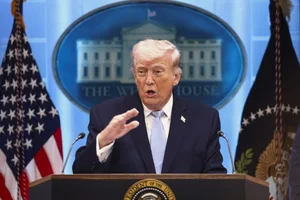
US President Donald Trump announced today that he was canc...

Serbian President Aleksandar Vučić said he was considering...

At the Museum of Fine Arts in Chambéry, France, an exhibit...

Korça has transformed this weekend into the capital of cel...
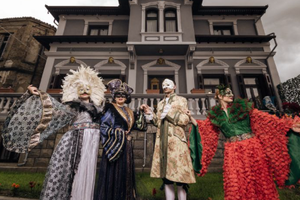
Korça is ready to open the summer season with one of the c...

Two years after his passing, the renowned Korçë poet Skënd...
The price of gold fell to its lowest level in more than si...
Businesses reduced their borrowing abroad last year. Bank ...

Payments and withdrawals in online sports betting will be ...

This Thursday, one US dollar is bought for 81.6 lek and so...