


Exchange rate, December 26, 2025
This Friday, one US dollar will be bought for 81 lek and s...



If EU integration occurs without increasing the quality of the economy and the value of work in Albania, emigration will be further strengthened, the International Monetary Fund announced in the latest review of the Agreement with Albania.
The Fund noted that Albania has the highest percentage of individuals in the Region who declare that they are likely to emigrate in the next decade or who intend to leave within 12 months.
"This high level of willingness to emigrate, compared to other Central and Eastern European countries, suggests a lack of confidence in the country's economic and social prospects, as well as the weakness of the labor market to provide quality and sustainable opportunities," the IMF said.
On the contrary, by increasing the value of labor, our country's integration into the EU would bring about a strong increase in per capita output and a decrease in unemployment, and consequently would mitigate the wave of emigration, the Fund suggests.
Per capita income in Albania is 34% of the EU average, a very deep gap. According to the Fund, in addition to the income gap, Albania exhibits a structural backwardness, which is related not only to the level of investment, but also to the efficiency of the use of labor and capital. This shows that economic growth has been based more on quantitative factors than on real improvements in productivity.
According to the IMF, demographic developments in the country with strong youth emigration and a decline in the labor force are negatively affecting the country's economic prospects.
Albania has experienced a significant decline in its working-age population, reflecting demographic contraction and mass emigration. Compared to some other countries in the region, the population decline in Albania is more pronounced, signaling continued pressure on labor supply and long-term economic growth potential.
Albania has significantly lower output per hour worked than the EU and Western Balkan averages, while informality remains high. Although employment and labor force participation rates have improved in recent years, they do not translate into high productivity, and the proportion of young people neither in work nor in school remains problematic. This suggests that the economy is creating jobs, but not high-value-added jobs.
Higher wages in EU countries are a strong pull factor, as Albania ranks among the lowest in Europe. The largest wage gap is observed among highly educated workers, where wages are over three times higher in advanced EU economies, and are a cause for increased emigration. Surveys show that shortcomings in governance and the rule of law are also among the main drivers of emigration, especially for skilled workers.
IMF staff analyses show that a comprehensive package of reforms that increase productivity is key to accelerating economic growth and mitigating the negative effects of migration. While government efforts to raise wages through repeated minimum wage increases may provide short-term relief, they are not sustainable without corresponding productivity gains. /Monitor

This Friday, one US dollar will be bought for 81 lek and s...

Imports of construction materials decreased in value this ...

The accelerated growth of lending by Albanian banks signal...

This Thursday, one US dollar will be bought for 81.3 lek a...
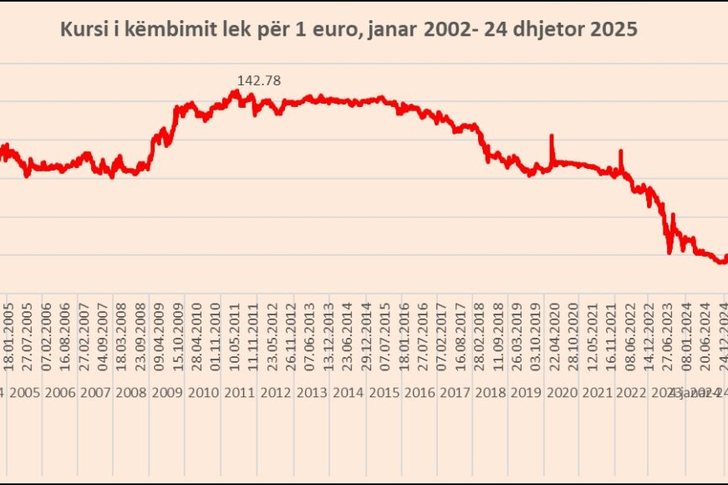
The Euro-Lek exchange rate is showing further downward tre...
The International Monetary Fund has shared new data from t...
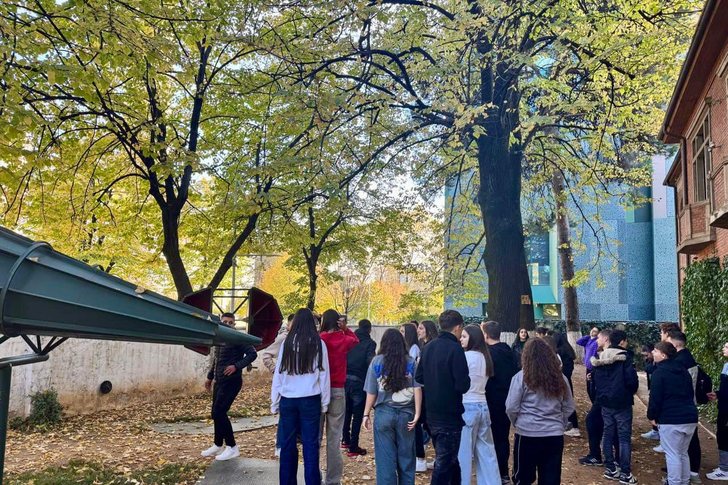
Tourism continued to have a positive performance during No...

Half of salaried employees receive up to 52,000 lek per mo...

This Wednesday, one US dollar will be bought for 81.3 lek ...

The implementation of the law "On the Fiscal Peace Agreeme...

The year 2025 is closing with a declining profitability of...
Businesses connected to 6 kilovolt voltage will have to se...
This Tuesday, one US dollar will be bought for 81.5 lek an...
Albania does not have a preparedness plan to guarantee ene...
Albania does not have a preparedness plan to guarantee ene...
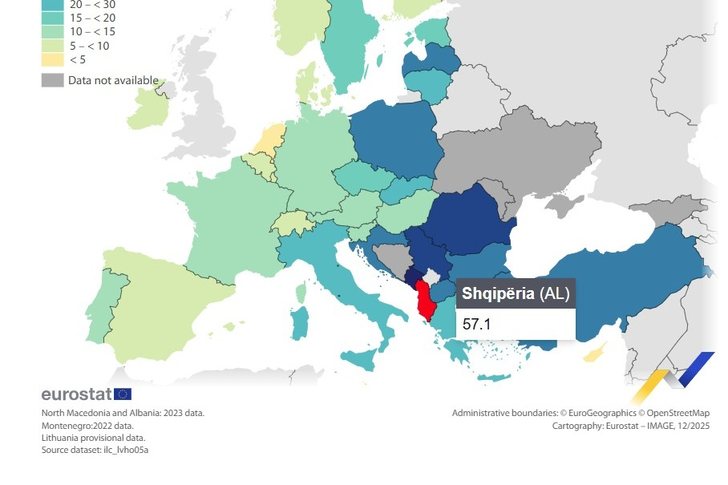
Although Albania holds the record in Europe for the weight...

The Albanian government's borrowing in the domestic financ...

This Monday, one US dollar will be bought for 81.8 lek and...

There are a variety of perspectives on how social media im...
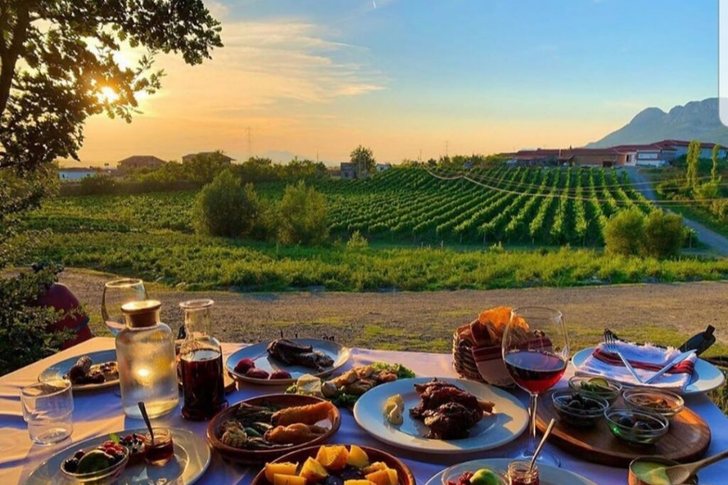
This year, agrotourism showed greater stability than class...

Irfan Hysenbelliu claims to be a big businessman, an hones...

The murder of officer Enea Mekolli in the line of duty has...

The next case broadcast on the show "Stop", this Thursday,...
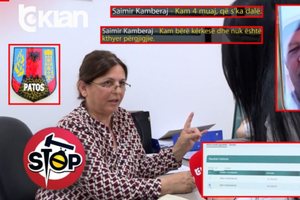
The case published this Thursday, June 4, on the show "Sto...

The Special Board of Appeal (KPA) decided this Monday ...

The KPA vetting decided this Thursday to dismiss the p...

Suela Salavaçi, a prosecutor in the Prosecutor's Offic...

The Special Board of Appeal reinstated the prosecutor ...

A 38-year-old man was arrested today near the Kamza turnof...

A money changer in Durrës lost 60 thousand euros after bei...
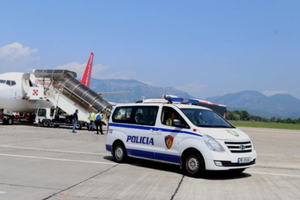
The 6 citizens captured in Dubai, members of criminal grou...
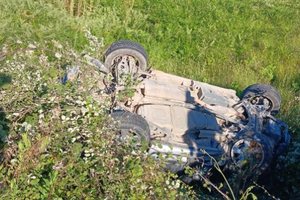
A serious accident occurred on the Kardhiq-Delvinë axis, i...

Today our country will be affected by stable weather condi...

For many children and teenagers, the long summer holidays ...
Albania is facing an unprecedented demographic transition,...

On Thursday, our country will be affected by unstable weat...
On the eve of the EU-Western Balkans summit, Germany and F...

Russian President Vladimir Putin said the war in Ukraine c...
An extraordinary story of survival has been recorded in Ne...
The Peace Implementation Council in Bosnia and Herzegovina...

Korça is ready to open the summer season with one of the c...
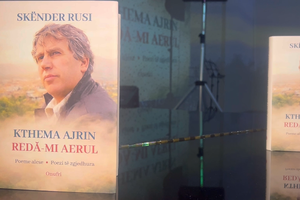
Two years after his passing, the renowned Korçë poet Skënd...
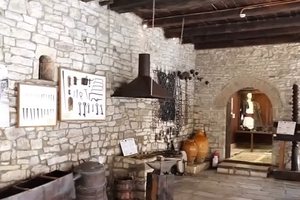
The Ethnographic Museum of Berat has opened its doors to v...
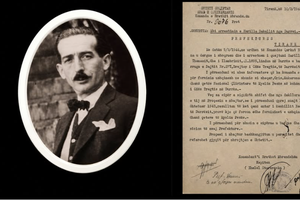
The story of Harilla Bakalli is one of the most chilling t...
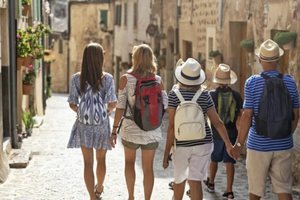
Despite years of efforts at regional cooperation and free ...

Albania is the country with the highest level of severe ma...

This Friday, one US dollar is bought for 81.3 lek and sold...
The government aims to transform the country's industrial ...