


Exchange rate, December 25, 2025
This Thursday, one US dollar will be bought for 81.3 lek a...


The accelerated growth of lending by Albanian banks signals a phase of expansion in the financial cycle that requires vigilance, the International Monetary Fund noted in its latest document on the review of the agreement with Albania.
Credit growth rates were double-digit in 2023 and 2024, with particularly rapid increases in real estate lending. While these trends support short-term economic activity, they also raise concerns about cyclical systemic risk and overheating in the real estate market, the international financial institution said.
The analysis shows that the Albanian banking sector has demonstrated strong profitability and resilience. Return on assets (RoA) and return on equity (RoE) of Albanian banks were positioned above their historical averages in 2023 and 2024. Capital adequacy at the system level remains strong, with the total capital ratio above 19 percent, significantly above the overall average capital requirement.
The IMF notes that high profits and good capital generation capacity indicate that the banking sector is able to withstand a modest increase in the countercyclical reserve requirement ratio without causing excessive credit tightening or increasing borrowing costs.
The International Monetary Fund assesses that the way the Bank of Albania decides today on the countercyclical capital addition for banks is too rigid and reacts too late to financial problems. According to the IMF, the current methodology is built mainly on realized losses and not on early signals of financial stress that is being created in the system.
According to the rules in force, the Bank of Albania decides to release the countercyclical supplement only after strong signs of a crisis appear, such as an increase in non-performing loans, bank losses, capital erosion or lending restrictions due to a lack of capital. The IMF emphasizes that these indicators usually appear several months after the start of an episode of financial stress, which means that support for the banking sector comes relatively late.
In this context, the IMF recommends that the Bank of Albania review the methodology and make it more flexible, in order to react earlier when tensions arise in the financial system.
Albania has taken the first steps towards this measure in 2025, by imposing for the first time a positive countercyclical requirement for bank capital, 0.25% from June 2025 and 0.5% from December 2025.
The document warns that rapid credit growth, particularly in the real estate sector, is signaling the economy is entering an expansionary phase of the financial cycle. Credit has grown at double-digit rates in recent years, driven by construction and tourism.
In this context, the IMF estimates that a pre-designed countercyclical measure would serve as a protective mechanism not only against domestic risks, but also against external shocks, including exchange rate fluctuations and worsening international financial conditions.
Based on historical analysis, stress tests, and expert assessment, the IMF suggests a safety buffer in the range of 1–2% of capital./ Monitor

This Thursday, one US dollar will be bought for 81.3 lek a...
The Euro-Lek exchange rate is showing further downward tre...
The International Monetary Fund has shared new data from t...
Tourism continued to have a positive performance during No...

Half of salaried employees receive up to 52,000 lek per mo...

This Wednesday, one US dollar will be bought for 81.3 lek ...

The implementation of the law "On the Fiscal Peace Agreeme...
The year 2025 is closing with a declining profitability of...
Businesses connected to 6 kilovolt voltage will have to se...
This Tuesday, one US dollar will be bought for 81.5 lek an...
Albania does not have a preparedness plan to guarantee ene...
Albania does not have a preparedness plan to guarantee ene...
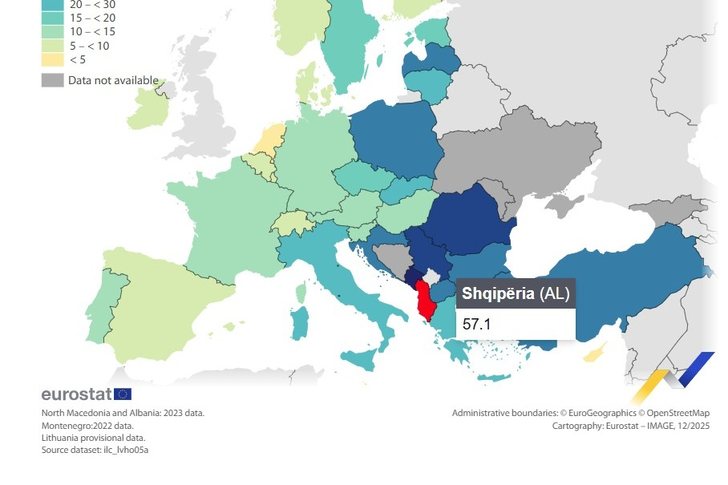
Although Albania holds the record in Europe for the weight...
The Albanian government's borrowing in the domestic financ...
This Monday, one US dollar will be bought for 81.8 lek and...

There are a variety of perspectives on how social media im...
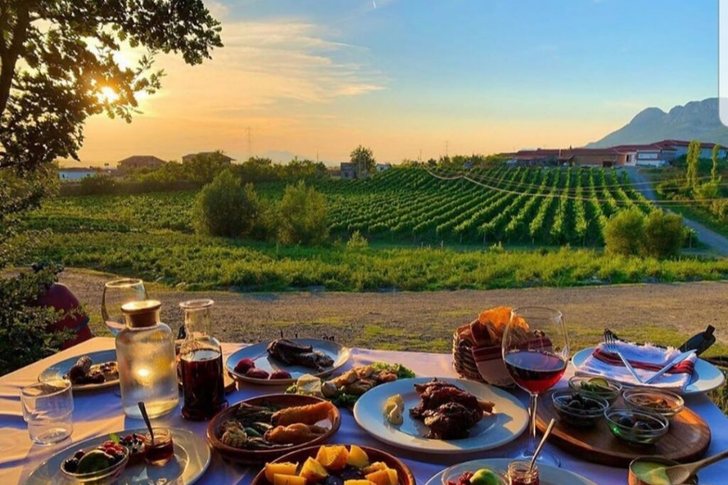
This year, agrotourism showed greater stability than class...
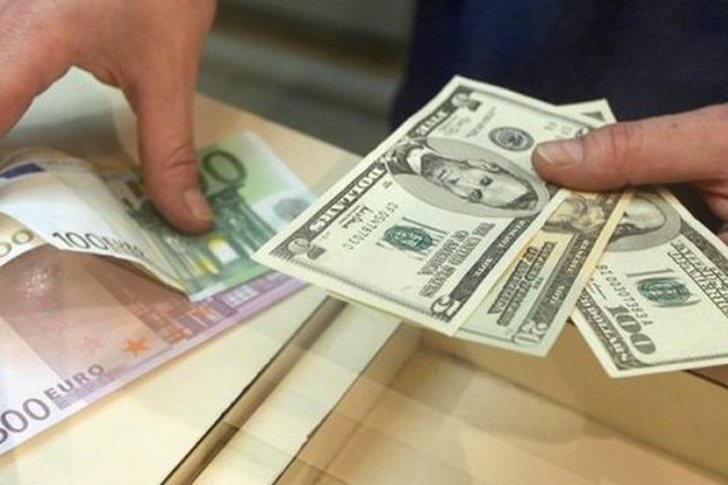
This Saturday, one US dollar will be bought for 81.9 lek a...
The Ministry of Finance will use a new domestic borrowing ...

The Albanian diaspora continues to expand and remains one ...

Irfan Hysenbelliu claims to be a big businessman, an hones...

The murder of officer Enea Mekolli in the line of duty has...

The next case broadcast on the show "Stop", this Thursday,...

The case published this Thursday, June 4, on the show "Sto...

The Special Board of Appeal (KPA) decided this Monday ...

The KPA vetting decided this Thursday to dismiss the p...

Suela Salavaçi, a prosecutor in the Prosecutor's Offic...

The Special Board of Appeal reinstated the prosecutor ...

A 38-year-old man was arrested today near the Kamza turnof...

A money changer in Durrës lost 60 thousand euros after bei...
The 6 citizens captured in Dubai, members of criminal grou...

A serious accident occurred on the Kardhiq-Delvinë axis, i...

Today our country will be affected by stable weather condi...

For many children and teenagers, the long summer holidays ...
Albania is facing an unprecedented demographic transition,...

On Thursday, our country will be affected by unstable weat...
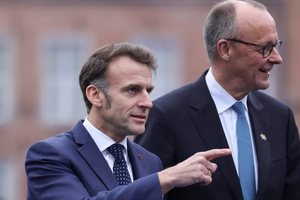
On the eve of the EU-Western Balkans summit, Germany and F...

Russian President Vladimir Putin said the war in Ukraine c...
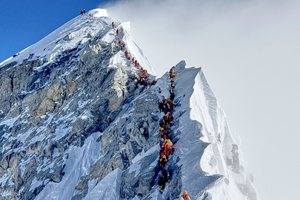
An extraordinary story of survival has been recorded in Ne...
The Peace Implementation Council in Bosnia and Herzegovina...

Korça is ready to open the summer season with one of the c...

Two years after his passing, the renowned Korçë poet Skënd...
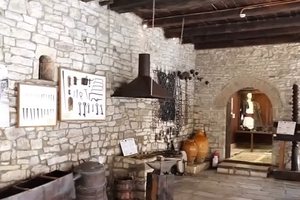
The Ethnographic Museum of Berat has opened its doors to v...
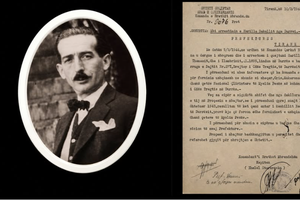
The story of Harilla Bakalli is one of the most chilling t...

Despite years of efforts at regional cooperation and free ...

Albania is the country with the highest level of severe ma...

This Friday, one US dollar is bought for 81.3 lek and sold...
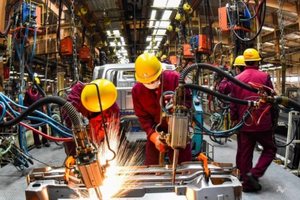
The government aims to transform the country's industrial ...