

Pound, at historic low/ Exchange rate, August 2, 2025
Today, in the foreign exchange market, one US dollar will ...


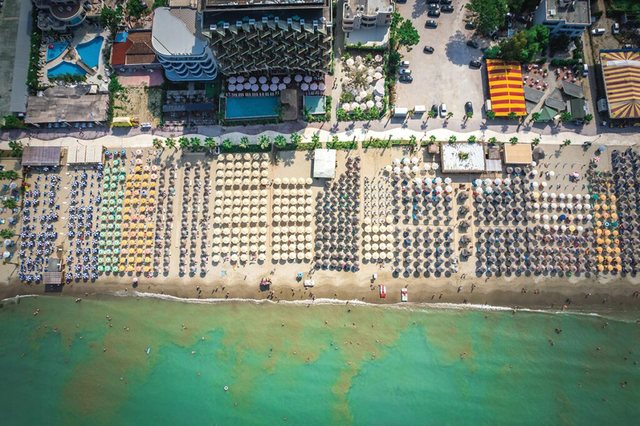
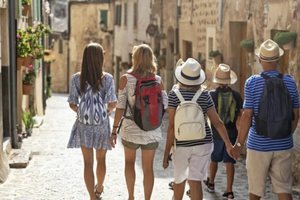
The increase in monthly rent for housing, properties for sale, prices in bars-restaurants and food products in markets, and the increase in traffic are the effects on the cost of living for locals in tourist areas from the influx of foreign tourists. Measures proposed by experts for overtourism.
"We are paying for tap water as if it were a luxury in the bar. For a coffee, water and a Coca-Cola we paid 650 lek," a resident of Pogradec says in outrage, as he leaves the bar of a hotel located on the lakeside.
He claimed to his friend with whom he was sitting at the bar that a glass of "tap" water was being paid more expensively than soft drinks.
An indication that the rise in prices, due to the high influx of tourists in the city's bars and restaurants, is affecting the daily lives of locals in tourist areas.
In the period January-May, according to INSTAT data, 3.4 million foreign citizens entered the country. Compared to the previous year, their number increased by 3.9%. In May, the number of foreign citizens entering Albania reached 987 thousand, with an increase of 1.4% compared to May 2024.
In this 5-month period, the highest increase in the flow of foreign tourists was recorded in the first months of the year. In January, the number of tourists increased by 14.5% compared to January 2024 and in February the increase was 7.4%.
For economic expert Arben Malaj, this high level of visitors is leading directly to increased demand for rental housing, property purchases, as well as daily consumer goods.
According to him, this has led to a significant increase in prices in these sectors, to levels that are threatening to locals.
"As the number of tourists increases, the demand for services such as accommodation, food and transport increases. This pressure on existing supply often leads to:
Seasonal price increases in coastal and tourist areas;
Market adaptation to take greater advantage of tourists, who have more purchasing capacity than locals;
"The phenomenon of "airbnb-ization", where many apartments are taken from the housing market to make a higher tourist price", he claims.
During discussions on Albania's tourism prospects, where it is predicted that by the end of 2025 the number of foreign tourists will reach between 12 and 14 million, according to economic expert Arben Malaj, this high influx is expected to further bring about a significant increase in demand for tourism services and infrastructure in the country.
The expensive cost of accommodation from tourism
One of the most significant effects of growing tourism is on the rental market for accommodation purposes. Tourists visiting Albania prefer to stay in daily rental apartments rather than hotels, due to the cheaper price.
Even in 2025, the number of foreign citizens entering the country and staying in official accommodation structures continues to remain low.
According to INSTAT data, 819.1 thousand foreign citizens entered in April, but only 149.6 thousand or about 20% of non-resident visitors stayed in accommodation structures.
INSTAT data shows that around 80% of foreign citizens who come to the country do not stay in registered accommodation structures.
Foreign tourists prefer to stay in daily rental apartments due to low prices, according to Stela Dhami, from Colliers Albania.
"They are more vulnerable to tourists who come to Albania mainly oriented by cheaper prices compared to developed tourist countries or the region."
"These structures also accommodate families and group travelers very well who want to be in the same environment," Ms. Dhami previously stated.
But the increasing demand for accommodation in these structures has prompted an increase in their number.
According to AirDNA data for "Monitor", in April there were 23.4 thousand units listed for rent, an increase of 38% compared to the same month a year ago, or about 6.4 thousand more apartments, or residential units.
In April 2023, there were only 12.6 thousand units listed, so in two years, their number has doubled. The number of apartments for rent in April 2025 was the same as in August 2024, when a record is always set due to high demand at the peak of the season.
The expansion of the market is significantly increasing the supply of apartments for daily rent, as a result of which prices are cheaper than in European countries. On the other hand, the supply of rental properties continues to decrease, as a result of which increasingly high prices are offered for long-term monthly rent.
Real estate agent Lorena Rada from "Century 21 CPM" said that in the capital, monthly rental prices continued to remain at expensive levels even during 2025, due to high demand and declining supply.
Ms. Rada emphasizes that the decrease in daily rental supply is felt more in areas closer to the center. “In the New Bazaar area, we are unable to find cheap properties for long-term rental.
"In this area, the demand for daily rental properties is high. Also, daily rental of apartments is being increasingly used by the apartment owners themselves."
On average in Tirana, rental prices for 1+1 apartments range from 300 to 800 euros per month. For 2+1 apartments, the average price is 200 to 250 euros higher. Monthly rent for this property typology ranges from 550 to 1,300 euros.
In 2024, according to real estate agents, rental prices for housing purposes increased by an average of 10 to 20% compared to the previous year.
The most significant increase was in areas near the center, where many apartments have been converted into accommodation structures for daily rent, due to the increasing influx of foreign tourists.
In the former Blloku area, rents for 1+1 apartments in September reached 800 euros per month from 750 euros, which was the maximum rent level last year. The increase is about 7%. While for 2+1 properties, rents start from 1,000 to 1,300 euros, up from 950 to 1,000 euros per month in September 2023.
In other areas, such as the one near the Air Albania Stadium, prices for 1+1 apartments reached 800 euros per month, up from 650 euros a year earlier. The increase was 23%.
While prices for 2+1 apartments reached up to 1,300 euros from 1,200 euros the previous year.
In addition to high prices from the decrease in the stock of long-term rental apartments, locals are also facing long periods of time for apartment searching.
On average, an Albanian family must spend 1 to 2 months of intensive time, according to real estate agent Lorina Rada, in special cases the search period reaches 9 months, to find a long-term rental apartment in Tirana.
Real estate market agents also once again raise concerns about the risk of a bubble in this market, due to oversupply and prices that are many times lower than in European countries.
For example, in Tirana, if you book an apartment 450 meters from the center for a 1-night stay, it is offered at a price of 34 to 39 euros/night.
An apartment 300 euros away from the center can be found for 45 euros/night.
In Athens, if you booked a rental apartment 500 meters from the center for 1 night at the end of June through Booking.com, it was offered at a price of 170 euros/night, or for an apartment 3 km from the center, the price reached 130 euros/night.
In Rome, apartment prices in areas near the center range from 105 euros to 327 euros/night.
Domestic production with structural problems is also being burdened by the cost of tourism.
In addition to high prices in bars and restaurants, locals are also facing rising food prices in supermarkets.
Alban Zusi, head of the Albanian Export Center, claims that the phenomenon is also being affected by the lack of competitiveness of domestic production, influenced by high production costs, the depreciation of the Euro and tourism for the supply of labor.
Domestic products in supermarkets are often sold more expensively than imported ones, making the position of domestic producers in the market more difficult.
"The prices of domestic products, including dairy products, processed meats (salami-hams), including other products, such as 'mozzarella', are being sold in markets more expensively than imported products."
Domestic products are unable to compete with imported ones, as production costs are increasing, while the 30-40% depreciation of the Euro favors imported goods.
To protect themselves, the Albanian producer is forced to maintain high prices or aims to market products in local indigenous product markets, where tourists tend to buy more.
Accommodation structures are mainly supplied with imported food goods, due to cheaper prices than domestic production.
The demand for cheap imported products is high due to the mass, non-elite tourism that is taking place in the country. But even this trend does not help local producers in marketing their products.
In addition to the structural problems currently facing the manufacturing sector, tourism is also contributing to the increase in production costs, especially labor costs.
Many processing industry workers, lured by high wages, leave for seasonal employment in coastal areas. In order to retain them, agro-processors are forced to review their salaries.
Bars and restaurants, decrease in consumption by locals, compensated by tourists
According to the president of the Association of Bars and Restaurants, Enri Jahja, in bars and restaurants in coastal areas, the trend of consumption by locals has remained downward in the last two years due to high prices.
"Due to rising costs and prices, the local consumer has reduced consumption in bars and restaurants by about 20%.
"The decline in consumption by locals is recurring every year, due to the decrease in purchasing power from high prices," says Mr. Jahja. He adds that many Albanians are also preferring to spend their holidays abroad to avoid high costs at home.
However, total consumption in the bars and restaurants sector has not increased compared to the tourist season of the previous year, which indicates that tourists are simply replacing domestic consumption, not increasing it.
Demand increases, but not prices, in the car rental sector
Unlike the effect that tourism has on the long-term rental market for apartments, where prices have increased significantly due to supply constraints, the car rental sector is not experiencing the same pressure on prices.
On the contrary, this market is increasingly expanding thanks to the entry of new operators and growing competition.
Aleksandër Ndoci, head of the RentX company, said that daily rates for rental cars have remained stable, despite increased demand during the tourist season.
"Demand has been increasing due to the influx of tourists, but the increase in the number of operators in the market has balanced the situation and prevented price increases."
According to Mr. Ndoci, increased competition among companies offering car rentals has helped keep prices within previous limits.
Daily prices for a car range from 15 euros for basic models, up to 150–200 euros per day for luxury vehicles.
The car rental sector is an example where increased demand has not automatically led to price increases, showing that market dynamics are also influenced by other factors, such as the number of providers and the structure of competition.
Economic expert Arben Malaj emphasizes that when analyzing the costs for locals from the increase in tourist flow, there are also problems with traffic congestion, negative impacts on the environment, and even the risk of losing the cultural identity of tourist villages.
Rising retail prices – Accommodation, food and transportation prices for the past season. Local residents face rising costs that often do not match their income.
Negative impact on the environment – Excessive consumption of natural resources (water, energy). Waste, pollution and damage to marine and terrestrial ecosystems. Destruction of nature for the creation of resorts and tourist activities.
Pressure on public activity – Sewerage, transport and health systems are overwhelmed. Rapid and often chaotic urbanization in coastal or historic areas.
Loss of local identity and culture – The transformation of cities or villages into “places for tourists”, not for residents. The risk of commercialization of products and culture, where it suits the tourist, not the community.
Damage to the quality of life of residents – Noise, heavy traffic, overloaded services. Residents feel “pushed out” of their city, to historical centers or beaches.
Overcrowding with tourists, otherwise known as “overtourism”, is a phenomenon that is occurring in many European countries and in developing destinations such as Albania. Arben Malaj predicts that the trend of increasing prices from tourism will be long-term. Consequently, this phenomenon brings significant costs, but also social, economic and environmental, which must be managed carefully.
"The rate of growth, the sources of growth, and the negative effects need more in-depth studies. There are elements that make this a trend, albeit with seasonal fluctuations:
(i) Tourism has become a sector for the Albanian economy and investments in it are growing;
(ii) Global inflation and geopolitical conflicts have affected the overall price performance. If other structures and balanced policies are built, there could be medium-term stabilization.
Economic expert and former Minister of Finance, Arben Malaj, proposes implementing several policies to protect the interests of local citizens in the face of rising prices and the cost of living. These include limiting the conversion of housing into tourist units, as well as temporary price controls during the tourist season.
"In conclusion, overtourism is not necessarily negative, but requires smart policies and long-term planning to maximize benefits and minimize costs."
"Managing destination capacities, investing in sustainable tourism, and involving the local community in decision-making are some of the essential steps to guarantee balanced development, which respects both visitors and the lives and interests of local residents," asserts Mr. Malaj.
“In conclusion, overtourism is not necessarily negative, but requires smart policies and long-term planning to maximize benefits and minimize costs. Managing destination capacities, investing in sustainable tourism, and involving local communities in decision-making are some of the essential steps to ensure balanced development that respects both visitors and the lives and interests of local residents.”
To balance the interests between tourism development and protecting the well-being of local communities, expert Arben Malaj proposes a series of policies:
Subsidies or financial assistance for low-income families, especially in areas with high tourist influx.
Temporary price control based on products or services during the tourist season
Affordable housing policy, through restrictions on the conversion of housing into tourist units in some areas
Investments in public transportation, to provide cheaper and more efficient alternatives to private transportation during the busy season.
Fair and targeted taxation for tourism, where the revenues collected are used to improve public services that also serve the local community.
Smart urban planning, which envisages maintaining a balance between economic development and quality of life for local residents./ Monitor

Today, in the foreign exchange market, one US dollar will ...
The latest data from the Bank of Albania revealed that in ...
In general, in rankings where it is compared to European c...
Today, in the foreign exchange market, one US dollar will ...
Albania remains among the countries with the lowest motori...

Changes in the reference prices of apartments in the distr...
Today, in the foreign exchange market, one US dollar will ...
According to a research by "Monitor", of the 200 largest c...
Applications for the National Investment Scheme 2025 for t...

Today, in the foreign exchange market, one US dollar will ...
Italians, lured in recent years by the idea of cheap holid...
Today, in the foreign exchange market, one US dollar will ...

With four days left until the deadline for online submissi...
Today, in the foreign exchange market, one US dollar will ...
The Tax Directorate has announced that in 12 days, 76.1 to...
The swimming pool market in Albania is showing signs of ex...
Today, in the foreign exchange market, one US dollar will ...

Today, in the foreign exchange market, one US dollar will ...
Real estate reference prices, which were recently revised ...

Today, in the foreign exchange market, one US dollar will ...

The murder of officer Enea Mekolli in the line of duty has...
The next case broadcast on the show "Stop", this Thursday,...

The case published this Thursday, June 4, on the show "Sto...

The protests of recent days related to the situation in Zv...

The Special Board of Appeal (KPA) decided this Monday ...

The KPA vetting decided this Thursday to dismiss the p...

Suela Salavaçi, a prosecutor in the Prosecutor's Offic...

The Special Board of Appeal reinstated the prosecutor ...

A money changer in Durrës lost 60 thousand euros after bei...
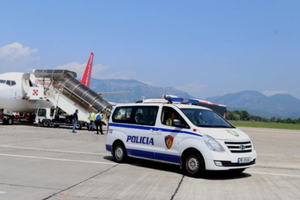
The 6 citizens captured in Dubai, members of criminal grou...
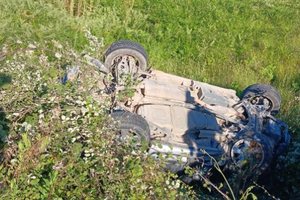
A serious accident occurred on the Kardhiq-Delvinë axis, i...
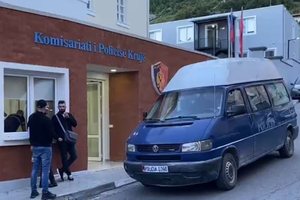
Authorities have conducted a large-scale anti-drug operati...
Today our country will be affected by stable weather condi...

For many children and teenagers, the long summer holidays ...
Albania is facing an unprecedented demographic transition,...
On Thursday, our country will be affected by unstable weat...

Russian President Vladimir Putin said the war in Ukraine c...
An extraordinary story of survival has been recorded in Ne...
The Peace Implementation Council in Bosnia and Herzegovina...
John Bolton, the former national security adviser to US Pr...
Korça is ready to open the summer season with one of the c...
Two years after his passing, the renowned Korçë poet Skënd...
The Ethnographic Museum of Berat has opened its doors to v...
The story of Harilla Bakalli is one of the most chilling t...
Despite years of efforts at regional cooperation and free ...
Albania is the country with the highest level of severe ma...

This Friday, one US dollar is bought for 81.3 lek and sold...
The government aims to transform the country's industrial ...