


America's youth are living and dying by guns, what must be done
Like so many young people in America, our lives are fo...


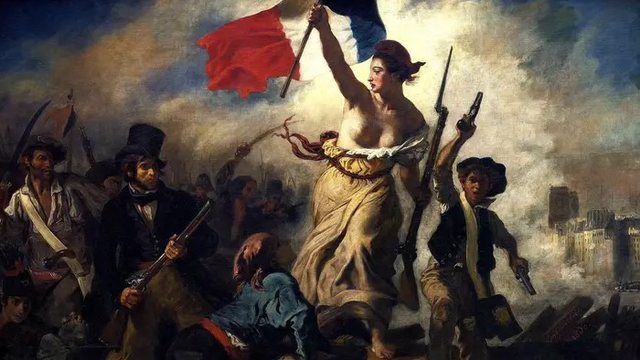
Throughout history, revolutions have been a powerful tool to effect drastic changes in society. From the American and French revolutions of centuries ago, to more recent movements like the Arab Spring, and the protests in Hong Kong, each revolution has its own unique history and the multitude of circumstances that led to it.
But what do these successful revolutions have in common? And what can we learn from them about how to start a successful revolutionary movement? Revolution is a powerful tool used to bring about social, political and economic change.
It can be either peaceful or violent, and often involves the overthrow of oppressive regimes or systems of government. At the heart of all successful revolutions is a small group of people who are passionate about their cause and willing to risk their lives for it.
These revolutionaries are driven by strong beliefs in their mission, and motivated by a sense of injustice or oppression. They have an unwavering passion for change, and to achieve their goals they often use tactics such as civil disobedience, strikes, protests, petitions, boycotts or even violence.
The French Revolution was an example, where revolutionary forces overthrew the monarchy in favor of democracy. The American Revolution sought independence from British rule. On the other hand, recent movements such as the Arab Spring aimed at overthrowing authoritarian governments throughout North Africa and the Middle East.
No matter what form they take (peaceful or violent), revolutions have proven again and again that they can be effective tools for inducing social change, when properly organized by dedicated individuals who have a strong belief in their cause.
To instigate and lead a successful revolution, it is important to understand the root cause of the current situation, and why we need change. This will not only help you clearly articulate your message and objectives, but also determine how best to mobilize people to your cause.
Once you've identified the issue that calls for change, it's important to understand your audience so you can effectively communicate with them and motivate them to join the movement. So find out who your target audience is, and what kind of message would resonate most strongly with them.
It can be helpful to create different messages for different audiences to ensure that everyone hears what they need to take action. Once you understand your audience, it's time to start organizing people into unified groups with clear goals and objectives.
This may include creating teams or councils responsible for specific tasks such as communication, outreach, fundraising, etc., as well as coordinating efforts across multiple countries if necessary. Creating a strong sense of collective responsibility among the members of the revolutionary movement will be essential to its success.
Once you've created a team and a shared goal, it's time to create a powerful narrative that captures the public's attention and builds an emotional resonance within people for their cause. This may include telling stories about those affected by injustice or oppression in an effort to empathize with potential supporters.
Finally, you must consider what tactics will be used to achieve the objectives. Protests, rallies, boycotts or other forms of direct action are some common examples. Ensure that all participants are aware of their role in the movement so that they can take action at strategic moments when their involvement can have maximum impact on further progress towards the desired outcome.
Before making any big move, the potential consequences, both good and bad, should be considered to ensure that those involved are aware of the risks and possible outcomes. At its core, the objective remains the achievement of meaningful social change; and this requires an effective narrative that captures the public's attention.
The point is to know which tactics are most suitable for success. Civil disobedience, strikes, protests and petitions, may be necessary at various stages to achieve the desired results. When preparing to start a successful revolution, the first step is to engage with the emotions of the people.
For this it is important to identify the core emotions that can drive individuals to join and support a cause, such as hope, pride and anger, and then create a narrative that resonates with this target audience.
One way leaders can use to develop this narrative is by providing examples of successful and failed revolutions in history, showing what can be achieved if certain preconditions are met. Social media has become an invaluable tool to amplify revolutionary messages quickly and widely.
Engaging potential supporters through digital media alongside traditional methods such as rallies or protests allows movements to build a strong online presence that can bring about real social change when enough people are convinced about the mission to which they are fighting.
Revolutions have been a powerful tool for achieving drastic change throughout history, so it is important to understand the characteristics of successful revolutions, and the lessons we can learn from them. The English Revolution of 1642-1651 was a major event in British history and its legacy can still be seen today.
This revolution overthrew the monarchy and established the republic. Through this example, we can see how a small group of passionate people, who believed in their mission, were able to achieve such a monumental change.
The French Revolution of 1789-1799 was another important event that changed the course of history. This revolution produced major political and social changes, but ultimately caused more instability due to its failure to address economic issues.
It serves as an example that to be successful, revolutions must take into account all aspects of society in order. The American Revolution of 1775-1783 ended with the independence of a nation from its colonial authority. It serves as an example of how effective organizing and tactics such as civil disobedience, strikes, protests and petitions can lead to success when done with purpose./ Adapted from CNA.al

Like so many young people in America, our lives are fo...

United Nations Secretary-General Antonio Guterres received t...

Molly was 88 years old and in relatively good health. She ...

Ever since Russia threatened to intervene in Ukraine, ...
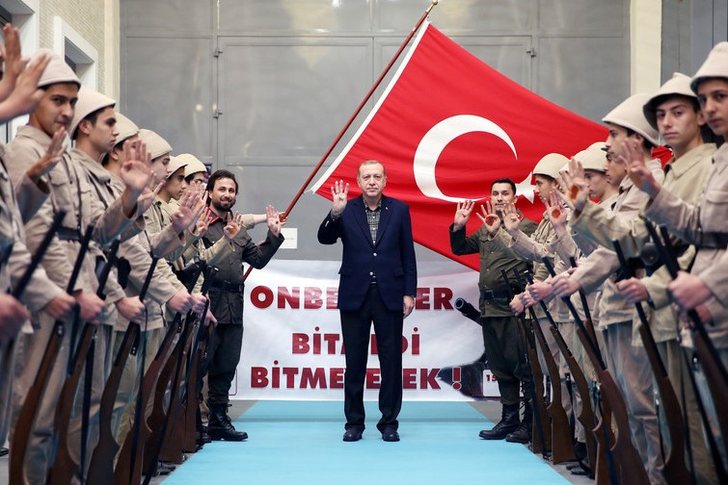
Turqia do të shkojë këtë të diel drejt qendrave të vot...

Nuclear scientist Sigfried S. Hecker, 79, is one of th...

According to the Internet Watch foundation, since 2019 the...

I visited Kiev last month to meet with Ukrainian President...
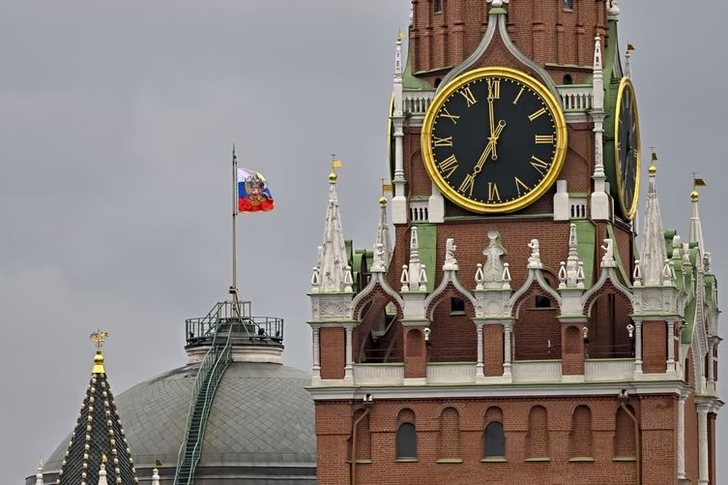
Two drones carried out an attack inside the Kremlin compou...

The Eiffel Tower was inaugurated in Paris on March 31, 188...
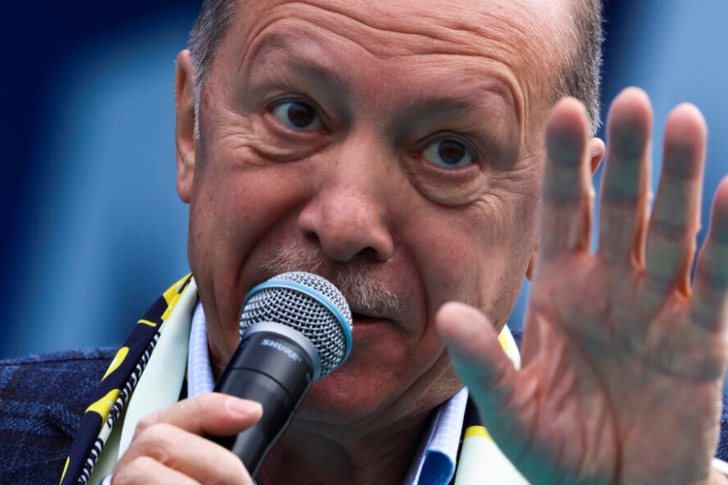
Is there a Western preference for the winner as Turkey...

Njerëzimi ka 2 probleme kryesore, të cilat janë bërë m...
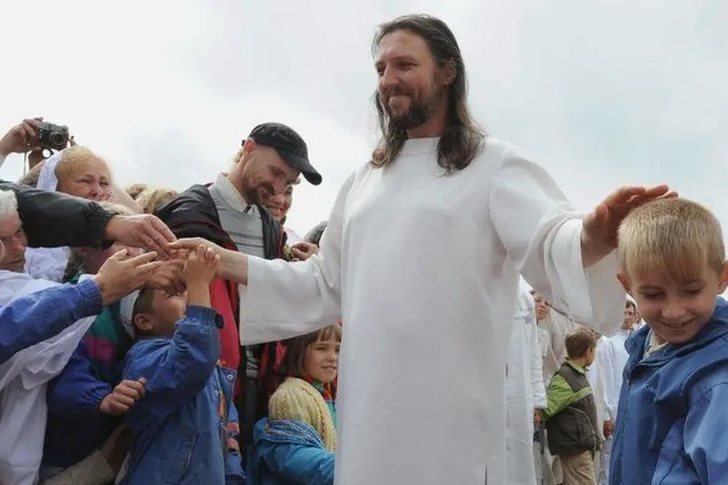
Have you ever heard of a man who claims to be the rein...

The telephone conversation between Xi Jinping and Volo...

Që nga fillimi i këtij viti, më shumë se 600 emigrantë vlerë...

Imagine for a moment a typical British scenario. A pop...
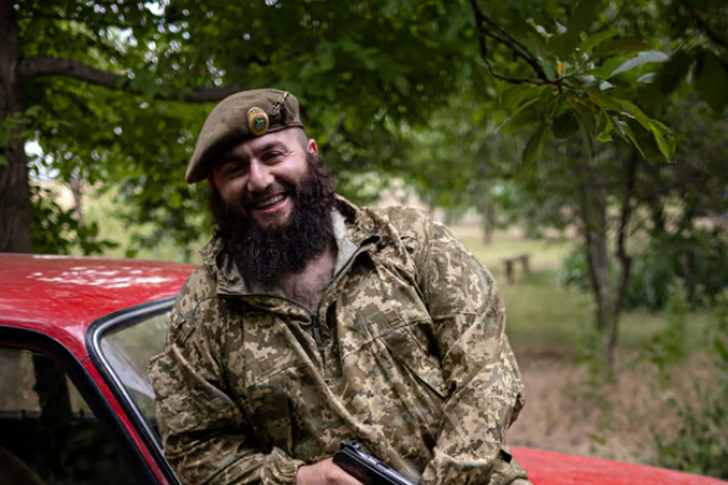
Kiev - "After Ukraine, it's Chechnya's turn" - says the Ch...

Can America survive a second Joe Biden presidency and pote...

I've been very busy with writing books and I've been p...

President Joe Biden's brand is popular at best. And at...
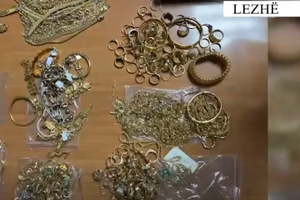
A 39-year-old citizen has been arrested in Lezha, after se...

CNA has launched another investigation that could lead to ...

Irfan Hysenbelliu is a businessman that we call "Irfan the...

In March 2026, CNA launched another investigation centered...

The Special Board of Appeal (KPA) decided this Monday ...

The KPA vetting decided this Thursday to dismiss the p...

Suela Salavaçi, a prosecutor in the Prosecutor's Offic...

The Special Board of Appeal reinstated the prosecutor ...

Several gunshots were reported today in the village of Gjo...

Following the successive operations carried out by the ope...

The Police Supervision Agency has seized the service weapo...

A serious incident occurred in Lushnje, where citizen IY, ...

As the year 2026 is in its second half, the world is exper...

Today, our country will be under the influence of stable a...

By noon, cloudiness is expected to prevail in almost all o...

Children without parental care, for whom alternative famil...

Ukrainian President Volodymyr Zelensky said Russia wants t...
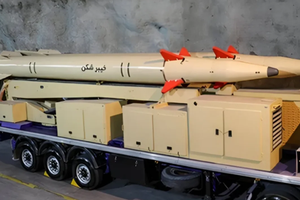
Iran is adapting and enhancing the capabilities of its bal...

Serbia's Minister of State Administration and Local Self-G...
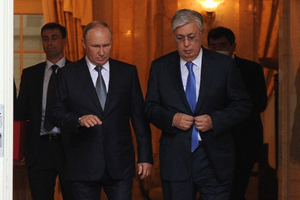
Kazakh President Kassym-Jomart Tokayev shared some critici...

Two windows, a century of history and the metaphysics of p...
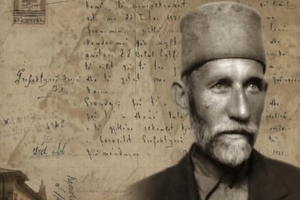
In my research at the Central State Archives, specifically...

At a time when industrial products are increasingly taking...

Trust among people is not just a three-syllable word. It c...

This Saturday, one US dollar is bought for 81.7 lek and so...

War, weather and supply disruptions could send gas prices ...

The number of active enterprises in Albania continued to g...
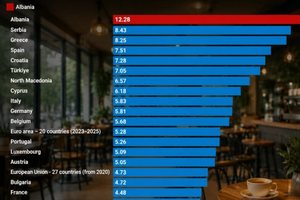
In Albania, the bar-cafe has long become an almost unique ...