

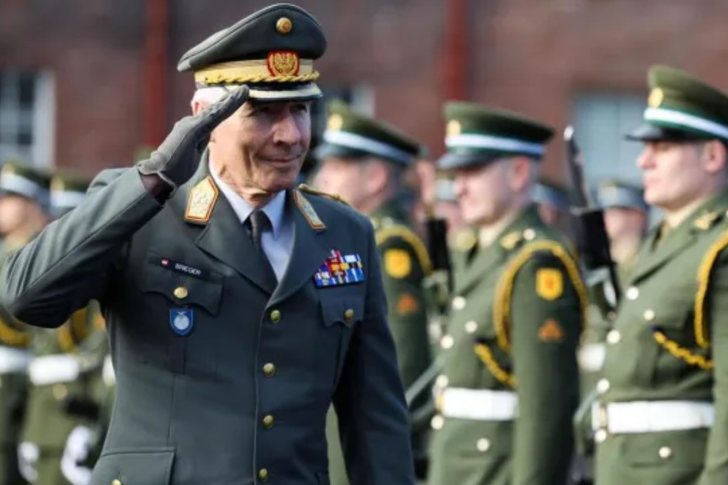
Europe is a very soft power, unsuitable for the current challenges that the world has
The European Union's soft power approach to problem so...


In July, NATO allies will gather in Vilnius for their second summit since Russian President Vladimir Putin launched his genocidal war against Ukraine. This year there will be 31 member countries, after Finland joined the club in a direct response to Putin's hostility.
What should they decide? One way or another, every discussion will affect Putin. The neo-tsarist, imperialist, irredentist and atavistic threat he represents threatens not only non-NATO countries like Ukraine or Moldova, but also NATO allies, including Estonia, Latvia and Lithuania.
And while some items on the summit's agenda may seem uncontroversial, others present dilemmas that may hinge on the success or failure of Ukraine's expected "spring offensive." The easiest category should be resources. Allies must reach a binding agreement to spend at least 2 percent of their Gross Domestic Product on their militaries.
Also, NATO should have more say in where that money goes. One country might be told to build fewer submarines, another to invest more in fighter jets, and so on. The goal should be to confront the Kremlin, not as a chaotic mob, but as a coherent and coordinated fighting force.
Allies must formally abandon their old strategy of deterrence by "punishment" or "retaliation". This model assumed that in the event of a Russian attack, the enemy would first occupy parts of NATO territory. But then the US and other allies would come to their aid, freeing their friends and driving Russia out by committing a very large military force.
Perhaps counter-intuitively, deterrence through retaliation made more sense in the relatively peaceful period of the previous era, symbolized by the NATO-Russia Founding Act of 1997. Its premise was that Russia and the West “will build together a lasting and comprehensive peace", based on "mutual trust and cooperation".
Russia vowed not to behave aggressively in Eastern Europe, while NATO promised not to deploy large forces or heavy weapons in eastern member states - and certainly not nuclear weapons - to avoid threatening or provoking the Kremlin.
It also meant that the Allies could not stop a Russian surprise attack, even if they wanted to. Putin unilaterally destroyed the basis for that cooperation. First, he deliberately abandoned the Founding Act when he annexed Crimea in 2014 and annexed the rest of Ukraine in 2022.
Second, by committing atrocities in Bucha and other Ukrainian territories they occupied, his troops showed what awaits the Baltics, Poles or Finns as they wait to be liberated by the rest of NATO. Therefore, today only the approach of deterrence through revenge is no longer enough.
NATO must agree on the "prevention through denial of aggression" approach. This is the proper jargon to defend "every inch" of NATO territory. So stopping the Russians before they invade any territory. To make this kind of deterrence credible, NATO must have formidable forces not only in the rear - for example in US bases and nuclear bases in Germany - but also in the front.
After Putin invaded Crimea, the alliance took a small step in that direction, with a so-called "Advanced Presence". It consists of 4 multinational battle groups in Estonia, Latvia, Lithuania and Poland. Last year, the alliance added 4 more - in Bulgaria, Hungary, Romania and Slovakia.
But these dislocations remain small. This was part of the old rationale for trying not to provoke Putin, which Putin has made look obsolete by becoming a paranoid and angry aggressor, with or without provocation.
Therefore, the presence of NATO troops on the front line must become a permanent combat force, with entire brigades instead of simple battalions, each armed to the teeth. This raises the question of nuclear weapons.
Since the start of the invasion of Ukraine, Putin has repeatedly violated nuclear taboos by threatening tactical strikes. A few weeks ago, he announced that he would deploy nuclear weapons in the neighboring country - almost a vassal of Russia - Belarus. (He may have already deployed nuclear weapons in the Russian enclave of Kaliningrad, which lies between Lithuania and Poland.)
NATO must show Putin, as well as his potential challengers inside Russia and dictators like him around the world, that it will never tolerate such nuclear intimidation or blackmail. Otherwise, Putin will get on with it, and other regimes - starting with the Iranian mullahs - will race to have their own nuclear weapons.
In that scenario, the world would turn into a nuclear "matchbox". NATO should therefore announce plans against any kind of nuclear blackmail by Putin. If he plants nuclear bombs in Belarus, NATO will have to plant its own in the Baltic countries or Poland.
The most troubling question concerns Ukraine. Uncertainty over its future in or out of NATO has been a factor in tensions between Russia and the West since at least 2008, when the alliance said Ukraine and Georgia "will become members," but at an unspecified time. in the future.
That left Kiev "a quarter in and three quarters out" of the alliance, as Putin further reinforced his narrative that the West is determined to encircle Russia. Today, there are very strong arguments for Ukraine's accession to NATO. After the war, it will still need security guarantees from the West.
And the prospect of membership - like that of the European Union, which Brussels promised last year - will boost the morale of Ukrainians as they fight for their national survival. Having said that, the problem remains Article 5, the mutual protection clause in the case of Ukraine.
One consideration in weighing whether or not to expand NATO should be whether the potential member would make the alliance stronger or weaker. Finland makes NATO stronger, just like Sweden. But not Ukraine. Moreover, the promise to accept Ukraine into NATO would compromise another imperative.
The US and its allies must never dictate to Kiev its objectives in self-defense, or the terms of peace negotiations. But if all allies were to pledge to defend Ukraine, their fates would be intertwined and NATO could "sleepwalk" into World War III, depending on the choices Kiev makes.
To avoid this, the West would have to interfere in Ukraine's decisions. To some extent, the fates of Ukraine and Europe are already tied together. This is why the West must support Ukraine with everything it has, except for Article 5. Beyond that, the best NATO can do is leave Moscow in no doubt that any attack on any of its allies would lead to in a certain defeat of Russia./ " Bloomberg " - Adapted and translated by CNA.al

The European Union's soft power approach to problem so...
Ndërmjet formave të ndryshme të mbledhjes së informacionit...
If the West is not united, it will not be able to comp...
There is something powerful about the last words a man...
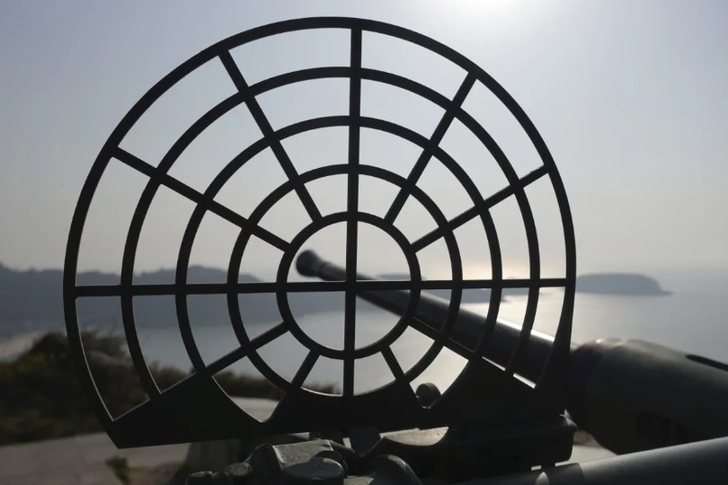
Two months and two days. November 29, 1948-January 31,...
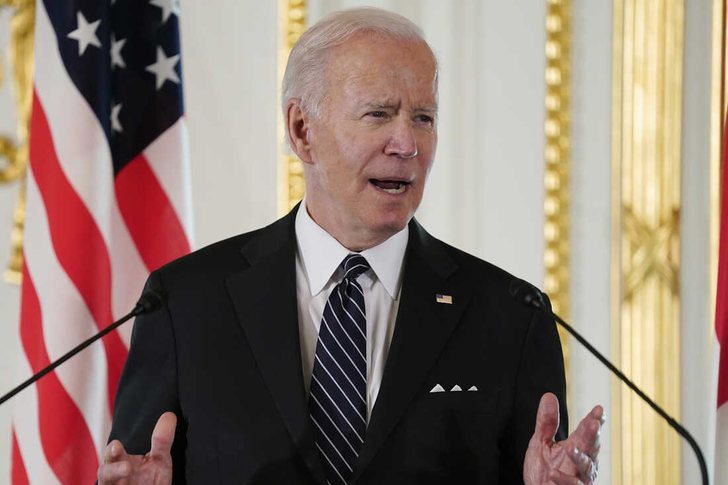
President Joe Biden's public statements about the War ...
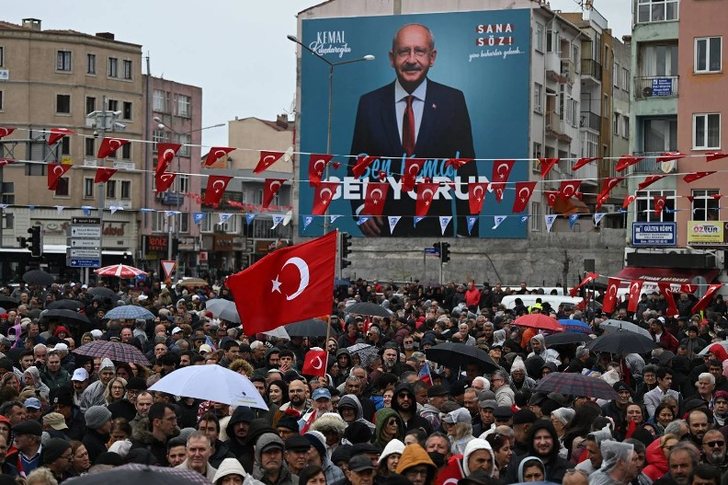
During the 2018 presidential election campaign in Turk...
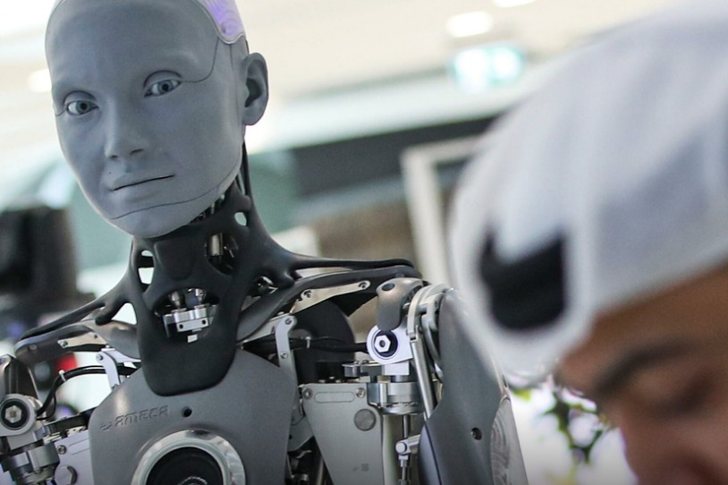
In each of its forms - from anthropomorphic robots to teac...
According to one estimate, the dollar is part of 88 percen...
As our planet's climate is getting hotter and hotter, the ...
Last week, Russia claimed control of the city of Bakhm...
No one seems to know how the United States would react...
"A domestic spy, possibly recruited by the Russians, i...
At the beginning of 2022, Jens Stoltenberg, Secretary ...
Easter is one of the most important holidays in the Ch...
Mafia organizations are increasingly infiltrating European...
Lufta në Ukrainë ka një natyrë psikologjike dhe politi...
According to the World Happiness Survey, Finland has b...
Nothing better illustrates the growing importance in w...
Enlargement policy is back at the top of the EU's geop...
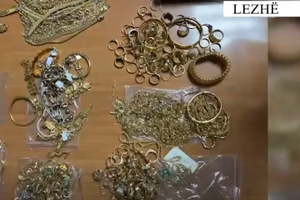
A 39-year-old citizen has been arrested in Lezha, after se...

CNA has launched another investigation that could lead to ...

Irfan Hysenbelliu is a businessman that we call "Irfan the...

In March 2026, CNA launched another investigation centered...

The Special Board of Appeal (KPA) decided this Monday ...

The KPA vetting decided this Thursday to dismiss the p...

Suela Salavaçi, a prosecutor in the Prosecutor's Offic...

The Special Board of Appeal reinstated the prosecutor ...
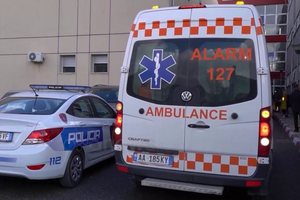
Several gunshots were reported today in the village of Gjo...
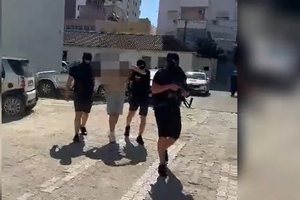
Following the successive operations carried out by the ope...
The Police Supervision Agency has seized the service weapo...
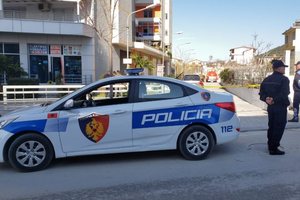
A serious incident occurred in Lushnje, where citizen IY, ...

As the year 2026 is in its second half, the world is exper...

Today, our country will be under the influence of stable a...

By noon, cloudiness is expected to prevail in almost all o...

Children without parental care, for whom alternative famil...
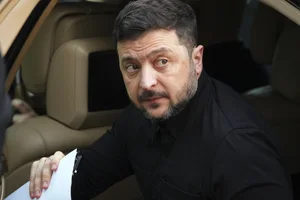
Ukrainian President Volodymyr Zelensky said Russia wants t...
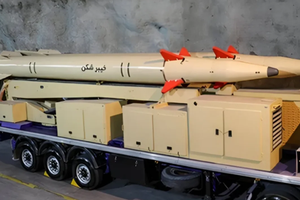
Iran is adapting and enhancing the capabilities of its bal...
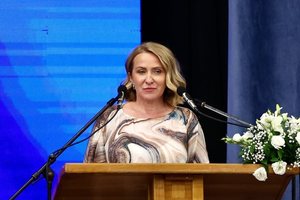
Serbia's Minister of State Administration and Local Self-G...
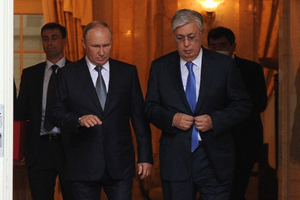
Kazakh President Kassym-Jomart Tokayev shared some critici...
Two windows, a century of history and the metaphysics of p...
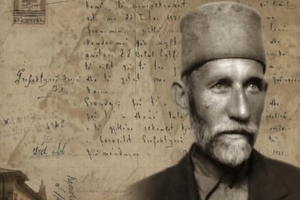
In my research at the Central State Archives, specifically...

At a time when industrial products are increasingly taking...

Trust among people is not just a three-syllable word. It c...
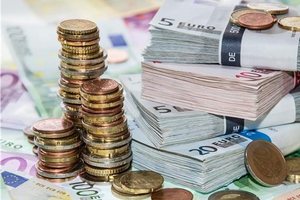
This Saturday, one US dollar is bought for 81.7 lek and so...
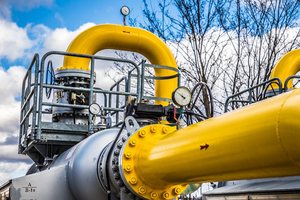
War, weather and supply disruptions could send gas prices ...
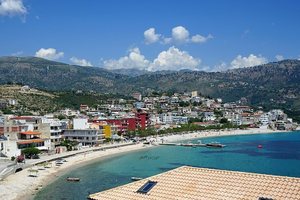
The number of active enterprises in Albania continued to g...
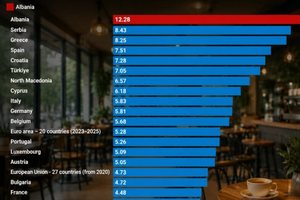
In Albania, the bar-cafe has long become an almost unique ...