

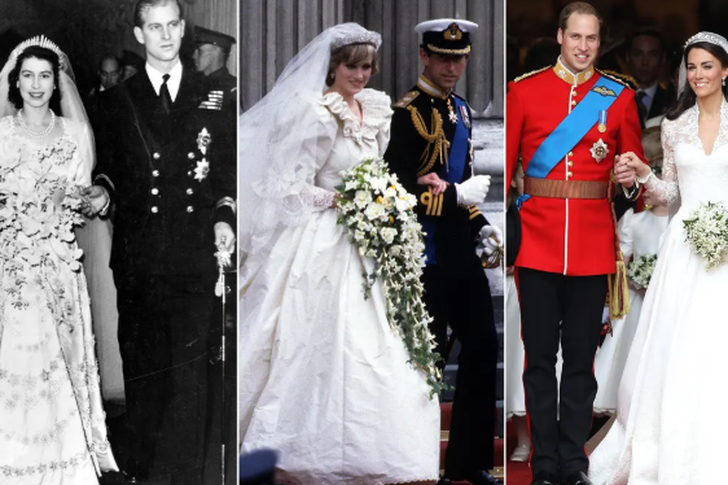
The history of royal wedding dresses
Royal wedding dresses occupy a unique space in people's im...


New ride, same crazy carousel.
Escalation between Hezbollah and Israel. Again. Beirut and Galilee are bombed. Again. Iran attacks Israel and Israel retaliates, while Trump no longer knows where to turn to avoid being sucked into the quicksand of the Middle East. Again. Everyone committed to not missing a single spin of the carousel, in a desperate attempt to show that they are still alive and in command.
To understand something, one must invert one's perspective. We must stop following the official statements, diplomatic summits, and animated strategic maps on television, and start listening to the background noises. More precisely: those metallic, thin, and seemingly insignificant hums that are actually one of the most powerful keys to understanding the world that is exploding around us.
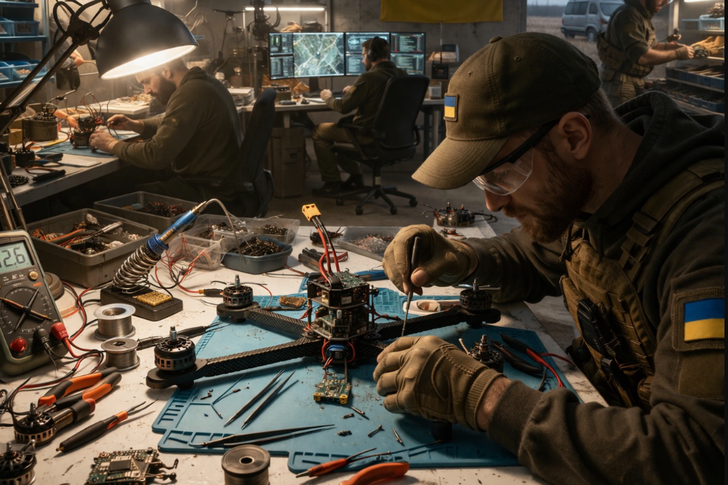
It's the sound of modern warfare: that of drones, fought thousands of miles away from air-conditioned operations rooms that resemble more an open space in Cupertino than the Eastern Front of 1944. A comfortable, orderly, almost natural war. Easy.
And to think that for thousands of years, killing your enemy has been a terribly difficult job. First of all physically. It required being so close to him that you could smell his blood, sweat, and fear. You had to look him in the eye as he died.
Not coincidentally, every civilization has been forced to invent a psychological arsenal to make this bearable: rituals, drugs, military liturgy, codes of honor, heroic epics, afterlife paradises, and gigantic collective narratives. All to convince human beings to do the most unnatural thing there is: slaughter other human beings.
The ancient problem of war has always been our species' annoying tendency to suffer in the face of the suffering of others. A manufacturing defect that has yet to be fully corrected.
Fortunately, technology has worked diligently to solve this "problem." First the rifle, which allowed you to kill without getting covered in the enemy's blood. Then artillery, incredibly convenient for tearing others to pieces without even recognizing their faces. Even better, bombers, perfect for leveling entire cities from the air, without even hearing their screams.
But the drone represents the final step: it is not just the body that is removed from war, but the entire perception of it. It transforms war into an interface. Into a multiplayer electronic game.
Drone warfare, like video games
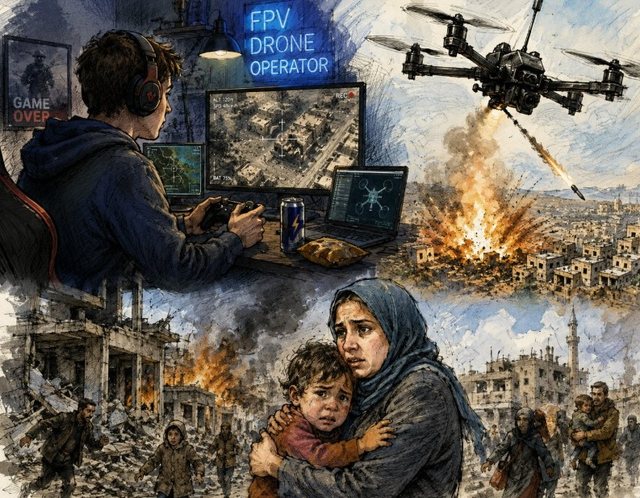
Here are the new warriors: seventeen-year-olds in sports shirts, energy drinks in hand, Spotify playlists in their headphones. They look at a screen. They move a joystick. They fly FPV drones that fly like crazy wasps. They look for the target, they find it.
Game over.
They've just fought from their room, like in a video game, with the only difference being that here the objectives don't regenerate in the next game.
The Ukrainian and Russian armies openly recruit gamers and teenagers who are raised on simulators and competitive games. “If they have experience with PlayStation, it’s a big advantage.”
Trained for years in the virtual world without even realizing it. Even so, war ceases to appear as an extraordinary and monstrous event, and becomes manageable, familiar, everyday. No blood on the body. No mud on the boots.
Warrior 4.0 comes home in the evening, orders sushi, and turns on Netflix.
This is a strategy that doesn't just change the nature of combat: it also changes the perception of it. After all, what can a small drone do? It's too light, too unspectacular to change the course of history.
And that's exactly how the escalation grows: swarm after swarm, micro-attack after micro-attack, until what is easy becomes irreversible.
There are those who rightly object that things are not so simple, that even drone pilots suffer from post-traumatic stress. True. But technology is already finding the solution: the first autonomous drones driven by artificial intelligence are coming, capable of choosing their own target and striking without human intervention.
The traumatized executioner disappears. The massacre remains.
This is the fundamental feature of the “ease” of modern wars: it works only in one direction. If the one who strikes lives the conflict as an increasingly mediated, distant, and sterilized experience, the one who suffers it continues to experience it in the flesh, just as it always has.
Just listen to the stories of Ukrainian, Russian, Gazan, Israeli or Lebanese civilians. That hum enters dreams and transforms the sky into a constant threat.
Low-cost, instant, and easily replicable, the drone is the perfect mirror of our era. And like every weapon before it, it is succeeding in giving us the illusion that violence can become sustainable, that it can be practiced without consequences, at least for those who exercise it.
But it is only an illusion. For those who experience it from the other side, war remains as real, as brutal, and as tragic as it has always been. / Bota.al

Royal wedding dresses occupy a unique space in people's im...

A bold rule introduced in Ashgabat, the capital of Turkmen...

This month marks the 750th anniversary of the Oxford Unive...
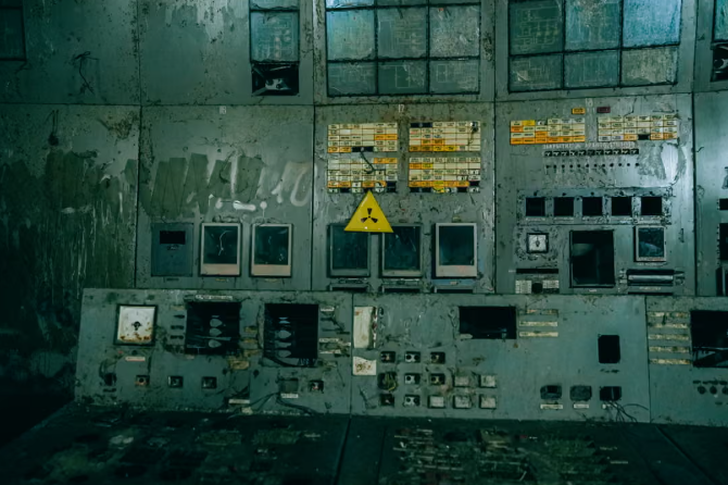
Reactor number 4, which exploded on April 26, 1986 at Cher...

From the kaleidoscopic reefs of Fiji to the shark-filled p...
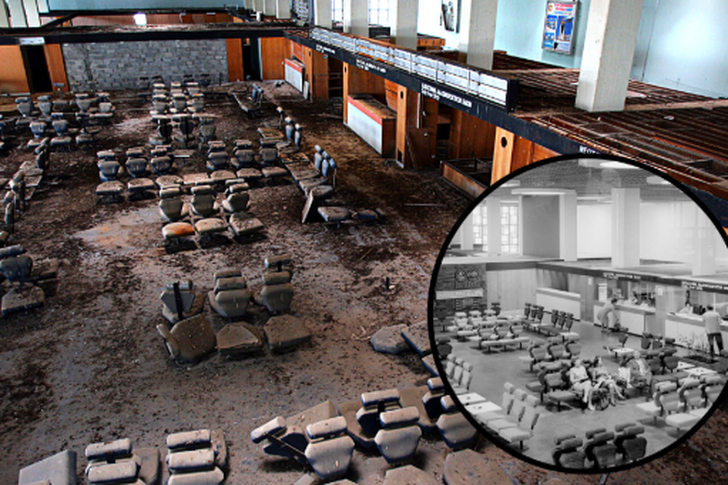
All over the world, over the past five decades, there have...

Cinema-inspired tourism, known as “set-jetting,” is set to...

A new scientific study has shed light on one of history's ...

Often, very often, we commemorate history by exalting a si...
There are people who are part of our lives every day… and ...
On April 9, history has recorded significant events around...

The 2026 FIFA World Cup will take place from June 11 to Ju...
The billionaire who revitalized Brooklyn's waterfront went...
When I first visited Kiev in May 2023, the Ukrainian capit...

Often used interchangeably, the concepts of “state” and “n...

The Silent Generation, the generation born between the 192...

The consumption of pork is one of the most controversial t...
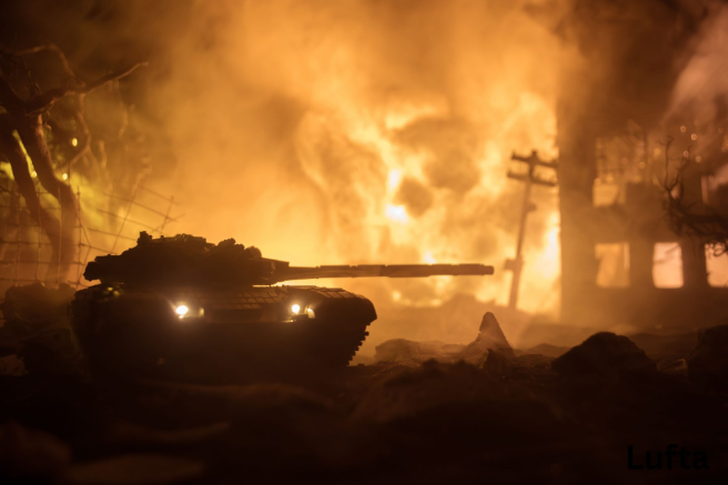
From Vietnam to Afghanistan, to Iran and Ukraine. When con...

History is not always changed by big decisions or well-tho...
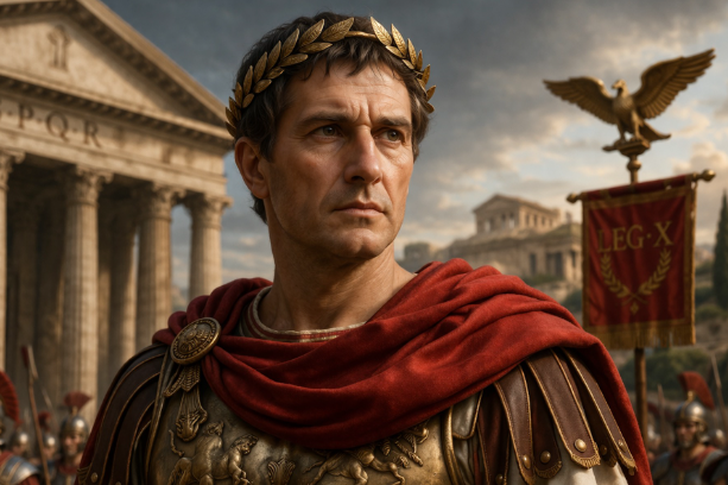
Julius Caesar is not just a name in the history books. He ...
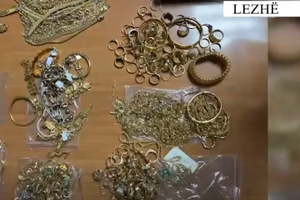
A 39-year-old citizen has been arrested in Lezha, after se...

CNA has launched another investigation that could lead to ...

Irfan Hysenbelliu is a businessman that we call "Irfan the...

In March 2026, CNA launched another investigation centered...

The Special Board of Appeal (KPA) decided this Monday ...

The KPA vetting decided this Thursday to dismiss the p...

Suela Salavaçi, a prosecutor in the Prosecutor's Offic...

The Special Board of Appeal reinstated the prosecutor ...

A conflict for weak motives was recorded today in the vill...

An accident involving three vehicles occurred a few minute...

55-year-old Belere Plaka, who was injured today with a sho...
Police Announcement: Following preliminary information...

Today, our country will be under the influence of stable a...

By noon, cloudiness is expected to prevail in almost all o...

Children without parental care, for whom alternative famil...
On Thursday, our country will be under the influence of st...

Marine Le Pen is entering the decisive phase of the presid...

Member states of the International Criminal Court voted to...

From the declining role of exports to new public investmen...

South Korea is becoming one of the most sought-after desti...

In my research at the Central State Archives, specifically...

At a time when industrial products are increasingly taking...

Trust among people is not just a three-syllable word. It c...

Master of humor Todi Llupi has passed away at the age of 7...

This Saturday, one US dollar is bought for 81.7 lek and so...

War, weather and supply disruptions could send gas prices ...

The number of active enterprises in Albania continued to g...
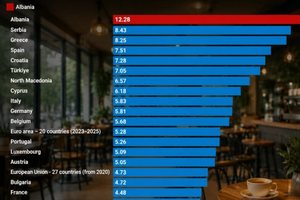
In Albania, the bar-cafe has long become an almost unique ...