

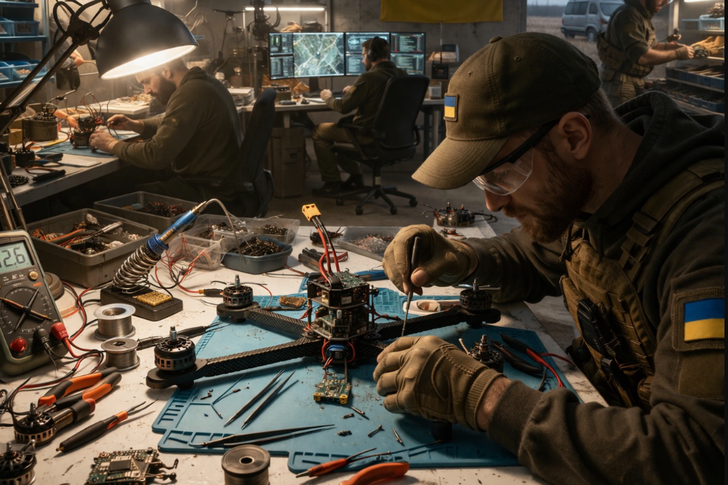
Ukraine's drone army has done the unbelievable
When I first visited Kiev in May 2023, the Ukrainian capit...


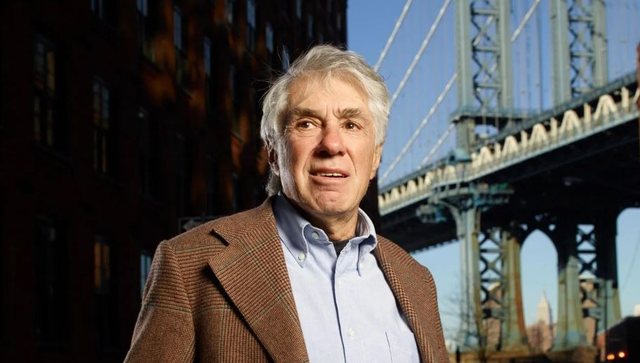
The billionaire who revitalized Brooklyn's waterfront went from working on a farm to building a real estate empire worth billions.
Here are the lessons he learned on his difficult journey.
Long before real estate billionaire David Walentas transformed a portion of Brooklyn's rundown waterfront into the thriving neighborhood of Dumbo ("Under the Manhattan Bridge Overpass"), he was a kid growing up in Rochester, New York during the Great Depression, learning lessons the hard way.
His father, a first-generation Russian-Lithuanian American who worked at the post office, suffered a stroke when Walentas was five that left him paralyzed. To support him and his brother (then 3 and 4 years old), his mother worked constantly, and when that still wasn’t enough, she sent the boys to live and work on nearby farms.
"We were more or less like orphans or indentured servants," he says. "We'd wake up at five o'clock, milk the cows, clean up the poop, take the school bus, come home and do it again."
That early experience was difficult, sleeping in the cold during the winter and the heat during the summer was never easy for Walentas, but it fueled his ambition.
"I think the biggest lesson I learned was that I wanted to be more successful," he says.
The problem was that Walentas didn't have a plan of action. "When you're poor like that... you don't talk to anyone who knows anything," he tells Forbes.
“During the Great Depression, people didn’t go to college. I never had a mentor.” So he had to forge his own path. As a senior in high school, sitting in a principal’s office, he noticed a poster for a Navy ROTC scholarship. He signed up on his own, circling two favorite schools: Harvard, because he had heard about it, and the University of Virginia because “it was short… and I thought it might be warm down there.”
Weeks later, he received a letter in the mail saying he had been accepted into UVA’s ROTC program. “That was transformative,” he says. “It changed my life.”
From there, Walentas followed a long and winding path to the billionaires' list, including cleaning septic tanks for the military, selling his blood to pay for a meal and, eventually, getting an MBA and retiring from the allure of 1960s New York City.
Today, Forbes estimates his net worth at $2 billion, making him one of the richest people in America, thanks to his real estate company Two Trees Management. He owns more than two dozen residential and commercial properties in Dumbo, Brooklyn Heights, Williamsburg and Manhattan.
In recent conversations with Forbes, Walentas shared some of the secrets to his success.
1. Do the jobs that everyone hates
With his experience working on the farm, Walentas never shunned any job, and instead looked for ways to take advantage of the work that others shunned. One summer, he took a job at a U.S. air base in Greenland, cleaning septic tanks for the military, “something my days on the farm prepared me well for,” he says. “I would jump into the tank and clean the garbage off the walls… 10 hours a day, seven days a week.” It’s a pattern he says defines him: lean into discomfort, go for opportunity. He used this in an early, post-military job at Singer Corporation, where he accepted engineering assignments in Australia and Japan, and later in real estate, with a big bet on a run-down part of Brooklyn that banks wouldn’t lend to. He had to raise investors to give him money to finance his vision and wage a tough zoning battle to get the necessary government approvals. He now wears a pair of cufflinks with his personal motto: "No guts, no glory."
2. Seeking exposure can change your trajectory
At UVA, Walentas found something he had never had before: exposure. Through his involvement in a fraternity and meeting classmates from more privileged backgrounds, his worldview expanded, and quickly. "The people I met changed my whole perspective on life," he says. "The kids there were all upper middle class, prep school kids, athletes, and government students. It was just so transformative for me."
This environment not only expanded his thinking, but also changed his trajectory: it was there that he met Jeff Byers, his initial partner at Two Trees, who played a key role in the company's growth and who also introduced Walentas, now a prominent collector, to the art world.
3. If you can't control it, don't own it.
Walentas made his first investment when he returned to the U.S. on leave: a small farmhouse near Charlottesville, which he bought for $30,000. While the deal worked on paper (rental income from the house helped cover the mortgage), poor management nearly ruined it after the broker he hired failed to collect rent and would leave the property empty for months. “Today, that property would be worth maybe $20 million,” he tells Forbes , but he sold it long ago.
“The lesson was, if I couldn’t manage it, I shouldn’t own it.” Moving forward, control became central to his strategy. At Two Trees, the real estate firm he built, Walentas insists that his company manage all the properties it owns.
4. Follow your instincts
Walentas encourages people to find what they love and pursue it. “We all have different interests. Follow your instincts,” he says — especially in the beginning: “When you’re young, you have the whole world in front of you… if you fail, you start over.” When he moved to New York in 1966 to work for the consulting firm Peat Marwick, he would spend many nights wandering its rough edges. He knew he had to change careers. “I just wanted to be a real estate developer,” he says. “I was attracted to the ability to build things, to collect rent, to own them.”
5. Take on big challenges
Initially, Walentas started buying up properties in Manhattan, but he quickly became convinced that the run-down industrial neighborhood of Dumbo could be the next big thing. Banks didn’t seem to agree — he couldn’t get a loan — and the city government didn’t see his vision for a trendy neighborhood of offices, shops, and apartments, refusing to redevelop it. So he found his own way, convincing cosmetics billionaires Ronald and Leonard Lauder to back him with $6 million in private loans and going to Gov. Mario Cuomo to negotiate a deal that would let him buy DUMBO but also protect the manufacturing tenants for up to 10 years. “You have to keep reminding yourself when the going gets tough there not to give up,” he says.
6. Choose the right life partner
Marrying his wife was “the best deal” Walentas ever made. “We don’t teach our kids how important it is to choose the right partner,” he says. He attributes much of his trajectory to his wife, Jane, whom he met when she rented an apartment from him in 1969. As an art student, Jane introduced him to the Lauder family, who were early financiers of Walentas’ career while she worked for them as an art director. She also served as art director of Clinique, a cosmetics company. The couple’s son, Jed, now oversees the day-to-day management of Two Trees./ Adapted from CNA
Taken from Forbes

When I first visited Kiev in May 2023, the Ukrainian capit...

Often used interchangeably, the concepts of “state” and “n...

The Silent Generation, the generation born between the 192...

The consumption of pork is one of the most controversial t...

From Vietnam to Afghanistan, to Iran and Ukraine. When con...
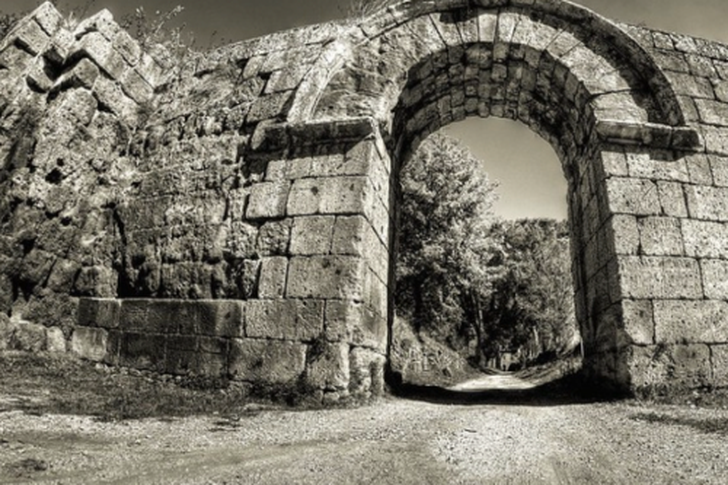
History is not always changed by big decisions or well-tho...

Julius Caesar is not just a name in the history books. He ...

The dog is perhaps the only species on the planet that has...

Many people do not regret the mistakes they made in life, ...

Success is rarely a coincidence. In most cases, it is the ...

Depression is not just a bad day. It is not even a tempora...

In Beirut, the capital of Lebanon, an Israeli strike this ...

Donald Trump announces that he has "wiped Iran off the map...

On social media, what seems like the majority opinion is o...

Beyond the official history we know, there is another worl...

Amiens is a historic city with a strong cultural heritage,...

We all know the story. Helen of Troy, the face that launch...

Ayatollah Ali Khamenei, Iran's Supreme Leader since 1989, ...

In recent months, social media has been awash with videos ...

What's it like to grow up as the children of dictators? Am...

On the morning of July 7, 2026, the Ministry of Culture ur...

After the disclosure of the portfolio of properties an...

For 6 months now, CNA has been sending several letters to ...
The word "fatherland" with properties is not enough. The m...

The Special Board of Appeal (KPA) decided this Monday ...

The KPA vetting decided this Thursday to dismiss the p...

Suela Salavaçi, a prosecutor in the Prosecutor's Offic...

The Special Board of Appeal reinstated the prosecutor ...

A knife attack occurred this evening in Fushë-Krujë. Acco...

A 44-year-old man in Saranda has been seriously injured af...

Spanish police have acted on an Albanian-Spanish criminal ...

New details have been revealed regarding the murder of Egl...

In Albania, in 2024, 8,911 beds were available in public h...

Albania was included in the band of above-normal temperatu...
Today, our country will be affected by mainly stable weath...

Today, our country will be affected by mainly stable weath...

The death toll from two powerful earthquakes that struck V...

Oil prices rose to their highest levels in a month after t...

Iran has reacted to US President Donald Trump's statements...

Counter-terrorism police have taken control of the investi...

The ninth edition of "MIK Festival" kicked off with one of...

A historic evening for Albanian culture was marked in the ...

When I turned 10, another building was built in front of o...

A special scientific conference was held by the World Bekt...

The tax administration has announced the completion of the...

Albania has lost almost a quarter of its population since ...

This Monday, one US dollar is bought for 81.5 lek and sold...

This Sunday, one US dollar is bought for 81.5 lek and sold...