


Murder in Kamëz/ Victim identified, other details revealed
A serious incident occurred this Monday afternoon in Kamëz...

A serious incident occurred this Monday afternoon in Kamëz...

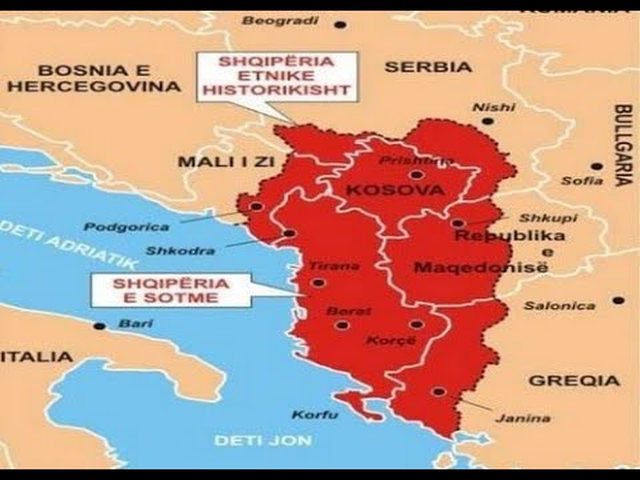
The month of July is the month of baptism of the Albanian states. On July 29, 1913, the Conference of Ambassadors in London recognized "de jure" the Albanian state, declared independent on November 28, 1912, as "... an autonomous, sovereign principality ... under the guarantee of the six Powers", while on July 22, 2010, the International Court of Justice called Kosovo's Declaration of Independence of February 17, 2008 legal and declared that: "it has not violated international law nor resolution 1244, nor the UNMIK Constitutional Framework", but is in full compliance with them. With this decision, the ICJ (UN judicial body) confirms the borders and citizenship of Kosovo.
Baptism as a process is the first sacrament of Christianity, through which a believer of this religion is accepted into its bosom. In the case of Kosovo, 10 of the judges/godfathers agreed with the baptism of the newest state, while 4 (from: Russia, Slovakia, Morocco, Sierra Leone) were against. In the case of Albania, the godfathers of the baptism of the state/baby Albania, contrary to the principles and purposes of baptism, instead of cutting the hair, intended to cut the limbs, dismember and kill this baby/state. It was these screaming injustices that forced Father Gjergj Fishta to accuse: "Uh! Europe, you whore of the weather!/You deny the faith of God!/Yes, is this the point of citizenship?/I gave the land of Albania".
We all agree and are grateful for the decision of the ICJ on July 22, 2010, while regarding the importance and consequences of the decision of July 29, 1913, Albanian historiography continues to be in a dilemma even today.
Despite the great limitations of this decision (it legalized the fact that the Albanians were the only people on the globe that bordered on itself), it had a special importance for the fate of Albania, since even though the Albanian territory and population were severely divided and in scary numbers, again managed to survive.
Before this conference, the Albanian population lived divided into four vilayets, two of which were individually larger than today's Albania, while the other two were almost as big as today's. Respectively, the vilayet of Kosovo had an area of ??32,000 km2, that of Shkodra covered an area of ??10,987 km2, that of Manastir was full of 28,500 km2, while that of Ioannina extended with 17,900 km2. According to the calculations of Ottoman sources, the population of Albania on the eve of the Balkan War numbered approximately 3 million Albanian inhabitants. Through this decision, the dismemberment of Albania was legislated, giving Serbia 34,000 km2 with 1,090,000 inhabitants, Greece 10,794 km2 with 425,000 inhabitants and Montenegro 7,000 km2 with 260,000 inhabitants.
The Albanian tragedy and Europe's injustices towards us had started a long time ago and continued even after this decision. They were played in several acts:
The first act of this tragedy was played on March 3, 1878, in Saint Stefan near Istanbul, where "the political concept of solving the Albanian issue through dismemberment" and "the ethnic cleansing of Albanians from the lands that occupy the Balkan neighbors" began to be implemented. The second act was played at the Congress of Berlin (June 13, 1878) where Albania was treated as a geographical term, while the Albanian-inhabited countries were divided between neighboring countries. The third act was to be played 34 years later, at the Conference of Ambassadors in London, which ended with the decision of 29 July. The fourth act would bring back this danger again with the Secret Treaty of London in April 1915, where the further fragmentation of Albania continued, even its disappearance from the political map was projected.
But let's return to the decision of July 29, which did not aim to solve the Albanian issue, but to avoid the contradictions of the Great Powers, which were divided into two antagonistic blocs: Germany, Austria-Hungary and Italy had been united for a long time. in the Trilateral, while England, France and Russia had formed the Entente.
Although the Albanians had declared independence, this was not enough, as Albania had become the point of intersection, not only of the greed of the Great European Powers, but also of the chauvinistic appetites of the Balkan states.
To make their anti-Albanian work easier, the organizers of this conference did not invite the Albanian people to send their representatives to this most vital forum for them. This was an injustice that was done to our people, but nevertheless the role and pressure of the Albanian people, essentially influence the taking of these decisions by them.
This conference was so unfair that it is enough to remember what the American Minister in Greece wrote at the time as: "a miracle of incompetence", "an absolutely incompatible scheme", "a jumble of unstable things".
The conference on its first day on December 17, 1912, considered the Albanian issue, which was agreed by all parties, to be discussed in three aspects: "the status of Albania, the organization of the Albanian state and the determination of borders". In the press of the time, a communiqué of the ambassadors appeared, in which it was said that the governments of the great powers "had accepted the principle of Albanian autonomy". This was a step back compared to the independence decision of the Vlora Assembly, as it left Albania still within the framework of the Turkish Empire.
The use of two terms: "under the sovereignty or suzerainty of the sultan", was not accidental, but reflected the substantial changes in their attitude, regarding the degree of independence of Albania. The Russian government defended the thesis that "Albania should be an autonomous province of the Turkish Empire, with some rights for a special organization, but always within the framework of the Empire, (the sovereignty of the Sultan)". The Austro-Hungarian government opposed it and was for an "autonomous or independent Albania with the widest possible borders". Most agreed on a compromise solution: the organization of an Albanian state with some internal autonomy.
This was certainly something new, but it was not independence, since the Albanian state was declared as a vassal or autonomous state and recognized the supreme authority of the sultan. According to international law, such a state does not itself participate in international relations, but is represented by the suzerain state.
The debates continued for a long time and in the end the Conference tasked Austria-Hungary and Italy with drafting a project on the organization of the autonomous Albanian state. This project was presented by them at the meeting of the Conference on May 8, 1913. It was in the spirit of the decision of December 17 and had at its base: the autonomy of Albania and its subordination to Turkey, its neutrality, ensuring order and tranquility by a gendarmerie organized by internationals, etc. In this meeting, the ambassador of Austria-Hungary, Mensdorf, asked for the recognition of Albania's independence. He brought as his main argument the fact that as a result of the defeat in the war "there was no territorial connection between Albania and European Turkey". This view was joined by the ambassador of Italy Imperiali. The proposal was immediately opposed by the representative of the tsarist government, which sought to preserve Albania's ties of dependence from Turkey, since "An Albania without ties of dependence from Turkey would quickly turn into a fiefdom of Austria". The main concern of the Russian government was that Serbia should retain the hope of later extending to the Adriatic, which could only be realized if Albania continued to remain within the framework of the Turkish Empire.
But time was running out for Albania and independence was a path of no return, since with the Peace Treaty of May 30, 1913, Turkey, as a losing country in the war, no longer had any rights with other countries, including Albania. This is the first act between which Turkey officially renounced its sovereign rights over Albania and recognized the competence of the Great Powers to resolve the Albanian issue. This treaty simultaneously forced the neighboring countries to accept the existence of a separate state (Albania), according to the decisions that the Great Powers would take. The act of May 30, 1913, is the first international act that speaks for a separate Albanian state, although not directly.
The conclusion of this entire diplomatic marathon comes on July 29, 1913, where the Conference of Ambassadors in the final decision states in Article 1: "Albania is formed as an autonomous, sovereign and hereditary principality ... under the guarantee of the six Powers".
Analyzing the debates, clashes, coherence and incoherence of the positions of these Great Powers in this conference, it is concluded that:
1. The treatment of the border problem of the new Albanian state was not based on the basic democratic principles that regulate international relations, such as ethnographic, historical, economic, etc., but was done under the prism of not breaking the "European Concert". Serbia's right over Kosovo and Greece's right over Chameria and other Albanian territories in the south-east were the result of winning these territories as spoils of war.
2. The activity of the Balkan states and the Great Powers in the realization of this decision was helped by the situation in which the Albanian society was at that time. Five centuries of Ottoman occupation had preserved the medieval mentality. Albania suffered from the lack of an emancipated social grouping, it suffered from the existence of a "Dumbabiste" class of beylers, which had a little developed sense of national responsibility and still dealt with the ghosts of preserving personal donated fiefdoms. The emancipated liberal and pro-European forces of the Albanian society were a minority almost powerless to undertake initiatives that broke the conservative taboos of a newly freed society.
3. The issue of Albania was resolved without the slightest respect for the Albanians, and the border of the new Albanian state was determined only under the prism of avoiding a confrontation between Austria-Hungary and Russia, for which the Albanians were not to blame and had no to do with it at all.
4. This Conference, convened as the "Meeting of the Ambassadors of the Six Great Powers signatory to the Treaty of Berlin" (1878) had no right (according to international law) to make decisions for third parties and issue acts. The conference had only advisory and consultative powers. Its members themselves affirm this fact: "...neither Sir Gray nor the ambassadors have ever claimed to take decisions, in the end they would have no value, because they would depend on the consent of the governments", wrote the French ambassador P. Kamboni to the French Foreign Ministry and continued that "these are only proposals and suggestions that can serve as a basis for talks".
So as a conclusion we can say that: the attitude of the Great Powers of that time was unjust, anti-Albanian and criminal.
Now, after 110 years, time is working for the Albanians, who have become an important factor of stability in the region. A new entity was created in the Balkans "Republic of Kosovo"; in North Macedonia we are a constitutional ethnicity with 30% of the population; also in Montenegro; the Albanians of Presheva, Medveja, Bujanovac are represented by deputies in the Serbian Parliament. The Cham issue from "taboo" has returned to the table of international negotiations.
I pray to God that we Albanians also work for Albanians, since the events of July 13, 2023 (and not only), in both Albanian parliaments (of Albania and Kosovo), were a black page of Albanianism, it seemed as if they had the same anti-Albanian regime . The parliaments seemed to me like gladiatorial arenas in ancient Rome. Seeing these scenes reminded me again of Reverend Father Gjergj Fishta, when he sadly said: "Albanians are just the way they want to be".
In this article, I cannot help but mention the surprise that has caused me today's asymmetric and double-standard attitude of the West in the Kosovo-Serbia negotiations: severity and punishment towards Kosovo politics and absurd tolerance and forgiveness towards Serbia and President Vu?i? (the former Minister of Information of Milosevic in 1998, at the worst time of the Serbian genocide in Kosovo), which has not yet imposed sanctions on Russia, has not signed the Brussels Basic Agreement (February 27, 2023) and its Ohrid Annex (March 18, 2023), even when he insults the five countries of the Quint, (USA, France, Great Britain, Germany and Italy) saying, “Shame on you all! All of Quinti, all of them are liars!”. I don't believe they have forgotten when on April 23, 1999,
God keep me sane.
Adding to this surprise is the "coincidence" fact that the three negotiators and rapporteurs for the Kosovo-Serbia negotiations were selected from 3 out of 5 EU countries, which have not recognized Kosovo's independence (chief negotiator Borrell, former minister of the Spanish government, negotiator Laj?ak-former foreign minister of Slovakia, reporter Bagojanis-former foreign minister of Greece)!!??
So be careful! Today, the martyred Kosovo is at a historical moment, the politicians that we have elected should put aside personal quarrels and come to an agreement between the parties (at least for the national issue), have the wisdom, dignity, loyalty, persistence for the solution of its right and final.
Our nation today has the opportunity to unite their motherland with the Europe of democratic values. The West, accepting this Albanian aspiration, will amnesty itself and correct the injustices it has done to one of the oldest and most suffering peoples of Europe.
It is the duty of the Albanian political class in all Albanian lands to use this moment/fate to repay the debt, as my friend the great poet Xhevahir Spahiu says "I owe the year 13, for not closing the wounds", by drawn up common integrative policies in all areas and not as they have tried to act in quite a few cases so far, such as with the sea agreement with Greece, the Kosovo-Montenegro border, the north of Kosovo, the de-Albanianisation of cities with a historical Albanian majority in North Macedonia, the criminalization of the leaders/heroes of the KLA in The Hague, with indictments drawn up in Belgrade by those who committed the genocide in Kosovo, etc., etc.
God help us!

Today's arrests of exponents of the police, prosecutio...
Edepsezer, jeziter, zullumqare! Damlla ma bëtë veren që d...
A friend asked me if we have become too cynical in Albania...
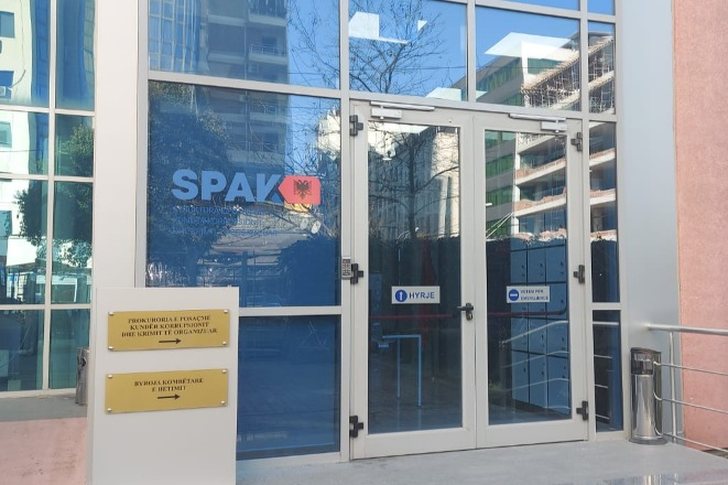
287 Decisions of the Strasbourg Court (ECtHR) and at least...
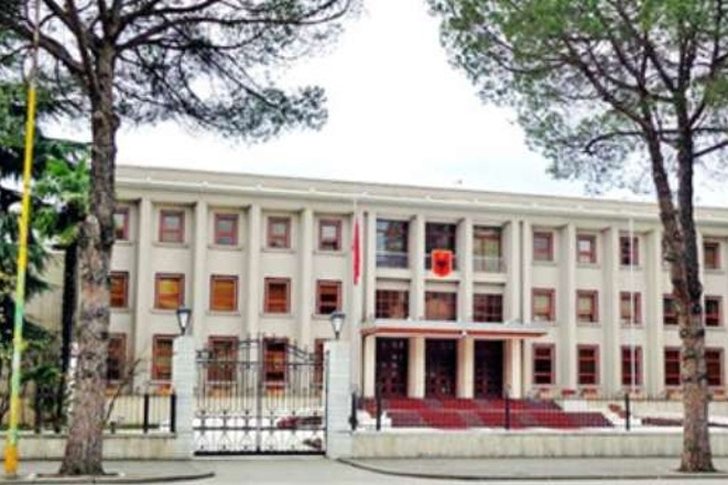
If the citizens of the capital want to orient you in t...
What will Albania be like in five years? For most, perhap...

Under the shade of a palm tree scorched by the strong July...
They complain that there is no light - when from 5:30 ...

I was dying today. In Albania we have all kinds of monume...
A post of mine at a time when everyone rushed to "show" th...
I'm showing you the routine of a real summer day. Gio...
Whenever Enver Hoxha wanted to strengthen his power, he we...
Much is written and spoken about the re-dimensioning, ...
As is widely known, today and tomorrow (July 11-12, 2023),...
A shepherd lived in a hut near a forest and a mountain...
Once upon a time there was a beautiful place with sun, win...

Today I was drinking morning coffee with a friend, abo...
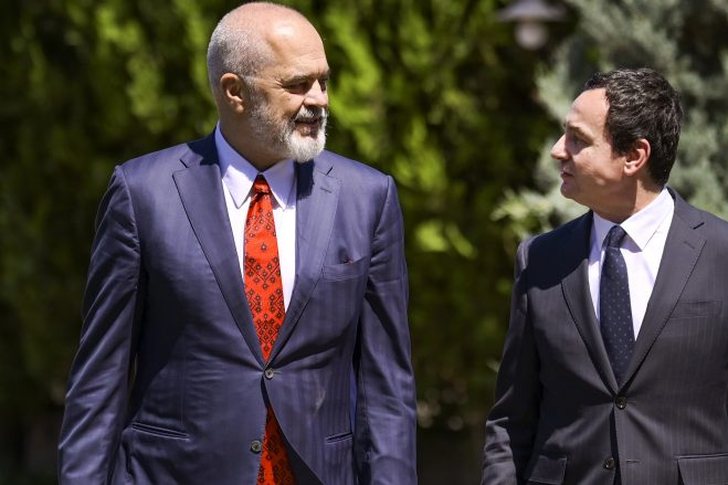
Pyetjes se ku është ndryshimi mes Albin Kurtit dhe Ram...

A meme has been circulating on social networks for some ti...
The event of Fushë Kruja is spectacular because it starts ...
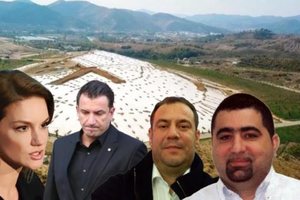
The in-depth investigations that SPAK conducted into Ajola...
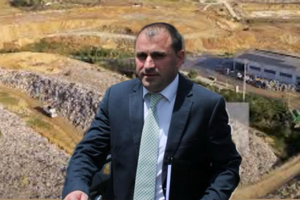
SPAK's standards, the way it investigates, how it secures ...
Irfan Hysenbelliu claims to be a big businessman, an hones...

The murder of officer Enea Mekolli in the line of duty has...

The Special Board of Appeal (KPA) decided this Monday ...

The KPA vetting decided this Thursday to dismiss the p...

Suela Salavaçi, a prosecutor in the Prosecutor's Offic...

The Special Board of Appeal reinstated the prosecutor ...

A serious incident occurred this Monday afternoon in Kamëz...
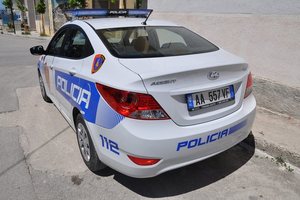
At noon this Monday, gunshots were recorded in Kamëz. Acc...
The perpetrator of the injury that occurred yesterday afte...

Another gunshot wound occurred at the scene. According to...
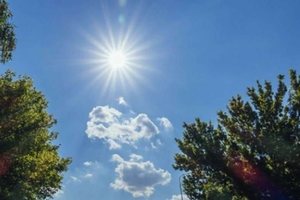
On Monday, our country will be affected by relatively stab...

More than 860 million people fall ill and 1.5 million die ...
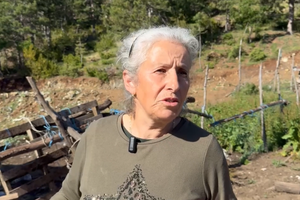
The mother of Violand Braçellari, the perpetrator of the s...
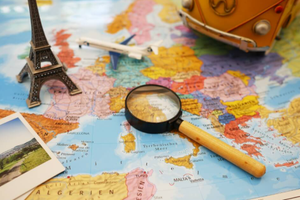
The modern European traveler seeks a meaningful connection...

Australia in December became the first country in the worl...
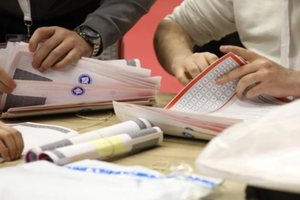
The vote counting for political entities in Kosovo has bee...
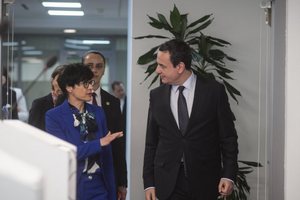
The European Union Commissioner for Enlargement, Marta Kos...
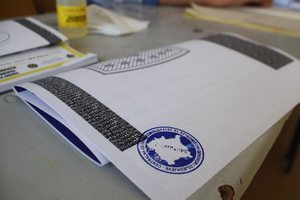
The counting of votes for political entities in Kosovo has...
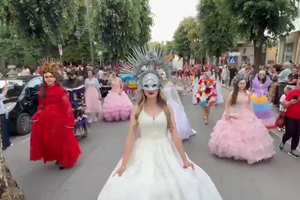
Korça has transformed this weekend into the capital of cel...
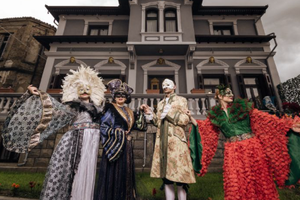
Korça is ready to open the summer season with one of the c...
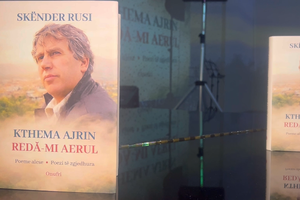
Two years after his passing, the renowned Korçë poet Skënd...
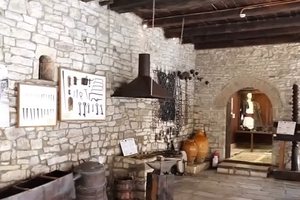
The Ethnographic Museum of Berat has opened its doors to v...
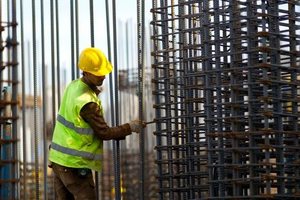
The construction sector is going through a challenging per...
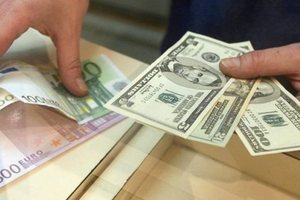
This Monday, one US dollar is bought for 81.8 lek and sold...

The tourist apartment market is continuing to expand at a ...
The number of properties sold by entities monitored by the...